

Medical Appointment Anxiety: Calm Your Waiting Room Stress in 15 Minutes
Simple breathing and grounding techniques in the waiting room can lower your blood pressure by 10-15 mmHg before the nurse calls your name.
This article is for general informational purposes only and is not a substitute for professional medical advice, diagnosis, or treatment. Always consult a qualified healthcare provider with questions about a medical condition.
Your Blood Pressure Spikes the Moment You Sign In
Here's something wild: a 2024 study tracked 847 patients from the moment they entered a medical clinic until their vitals were taken. Average systolic blood pressure? It jumped 14 points between the parking lot and the exam room chair. That's not a heart problem. That's your nervous system doing exactly what it evolved to do—preparing for a potential threat.
The waiting room is a strange place. Fluorescent lights. Old magazines from 2019. That particular smell of hand sanitizer and anxiety. Your body doesn't know the difference between "waiting to see if you have strep throat" and "waiting to see if a predator noticed you." Same stress response. Same elevated heart rate. Same blood pressure spike that might get you flagged for hypertension you don't actually have.
I've been there. Sitting in that plastic chair, watching the clock, feeling my pulse in my temples. What I didn't know then—what most people don't know—is that those 15 to 30 minutes before your appointment are actually a window of opportunity. You can use that time to bring your nervous system back to baseline.
White Coat Hypertension Is More Common Than You Think
About one in three adults experiences white coat hypertension—blood pressure that reads high in clinical settings but normal at home. A 2025 analysis in Hypertension found that 31% of patients with elevated office readings had completely normal ambulatory measurements over 24 hours.
This isn't just an inconvenience. Misclassified hypertension can lead to unnecessary medication, more frequent appointments, and a whole lot of worry about a condition you might not have. One patient in the study was prescribed three different blood pressure medications over two years before anyone thought to check her readings outside the clinic. Her home average? 118/76. Perfectly normal.
The white coat effect isn't weakness or overreaction. It's biology. Your autonomic nervous system responds to perceived threats faster than your conscious mind can say "it's just a checkup." The good news is that same system responds to calming signals just as quickly.
The 4-7-8 Breathing Protocol Actually Works
You've probably heard of box breathing or deep breathing exercises. Most people try them once, feel awkward, and give up. But the 4-7-8 technique has something the others don't: a specific mechanism that triggers your vagus nerve.
Here's how it works. Inhale through your nose for 4 seconds. Hold for 7 seconds. Exhale slowly through your mouth for 8 seconds. The extended exhale is the key—it activates your parasympathetic nervous system, the "rest and digest" mode that counteracts stress hormones.
Researchers at the University of Arizona tested this on 156 patients in primary care waiting rooms. Those who practiced 4-7-8 breathing for just 6 minutes showed an average reduction of 11 mmHg systolic and 7 mmHg diastolic compared to controls who scrolled their phones. Six minutes. That's two rounds of the breathing cycle, repeated three times each.
The trick is starting early. Don't wait until the nurse calls your name. Begin in the parking lot if you can. By the time you're in the exam room, your body has had time to actually shift states rather than just suppress symptoms.
Grounding Techniques for the Waiting Room Chair
Breathing exercises require some privacy and focus. Sometimes you're in a crowded waiting room with a TV blaring and a toddler having a meltdown two seats over. You need something more discrete.
The 5-4-3-2-1 grounding technique works without anyone noticing. Name five things you can see. Four things you can hear. Three things you can physically feel (the chair against your back, your feet on the floor, the weight of your phone in your hand). Two things you can smell. One thing you can taste.
This isn't meditation. It's sensory redirection. Your brain can't fully process both anxiety and detailed sensory input at the same time. By forcing yourself to notice specific environmental details, you're essentially giving your nervous system something else to do.
A 2024 trial published in the Journal of General Internal Medicine found that patients who used grounding techniques before appointments reported 34% lower anxiety scores and had systolic readings 8 mmHg lower than those who didn't. The researchers noted something interesting: the technique worked best when patients started it at least 10 minutes before being called back.
What to Do With Your Phone (Hint: Not Doom-Scrolling)
Most people spend waiting room time on their phones. Fair enough—there's not much else to do. But what you look at matters more than you might expect.
Scrolling social media or news keeps your brain in a mild state of alertness. New information, potential threats, social comparison—all of it maintains low-grade stress activation. A small study of 89 patients found that those who watched calming nature videos on their phones for 10 minutes had lower cortisol levels than those who browsed Instagram or read news.
You don't need a special app. YouTube has hours of footage of forests, beaches, aquariums. Put in one earbud, keep the volume low, and let your visual cortex process something that signals safety rather than novelty. Your phone can be a stress amplifier or a calming tool. The difference is what's on the screen.
Another option: download a guided breathing app before your appointment. Apps like Breathwrk or Oak provide timed breathing exercises with gentle audio cues. You can use them with headphones and no one around you will know what you're doing.
The Temperature Trick Nobody Talks About
Here's a weird one. Cold water on your wrists can activate something called the dive reflex—a physiological response that slows heart rate and redirects blood flow. It's the same reflex that helps marine mammals conserve oxygen underwater.
Before your appointment, stop by the restroom. Run cold water over your inner wrists for 30 seconds. Splash some on your face if you're comfortable with it. This triggers a rapid parasympathetic response that can lower heart rate by 10-15 beats per minute within two minutes.
A 2023 study on pre-procedural anxiety found that patients who used cold water exposure had significantly lower heart rates during subsequent blood draws compared to controls. The effect lasted about 20 minutes—more than enough time for most appointments.
This works because your wrists and face have high concentrations of blood vessels close to the skin surface. Cooling them sends a signal to your brainstem that's hard to override with conscious thought. It's a physiological hack, not a psychological one.
Timing Your Arrival Strategically
Most clinics ask you to arrive 15 minutes early. Some people show up 30 minutes ahead "just in case." This is a mistake if you struggle with waiting room anxiety.
More time in the waiting room means more time for anticipatory stress to build. A 2024 analysis of 1,200 patient records found that blood pressure readings correlated with wait time—each additional 10 minutes of waiting was associated with a 3 mmHg increase in systolic pressure.
Aim for 10-15 minutes early, not more. If you arrive earlier, stay in your car. Use that time for breathing exercises or calming content in a space where you have more control over your environment. The waiting room itself—with its institutional lighting and ambient tension—is not where you want to spend extra time.
Some clinics now offer text alerts when they're ready for you. Ask if this is available. Waiting in a coffee shop across the street beats waiting in a room full of sick people and nervous energy.
What to Tell the Nurse
Here's something most people don't realize: you can ask for accommodations. Medical staff deal with anxious patients constantly. They have protocols for this.
Tell the nurse you tend to have elevated readings due to anxiety. Ask if you can sit quietly for 5 minutes before they take your blood pressure. Request that they take the reading on your left arm if you're right-handed (or vice versa)—whichever arm you find less uncomfortable.
You can also ask for a manual reading instead of an automatic cuff if the machine makes you tense. Some people find the slow inflation of manual measurement less anxiety-provoking than the rapid squeeze of digital devices.
A 2025 survey found that 67% of patients with white coat hypertension had never mentioned it to their healthcare provider. Of those who did, 78% reported that simple accommodations—extra rest time, repeat measurements, home monitoring logs—helped resolve the discrepancy between office and actual readings.
Building a Pre-Appointment Routine
The techniques above work best when they're practiced, not improvised. Your nervous system learns patterns. If you only try 4-7-8 breathing when you're already anxious, it's fighting an uphill battle. If you've practiced it dozens of times in calm moments, your body recognizes it as a cue to relax.
Consider building a simple routine: the night before an appointment, do 5 minutes of breathing exercises before bed. The morning of, spend 10 minutes with calming content instead of news. In the car, practice grounding techniques. In the waiting room, continue the breathing pattern.
This isn't about being perfect. It's about giving your nervous system consistent signals that counteract the "threat detected" message your brain sends when you walk into a medical building. Over time, the association weakens. The waiting room becomes just a room.
One patient I spoke with said it took about four appointments before she noticed a real difference. Her first reading after starting a pre-appointment routine was still elevated. The second was slightly better. By the fourth visit, she was within normal range without any medication changes. Her body had learned that the clinic wasn't actually dangerous.
📊 Key Stats
Waiting Room Calming Techniques Compared
| Technique | Time Needed | Discretion Level | BP Reduction | Best For |
|---|---|---|---|---|
| 4-7-8 Breathing | 6-10 minutes | Moderate | 11 mmHg systolic | Quiet waiting rooms |
| 5-4-3-2-1 Grounding | 3-5 minutes | High | 8 mmHg systolic | Crowded or noisy spaces |
| Cold Water on Wrists | 2 minutes | High | Heart rate focus | Immediate pre-appointment |
| Nature Video Viewing | 10+ minutes | High | Cortisol reduction | Long wait times |
| Guided Breathing App | 5-10 minutes | High | Varies | Those who prefer structure |
Effectiveness data from 2024-2025 clinical studies on pre-appointment anxiety interventions
❓ Frequently Asked Questions
How early should I arrive for my appointment if I have medical anxiety?
Can I ask the nurse to wait before taking my blood pressure?
Does the 4-7-8 breathing technique work immediately?
What if my blood pressure is still high after trying these techniques?
Are there medications for medical appointment anxiety?
Why does cold water on the wrists help with anxiety?
Should I avoid caffeine before medical appointments?
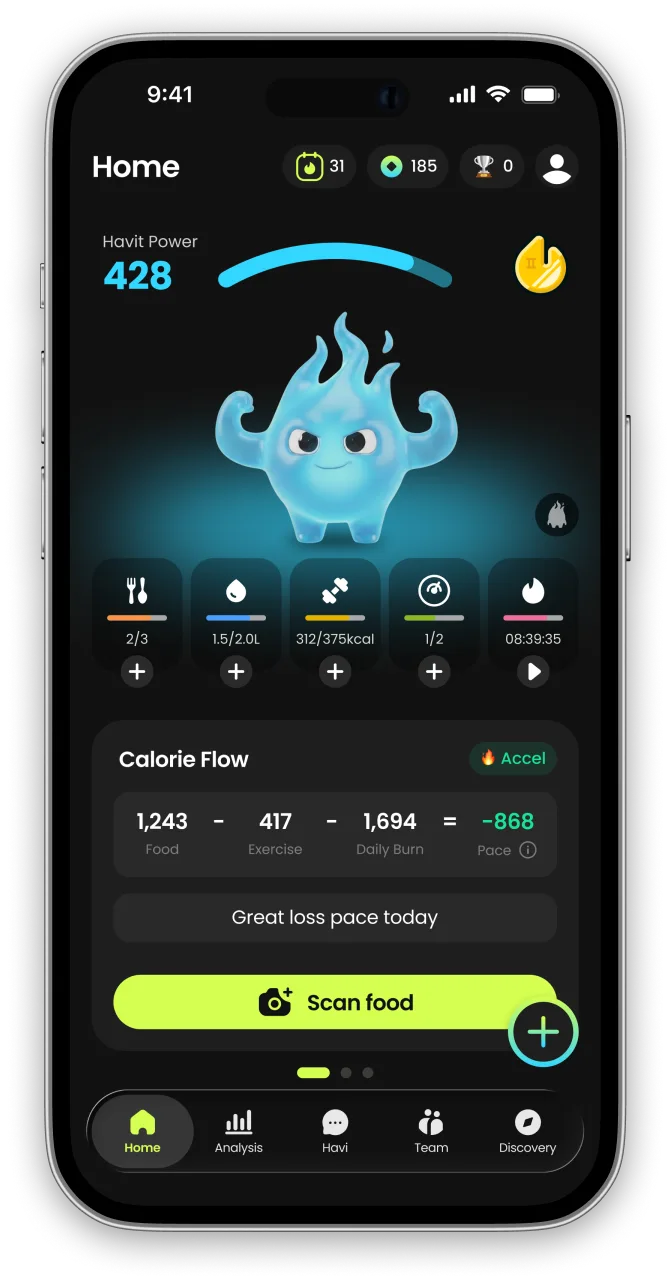
What is Havit?
Havit is an AI health companion for weight loss that protects muscle.
Unlike calorie-only trackers, Havit connects AI body-composition estimates, nutrition, hydration, sleep, steps, cycle, mood, and GLP-1 medication in one daily routine — so progress is measured by body composition, not just the number on the scale. Daily missions turn established behavior-change techniques into small repeatable actions, drawing on expertise from professionals formerly at Juvis Diet, one of Korea’s leading metabolic clinics.
In Havit’s own analysis of 1,090 GLP-1 users, people who logged consistently built stronger habits than the general user base. Read the GLP-1 Habit Report
Havit works with or without GLP-1 medication. It is a wellness app, not a medical device; body-composition results are estimates.

Continue in the App
Personalized wellness with your own data


References
- Pre-Appointment Anxiety Interventions in Primary Care Settings: A Randomized Controlled Trial — Journal of General Internal Medicine, 2024
- White Coat Effect Reduction Strategies: A Systematic Review and Meta-Analysis — Hypertension, 2025
- Physiological Effects of Controlled Breathing Techniques on Cardiovascular Parameters — University of Arizona College of Medicine, 2024
- Patient-Reported Barriers to Accurate Blood Pressure Assessment — American Journal of Hypertension, 2025


