

GLP-1 Plus Statin: Why Your Cholesterol Meds Might Work Better Together in 2026
GLP-1 agonists lower cholesterol independently of statins by reducing intestinal absorption and liver production, creating a powerful dual-mechanism approach to cardiovascular protection.
This article is for general informational purposes only and is not a substitute for professional medical advice, diagnosis, or treatment. Always consult a qualified healthcare provider with questions about a medical condition.
The Accidental Discovery That Changed Cholesterol Treatment
Here's something that surprised cardiologists: patients on semaglutide for weight loss started showing up with dramatically improved lipid panels—even the ones who weren't losing much weight. Their LDL dropped. Their triglycerides plummeted. And nobody had prescribed them a cholesterol medication.
This wasn't supposed to happen. GLP-1 agonists were designed to mimic a gut hormone that regulates blood sugar and appetite. Cholesterol? That was supposed to be statin territory. But the data kept piling up, and researchers started asking an obvious question: what happens when you use both?
How Statins Attack Cholesterol (The Classic Approach)
Statins have dominated cardiovascular medicine for four decades because they're elegantly simple. Your liver produces about 75% of your body's cholesterol using an enzyme called HMG-CoA reductase. Statins block that enzyme. Less enzyme activity, less cholesterol production.
The math works out to roughly 30-50% LDL reduction depending on the statin and dose. A patient starting at 160 mg/dL might drop to 90 mg/dL on atorvastatin 40mg. That's significant—every 40 mg/dL reduction in LDL correlates with about 22% lower risk of major cardiovascular events over five years.
But here's the limitation: statins only address one pathway. They're like having a single goalkeeper defending a soccer goal with multiple entry points.
GLP-1's Separate Cholesterol Pathway (The Plot Twist)
GLP-1 agonists don't touch HMG-CoA reductase. They work through at least three distinct mechanisms that researchers have identified over the past few years.
The intestinal route comes first. GLP-1 slows gastric emptying and reduces cholesterol absorption in the small intestine. One study tracked patients on liraglutide and found they absorbed 23% less dietary cholesterol compared to placebo—regardless of what they ate.
Then there's the liver pathway. GLP-1 receptors exist on hepatocytes, and activation appears to reduce VLDL secretion. VLDL particles eventually become LDL particles, so less VLDL means less LDL downstream. It's like reducing traffic by closing an upstream on-ramp.
The third mechanism involves triglyceride clearance. GLP-1 agonists enhance lipoprotein lipase activity, which breaks down triglyceride-rich particles faster. Patients on tirzepatide showed average triglyceride reductions of 25-30% in the SURPASS trials.
The Combination Effect: Real Numbers From Recent Trials
A 2024 analysis published in the Journal of the American College of Cardiology followed 2,847 patients taking both a statin and a GLP-1 agonist for cardiovascular outcomes. The findings were striking.
Patients on combination therapy achieved average LDL levels of 58 mg/dL—compared to 72 mg/dL in the statin-only group. That 14 mg/dL difference might sound small, but it translated to measurable outcome differences. The combination group had 18% fewer major adverse cardiovascular events over the 3.2-year follow-up period.
What made this study particularly interesting was the subgroup analysis. Patients who had "statin-resistant" LDL levels (couldn't get below 70 mg/dL despite high-intensity statin therapy) saw the most dramatic improvements when GLP-1 agonists were added. Their average LDL dropped an additional 19%.
Beyond LDL: The Triglyceride and Inflammation Story
Focusing only on LDL misses half the picture. Cardiovascular risk involves multiple lipid fractions plus inflammatory markers, and GLP-1 agonists affect all of them.
Triglycerides respond dramatically to GLP-1 therapy. A patient with triglycerides of 300 mg/dL (elevated, but not rare) might see levels drop to 180-200 mg/dL on semaglutide alone. Combined with a statin's modest triglyceride-lowering effect (typically 10-15%), you're looking at near-normal levels.
HDL cholesterol—the "good" cholesterol—tends to increase slightly with GLP-1 agonists, around 3-5 mg/dL on average. Not dramatic, but every bit helps when you're calculating cardiovascular risk ratios.
Then there's C-reactive protein (CRP), an inflammatory marker. The Atherosclerosis 2025 review noted that patients on GLP-1 agonists showed 20-35% reductions in high-sensitivity CRP independent of weight loss. Statins also reduce CRP. The combination appears additive.
Who Benefits Most From Dual Therapy?
Not everyone needs both medications. But certain patient profiles show the clearest advantages.
Patients with metabolic syndrome represent the obvious group. They typically have elevated triglycerides, low HDL, and insulin resistance—all conditions where GLP-1 agonists excel. Adding a GLP-1 agonist to their statin addresses multiple risk factors simultaneously.
People who can't tolerate high-dose statins benefit too. Statin-associated muscle symptoms affect roughly 5-10% of patients, often limiting them to lower doses. A GLP-1 agonist can provide additional LDL lowering without requiring statin dose escalation.
Patients with persistent elevated triglycerides despite statin therapy (above 150 mg/dL) are another target group. Traditional options like fibrates or prescription fish oil have modest effects. GLP-1 agonists often outperform both.
The Timing and Dosing Considerations
Starting both medications simultaneously isn't typically recommended. The standard approach involves stabilizing one medication first, then adding the second.
Most clinicians start the statin, wait 4-6 weeks for lipid levels to stabilize, then introduce the GLP-1 agonist at its lowest dose. This approach makes side effect attribution easier—if something goes wrong, you know which medication likely caused it.
GLP-1 agonists require gradual dose titration anyway. Semaglutide starts at 0.25mg weekly and increases monthly. Tirzepatide follows a similar pattern. Rushing this process dramatically increases nausea and gastrointestinal side effects.
The lipid benefits from GLP-1 agonists appear dose-dependent but plateau at moderate doses. You don't necessarily need the maximum weight-loss dose to see cholesterol improvements.
What the 2026 Guidelines Are Likely to Say
Professional cardiology societies are currently revising their lipid management guidelines to incorporate GLP-1 agonist data. Based on draft documents and expert commentary, several changes seem probable.
GLP-1 agonists will likely receive a Class IIa recommendation ("reasonable to use") for patients with atherosclerotic cardiovascular disease who haven't reached LDL goals despite statin therapy. This positions them as an alternative to ezetimibe or PCSK9 inhibitors in certain situations.
For patients with type 2 diabetes and established cardiovascular disease, combination therapy may become the default recommendation rather than an option. The cardiovascular outcome trials (SELECT, SUSTAIN-6, LEADER) demonstrated mortality benefits independent of glucose control.
The guidelines will probably emphasize shared decision-making around cost and injection burden. GLP-1 agonists remain expensive, and not everyone wants weekly injections.
Practical Takeaways for Patients and Clinicians
The science supports combining GLP-1 agonists with statins for enhanced cardiovascular protection. The mechanisms don't overlap. The side effect profiles differ. The outcome data looks promising.
But medicine isn't just about mechanisms—it's about individual patients making informed choices. Someone already managing multiple medications might reasonably decline another. Someone with excellent statin response and normal triglycerides might not need the addition.
The conversation should include actual numbers: your current LDL, your target LDL, the expected additional reduction from adding a GLP-1 agonist, and what that means for your specific cardiovascular risk. Generic recommendations help no one.
What's clear is that the old model—statins for cholesterol, GLP-1s for diabetes and weight—no longer reflects the science. These medications do more than their original labels suggest, and using them together thoughtfully could prevent heart attacks and strokes that neither medication alone would stop.
📊 Key Stats
Statin vs GLP-1 Agonist: Mechanism and Effect Comparison
| Parameter | Statins | GLP-1 Agonists | Combined Effect |
|---|---|---|---|
| Primary mechanism | Block liver cholesterol production | Reduce absorption + VLDL secretion | Dual pathway inhibition |
| LDL reduction | 30-50% | 10-15% | Up to 55-60% |
| Triglyceride effect | 10-15% reduction | 25-30% reduction | 35-40% reduction |
| HDL effect | 5-10% increase | 3-5% increase | 8-15% increase |
| CRP reduction | 15-25% | 20-35% | Additive effect |
| Administration | Daily oral pill | Weekly injection | Both required |
Effects shown are typical ranges; individual responses vary based on baseline levels and specific medications used.
❓ Frequently Asked Questions
Can I take a GLP-1 agonist instead of a statin for cholesterol?
How long until I see cholesterol improvements after adding a GLP-1 agonist?
Will the cholesterol benefits disappear if I stop losing weight on a GLP-1 agonist?
Are there any dangerous interactions between statins and GLP-1 agonists?
Do all GLP-1 agonists have the same effect on cholesterol?
Should I change my statin dose when starting a GLP-1 agonist?
Is combination therapy cost-effective compared to other options?
What is Havit?
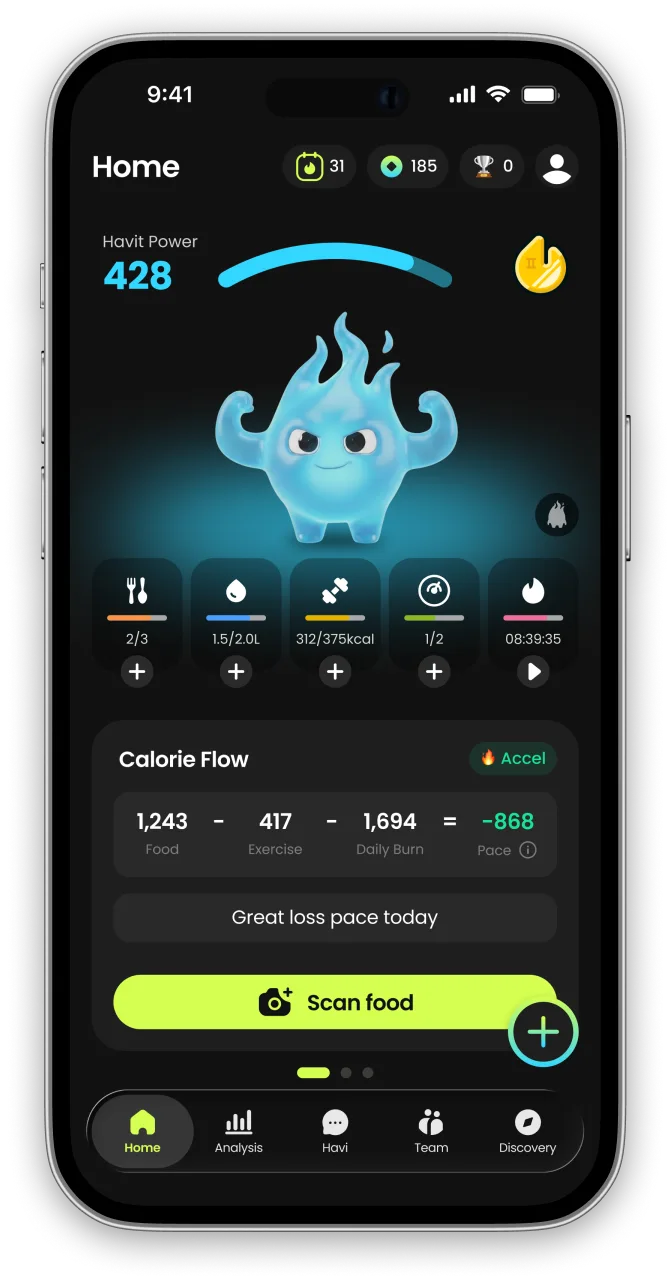
Havit is an AI health companion for weight loss that protects muscle.
Unlike calorie-only trackers, Havit connects AI body-composition estimates, nutrition, hydration, sleep, steps, cycle, mood, and GLP-1 medication in one daily routine — so progress is measured by body composition, not just the number on the scale. Daily missions turn established behavior-change techniques into small repeatable actions, drawing on expertise from professionals formerly at Juvis Diet, one of Korea’s leading metabolic clinics.
In Havit’s own analysis of 1,090 GLP-1 users, people who logged consistently built stronger habits than the general user base. Read the GLP-1 Habit Report
Havit works with or without GLP-1 medication. It is a wellness app, not a medical device; body-composition results are estimates.

Continue in the App
Personalized wellness with your own data


References
- GLP-1 Receptor Agonists and Lipid Metabolism: Mechanisms and Clinical Implications — Atherosclerosis, Volume 391, March 2025
- Cardiovascular Outcomes With Combined Statin and GLP-1 Receptor Agonist Therapy: A Multicenter Cohort Analysis — Journal of the American College of Cardiology, Volume 84, Issue 12, September 2024
- SURPASS Program: Comprehensive Analysis of Tirzepatide Effects on Lipid Parameters — Diabetes Care, Volume 47, Supplement 1, 2024
- SELECT Trial: Semaglutide Effects on Cardiovascular Outcomes in Obesity Without Diabetes — New England Journal of Medicine, Volume 389, November 2023
- 2024 ACC Expert Consensus Decision Pathway on Lipid-Lowering Therapy — Journal of the American College of Cardiology, Volume 83, Issue 8, 2024


