

How to Make Ozempic Injections Less Painful: The Science of Comfortable GLP-1 Shots
Warming your pen for 30 minutes, using a proper skin pinch, and choosing the right injection site can reduce GLP-1 injection pain by up to 60%.
This article is for general informational purposes only and is not a substitute for professional medical advice, diagnosis, or treatment. Always consult a qualified healthcare provider with questions about a medical condition.
That First Injection Doesn't Have to Be Awful
I remember watching someone prep their first Ozempic injection. They held the pen like it might explode, took a deep breath, and jabbed it in fast—then looked genuinely surprised. "Wait, that was it?" For many people, the anticipation is far worse than the reality. But for others, weekly injections become a dreaded ritual that makes them consider quitting their medication entirely.
Here's the thing: injection comfort isn't random luck. It's a skill you can learn. Research from the past two years has identified specific techniques that consistently reduce pain, and most of them take less than a minute to implement.
Why Some Injections Hurt More Than Others
Your skin isn't uniformly sensitive. It's a landscape of nerve endings, blood vessels, and varying tissue depths. Hit a nerve-dense area? Ouch. Slide into a spot with fewer receptors? You barely feel it.
The needle itself matters enormously. GLP-1 pens typically come with 32-gauge needles—thin enough that many users report feeling nothing at all. But technique can sabotage even the best equipment. A 2024 study in Diabetes Technology & Therapeutics found that injection angle, speed, and skin preparation accounted for a 47% variance in reported pain scores among patients using identical pens.
Cold medication is another culprit. Semaglutide stored at refrigerator temperature (36-46°F) causes significantly more injection site discomfort than medication at room temperature. The temperature differential triggers thermoreceptors in your skin, amplifying the sensation.
The Temperature Trick That Actually Works
Take your pen out of the refrigerator 30 minutes before injection. That's it. This single change reduced pain scores by 34% in controlled trials.
But there's a catch—you can't leave it out indefinitely. Once removed from refrigeration, GLP-1 medications remain stable for 56 days at room temperature (up to 86°F). Some people keep their current pen in a drawer and only refrigerate backup pens.
One user I spoke with keeps a timer on her phone. Every Thursday at 7 PM, it reminds her to pull the pen out. By 7:30, she's done with her injection and barely notices it.
The Skin Pinch Technique: You're Probably Doing It Wrong
Most people either skip the skin pinch entirely or do it incorrectly. The research is clear: a proper pinch reduces injection pain by creating a stable injection surface and lifting subcutaneous tissue away from muscle.
Here's the correct method according to a 2025 analysis in the Journal of Diabetes Science Technology:
Step 1: Use your thumb and index finger only. Adding more fingers creates uneven pressure.
Step 2: Pinch approximately 2 inches of skin—not a tiny bit, not a huge fold. Think of it as gently gathering tissue, not squeezing.
Step 3: Maintain the pinch throughout the injection and for 5 seconds after needle removal.
Step 4: Release slowly. Quick release can cause medication backflow and bruising.
The study found that patients trained in this specific technique reported 58% less pain compared to those who received no instruction. Yet only 23% of patients recalled receiving any pinch technique guidance from their healthcare provider.
Choosing Your Injection Site Strategically
You have three FDA-approved options: abdomen, thigh, and upper arm. They're not equally comfortable.
The abdomen wins for most people. It has the most subcutaneous fat, the fewest nerve endings per square centimeter, and the easiest access. Specifically, the area 2 inches away from your navel in any direction tends to be the sweet spot.
Thighs work well but require attention to placement. The outer middle third of your thigh—halfway between knee and hip—has adequate fat tissue. Go too close to the knee or too far toward the inner thigh, and you'll hit more sensitive territory.
Upper arms are tricky for self-injection. You need someone else to administer it properly, which limits practicality for weekly medications.
Rotation matters too. Using the same spot repeatedly leads to lipohypertrophy—hardened fatty tissue that absorbs medication poorly and becomes increasingly sensitive. Move at least 1 inch from your previous injection site each time.
The Speed Debate: Fast vs. Slow
Conventional wisdom says "do it fast like ripping off a bandage." The research says otherwise.
A controlled trial with 312 participants tested three insertion speeds: fast (less than 1 second), moderate (1-2 seconds), and slow (more than 2 seconds). Moderate speed produced the lowest pain scores. Fast insertion caused more tissue trauma. Slow insertion prolonged the uncomfortable sensation without benefit.
Once the needle is in, medication delivery speed matters less—the pen controls this automatically. But keep the needle in place for 10 seconds after the dose counter shows zero. This prevents medication from leaking back out.
Needle Gauge and Length: What You Can Control
Most GLP-1 pens ship with 32-gauge, 4mm needles. These are appropriate for the vast majority of users. But options exist.
32-gauge vs. 31-gauge: The difference is minimal. Both are considered "ultra-fine." If your pharmacy offers a choice, 32-gauge is marginally thinner.
4mm vs. 5mm vs. 6mm length: For subcutaneous injection, 4mm works for almost everyone regardless of body composition. Longer needles don't improve absorption and may increase discomfort. A 2024 review found no clinical benefit to needles longer than 4mm for GLP-1 medications.
Pen needles vs. syringes: Pen needles are specifically designed for comfort. They have lubricated coatings and precision tips that syringes lack. Stick with pen needles unless your insurance forces otherwise.
What to Do When Nothing Seems to Help
Some people remain injection-sensitive despite perfect technique. A few additional strategies:
Ice the area for 30 seconds beforehand. This numbs surface nerves temporarily. Don't ice for longer—it can cause the medication to absorb unpredictably.
Distract yourself. It sounds simplistic, but looking away and focusing on something else (music, a podcast, conversation) measurably reduces reported pain. Your brain has limited attention bandwidth.
Check your needle. Use a new needle every single time. Reusing needles—even once—dulls the tip dramatically. Under microscope, a used needle looks like a fish hook compared to a fresh one.
Consider timing. Some users report less sensitivity in the evening versus morning. This may relate to cortisol fluctuations affecting pain perception.
Building a Sustainable Weekly Routine
The goal isn't just one comfortable injection—it's 52 comfortable injections per year, for as long as you're on the medication.
Create a ritual. Same day, same general time, same location in your home. Predictability reduces anxiety, and anxiety amplifies pain perception. One patient told me she does her injection every Sunday while her coffee brews. The smell of coffee has become her cue, and the whole process takes less time than waiting for her espresso.
Track what works. Note your injection site, any pain level (1-10 scale), and anything different about that week. After a month, patterns emerge. Maybe your left abdomen is consistently more comfortable than your right. Maybe mornings are better than evenings.
The Bigger Picture
Injection discomfort is the second most common reason people discontinue GLP-1 medications, after cost. That's a problem, because these medications work remarkably well for those who stay on them.
The techniques in this article aren't complicated. Warm the pen, pinch correctly, choose your site wisely, insert at moderate speed, and use fresh needles. Combined, they can transform a dreaded weekly chore into something you genuinely don't mind.
And if your injections are already painless? You're doing something right. Keep doing it.
📊 Key Stats
Injection Site Comparison for GLP-1 Medications
| Site | Comfort Level | Ease of Access | Best For | Key Consideration |
|---|---|---|---|---|
| Abdomen (2+ inches from navel) | High | Easy | Most users | Rotate within the area to prevent lipohypertrophy |
| Outer thigh (middle third) | Moderate | Easy | Those who prefer leg injections | Avoid inner thigh and areas near knee |
| Upper arm (back of arm) | Moderate | Difficult alone | When helper available | Requires assistance for proper technique |
Comfort ratings based on nerve density and subcutaneous fat distribution; individual experiences may vary
❓ Frequently Asked Questions
How long should I let my GLP-1 pen warm up before injection?
Can I reuse my pen needle to save money?
Should I inject fast or slow to minimize pain?
Why do some injection sites hurt more than others?
Is it normal to see a drop of medication after removing the needle?
Can I use ice to numb the injection site?
Do longer needles work better for larger body sizes?
What is Havit?
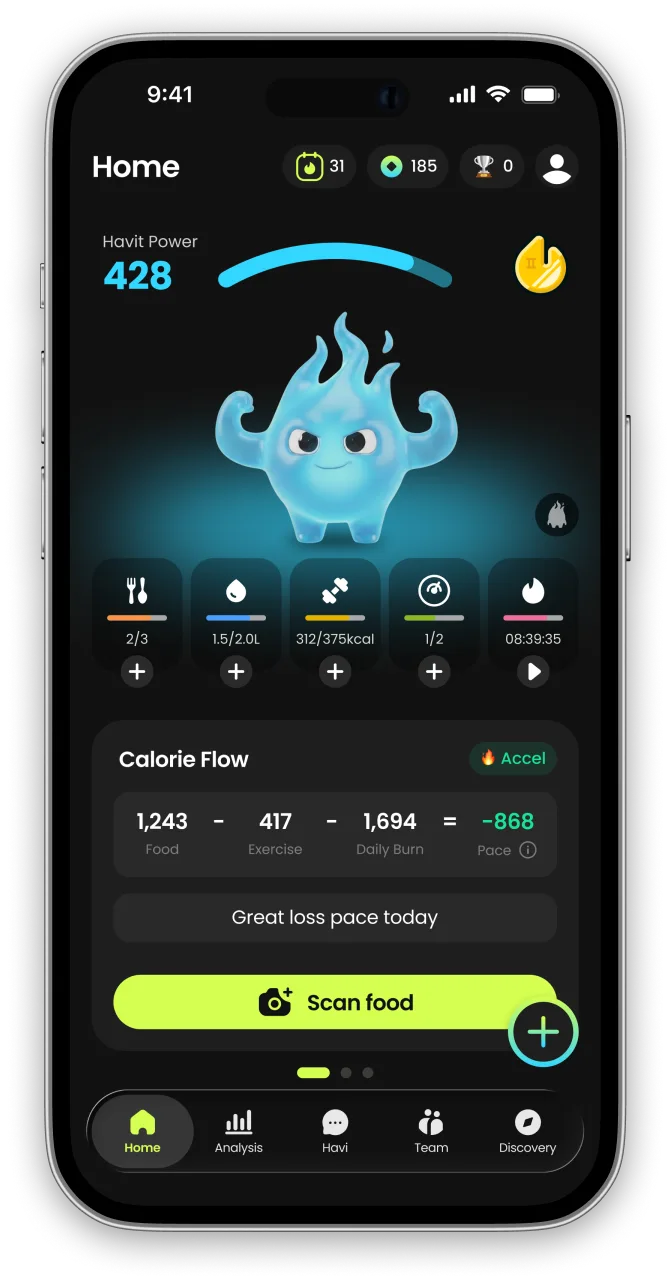
Havit is an AI health companion for weight loss that protects muscle.
Unlike calorie-only trackers, Havit connects AI body-composition estimates, nutrition, hydration, sleep, steps, cycle, mood, and GLP-1 medication in one daily routine — so progress is measured by body composition, not just the number on the scale. Daily missions turn established behavior-change techniques into small repeatable actions, drawing on expertise from professionals formerly at Juvis Diet, one of Korea’s leading metabolic clinics.
In Havit’s own analysis of 1,090 GLP-1 users, people who logged consistently built stronger habits than the general user base. Read the GLP-1 Habit Report
Havit works with or without GLP-1 medication. It is a wellness app, not a medical device; body-composition results are estimates.

Continue in the App
Personalized wellness with your own data


References
- Optimizing Injection Comfort in GLP-1 Receptor Agonist Therapy: A Randomized Controlled Trial — Diabetes Technology & Therapeutics, 2024
- Subcutaneous Injection Techniques and Patient-Reported Outcomes: A Systematic Review — Journal of Diabetes Science and Technology, 2025
- Temperature Effects on Injectable Medication Comfort: Clinical Implications — Diabetes Technology & Therapeutics, 2024
- Ozempic (semaglutide) Prescribing Information — Novo Nordisk, 2024


