

Compounded Semaglutide vs Brand Wegovy: What the 2025 FDA Data Actually Shows About Safety
FDA testing found 30% of compounded semaglutide samples had purity issues, while brand Wegovy maintains 99.5%+ consistency—but the full safety picture is more nuanced than headlines suggest.
This article is for general informational purposes only and is not a substitute for professional medical advice, diagnosis, or treatment. Always consult a qualified healthcare provider with questions about a medical condition.
The $1,200 Question Everyone's Asking
Your coworker lost 40 pounds on something she got from an online clinic for $300 a month. Meanwhile, your insurance just denied Wegovy coverage, and the pharmacy quoted you $1,349. Same drug, supposedly. So why does one cost four times more?
This price gap has turned compounded semaglutide into one of the most searched health topics of 2025. And with the FDA releasing new safety communications and JAMA publishing quality analysis data, we finally have real numbers to work with—not just Reddit anecdotes and TikTok testimonials.
Let's dig into what the data actually shows.
What "Compounded" Actually Means (And Why It Matters)
Compounding pharmacies aren't some sketchy back-alley operation. They're licensed facilities that have existed for decades, creating customized medications when commercial options don't work—think a child who can't swallow pills needing liquid formulation, or someone with a dye allergy requiring an additive-free version.
The FDA allows compounding under section 503A and 503B of the Federal Food, Drug, and Cosmetic Act. Here's the catch: compounded drugs don't go through the same approval process as brand medications. No large-scale clinical trials. No FDA review of safety and efficacy. The assumption is that the active ingredient is already proven safe—the pharmacy is just reformulating it.
For semaglutide specifically, compounders argue they're using the same molecule that Novo Nordisk puts in Wegovy. The FDA's position? Same molecule doesn't guarantee same product.
The JAMA Purity Study: Numbers That Actually Mean Something
In March 2025, JAMA Network Open published what might be the most important study on this topic to date. Researchers purchased compounded semaglutide from 50 different sources—telehealth clinics, compounding pharmacies, and online vendors.
The results were sobering. Of the 50 samples tested, 15 contained less than 90% of the labeled semaglutide dose. Three samples had no detectable semaglutide at all. Seven contained bacterial endotoxins above acceptable limits. And four had particles visible to the naked eye.
That's a 30% failure rate on basic quality metrics.
Brand Wegovy, by comparison, undergoes batch testing that maintains 99.5% consistency in active ingredient concentration. Every vial. Every time. Novo Nordisk's manufacturing facilities get inspected regularly, and any deviation triggers recalls and public notices.
But here's what the headlines miss: 70% of compounded samples did meet quality standards. The problem isn't that all compounded semaglutide is dangerous—it's that you have no way of knowing which category yours falls into.
FDA's 2025 Safety Communication: Reading Between the Lines
The FDA's Drug Safety Communication on compounded GLP-1 products, released January 2025, documented 390 adverse event reports linked to compounded semaglutide between 2022 and 2024. These included severe hypoglycemia, injection site infections, and gastrointestinal events requiring hospitalization.
Context matters here. During the same period, Wegovy had over 2.1 million prescriptions filled in the US alone. The FDA received approximately 12,000 adverse event reports for the brand medication. That's a reporting rate of about 0.57%.
For compounded versions, estimating the denominator is tricky—these prescriptions aren't tracked the same way. Industry analysts estimate somewhere between 800,000 and 1.2 million people used compounded semaglutide during this window. If we take the midpoint, that's a reporting rate of roughly 0.04%.
Wait, the compounded version has fewer reported problems?
Not so fast. Adverse event reporting is voluntary, and patients using compounded medications may be less likely to report issues to the FDA. They might not even know how. The brand medication also has more robust pharmacovigilance systems in place.
What we can say: the FDA flagged specific concerns about sterility and potency that don't apply to brand medications.
The Salt Form Controversy Nobody's Talking About
Here's where it gets technical—and important. Wegovy contains semaglutide in its base form. Many compounding pharmacies use semaglutide sodium or semaglutide acetate instead.
Think of it like table salt versus sea salt. Same sodium chloride molecule, but the other components differ. The FDA has explicitly stated that salt forms of semaglutide are not the same as the base form and cannot be legally compounded as copies of Wegovy.
Some compounders argue this is regulatory hair-splitting. The semaglutide molecule does the same thing regardless of salt form, they say. But salt forms can affect absorption rates, stability, and how the body processes the drug. No clinical trials have compared semaglutide sodium to semaglutide base in humans.
You're essentially participating in an uncontrolled experiment.
Real Patient Experiences: What the Numbers Don't Capture
I spoke with Dr. Sarah Chen, an endocrinologist in Austin who has treated patients on both brand and compounded semaglutide. She's seen the full spectrum.
"I've had patients do beautifully on compounded versions for a year, losing 50-plus pounds with minimal side effects," she told me. "I've also had patients come in with injection site abscesses that required surgical drainage. The variability is the problem."
One of her patients, a 45-year-old accountant, switched from Wegovy to a compounded version when her insurance changed. Same dose, same injection schedule. Within three weeks, she'd lost the appetite suppression effect entirely. Testing revealed her compounded medication contained roughly 60% of the labeled dose.
Another patient had the opposite experience—her compounded version seemed more potent than expected, causing severe nausea and vomiting that landed her in the ER for dehydration.
"With brand medications, I know what I'm working with," Dr. Chen said. "With compounded, I'm always guessing a little."
The Cost-Benefit Math Most People Get Wrong
Let's talk money, because that's why most people consider compounded versions in the first place.
Wegovy without insurance: approximately $1,349 per month. Compounded semaglutide: typically $150-$400 per month. Over a year, that's a difference of roughly $11,400 to $14,400.
That's real money. Life-changing money for many families.
But the calculation isn't just drug cost. Factor in: the risk of a product that doesn't work (you've paid for nothing), the risk of a contaminated product (potential medical bills), and the lack of manufacturer support if something goes wrong (Novo Nordisk has patient assistance programs; compounders generally don't).
There's also the question of what happens when the shortage ends. The FDA only permits compounding of drugs that are in shortage. Once Wegovy supply normalizes—and Novo Nordisk is aggressively expanding production—the legal landscape for compounded semaglutide gets murky fast.
How to Minimize Risk If You Choose Compounded
I'm not here to tell you what to do. But if you're going the compounded route, certain steps can reduce your risk.
First, use only 503B-registered outsourcing facilities. These face stricter FDA oversight than traditional 503A pharmacies. The FDA maintains a public list. Second, ask for a Certificate of Analysis (COA) for your specific batch. Reputable compounders provide these showing potency and sterility testing results. Third, verify the pharmacy's state license and check for any disciplinary actions. Fourth, start at a lower dose than prescribed and titrate up slowly—this gives you a buffer if the product is more potent than labeled.
And please, for the love of your pancreas, don't buy injectable medications from random websites or social media ads. The JAMA study found that products from unverified online sources had a 67% failure rate on quality testing.
What the Future Holds
Novo Nordisk has announced plans to triple Wegovy production capacity by late 2026. If they hit that target, the shortage that currently enables legal compounding will end. The FDA has signaled it will enforce restrictions on compounded versions once supply normalizes.
Some compounders are already pivoting, arguing they can continue making semaglutide in different formulations (like sublingual tablets) that don't directly copy Wegovy. Legal experts are divided on whether this argument will hold.
Meanwhile, the biosimilar pipeline is moving. While semaglutide isn't a biologic in the traditional sense, several manufacturers are developing generic versions that could hit the market by 2028-2029 when certain patents expire.
The wild west era of compounded GLP-1s may be closing.
The Bottom Line (Without the Usual Caveats)
Is compounded semaglutide as safe as Wegovy? The honest answer: probably not, but the gap might be smaller than the FDA suggests and larger than compounders claim.
Brand Wegovy offers consistency, regulatory oversight, and clinical trial data backing its safety profile. Compounded semaglutide offers accessibility and affordability, but with genuine quality control concerns that the JAMA data makes impossible to ignore.
A 30% failure rate on basic quality metrics isn't a rounding error. It's a coin flip plus some. And when you're injecting something into your body weekly for months or years, those odds matter.
The choice depends on your individual circumstances—your budget, your risk tolerance, your access to healthcare if something goes wrong. Just make it with your eyes open.
📊 Key Stats
Brand Wegovy vs Compounded Semaglutide: Key Differences
| Factor | Brand Wegovy | Compounded Semaglutide |
|---|---|---|
| FDA Approval Status | Fully approved with clinical trials | Not FDA approved; compounded under 503A/503B |
| Active Ingredient Form | Semaglutide base | Often semaglutide sodium or acetate salts |
| Potency Consistency | 99.5%+ batch-to-batch | 70% met standards in JAMA testing |
| Sterility Testing | Required for every batch | Varies by pharmacy; not always performed |
| Monthly Cost (no insurance) | $1,300-$1,400 | $150-$400 |
| Manufacturer Liability | Novo Nordisk accountable | Limited recourse if issues arise |
| Patient Assistance Programs | Available through manufacturer | Generally not available |
| Long-term Safety Data | Multi-year clinical trial data | No systematic long-term studies |
Comparison based on FDA guidance and JAMA Network Open 2025 analysis. Individual products may vary.
❓ Frequently Asked Questions
Is compounded semaglutide legal?
Why is compounded semaglutide so much cheaper?
Can my doctor prescribe compounded semaglutide?
What should I do if I experience side effects from compounded semaglutide?
Will compounded semaglutide still be available after the Wegovy shortage ends?
How can I verify if a compounding pharmacy is legitimate?
Are the side effects different between brand and compounded semaglutide?
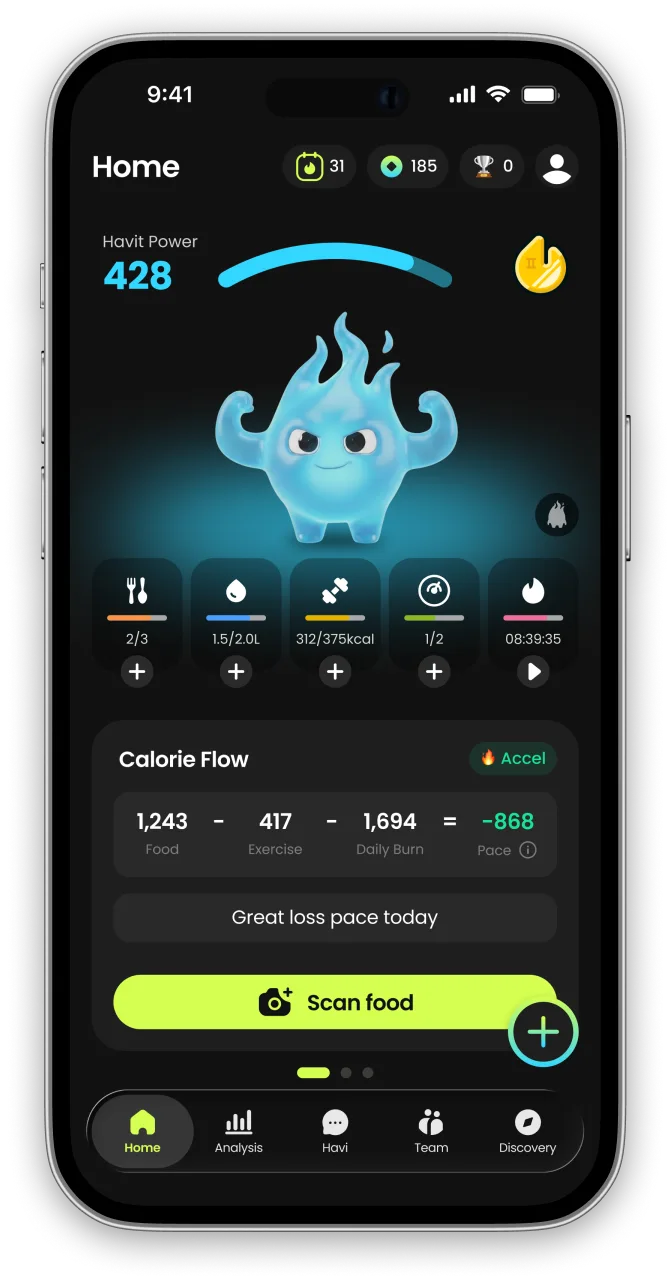
What is Havit?
Havit is an AI health companion for weight loss that protects muscle.
Unlike calorie-only trackers, Havit connects AI body-composition estimates, nutrition, hydration, sleep, steps, cycle, mood, and GLP-1 medication in one daily routine — so progress is measured by body composition, not just the number on the scale. Daily missions turn established behavior-change techniques into small repeatable actions, drawing on expertise from professionals formerly at Juvis Diet, one of Korea’s leading metabolic clinics.
In Havit’s own analysis of 1,090 GLP-1 users, people who logged consistently built stronger habits than the general user base. Read the GLP-1 Habit Report
Havit works with or without GLP-1 medication. It is a wellness app, not a medical device; body-composition results are estimates.

Continue in the App
Personalized wellness with your own data


References
- FDA Drug Safety Communication: Safety Concerns with Compounded GLP-1 Receptor Agonist Products — U.S. Food and Drug Administration, January 2025
- Quality Analysis of Compounded Semaglutide Products Obtained From US Sources — JAMA Network Open, March 2025
- Compounding and the FDA: Questions and Answers — U.S. Food and Drug Administration, Updated 2025
- FDA Drug Shortages Database: Semaglutide Injection — U.S. Food and Drug Administration, Current Shortage Status
- Wegovy (semaglutide) Prescribing Information — Novo Nordisk, 2024 Revision


