

How to Check for Muscle Loss While on Wegovy: A Complete Monitoring Guide for 2026
Keep tabs on muscle mass during GLP-1 therapy using simple grip strength tests at home and periodic DEXA scans, with clear benchmarks that tell you when it's time to make changes.
This article is for general informational purposes only and is not a substitute for professional medical advice, diagnosis, or treatment. Always consult a qualified healthcare provider with questions about a medical condition.
The Scale Says You're Winning—But Are Your Muscles?
You've dropped 15 pounds in three months on Wegovy. Your clothes fit better. Your doctor is pleased with your A1C. But here's a number that might not be on your radar: up to 39% of that weight you're losing could be coming from muscle, not fat. That's not a typo. A 2024 JAMA Network Open analysis found that GLP-1 medications, while remarkably effective for weight loss, create a metabolic environment where lean tissue becomes vulnerable.
I'm not here to scare you off these medications—they're genuinely transformative for many people. But I am here to give you a practical playbook for catching muscle loss before it becomes a problem. Think of this as your early warning system.
Why Muscle Loss During GLP-1 Therapy Deserves Your Attention
Here's what happens when you lose weight rapidly: your body doesn't discriminate perfectly between fat and muscle. It's burning through whatever it can access. GLP-1 medications like Wegovy and Ozempic suppress appetite so effectively that many people end up in significant caloric deficits—sometimes 500 to 800 calories below their needs daily.
That's great for shedding fat. Less great for maintaining the muscle tissue that keeps your metabolism humming, your bones protected, and your body functional as you age.
A 2025 study in Age and Ageing tracked 847 adults on GLP-1 therapy over 18 months. The researchers found that patients who lost more than 15% of their body weight had a 2.3-fold higher risk of meaningful muscle loss compared to those with more moderate weight reduction. The kicker? Most of them had no idea it was happening until they noticed they couldn't open jars as easily or felt winded climbing stairs.
The At-Home Tests You Can Do This Week
You don't need fancy equipment to start monitoring your muscle health. These three checks take less than ten minutes combined and give you meaningful baseline data.
The Grip Strength Test
Buy a hand dynamometer—they're about $25 on Amazon. Squeeze with your dominant hand three times, rest 30 seconds between attempts, and record your highest number. For women, anything below 16 kg is worth paying attention to. For men, below 27 kg warrants a closer look. Test monthly and track the trend. A drop of more than 10% over three months? Time to talk to your doctor.
The Chair Stand Test
Sit in a standard dining chair with your arms crossed over your chest. Stand up and sit back down five times as fast as you can. Time yourself. If it takes longer than 12 seconds, your lower body strength needs work. This test catches functional decline that grip strength alone might miss.
The Calf Circumference Check
Wrap a measuring tape around the widest part of your non-dominant calf while standing. Below 31 cm for women or 34 cm for men suggests possible muscle depletion. It's not definitive on its own, but combined with other markers, it paints a clearer picture.
When to Ask for a Deeper Look: The DEXA Decision
At-home tests are your first line of defense. But there are specific situations where you should push for a more thorough evaluation, particularly a DEXA scan that measures body composition.
Request a baseline DEXA before starting GLP-1 therapy if possible. If you're already on medication, get one now to establish your current lean mass. Then repeat at six months and twelve months.
The 2025 Age and Ageing consensus recommends getting a professional evaluation when any of these occur: grip strength drops below the benchmarks mentioned above, you lose more than 10% of body weight within six months, you're over 65 and on GLP-1 therapy regardless of other symptoms, or you notice functional changes like difficulty with stairs or carrying groceries.
DEXA scans typically cost between $75 and $200 out of pocket if insurance doesn't cover them. Some facilities offer body composition packages. The appendicular lean mass index (ALMI) from your scan is the gold standard measurement—below 7.0 kg/m² for men or 5.5 kg/m² for women indicates you've entered sarcopenia territory.
The Action Thresholds: When Numbers Become Decisions
Here's where the rubber meets the road. Knowing your numbers means nothing without knowing what to do with them.
Green Zone (Keep Doing What You're Doing)
- Grip strength stable or improving
- Chair stand under 10 seconds
- ALMI comfortably above benchmarks
- Weight loss pace under 1% body weight per week
Yellow Zone (Time to Adjust)
- Grip strength dropped 5-10% from baseline
- Chair stand 10-12 seconds
- ALMI within 10% of benchmark values
- Consider adding resistance training if not already doing so, increase protein to 1.2g per kg body weight
Red Zone (Make Changes Now)
- Grip strength dropped more than 10% or below absolute benchmarks
- Chair stand over 12 seconds
- ALMI below benchmark values
- Talk with your prescribing physician about dose adjustment, work with a registered dietitian on protein optimization, begin supervised resistance training program
Building Your Protection Plan: The 30-60-90 Framework
I like to think of muscle preservation during GLP-1 therapy as a three-layer system. Each layer adds protection.
The 30-Day Layer: Protein Optimization
Most people on GLP-1 medications aren't eating enough protein. When your appetite is suppressed, protein-rich foods often feel least appealing. But you need 1.0 to 1.2 grams of protein per kilogram of your goal body weight daily—minimum. For a person targeting 70 kg, that's 70-84 grams daily.
Spread it across meals. Front-load breakfast with 25-30 grams. Greek yogurt, eggs, cottage cheese. Make protein the non-negotiable part of every eating occasion, even when nothing sounds good.
The 60-Day Layer: Resistance Training
The JAMA Network Open analysis found that patients who performed resistance training at least twice weekly retained 64% more lean mass than those who didn't exercise during GLP-1 therapy. Not cardio—resistance training specifically. Weights, bands, bodyweight exercises that challenge your muscles.
You don't need a gym membership. Squats, lunges, push-ups, rows with a resistance band. Two sessions weekly, 30 minutes each. Progressive overload matters: gradually increase difficulty over time.
The 90-Day Layer: Working With Your Healthcare Team
Schedule a dedicated conversation with your prescribing physician about muscle monitoring. Bring your at-home test results. Ask specifically about body composition evaluation options. Some clinics now offer bioelectrical impedance analysis (BIA) as a more accessible alternative to DEXA, though it's less precise.
The 2025 Age and Ageing guidelines explicitly recommend that clinicians prescribing GLP-1 medications should incorporate muscle health checks into routine follow-up. If your doctor isn't doing this, you may need to advocate for yourself.
Special Considerations for Different Groups
Not everyone faces the same risk profile. Your monitoring intensity should match your vulnerability.
Adults Over 60
Age-related muscle loss (sarcopenia) was already happening before you started GLP-1 therapy. The medication accelerates an existing process. Monthly at-home testing isn't optional—it's essential. Consider quarterly professional evaluations rather than every six months.
People With Diabetes
Insulin resistance affects muscle protein synthesis. If you're taking Wegovy or Ozempic for type 2 diabetes, you may be more susceptible to lean mass loss than someone using it purely for weight management. Protein targets should trend toward the higher end of recommendations.
Those With Previous Significant Weight Loss
If you've lost substantial weight before—through surgery, other medications, or intensive dieting—your baseline muscle mass may already be compromised. Establish your starting point carefully and monitor aggressively.
The Practical Weekly Checklist
Here's what muscle preservation actually looks like in daily life during GLP-1 therapy:
Daily
- Track protein intake (aim for your target grams)
- Note any functional changes: stairs feeling harder, grip feeling weaker, unusual fatigue
Weekly
- Perform at least two resistance training sessions
- Weigh yourself once (same time, same conditions)
Monthly
- Complete grip strength test
- Perform chair stand test
- Measure calf circumference
- Review trends in your tracking data
Every 3-6 Months
- Body composition evaluation (DEXA or BIA)
- Dedicated conversation with healthcare provider about lean mass trends
What the Research Actually Shows About Recovery
Here's the encouraging news: muscle loss during GLP-1 therapy isn't necessarily permanent. A 2024 study following patients who stopped GLP-1 medications found that those who maintained resistance training and adequate protein intake recovered approximately 78% of lost lean mass within 12 months.
The key word is "maintained." The protective habits you build during treatment become even more important if you eventually discontinue medication. Think of muscle preservation not as a temporary project but as a permanent lifestyle upgrade.
Reading Your Body's Signals
Numbers matter, but so does paying attention to how you feel. Your body sends signals about muscle loss before tests catch it.
Watch for: needing to use your arms to push yourself up from a chair, feeling unstable on uneven surfaces, noticing your rings fit looser but your pants fit the same, experiencing unusual fatigue after activities that used to feel easy, finding that you're cold more often than before.
These subjective experiences, combined with objective measurements, give you the full picture. Don't dismiss functional changes as "just getting older" or "normal weight loss stuff." They're data points worth tracking.
The goal isn't to avoid GLP-1 medications or to create anxiety about their effects. It's to use them intelligently, with eyes open to both their benefits and their potential costs. Muscle mass is precious. It's worth protecting.
📊 Key Stats
At-Home vs Clinical Muscle Monitoring Methods
| Method | What It Measures | Cost | Frequency | Best For |
|---|---|---|---|---|
| Grip Dynamometer | Upper body strength | $25 one-time | Monthly | Tracking trends over time |
| Chair Stand Test | Lower body function | Free | Monthly | Detecting functional decline |
| Calf Circumference | Peripheral muscle mass | Free | Monthly | Quick check indicator |
| DEXA Scan | Total body composition + ALMI | $75-200 per scan | Every 6 months | Definitive lean mass measurement |
| BIA (Clinical) | Estimated body composition | $25-75 per test | Every 3 months | More accessible than DEXA |
Combining at-home and clinical methods provides the most complete picture of muscle health during GLP-1 therapy
❓ Frequently Asked Questions
How soon after starting Wegovy should I begin monitoring for muscle loss?
Can I prevent muscle loss entirely while on GLP-1 medications?
What's the difference between normal weight loss muscle loss and concerning muscle loss?
Will my doctor automatically monitor my muscle mass during GLP-1 treatment?
How accurate are at-home grip strength tests compared to clinical measurements?
Should I stop taking Wegovy if I notice significant muscle loss?
Is muscle loss from GLP-1 medications permanent?
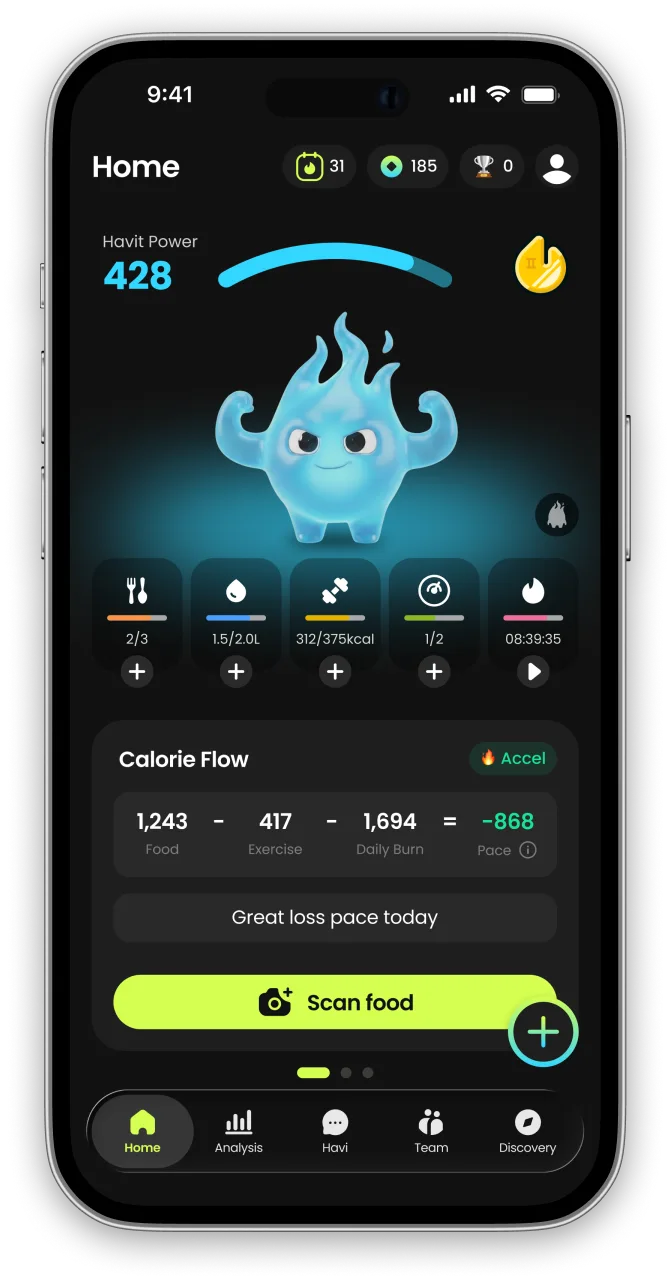
What is Havit?
Havit is an AI health companion for weight loss that protects muscle.
Unlike calorie-only trackers, Havit connects AI body-composition estimates, nutrition, hydration, sleep, steps, cycle, mood, and GLP-1 medication in one daily routine — so progress is measured by body composition, not just the number on the scale. Daily missions turn established behavior-change techniques into small repeatable actions, drawing on expertise from professionals formerly at Juvis Diet, one of Korea’s leading metabolic clinics.
In Havit’s own analysis of 1,090 GLP-1 users, people who logged consistently built stronger habits than the general user base. Read the GLP-1 Habit Report
Havit works with or without GLP-1 medication. It is a wellness app, not a medical device; body-composition results are estimates.

Continue in the App
Personalized wellness with your own data


References
- Sarcopenia screening and intervention during obesity pharmacotherapy: A consensus statement — Age and Ageing, Volume 54, Issue 2, February 2025
- Body composition changes and functional assessment outcomes in adults receiving GLP-1 receptor agonists for weight management — JAMA Network Open, 2024;7(8):e2428156
- European Working Group on Sarcopenia in Older People revised criteria (EWGSOP2): Updated diagnostic approach — Age and Ageing, Volume 48, Issue 1, 2019
- Protein requirements during weight loss in older adults: Systematic review and meta-analysis — Clinical Nutrition, Volume 43, Issue 4, April 2024
- Resistance training for preservation of lean mass during pharmacological weight loss: Randomized controlled trial — Obesity, Volume 32, Issue 3, March 2024


