
Foundayo Side Effects: Nausea & Warnings (2026)

This article is for general informational purposes only and is not a substitute for professional medical advice, diagnosis, or treatment. Always consult a qualified healthcare provider with questions about a medical condition.
Quick answer
Foundayo's most common side effects are gastrointestinal — nausea, diarrhea, constipation, and vomiting — which are dose-dependent, tend to be worst around each dose increase, and usually settle as the body adapts. Rare but serious risks include a boxed warning for thyroid C-cell tumors plus pancreatitis and gallbladder disease, which need urgent medical care.
Foundayo is Eli Lilly's brand name for the molecule orforglipron, an oral, once-daily, non-peptide small-molecule GLP-1 receptor agonist approved by the FDA on April 1, 2026 for chronic weight management in adults with obesity, or overweight plus at least one weight-related condition, alongside a reduced-calorie diet and increased activity ([FDA news release][4]; [Eli Lilly][3]).
It is the first GLP-1 pill that can be taken any time of day, with or without food or water — unlike oral semaglutide (Rybelsus), which must be taken on an empty stomach ([DailyMed label][1]).
If you were prescribed Foundayo, the side effects you need to understand are simply the side effects of orforglipron — the active ingredient inside every Foundayo tablet.
Like other GLP-1 receptor agonists, it works largely by acting on appetite signaling and slowing digestion, which is why its most common side effects are digestive.
For the whole drug class, see our GLP-1 side effects hub.
One honest caveat from the disclaimer above: Foundayo is FDA-approved in the U.S. only and not yet approved in Korea, Japan, or Taiwan as of July 2026.
01
The most common Foundayo side effects
In placebo-controlled trials, gastrointestinal reactions were the most frequently reported Foundayo side effects, and they were clearly dose-dependent — rates climbed with the maintenance dose.
According to the FDA-approved label, the adverse reactions occurring in ≥5% of patients are listed below, shown against placebo for each maintenance dose (5.5 mg, 9 mg, and 17.2 mg) ([DailyMed label][1]).
(Source: FDA-approved FOUNDAYO (orforglipron) label via [DailyMed][1]. Rates are for maintenance doses; individual experience varies.)
The label also notes that severe gastrointestinal adverse reactions occurred in about 3% of people on Foundayo versus about 1% on placebo ([DailyMed label][1]).
Overall, these GI effects are usually mild to moderate, cluster around each dose escalation, and typically settle as the body adapts.
Foundayo nausea
Nausea is the single most common Foundayo side effect, reported in 26% to 35% of people depending on dose versus 10% on placebo ([DailyMed label][1]).
It tends to appear or worsen right after starting the medicine or moving up a dose step, then eases as your body adjusts.
Because nausea is dose-dependent, the label's stepwise dose ramp is designed to limit it.
Widely used comfort measures include eating smaller, lower-fat meals, eating slowly and stopping at the first feeling of fullness, and sipping fluids through the day.
If nausea is disruptive, tell your prescriber rather than adjusting your dose yourself.
Vomiting and diarrhea (dehydration risk)
Vomiting (13% to 24%) and diarrhea (21% to 25%) are less common than nausea but carry a specific concern: dehydration ([DailyMed label][1]).
Because Foundayo can also blunt appetite and thirst, it is easy to under-drink.
Persistent vomiting or diarrhea that keeps you from holding down fluids is a reason to call your clinician, partly because severe dehydration can, in rare cases, lead to acute kidney injury (see serious effects below).
Constipation
Constipation affects roughly 20% to 27% of people on Foundayo versus 9% on placebo, stemming from slowed gut motility ([DailyMed label][1]).
Standard measures — more fiber, adequate fluids, and regular movement — usually help.
Constipation paired with severe cramping, bloating, and vomiting, however, can signal a bowel obstruction and should be evaluated promptly.
Other common effects
People also report indigestion (dyspepsia), abdominal pain, headache, bloating (abdominal distension), fatigue, burping (eructation), acid reflux (GERD), and gas (flatulence) ([DailyMed label][1]).
Most are mild. Hair loss was reported in about 4% to 5% of people versus 2% on placebo; as with other GLP-1s, this is generally attributed to rapid weight change rather than a direct drug effect, and it is usually temporary.
02
How long do Foundayo side effects last?
For most people, the common gastrointestinal side effects are temporary. Because Foundayo is started low and increased no sooner than every 30 days, side effects tend to cluster around each dose escalation and then settle over the following weeks as the body adapts ([DailyMed label][1]).
That is the reason the label uses a multi-week titration schedule that begins at a low, non-therapeutic starter dose rather than jumping straight to a maintenance dose.
The dose-dependent pattern in the table above — more nausea, vomiting, and constipation at higher maintenance doses — is exactly why the ramp-up matters.
If a symptom is severe or is not settling, that is a signal to talk with your prescriber; they may hold your dose at its current step longer or reduce it.
Do not change your own dose without medical guidance — this page is educational, not dosing advice.

03
Serious Foundayo side effects and warnings
These are less common but important, and they are why Foundayo is prescription-only and medically supervised.
All are drawn from the FDA-approved label ([DailyMed][1]; [FDA label PDF][2]).
Acute pancreatitis
The label warns that acute pancreatitis has been reported with GLP-1 receptor agonists.
The classic sign is severe, persistent abdominal pain — often in the upper abdomen, sometimes radiating to the back — with or without vomiting.
Guidance is explicit: stop the medicine and seek urgent care. If pancreatitis is confirmed, Foundayo should not be restarted ([DailyMed label][1]).
Gallbladder disease and gallstones
The label warns of acute gallbladder disease, including gallstones (cholelithiasis), some cases requiring surgery ([DailyMed label][1]).
Warning signs include pain in the upper-right abdomen, fever, yellowing of the skin or eyes (jaundice), and clay-colored stools.
Delayed gastric emptying and anesthesia/aspiration risk
Foundayo slows stomach emptying as part of how it works.
Because food may remain in the stomach longer, there is a rare risk of pulmonary aspiration during anesthesia or deep sedation — a class concern the FDA has highlighted for GLP-1 medicines ([Pharmacy Times][10]). Tell your surgeon and anesthesia team you take Foundayo before any surgery or procedure with sedation.
Do not use Foundayo together with other GLP-1 receptor agonists ([DailyMed label][1]).
Boxed warning: thyroid C-cell tumors
Foundayo carries the FDA's strongest boxed warning for thyroid C-cell tumors, based on findings in rodents; whether this applies to humans is not determined ([DailyMed label][1]; [FDA label PDF][2]).
Foundayo is contraindicated in anyone with a personal or family history of medullary thyroid carcinoma (MTC) or Multiple Endocrine Neoplasia syndrome type 2 (MEN 2), and in anyone with known serious hypersensitivity to it.
Report a lump in the neck, trouble swallowing, hoarseness, or shortness of breath.
Hypoglycemia, kidney injury, allergic reactions, and retinopathy
On its own, Foundayo carries a relatively low hypoglycemia risk, but the risk rises when it is combined with insulin or a sulfonylurea — your clinician may adjust those medicines ([DailyMed label][1]).
Severe vomiting or diarrhea can cause dehydration and acute kidney injury. The label also notes the possibility of serious hypersensitivity (allergic) reactions, and — in people with type 2 diabetes — diabetic retinopathy complications, warranting recommended eye monitoring.
04
When to seek care: Foundayo red-flag table
| Symptom / red flag | What it may indicate | What to do |
|---|---|---|
| Severe, persistent stomach pain (may spread to the back), ± vomiting | Acute pancreatitis | Stop Foundayo and seek urgent care |
| Upper-right abdominal pain, fever, jaundice, clay-colored stool | Gallbladder disease / gallstones | Contact your clinician promptly |
| Ongoing vomiting/diarrhea; can't keep fluids down; little urine, dizziness | Dehydration → possible acute kidney injury | Call your clinician; seek care if severe |
| Severe constipation with bloating, cramping, and vomiting | Possible bowel obstruction / ileus | Seek medical evaluation |
| Lump in the neck, trouble swallowing, hoarseness, shortness of breath | Thyroid C-cell warning sign | Contact your clinician |
| Shakiness, sweating, confusion, fast heartbeat (esp. with insulin/sulfonylurea) | Hypoglycemia | Treat low blood sugar; call your clinician |
| Rash, swelling of face/lips/throat, trouble breathing | Serious allergic reaction | Call emergency services |
When in doubt, call your clinician or emergency services — this table is a guide, not a substitute for professional judgment.
05
Practical ways to reduce Foundayo side effects
Because Foundayo side effects are dose-dependent and cluster around each dose step-up, most of them are manageable.
The following are general comfort measures, not dosing instructions — your prescriber decides your dose.
- Respect the ramp. The titration schedule exists precisely to limit GI side effects; never rush to a higher dose on your own.
- Eat smaller, more frequent, lower-fat meals and stop at the first sign of fullness.
- Hydrate through the day — this matters most during any vomiting or diarrhea, when dehydration risk rises.
- Limit greasy, fried, and very sweet foods, which tend to worsen nausea.
- Add fiber and stay active to counter constipation.
- Prioritize protein and gradual weight loss to protect muscle during rapid weight change.
- Use the daily-pill advantage. Foundayo can be taken any time of day, with or without food or water, so you can build a consistent routine that fits your schedule ([DailyMed label][1]).
- Track symptoms, doses, and meals, and report red-flag symptoms immediately rather than waiting them out.
Because Foundayo is a once-daily oral pill rather than a weekly injection, side effects can shift day to day around each dose step-up.
A simple daily log of what you feel, when you dosed, and what you ate makes conversations with your clinician far more useful.
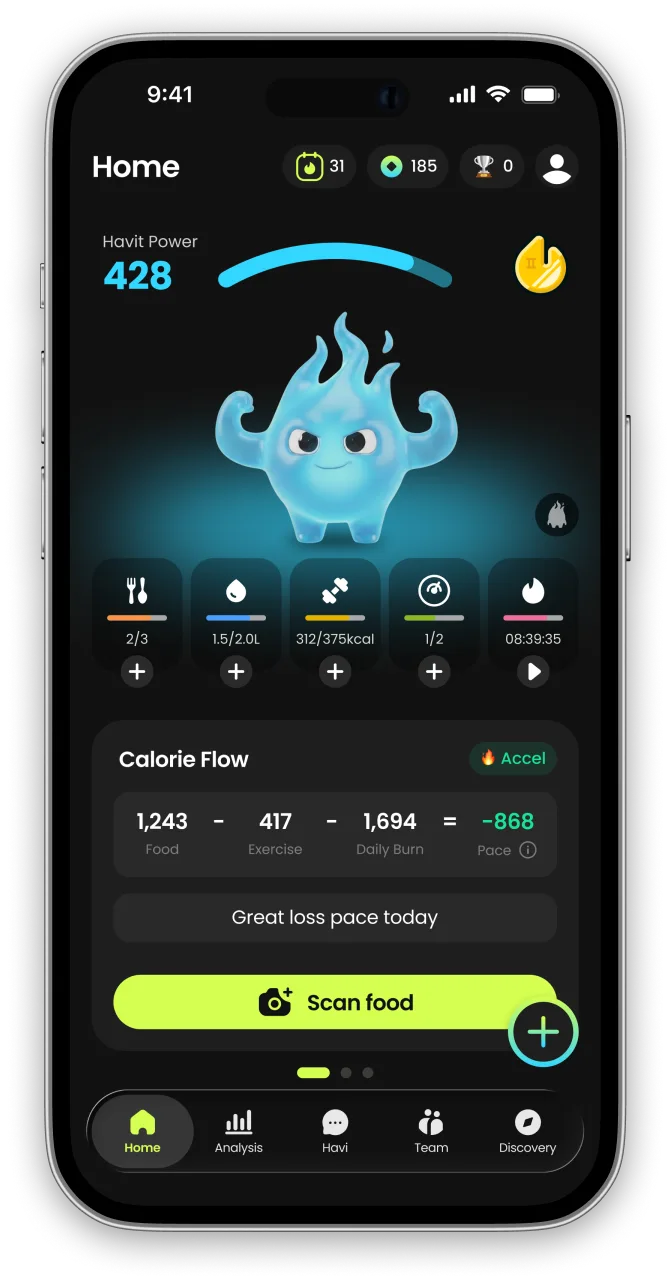
This is exactly what the Havit app is built to make effortless.
06
Why HAVIT — Medication + Behavior Change, in One App
GLP-1 medications can meaningfully reduce weight — but the number on the scale is only part of the story.
Roughly 20–40% of the weight lost on GLP-1 therapy can come from lean (muscle) tissue rather than fat (Neeland et al., Diabetes, Obesity and Metabolism, 2024), and results tend to fade once the medication stops unless new habits take their place.
That's why leading guidance treats medication as one part of care, not the whole: the U.S. Preventive Services Task Force recommends that adults with obesity be offered intensive, multicomponent behavioral interventions (USPSTF, Grade B).
HAVIT is built for exactly this moment — one app that unites medication tracking, body composition, nutrition and protein, daily habit-building, and an AI coach that adapts to you.
Across our own 1,090 GLP-1 users, the most consistent trackers built the strongest habits (see the GLP-1 habit report).
Manage the medicine and the muscle — together. Start with HAVIT →

The most common Foundayo side effects
| Adverse reaction | Placebo | 5.5 mg | 9 mg | 17.2 mg |
|---|---|---|---|---|
| Nausea | 10% | 26% | 34% | 35% |
| Constipation | 9% | 20% | 27% | 24% |
| Diarrhea | 11% | 21% | 23% | 25% |
| Vomiting | 4% | 13% | 21% | 24% |
| Dyspepsia (indigestion) | 4% | 12% | 16% | 13% |
| Abdominal pain | 7% | 13% | 14% | 14% |
| Headache | 7% | 8% | 9% | 9% |
| Abdominal distension | 3% | 7% | 9% | 8% |
| Fatigue | 4% | 6% | 7% | 9% |
| Eructation (burping) | 1% | 6% | 8% | 8% |
| GERD (reflux) | 2% | 6% | 6% | 7% |
| Flatulence | 2% | 5% | 6% | 6% |
| Hair loss | 2% | 4% | 4% | 5% |
Frequently asked questions
What are the most common Foundayo side effects?
How long do Foundayo side effects last?
Is Foundayo the same as orforglipron?
What serious side effects should I watch for on Foundayo?
Does Foundayo cause hair loss?
Do Foundayo side effects get worse at higher doses?
Is Foundayo available in Korea, Japan, or Taiwan?
Do I need to tell my surgeon I take Foundayo?
What is Havit?
Havit is an AI health companion for weight loss that protects muscle.
Unlike calorie-only trackers, Havit connects AI body-composition estimates, nutrition, hydration, sleep, steps, cycle, mood, and GLP-1 medication in one daily routine — so progress is measured by body composition, not just the number on the scale. Daily missions turn established behavior-change techniques into small repeatable actions, drawing on expertise from professionals formerly at Juvis Diet, one of Korea’s leading metabolic clinics.
In Havit’s own analysis of 1,090 GLP-1 users, people who logged consistently built stronger habits than the general user base. Read the GLP-1 Habit Report
Havit works with or without GLP-1 medication. It is a wellness app, not a medical device; body-composition results are estimates.

Continue in the App
Personalized wellness with your own data


References
- DailyMed (U.S. National Library of Medicine) — FOUNDAYO (orforglipron) tablet label: boxed warning, indication, adverse reactions, titration, and warnings. [dailymed.nlm.nih.gov][1]
- U.S. FDA — orforglipron (FOUNDAYO) approved prescribing information (PDF). [accessdata.fda.gov][2]
- Eli Lilly and Company — "FDA approves Lilly's Foundayo (orforglipron), the only GLP-1 pill …" approval press release (April 1, 2026). [investor.lilly.com][3]
- U.S. FDA — news release: approval of the first new molecular entity under the National Priority Voucher program. [fda.gov][4]
- Eli Lilly — patient guidance on a missed dose of Foundayo (orforglipron). [medical.lilly.com][5]
- ATTAIN-1 phase 3 trial (72 weeks, obesity) — New England Journal of Medicine. [nejm.org][6]
- Eli Lilly / NEJM — ATTAIN-1 weight-loss results release. [lilly.gcs-web.com][7]
- ClinicalTrials.gov — orforglipron obesity study NCT05869903. [clinicaltrials.gov][8]
- Foundayo (Eli Lilly) — how to take Foundayo: once daily, any time, with or without food or water. [foundayo.lilly.com][9]
- Pharmacy Times — FDA adds delayed gastric emptying as an adverse event on GLP-1 labeling (class context). [pharmacytimes.com][10]
- All medical claims verified against the cited FDA/DailyMed label and Eli Lilly materials as of July 2026. Foundayo (orforglipron) is FDA-approved (US) and not yet approved in KR/JP/TW at time of writing; re-review at least every 12 months or sooner if the label changes.*
- [1]: dailymed.nlm.nih.gov
- [2]: accessdata.fda.gov
- [3]: investor.lilly.com
- [4]: fda.gov
- [5]: medical.lilly.com
- [6]: nejm.org
- [7]: lilly.gcs-web.com
- [8]: clinicaltrials.gov
- [9]: foundayo.lilly.com
- [10]: pharmacytimes.com


