
GLP-1 Postpartum: Breastfeeding Safety & Weight (2026)

This article is for general informational purposes only and is not a substitute for professional medical advice, diagnosis, or treatment. Always consult a qualified healthcare provider with questions about a medical condition.
Quick answer
GLP-1s are not recommended while breastfeeding. The FDA Wegovy (semaglutide) label states breastfeeding is not recommended during treatment, and clinical guidance advises avoiding tirzepatide while nursing. GLP-1s must also be stopped in pregnancy. Any use for postpartum weight loss is an individual decision to make with your OB-GYN — usually only once you are no longer breastfeeding.
The postpartum year is real, and so is postpartum weight retention: on average women retain a modest amount of pregnancy weight at one year, but the range is wide — some carry very little, some carry a lot (postpartum weight-loss review, Current Ob/Gyn Reports 2024).
With GLP-1s everywhere, it is natural to wonder whether one could help.
This page answers that safety first, because the postpartum period overlaps two situations where GLP-1s are contraindicated or discouraged — breastfeeding and any chance of pregnancy.
This is education, not a prescription, and the safety facts below are conservative by design.
The single most important message: do not start a GLP-1 postpartum without your OB-GYN, and not at all while you are breastfeeding.
01
Breastfeeding and GLP-1s: the safety facts
This is the section that matters most. Read it before anything else.
The FDA Wegovy label is explicit: "Breastfeeding is not recommended during treatment with WEGOVY." For tirzepatide, the label does not carry the same blanket statement, but there are no data on effects on the breastfed infant or on milk production, and reputable resources such as MotherToBaby note that most clinical guidance recommends avoiding GLP-1s while nursing.
There is some emerging reassurance in the science — for injectable semaglutide, small studies detected little to no drug in human milk (LactMed, semaglutide) — but emerging low-transfer data is not an approval to use it.
Regulators and clinicians remain cautious, and the deciding voice is your OB-GYN, not a blog and not a social feed.
02
Timing after pregnancy: when a GLP-1 might be considered
Timing is a medical decision, but the general logic runs like this:
- 1
During pregnancy
never — stop the medication as soon as pregnancy is recognized.
- 2
While breastfeeding
not recommended — this is the core message of this page.
- 3
After weaning
only then does a GLP-1 become a conversation, and only if you meet the approved diabetes or weight-management criteria and your clinician agrees.
- 4
Before trying for another baby
semaglutide should be stopped at least 2 months in advance because of its long half-life (FDA Wegovy label).
Because breastfeeding recommendations vary and every recovery is different, your OB-GYN's judgment overrides any general timeline here. There is no fixed "X weeks postpartum" number that applies to everyone.
03
Safe, evidence-based postpartum weight loss (without a GLP-1)
For most new parents — especially while breastfeeding — postpartum weight is best approached without medication. The evidence-backed basics:
- 1
Don't crash-diet while nursing.
Lactation itself adds an energy cost, and severe restriction can affect you and, potentially, milk supply.
- 2
Eat enough, with protein at every meal to protect muscle and support recovery.
- 3
Return to activity gradually, cleared by your provider — ACOG supports building toward regular cardio plus strength work postpartum.
- 4
Prioritize sleep where possible
sleep loss worsens appetite hormones.
- 5
Be patient with the timeline.
Weight retention at one year varies enormously; slow and steady protects you and your baby.
If a GLP-1 later becomes appropriate (after weaning, with your clinician), the general drug landscape is covered in our GLP-1 side effects guide.
Women whose weight struggles are tied to hormones may also relate to GLP-1 for PCOS and, later in life, GLP-1 for menopause.
04
What to track postpartum
While a GLP-1 is off the table during breastfeeding, tracking still helps you recover safely and hand your OB-GYN real data:
| What to track | Why it matters postpartum | How often |
|---|---|---|
| Weight trend (not daily swings) | See the real trajectory, not water shifts | Weekly |
| Protein & overall intake | Fuels recovery and milk supply | Daily |
| Activity, once cleared | Rebuilds strength gradually | As able |
| Sleep | Sleep loss drives appetite and mood | Ongoing |
| Mood | Screen your own wellbeing; flag concerns to your provider | Ongoing |
| Contraception plan | GLP-1s are unsafe in pregnancy — plan ahead | With clinician |
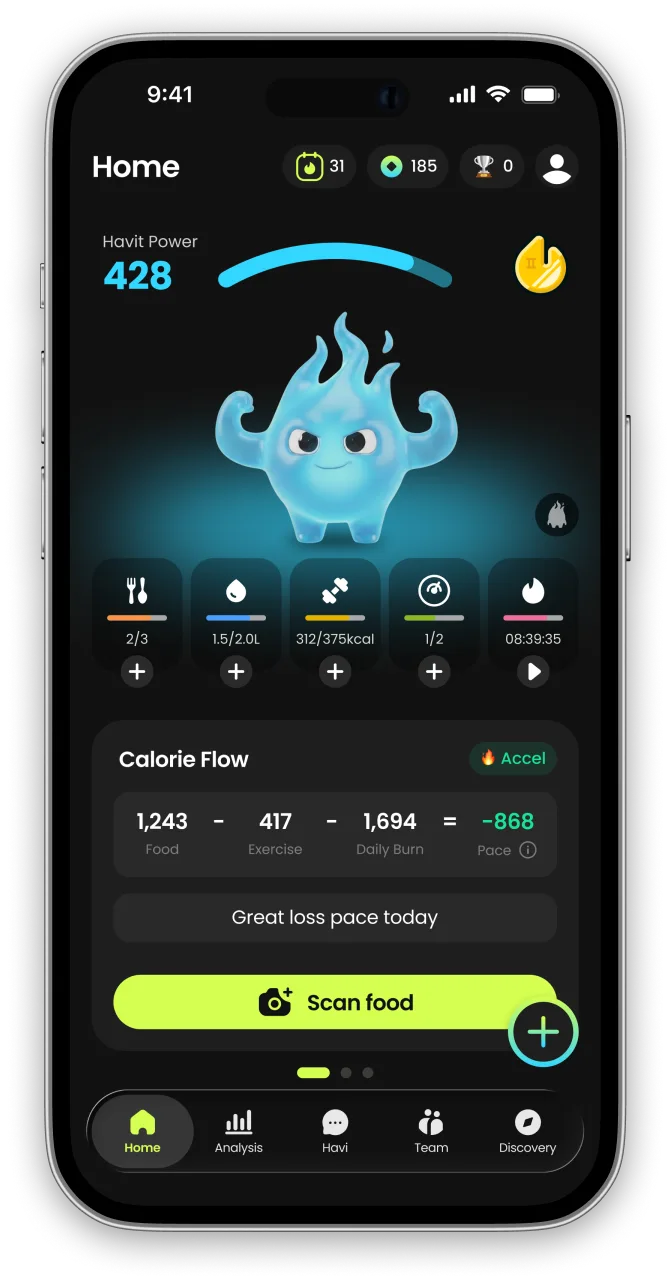
Logging weight, protein, activity, and sleep in one place is exactly what the Havit app makes effortless — so you can recover at a healthy pace and bring real data to your postpartum check-ups. (Havit is a tracking companion, not a medical device — always defer to your OB-GYN.)
05
Why HAVIT — Medication + Behavior Change, in One App
GLP-1 medications can meaningfully reduce weight — but the number on the scale is only part of the story.
Roughly 20–40% of the weight lost on GLP-1 therapy can come from lean (muscle) tissue rather than fat (Neeland et al., Diabetes, Obesity and Metabolism, 2024), and results tend to fade once the medication stops unless new habits take their place.
That's why leading guidance treats medication as one part of care, not the whole: the U.S. Preventive Services Task Force recommends that adults with obesity be offered intensive, multicomponent behavioral interventions (USPSTF, Grade B).
HAVIT is built for exactly this moment — one app that unites medication tracking, body composition, nutrition and protein, daily habit-building, and an AI coach that adapts to you.
Across our own 1,090 GLP-1 users, the most consistent trackers built the strongest habits (see the GLP-1 habit report).
Manage the medicine and the muscle — together. Start with HAVIT →
Breastfeeding and GLP-1s: the safety facts
| Situation | GLP-1 guidance | Source |
|---|---|---|
| Breastfeeding — semaglutide (Ozempic, Wegovy) | Not recommended during treatment | FDA Wegovy label |
| Breastfeeding — tirzepatide (Mounjaro, Zepbound) | No infant/milk-supply data; clinical guidance advises avoiding | MotherToBaby / LactMed |
| Pregnancy (any GLP-1) | Not for use; discontinue when pregnancy is recognized | FDA Wegovy label |
| Before a planned pregnancy (semaglutide) | Stop ≥2 months before, due to long half-life | FDA Wegovy label |
Frequently asked questions
Can I take a GLP-1 while breastfeeding?
Is Ozempic or Wegovy safe while breastfeeding?
What about Mounjaro or Zepbound while nursing?
When can I start a GLP-1 after having a baby?
Is a GLP-1 approved for postpartum weight loss?
How should I lose postpartum weight instead?
I took a GLP-1 before I knew I was pregnant — what now?
How long before trying to conceive should I stop a GLP-1?
What is Havit?
Havit is an AI health companion for weight loss that protects muscle.
Unlike calorie-only trackers, Havit connects AI body-composition estimates, nutrition, hydration, sleep, steps, cycle, mood, and GLP-1 medication in one daily routine — so progress is measured by body composition, not just the number on the scale. Daily missions turn established behavior-change techniques into small repeatable actions, drawing on expertise from professionals formerly at Juvis Diet, one of Korea’s leading metabolic clinics.
In Havit’s own analysis of 1,090 GLP-1 users, people who logged consistently built stronger habits than the general user base. Read the GLP-1 Habit Report
Havit works with or without GLP-1 medication. It is a wellness app, not a medical device; body-composition results are estimates.
Continue in the App
Personalized wellness with your own data


References
- FDA — WEGOVY (semaglutide) Prescribing Information (Lactation: breastfeeding not recommended; Pregnancy: discontinue; stop ≥2 months before planned pregnancy). accessdata.fda.gov
- MotherToBaby — Tirzepatide (Mounjaro, Zepbound): breastfeeding and pregnancy fact sheet. NCBI Bookshelf. ncbi.nlm.nih.gov
- LactMed (Drugs and Lactation Database) — Semaglutide. NCBI Bookshelf. ncbi.nlm.nih.gov
- MotherToBaby — Semaglutide: pregnancy and breastfeeding fact sheet. NCBI Bookshelf. ncbi.nlm.nih.gov
- Navigating Postpartum Weight Loss: Evidence and Interventions. *Current Obstetrics and Gynecology Reports*, 2024. Springer. link.springer.com
- Pharmacologic Treatment of Obesity in Reproductive-Aged Women. PMC. pmc.ncbi.nlm.nih.gov
- ACOG — Exercise After Pregnancy (postpartum physical activity). acog.org
- Mayo Clinic — Losing weight after pregnancy. mayoclinic.org
- All medical claims above were verified against the cited FDA label, NCBI/LactMed/MotherToBaby resources, peer-reviewed sources, and major clinics as of mid-2026. Guidance on lactation and pregnancy is deliberately conservative — always defer to your OB-GYN.*


