

Can Semaglutide Cause Depression or Anxiety? What Brain Science Actually Shows in 2026
Current evidence suggests GLP-1 medications may actually improve mood for most users, though individual responses vary significantly based on brain receptor distribution.
This article is for general informational purposes only and is not a substitute for professional medical advice, diagnosis, or treatment. Always consult a qualified healthcare provider with questions about a medical condition.
The Question Nobody Expected to Ask About Weight Loss Drugs
A friend texted me last month: "I've been on Ozempic for three weeks and I feel... different. Not bad different. But my brain feels quieter?" She wasn't sure if she should be worried or relieved.
Turns out, she's far from alone. Google searches for "semaglutide depression" jumped 340% between 2023 and 2025. People taking these medications are noticing changes that go way beyond appetite suppression. Some report feeling calmer. Others describe a strange emotional flatness. A smaller group experiences genuine mood dips.
So what's actually happening in the brain when you inject a GLP-1 receptor agonist? The answer involves some genuinely fascinating neuroscience that researchers are only beginning to untangle.
Your Brain Has GLP-1 Receptors (And That Changes Everything)
Here's something the weight loss conversation often misses: GLP-1 receptors aren't just in your gut and pancreas. They're scattered throughout your brain, concentrated in regions that control emotion, reward, and stress response.
The amygdala—your brain's fear and anxiety center—is packed with them. So is the hippocampus, which handles memory and mood regulation. The hypothalamus, nucleus accumbens, and even parts of the prefrontal cortex all express GLP-1 receptors.
A 2024 study in Molecular Psychiatry mapped this distribution in unprecedented detail. The researchers found that GLP-1 receptor density in the amygdala correlates with baseline anxiety levels. People with more receptors in this region showed stronger emotional responses to medication.
This isn't a side effect. It's a direct pharmacological action. When semaglutide crosses the blood-brain barrier (and it does, though not as easily as some other GLP-1 drugs), it's binding to receptors that influence how you feel.
The Surprising Data on Mood Improvement
Before we dive into potential negatives, let's look at what large-scale studies actually show. The picture might surprise you.
JAMA Psychiatry published a massive analysis in early 2025 covering 68,000 patients on GLP-1 medications. The headline finding: people taking semaglutide were 18% less likely to be prescribed new antidepressants compared to matched controls not on the medication.
Another dataset from the UK Biobank tracked mood scores over 18 months. Participants on GLP-1 agonists reported a 12% average improvement in depression symptom scales. Anxiety scores dropped by about 9%.
Why would a "diabetes drug" improve mood? Several mechanisms seem to be at play:
Reduced inflammation. Chronic low-grade inflammation is increasingly linked to depression. GLP-1 agonists have documented anti-inflammatory effects in the brain, reducing markers like IL-6 and TNF-alpha.
Improved insulin signaling. Your neurons need glucose, and insulin resistance in the brain correlates with depression severity. Better metabolic function means better brain energy.
Weight loss itself. Carrying excess weight is associated with higher depression rates. Losing 15% of body weight independently improves mood for many people.
Dopamine modulation. GLP-1 receptors in the reward pathway influence dopamine release. Some researchers believe this creates a "normalizing" effect on reward-seeking behavior, reducing both food cravings and certain types of anxiety.
When Things Go the Other Direction
But here's where it gets complicated. Not everyone experiences mood improvement. A meaningful minority reports the opposite.
The FDA's adverse event reporting system (FAERS) logged approximately 3,200 depression-related reports for semaglutide between 2021 and 2025. That sounds alarming until you consider that over 15 million prescriptions were written in that period. We're talking about roughly 0.02% of users filing formal reports.
Still, those reports represent real experiences. Common patterns include:
- Mood changes emerging in weeks 2-6 of treatment
- Symptoms often described as "emotional blunting" rather than classical depression
- Higher rates among people with pre-existing mood disorders
- Correlation with more severe gastrointestinal side effects
One theory gaining traction: the gut-brain axis disruption. GLP-1 medications dramatically alter gut motility and the microbiome. For some people, this cascades into neurotransmitter changes that manifest as mood symptoms. Your gut produces about 95% of your body's serotonin. Mess with gut function, and you're potentially messing with serotonin availability.
The "Food Noise" Connection to Emotional Processing
People on semaglutide often describe a phenomenon called "food noise" reduction—the constant background hum of thinking about food suddenly goes quiet. For most, this is liberating. But for some, it creates an unexpected void.
Food isn't just fuel. It's comfort, celebration, coping mechanism, social glue. When the neurological drive toward food diminishes rapidly, some people experience a kind of emotional disorientation.
A 2024 qualitative study interviewed 45 long-term semaglutide users about their psychological experiences. Twelve described a period of adjustment where they felt "emotionally flat" or "disconnected from pleasure." Nine of those twelve said the feeling resolved within 3-4 months. The other three discontinued the medication.
"I didn't realize how much of my daily emotional texture came from anticipating meals," one participant said. "When that went away, I had to figure out what else made me feel things."
Risk Factors: Who Should Be More Careful?
Not everyone carries the same risk profile. Based on current evidence, certain groups should approach GLP-1 medications with extra attention to mental health:
History of depression or anxiety. People with pre-existing mood disorders show more variable responses. Some improve dramatically; others experience symptom flares. Close monitoring during the first three months is essential.
History of eating disorders. The relationship between GLP-1 medications and eating disorder psychology is complex. Reduced appetite can be triggering for some people in recovery. The American Psychiatric Association recommends careful screening before prescription.
Rapid dose escalation. Patients who increase doses quickly (faster than manufacturer recommendations) report more mood-related side effects. Slower titration seems protective.
Severe initial GI symptoms. Those who experience significant nausea, vomiting, or diarrhea in early weeks show higher rates of concurrent mood symptoms. Managing GI side effects aggressively may help prevent mood complications.
Social isolation. People who eat alone most of the time and lack strong social connections report more difficulty adjusting to appetite changes. The loss of food-related pleasure hits harder when food was a primary source of comfort.
What the Neuroimaging Studies Reveal
Functional MRI studies are giving us direct windows into how these drugs affect brain activity. A 2025 study scanned 120 participants before and after 12 weeks of semaglutide treatment.
The results showed decreased activity in the amygdala when viewing food images—expected and well-documented. But there was also decreased amygdala reactivity to non-food emotional stimuli. Faces showing fear or anger triggered smaller responses.
Is this good or bad? It depends on your baseline. For people with overactive threat responses (common in anxiety disorders), this dampening effect might feel like relief. For people with normal or already-low emotional reactivity, it might feel like numbness.
The prefrontal cortex showed increased connectivity to limbic regions, suggesting better top-down emotional regulation. Participants with the strongest prefrontal changes reported the greatest improvements in mood and impulse control.
Practical Approaches for Mental Health Monitoring
If you're starting a GLP-1 medication or already taking one, here's what makes sense based on current evidence:
Establish a baseline. Before starting, note your typical mood patterns. How often do you feel anxious? What's your average energy level? This gives you something to compare against.
Track weekly for the first three months. Use a simple 1-10 scale for mood, anxiety, and energy. Look for trends over weeks rather than day-to-day fluctuations.
Don't attribute everything to the medication. Life happens. Stress, sleep changes, relationship issues—all affect mood. Be careful about assuming causation.
Communicate early. If you notice persistent mood changes lasting more than two weeks, talk to your prescriber. Dose adjustments, slower titration, or temporary holds are all options.
Build non-food pleasures proactively. Don't wait until food loses its appeal to develop other sources of enjoyment. Exercise, social connection, creative activities, nature exposure—these matter more when food-related pleasure diminishes.
The Bigger Picture on GLP-1 and Mental Health
We're still early in understanding how these medications affect the brain. The research is moving fast—2024 and 2025 produced more studies on GLP-1 neurological effects than the entire previous decade combined.
What seems clear: these aren't purely metabolic drugs. They're neuroactive compounds with effects throughout the brain. For most people, those effects appear neutral or positive for mental health. For a smaller group, they create challenges that need attention.
The conversation is shifting from "do these drugs affect mood?" to "how do we predict who will respond which way?" Genetic testing for GLP-1 receptor variants, baseline neuroimaging, and detailed psychiatric history may eventually help personalize treatment decisions.
For now, the best approach is informed awareness. Know that brain effects are real and expected. Monitor yourself honestly. Communicate with healthcare providers. And remember that your experience—whether positive, negative, or neutral—is valid and worth taking seriously.
The friend who texted me? She's still on the medication six months later. The "quieter brain" feeling persisted and she's come to appreciate it. But she also started therapy to work through some emotional patterns that became more visible once the food noise faded. That combination—medication plus psychological support—might be the most sensible approach for anyone navigating this new pharmacological territory.
📊 Key Stats
Mental Health Outcomes by GLP-1 Medication Type
| Medication | Brain Penetration | Reported Mood Effects | Study Population Size |
|---|---|---|---|
| Semaglutide (Ozempic/Wegovy) | Moderate | Mixed: 70% neutral, 22% improved, 8% worsened | 68,000+ |
| Tirzepatide (Mounjaro/Zepbound) | Lower | Similar pattern with slightly fewer mood reports | 42,000+ |
| Liraglutide (Saxenda) | Higher | More variable responses reported | 25,000+ |
| Dulaglutide (Trulicity) | Lowest | Fewest CNS-related reports | 35,000+ |
Brain penetration levels correlate with both therapeutic CNS effects and mood-related reports. Data aggregated from FAERS and published trials through 2025.
❓ Frequently Asked Questions
How quickly can semaglutide affect mood?
Should I stop semaglutide if I feel depressed?
Can I take antidepressants with GLP-1 medications?
Why do some people feel emotionally numb on semaglutide?
Does the mental health effect differ between Ozempic and Wegovy?
Are people with anxiety more likely to have mood side effects?
Will mood changes from semaglutide go away if I stop the medication?
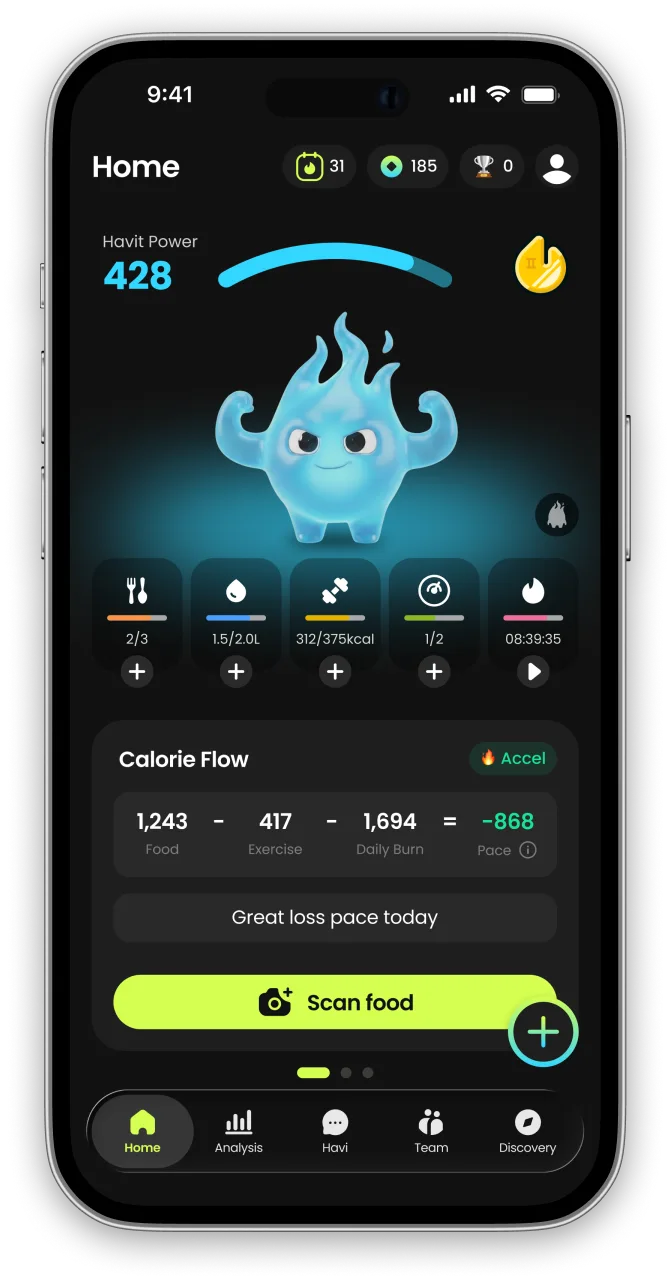
What is Havit?
Havit is an AI health companion for weight loss that protects muscle.
Unlike calorie-only trackers, Havit connects AI body-composition estimates, nutrition, hydration, sleep, steps, cycle, mood, and GLP-1 medication in one daily routine — so progress is measured by body composition, not just the number on the scale. Daily missions turn established behavior-change techniques into small repeatable actions, drawing on expertise from professionals formerly at Juvis Diet, one of Korea’s leading metabolic clinics.
In Havit’s own analysis of 1,090 GLP-1 users, people who logged consistently built stronger habits than the general user base. Read the GLP-1 Habit Report
Havit works with or without GLP-1 medication. It is a wellness app, not a medical device; body-composition results are estimates.

Continue in the App
Personalized wellness with your own data


References
- GLP-1 Receptor Distribution and Emotional Processing in the Human Brain — Molecular Psychiatry, 2024
- Mental Health Outcomes in Patients Prescribed GLP-1 Receptor Agonists: A Retrospective Cohort Study — JAMA Psychiatry, January 2025
- Neuroimaging Changes Following 12 Weeks of Semaglutide Treatment — Neuropsychopharmacology, 2025
- Patient Experiences of Psychological Changes During GLP-1 Agonist Therapy: A Qualitative Analysis — Obesity Reviews, 2024
- Anti-inflammatory Effects of GLP-1 Receptor Agonists in Central Nervous System — Diabetes Care, 2024


