
Tirzepatide Side Effects: Mounjaro & Zepbound (2026)

This article is for general informational purposes only and is not a substitute for professional medical advice, diagnosis, or treatment. Always consult a qualified healthcare provider with questions about a medical condition.
Quick answer
The most common tirzepatide side effects are gastrointestinal — nausea, diarrhea, vomiting, constipation, and abdominal pain — usually mild and worst during dose increases. Rare but serious risks include pancreatitis, gallbladder disease, and severe delayed stomach emptying, which need urgent medical care.
Tirzepatide is the active ingredient — the molecule — sold under two brand names by Eli Lilly: Mounjaro (approved for type 2 diabetes) and Zepbound (approved for chronic weight management and obstructive sleep apnea in obesity).
Unlike semaglutide, tirzepatide is a dual agonist: it activates two gut-hormone receptors, GIP and GLP-1, rather than GLP-1 alone.
Both brands are the same molecule, so they share the same side-effect profile — the differences are dose and indication. This page is the ingredient-level hub for tirzepatide.
For each brand's specifics, see our Mounjaro side effects and Zepbound side effects guides; for the whole drug class, see the GLP-1 side effects hub.
Like other incretin drugs, tirzepatide works largely by slowing how fast the stomach empties and acting on appetite centers in the brain — which is exactly why the most common side effects are digestive.
01
The most common tirzepatide side effects
In placebo-controlled trials, gastrointestinal reactions were the most frequently reported tirzepatide side effects, and they were clearly dose-related. Because the obesity trials (SURMOUNT) used higher doses than the diabetes trials (SURPASS), rates run higher at the top end — which is why you'll see a range.
According to the FDA-approved labels, the most common tirzepatide side effects (generally occurring in ≥5% of patients) fall in these ranges across doses:
(Sources: FDA Mounjaro and Zepbound prescribing information. Individual experience varies widely.)
A systematic review and meta-analysis of tirzepatide trials found nausea in 20.4% of patients (vs 10.5% of comparators), diarrhea in 16.2% (vs 8.6%), and vomiting in 9.1% (vs 4.9%) — a useful reminder that background rates exist too.
Crucially, most GI symptoms appear during dose escalation and tend to fade as the dose stabilizes.
Nausea
Nausea is the most common tirzepatide side effect. It typically peaks in the first days after a dose or a dose increase, then settles.
Practical strategies clinics recommend: eat smaller, more frequent meals, eat slowly and stop at the first feeling of fullness, favor bland, low-fat foods, and sip fluids between meals rather than with them.
Greasy, fried, and very sweet foods tend to make it worse. (Deep-dive: how to manage GLP-1 nausea.)
Diarrhea, vomiting, and constipation
Diarrhea and vomiting are less common than nausea but can cause dehydration, especially since tirzepatide blunts thirst and appetite.
Persistent vomiting or diarrhea that keeps you from holding down fluids is a reason to call your clinician.
Constipation comes from the same slowed motility — more fiber, fluids, and movement usually help — but constipation with severe cramping, bloating, and vomiting can signal a bowel obstruction and needs evaluation.
Other common effects
People also report burping, heartburn, gas, injection-site reactions (redness or itching), dizziness, and hair thinning. Hair thinning is generally attributed to rapid weight loss rather than a direct drug effect, and is usually temporary.
02
How long do tirzepatide side effects last?
For most people, the common GI side effects are temporary. Symptoms tend to start within days of a new dose, peak around weeks two to four, and ease by about weeks six to eight as tirzepatide levels stabilize.
Because side effects cluster around dose changes, a slow, gradual dose escalation is the single most effective way to limit them — which is why the labels build in a stepwise titration that starts at a low, non-therapeutic 2.5 mg dose.
If a side effect is still severe after several weeks, or you're losing weight faster than intended, that's a signal to talk with your prescriber.
They may hold your dose at its current step longer or reduce it. Do not adjust your own dose without medical guidance.

03
Dose-dependence and titration: why the ramp-up matters
Tirzepatide side effects are strongly dose-dependent — the same reason nausea runs higher at Zepbound's weight-loss doses than at lower diabetes doses.
This is why the prescribing information uses a stepwise titration (starting at 2.5 mg weekly for four weeks) rather than starting at a therapeutic dose.
The most reliable predictor of how you'll tolerate tirzepatide is how quickly the dose is increased, not personal "toughness." If a step is hard, prescribers can slow the ramp — a clinical decision, not a self-adjustment.
04
Serious tirzepatide side effects and warnings
These are less common but important, and they are why tirzepatide is prescription-only and medically supervised.
Pancreatitis
The tirzepatide labels warn that acute pancreatitis has occurred.
The classic sign is severe, persistent abdominal pain — often in the upper abdomen, sometimes radiating to the back — with or without vomiting.
Guidance is explicit: stop the medicine and seek care promptly. If pancreatitis is confirmed, tirzepatide should not be restarted.
Gallbladder problems and gallstones
The labels warn of acute gallbladder disease, including gallstones (cholelithiasis), some requiring surgery.
Warning signs include pain in the upper-right abdomen, fever, yellowing of the skin or eyes (jaundice), and clay-colored stools.
Delayed gastric emptying, gastroparesis, and aspiration risk
Tirzepatide slows stomach emptying by design, but in some people this becomes problematic.
Labeling notes it should be used with caution — and severe GI disease such as gastroparesis has not been studied.
A related concern is a rare risk of pulmonary aspiration during anesthesia, because food may remain in the stomach — so tell your care team you take tirzepatide before any surgery or procedure with sedation.
Boxed warning: thyroid C-cell tumors
Tirzepatide carries the FDA's strongest boxed warning for thyroid C-cell tumors, based on findings in rodents.
Whether this applies to humans is not known. Tirzepatide is contraindicated for anyone with a personal or family history of medullary thyroid carcinoma (MTC) or Multiple Endocrine Neoplasia syndrome type 2 (MEN 2). Report a lump in the neck, trouble swallowing, shortness of breath, or persistent hoarseness.
Hypoglycemia, kidney injury, and other risks
On its own tirzepatide carries a low hypoglycemia risk, but the risk rises sharply with insulin or a sulfonylurea — your clinician may adjust those.
Severe vomiting or diarrhea can lead to dehydration and acute kidney injury. Labels also flag hypersensitivity/allergic reactions, possible diabetic retinopathy complications in type 2 diabetes (keep recommended eye monitoring), and a note that tirzepatide may reduce the effectiveness of oral contraceptives around the first dose and each escalation — a barrier method or switch is advised.

05
When to seek care: tirzepatide red-flag table
| Symptom / red flag | What it may indicate | What to do |
|---|---|---|
| Severe, persistent stomach pain (may spread to the back), ± vomiting | Pancreatitis | Stop tirzepatide and seek urgent care |
| Upper-right abdominal pain, fever, jaundice, clay-colored stool | Gallbladder disease / gallstones | Contact your clinician promptly |
| Ongoing vomiting/diarrhea; can't keep fluids down; little urine, dizziness | Dehydration → possible acute kidney injury | Call your clinician; seek care if severe |
| Severe constipation with bloating, cramping, and vomiting | Possible bowel obstruction / ileus | Seek medical evaluation |
| Lump in the neck, trouble swallowing, hoarseness, shortness of breath | Thyroid warning sign | Contact your clinician |
| Shakiness, sweating, confusion, fast heartbeat (esp. with insulin/sulfonylurea) | Hypoglycemia | Treat low blood sugar; call your clinician |
| Rash, swelling of face/lips/throat, trouble breathing | Serious allergic reaction | Call emergency services |
When in doubt, call your clinician or emergency services — this table is a guide, not a substitute for professional judgment.
06
Tirzepatide vs semaglutide side effects: how they compare
Tirzepatide (dual GIP/GLP-1) and semaglutide (GLP-1 only) share the same broad GI side-effect profile, because both slow gastric emptying and curb appetite.
The question people ask is whether one is easier to tolerate.
| Tirzepatide (Mounjaro/Zepbound) | Semaglutide (Ozempic/Wegovy) | |
|---|---|---|
| Hormone target | GIP + GLP-1 (dual) | GLP-1 only |
| Most common effects | Nausea, diarrhea, vomiting, constipation | Nausea, vomiting, diarrhea, constipation |
| Avg. weight loss (top dose) | up to ~22.5% (SURMOUNT-1, 15 mg) | up to ~15% (STEP, Wegovy) |
| Boxed warning | Thyroid C-cell tumors | Thyroid C-cell tumors |
In the head-to-head SURMOUNT-5 trial, tirzepatide produced greater average weight loss than semaglutide (about 20% vs 14%).
Notably, GI side effects severe enough to stop treatment were reported slightly more often with semaglutide (5.6%) than tirzepatide (2.7%) — a reminder that "more weight loss" did not mean "worse tolerability" in that study.
Still, tolerability is individual and dose-driven. For the full decision framework, see our semaglutide vs tirzepatide comparison.
07
A safety note on compounded tirzepatide
Only the FDA-approved brands — Mounjaro and Zepbound — are quality-controlled by the manufacturer.
During the 2023–2024 shortage, "compounded" tirzepatide was widely sold; that landscape has changed. The FDA declared the tirzepatide shortage resolved, and enforcement discretion for mass-compounding ended in early 2025 — meaning routine compounding of copies of tirzepatide is generally no longer permitted. The FDA had received hundreds of adverse-event reports tied to compounded tirzepatide, many involving dosing errors from self-measured multi-dose vials, some requiring hospitalization.
Compounded versions are not FDA-reviewed for safety, effectiveness, or quality — discuss any non-brand source with a licensed clinician before use.
08
Practical ways to reduce tirzepatide side effects
- Go slow. Follow the titration schedule; never rush to a higher dose on your own.
- Eat smaller, more frequent, lower-fat meals and stop at the first sign of fullness.
- Hydrate — sip water through the day, especially with any vomiting or diarrhea.
- Limit greasy, fried, very sweet, and heavily processed foods, which worsen nausea.
- Add fiber and move your body to counter constipation.
- Prioritize protein and gradual weight loss to protect muscle and skin.
- Track your symptoms, doses, and meals so patterns are visible for your next visit.
- Report red-flag symptoms immediately — don't "wait it out."
Because tirzepatide side effects cluster around specific days and doses, a simple daily log of what you feel, when you dosed, and what you ate makes conversations with your clinician far more useful.
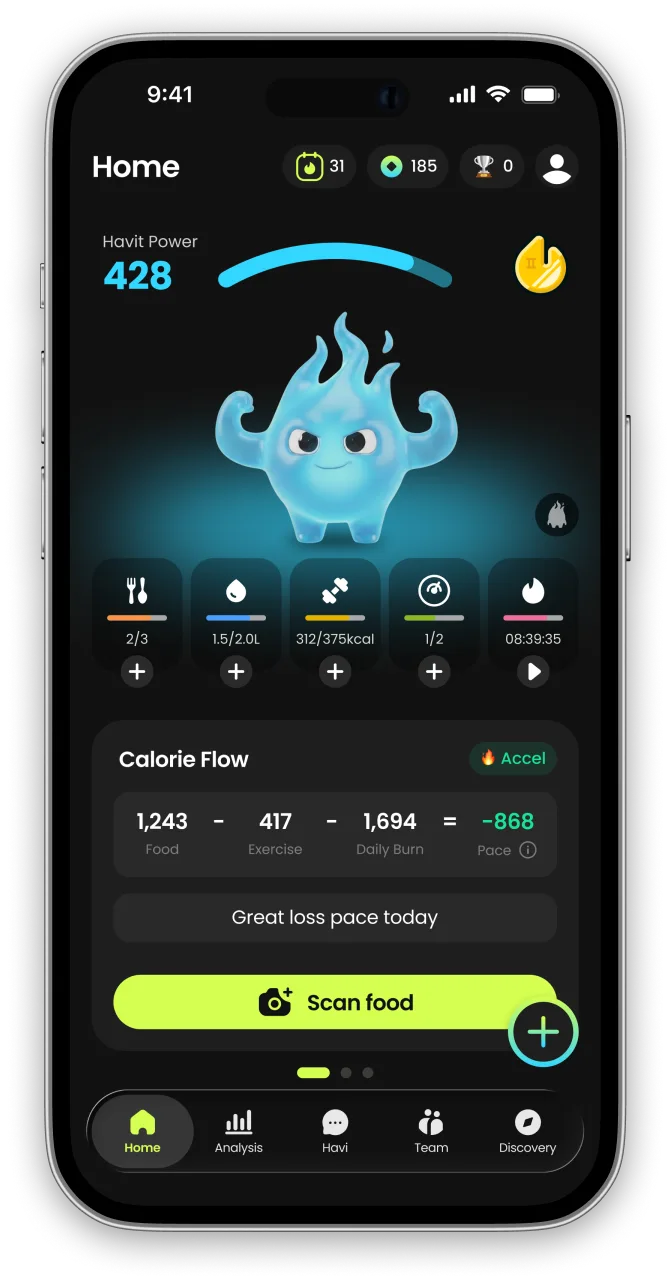
This is exactly what the Havit app is built to make effortless — log your dose, meals, and how you feel, and see your own patterns over time. (It's a tracking companion, not a medical device — always defer to your clinician.)

09
Why HAVIT — Medication + Behavior Change, in One App
GLP-1 medications can meaningfully reduce weight — but the number on the scale is only part of the story.
Roughly 20–40% of the weight lost on GLP-1 therapy can come from lean (muscle) tissue rather than fat (Neeland et al., Diabetes, Obesity and Metabolism, 2024), and results tend to fade once the medication stops unless new habits take their place.
That's why leading guidance treats medication as one part of care, not the whole: the U.S. Preventive Services Task Force recommends that adults with obesity be offered intensive, multicomponent behavioral interventions (USPSTF, Grade B).
HAVIT is built for exactly this moment — one app that unites medication tracking, body composition, nutrition and protein, daily habit-building, and an AI coach that adapts to you.
Across our own 1,090 GLP-1 users, the most consistent trackers built the strongest habits (see the GLP-1 habit report).
Manage the medicine and the muscle — together. Start with HAVIT →
The most common tirzepatide side effects
| Side effect | Reported frequency (tirzepatide) | Notes |
|---|---|---|
| Nausea | ~12–29% | The single most common effect; highest at obesity doses (Zepbound) |
| Diarrhea | ~12–23% | Common early and around dose increases |
| Vomiting | ~5–13% | Less common than nausea; watch for dehydration |
| Constipation | ~6–17% | From slowed gut motility |
| Abdominal pain | ~5–10% | If severe and persistent, see pancreatitis below |
| Dyspepsia (indigestion) | ~5–8% | Often with burping and reflux |
| Decreased appetite | Common | Expected/therapeutic, but can reduce fluid intake |
| Fatigue | ~4–7% | Usually mild |
Frequently asked questions
What are the most common tirzepatide side effects?
How long do tirzepatide side effects last?
Are Mounjaro and Zepbound side effects the same?
Does tirzepatide have fewer side effects than semaglutide?
What serious side effects should I watch for?
Why does tirzepatide cause nausea?
Is compounded tirzepatide safe?
Do I need to tell my surgeon I take tirzepatide?
What is Havit?
Havit is an AI health companion for weight loss that protects muscle.
Unlike calorie-only trackers, Havit connects AI body-composition estimates, nutrition, hydration, sleep, steps, cycle, mood, and GLP-1 medication in one daily routine — so progress is measured by body composition, not just the number on the scale. Daily missions turn established behavior-change techniques into small repeatable actions, drawing on expertise from professionals formerly at Juvis Diet, one of Korea’s leading metabolic clinics.
In Havit’s own analysis of 1,090 GLP-1 users, people who logged consistently built stronger habits than the general user base. Read the GLP-1 Habit Report
Havit works with or without GLP-1 medication. It is a wellness app, not a medical device; body-composition results are estimates.

Continue in the App
Personalized wellness with your own data


References
- FDA — ZEPBOUND (tirzepatide) Prescribing Information (label). accessdata.fda.gov
- FDA — MOUNJARO (tirzepatide) Prescribing Information (label). accessdata.fda.gov
- Jastreboff AM, et al. — Tirzepatide Once Weekly for the Treatment of Obesity (SURMOUNT-1). NEJM 2022. nejm.org
- Aronne LJ, et al. — Tirzepatide as Compared with Semaglutide for the Treatment of Obesity (SURMOUNT-5). NEJM 2025. pubmed.ncbi.nlm.nih.gov
- Mayo Clinic — Tirzepatide (subcutaneous route): description, side effects & dosage. mayoclinic.org
- Systematic review & meta-analysis — Tirzepatide-Induced Gastrointestinal Manifestations. PMC10614464. pmc.ncbi.nlm.nih.gov
- FDA — FDA Clarifies Policies for Compounders as National GLP-1 Supply Begins to Stabilize. fda.gov
- Pharmacy Times — FDA Affirms Tirzepatide Shortage Resolved, Sets Transition Period for Compounding. pharmacytimes.com
- All medical claims above were verified against the cited FDA tirzepatide labels, NEJM trial publications, Mayo Clinic, and FDA statements as of mid-2026. Labels are updated periodically — confirm current details with your clinician and the official prescribing information.*


