
Semaglutide Side Effects: Ozempic, Wegovy & Rybelsus (2026)

This article is for general informational purposes only and is not a substitute for professional medical advice, diagnosis, or treatment. Always consult a qualified healthcare provider with questions about a medical condition.
Quick answer
Semaglutide's most common side effects are gastrointestinal — nausea, diarrhea, vomiting, constipation, and abdominal pain — usually mild and worst during dose increases. Frequency depends on the product and dose: highest with Wegovy 2.4 mg (weight loss), lower with Ozempic and oral Rybelsus (diabetes). Rare serious risks include pancreatitis, gallbladder disease, and severe delayed stomach emptying.
Semaglutide is a once-weekly (injectable) or once-daily (oral) GLP-1 receptor agonist. It is the single active ingredient in three FDA-approved brands from Novo Nordisk: Ozempic (injectable, type 2 diabetes), Wegovy (injectable, chronic weight management and cardiovascular risk reduction), and Rybelsus (oral tablet, type 2 diabetes).
Because it is one molecule, all three share the same side-effect profile — what differs is the dose, the route, and the population, and those change how often each side effect shows up.
Semaglutide works largely by slowing how fast the stomach empties and by acting on appetite centers in the brain.
That mechanism is exactly why the most common side effects are digestive. This page is the ingredient-level hub for semaglutide the molecule.
For the whole drug class — including the dual-hormone drug tirzepatide — see our GLP-1 side effects hub.
For product-specific deep-dives, jump to Ozempic side effects or Wegovy side effects.
01
The most common semaglutide side effects
Across every semaglutide product, gastrointestinal reactions are the most frequently reported side effects and are clearly dose-related. Per the FDA labels, the reactions occurring in ≥5% of patients are nausea, vomiting, diarrhea, abdominal pain, constipation, and — at higher weight-loss doses — decreased appetite, headache, fatigue, and dyspepsia.
The single biggest driver of how often you experience them is the dose you reach, not the brand name.
Because dose and indication differ by product, it helps to see the labeled numbers side by side.
Wegovy 2.4 mg (weight management, injectable)
Wegovy titrates to the highest semaglutide dose (2.4 mg weekly), so it reports side effects most often. Per the FDA Wegovy label, adult incidence versus placebo (N=2,116 vs 1,261):
Overall, about 73% of Wegovy-treated adults reported a GI reaction (vs 47% on placebo), and roughly 6.8% discontinued for adverse reactions.
Ozempic (type 2 diabetes, injectable)
Ozempic uses lower diabetes doses (up to 2 mg), so GI rates are lower than Wegovy. Per the FDA Ozempic label, incidence at 0.5 mg / 1 mg versus placebo:
| Side effect | Ozempic 0.5 mg | Ozempic 1 mg | Placebo |
|---|---|---|---|
| Nausea | 15.8% | 20.3% | 6.1% |
| Diarrhea | 8.5% | 8.8% | 1.9% |
| Vomiting | 5.0% | 9.2% | 2.3% |
| Abdominal pain | 7.3% | 5.7% | 4.6% |
| Constipation | 5.0% | 3.1% | 1.5% |
GI-related discontinuation was 3.1–3.8% (vs 0.4% placebo).
Rybelsus (oral semaglutide, type 2 diabetes)
Rybelsus is the oral tablet. Overall GI adverse reactions rose with dose: placebo 21%, Rybelsus 7 mg 32%, Rybelsus 14 mg 41%. Per-symptom incidence (7 mg / 14 mg vs placebo):
| Side effect | Rybelsus 7 mg | Rybelsus 14 mg | Placebo |
|---|---|---|---|
| Nausea | 11% | 20% | 6% |
| Abdominal pain | 10% | 11% | 4% |
| Diarrhea | 9% | 10% | 4% |
| Decreased appetite | 6% | 9% | 1% |
| Vomiting | 6% | 8% | 3% |
| Constipation | 6% | 5% | 2% |
(Sources: FDA Ozempic, Wegovy, and Rybelsus prescribing information. Individual experience varies.)
Across all three, the label note is the same: most nausea, vomiting, and diarrhea happened during dose escalation — the weeks when the dose is being stepped up — and most GI symptoms were transient.
02
Injectable vs oral (Rybelsus): does the route change side effects?
The side-effect profile is the same whether you take semaglutide by injection or by mouth — same molecule, same GI-dominant risks. Two practical nuances matter:
- Rybelsus is dose-capped lower. The highest Rybelsus dose (14 mg daily) delivers less systemic semaglutide than the higher injectable doses, which is one reason its overall GI rate (41% at 14 mg) sits below Wegovy's. It is a diabetes drug, not an obesity dose.
- Rybelsus has strict absorption timing that affects tolerability. The label directs taking it on an empty stomach with a small sip of plain water, then waiting before eating, drinking, or other pills. Skipping that timing lowers absorption; it does not make side effects "safer." (Timing questions overlap with oral contraceptive absorption considerations — ask your prescriber.)
Bottom line: choosing oral over injectable changes convenience and peak dose, not the underlying safety warnings below.

03
How long do semaglutide side effects last?
For most people, the common GI side effects are temporary. Nausea and related symptoms most often ease within a few weeks of starting or of each dose increase, as the body adjusts.
Because side effects cluster around dose changes, a slow, gradual dose escalation is the single most effective way to limit them — which is why every semaglutide product uses a stepwise titration schedule rather than starting at the full dose.
Injectable semaglutide starts at a low, non-therapeutic 0.25 mg weekly and steps up at roughly four-week intervals; Wegovy reaches 2.4 mg around week 17, and Ozempic escalates through 0.25 → 0.5 → 1 → 2 mg.
Rybelsus starts at 3 mg (an initiation dose that isn't for glucose control), then 7 mg, then 14 mg.
If a step is poorly tolerated, prescribers can hold or slow the ramp — that is a clinician's decision, not a self-adjustment. Do not change your own dose without medical guidance.
04
Serious semaglutide side effects and warnings
These are less common but important, and they apply to every semaglutide product — Ozempic, Wegovy, and Rybelsus alike.
Pancreatitis
FDA labeling warns that acute pancreatitis — including rare fatal cases — has been observed with GLP-1 receptor agonists.
The classic sign is severe, persistent abdominal pain, often in the upper abdomen and sometimes radiating to the back, with or without vomiting.
Manufacturer guidance is explicit: stop the medicine and seek care promptly.
Gallbladder problems and gallstones
Semaglutide is associated with an increased occurrence of gallstones (cholelithiasis) and gallbladder inflammation (cholecystitis), some requiring surgery.
The FDA has noted the incidence of acute gallbladder disease was higher than placebo even after accounting for weight loss. Warning signs: pain in the upper-right abdomen, fever, jaundice, and clay-colored stools.
Delayed gastric emptying, severe GI reactions, and aspiration risk
Semaglutide slows stomach emptying by design; in some people this becomes problematic.
The FDA added delayed gastric emptying to semaglutide labeling and notes it is not recommended in severe gastroparesis; labels also list ileus (intestinal blockage). A related concern is a rare risk of pulmonary aspiration during general anesthesia or deep sedation, because food may remain in the stomach — so tell your care team you take semaglutide before any surgery or sedated procedure.
Boxed warning: thyroid C-cell tumors
Semaglutide carries the FDA's strongest boxed warning for thyroid C-cell tumors, based on rodent findings; whether this applies to humans is not known. All semaglutide products are contraindicated for anyone with a personal or family history of medullary thyroid carcinoma (MTC) or Multiple Endocrine Neoplasia syndrome type 2 (MEN 2). Report a lump in the neck, trouble swallowing, shortness of breath, or persistent hoarseness.
Kidney injury, hypoglycemia, hair loss, and mood
Acute kidney injury
postmarketing reports — some needing dialysis — mostly in people dehydrated from nausea, vomiting, or diarrhea.
Hypoglycemia
low on its own, but the risk rises sharply with insulin or a sulfonylurea in type 2 diabetes.
Hair loss
listed on the Wegovy label (3% vs 1% placebo) and generally attributed to telogen effluvium from rapid weight loss, not direct drug toxicity; it usually reverses as weight stabilizes.
Mood
the Wegovy label instructs monitoring for depression or suicidal thoughts. After 2024 reviews, both the FDA and the European Medicines Agency concluded evidence does not support a causal link between GLP-1 drugs and suicidal thoughts — still, report any new or worsening mood changes.
05
When to seek care: semaglutide red-flag table
| Symptom / red flag | What it may indicate | What to do |
|---|---|---|
| Severe, persistent stomach pain (may spread to the back), ± vomiting | Pancreatitis | Stop semaglutide and seek urgent care |
| Upper-right abdominal pain, fever, jaundice, clay-colored stool | Gallbladder disease / gallstones | Contact your clinician promptly |
| Ongoing vomiting/diarrhea; can't keep fluids down; little urine, dizziness | Dehydration → possible acute kidney injury | Call your clinician; seek care if severe |
| Severe constipation with bloating, cramping, and vomiting | Possible bowel obstruction / ileus | Seek medical evaluation |
| Lump in the neck, trouble swallowing, hoarseness, shortness of breath | Thyroid warning sign | Contact your clinician |
| Shakiness, sweating, confusion, fast heartbeat (esp. with insulin/sulfonylurea) | Hypoglycemia | Treat low blood sugar; call your clinician |
| New or worsening depression or thoughts of self-harm | Mood change | Contact your clinician / crisis line |
| Rash, swelling of face/lips/throat, trouble breathing | Serious allergic reaction | Call emergency services |
When in doubt, call your clinician or emergency services — this table is a guide, not a substitute for professional judgment.
06
Brand vs compounded semaglutide: an important safety caveat
The three brands above are FDA-approved, quality-controlled products. Compounded semaglutide — sold by some telehealth sites and pharmacies, often as multi-dose vials — is not FDA-approved and has not been evaluated by the FDA for safety, effectiveness, or quality. The safety concerns are real and specific:
- As of April 30, 2025, the FDA had received over 500 adverse event reports tied to compounded semaglutide.
- The most serious pattern is dosing errors: patients unfamiliar with drawing from a vial have self-administered 5 to 20 times the intended dose, confusing milligrams, milliliters, and "units." Reported overdose effects include severe nausea and vomiting, dehydration, fainting, acute pancreatitis, and gallstones — some requiring hospitalization.
- The FDA has moved to formally exclude semaglutide from the list of bulk substances outsourcing facilities may compound.
The takeaway: the molecule is the same, but the product quality, dose accuracy, and oversight are not. If you use a compounded product, the side effects on this page still apply — plus an added risk of dosing error.
Discuss any compounded source with a licensed prescriber.

07
Semaglutide vs tirzepatide: how the side effects compare
Semaglutide is often compared with tirzepatide (Mounjaro, Zepbound), a dual GIP/GLP-1 agonist.
They share the same GI-dominant profile and the same thyroid boxed warning, but tirzepatide adds a second hormone and, at top weight-loss doses, tends to report GI complaints in a similar-to-higher range.
| Semaglutide (Ozempic/Wegovy/Rybelsus) | Tirzepatide (Mounjaro/Zepbound) | |
|---|---|---|
| Hormone target | GLP-1 only | GIP + GLP-1 (dual) |
| Forms | Injectable + oral (Rybelsus) | Injectable only |
| Nausea (label range) | ~11–44% (dose-dependent) | ~12–29% |
| Boxed warning | Thyroid C-cell tumors | Thyroid C-cell tumors |
| Avg. weight loss (trials) | up to ~15% (Wegovy, STEP) | up to ~21% (Zepbound, SURMOUNT) |
The most reliable predictor of side effects is how quickly the dose is escalated, not which molecule you pick.
For a full decision walkthrough, see semaglutide vs tirzepatide.
08
Practical ways to reduce semaglutide side effects
- Go slow. Follow the titration schedule; never rush to a higher dose on your own.
- Eat smaller, more frequent, lower-fat meals and stop at the first sign of fullness.
- Hydrate — sip water through the day, especially with any vomiting or diarrhea.
- Limit greasy, fried, very sweet, and heavily processed foods, which worsen nausea.
- Add fiber and move your body to counter constipation.
- Prioritize protein and gradual weight loss to protect muscle and reduce hair shedding.
- If oral (Rybelsus), respect the empty-stomach timing exactly as labeled.
- Track your symptoms, doses, and meals — and report red-flag symptoms immediately.
Because semaglutide side effects cluster around specific days and doses, a simple daily log of what you feel, when you dosed, and what you ate makes conversations with your clinician far more useful.
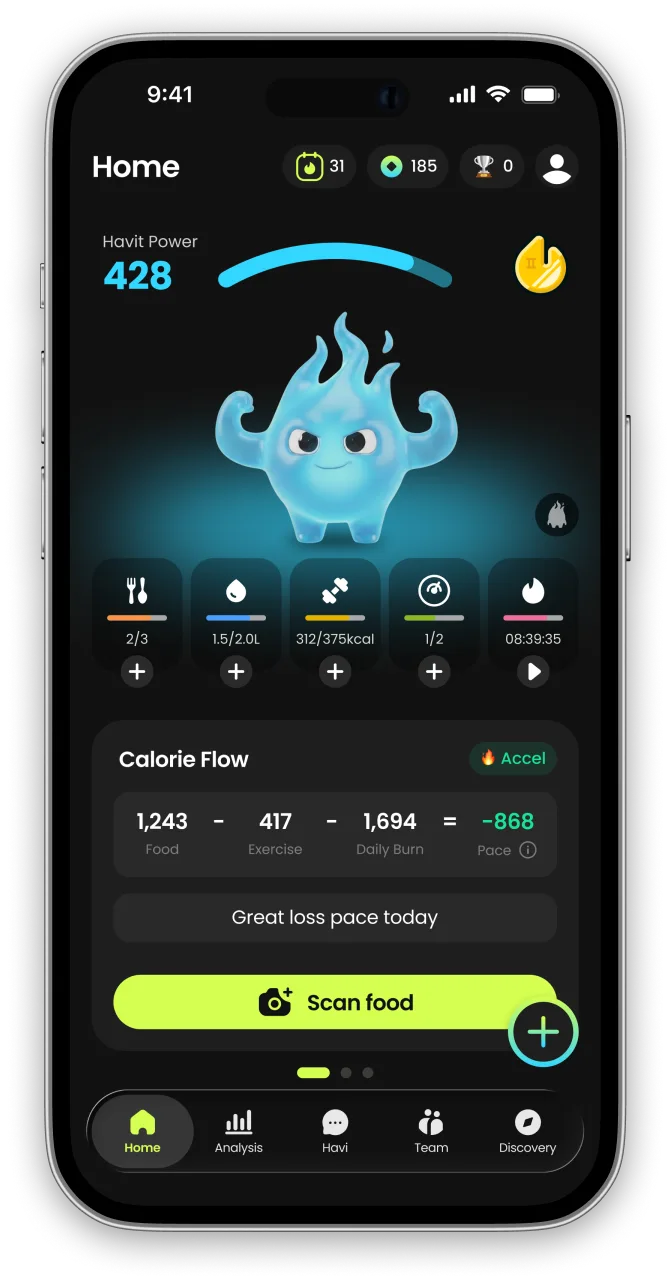
This is exactly what the Havit app is built to make effortless — log your dose, meals, and how you feel, and see your own patterns over time. (It's a tracking companion, not a medical device — always defer to your clinician.)

09
Why HAVIT — Medication + Behavior Change, in One App
GLP-1 medications can meaningfully reduce weight — but the number on the scale is only part of the story.
Roughly 20–40% of the weight lost on GLP-1 therapy can come from lean (muscle) tissue rather than fat (Neeland et al., Diabetes, Obesity and Metabolism, 2024), and results tend to fade once the medication stops unless new habits take their place.
That's why leading guidance treats medication as one part of care, not the whole: the U.S. Preventive Services Task Force recommends that adults with obesity be offered intensive, multicomponent behavioral interventions (USPSTF, Grade B).
HAVIT is built for exactly this moment — one app that unites medication tracking, body composition, nutrition and protein, daily habit-building, and an AI coach that adapts to you.
Across our own 1,090 GLP-1 users, the most consistent trackers built the strongest habits (see the GLP-1 habit report).
Manage the medicine and the muscle — together. Start with HAVIT →
The most common semaglutide side effects
| Side effect | Wegovy 2.4 mg | Placebo |
|---|---|---|
| Nausea | 44% | 16% |
| Diarrhea | 30% | 16% |
| Vomiting | 24% | 6% |
| Constipation | 24% | 11% |
| Abdominal pain | 20% | 10% |
| Headache | 14% | 10% |
| Fatigue | 11% | 5% |
| Hair loss | 3% | 1% |
Frequently asked questions
What are the most common semaglutide side effects?
Are Ozempic, Wegovy, and Rybelsus side effects different?
Does oral semaglutide (Rybelsus) have fewer side effects than the injection?
How long do semaglutide side effects last?
Does semaglutide cause hair loss?
What serious side effects should I watch for?
Is compounded semaglutide as safe as the brand?
Do I need to tell my surgeon I take semaglutide?
What is Havit?
Havit is an AI health companion for weight loss that protects muscle.
Unlike calorie-only trackers, Havit connects AI body-composition estimates, nutrition, hydration, sleep, steps, cycle, mood, and GLP-1 medication in one daily routine — so progress is measured by body composition, not just the number on the scale. Daily missions turn established behavior-change techniques into small repeatable actions, drawing on expertise from professionals formerly at Juvis Diet, one of Korea’s leading metabolic clinics.
In Havit’s own analysis of 1,090 GLP-1 users, people who logged consistently built stronger habits than the general user base. Read the GLP-1 Habit Report
Havit works with or without GLP-1 medication. It is a wellness app, not a medical device; body-composition results are estimates.

Continue in the App
Personalized wellness with your own data


References
- FDA — OZEMPIC (semaglutide) Prescribing Information (label, 2025). accessdata.fda.gov
- FDA — WEGOVY (semaglutide) Prescribing Information (label, rev. 08/2025). accessdata.fda.gov
- FDA / DailyMed — RYBELSUS (oral semaglutide) Prescribing Information (adverse reactions table). dailymed.nlm.nih.gov
- FDA — Alerts Health Care Providers, Compounders and Patients of Dosing Errors Associated with Compounded Injectable Semaglutide Products. fda.gov
- Ozempic.com / NovoMedLink (Novo Nordisk) — Ozempic Safety Profile. novomedlink.com
- Mayo Clinic — Tirzepatide (subcutaneous route): side effects & dosage. mayoclinic.org
- Pharmacy Times — FDA Adds Delayed Gastric Emptying as Adverse Event on Semaglutide Label. pharmacytimes.com
- FDA — Requests Removal of Suicidal Behavior and Ideation Warning from GLP-1 RA Medications. fda.gov
- All medical claims above were verified against the cited FDA labels (Ozempic 2025, Wegovy rev. 08/2025, Rybelsus via DailyMed), FDA compounding alerts, and Novo Nordisk / Mayo Clinic materials as of mid-2026. Labels are updated periodically — confirm current details with your clinician and the official prescribing information.*


