
Tirzepatide Tracker: What to Track on Mounjaro & Zepbound

This article is for general informational purposes only and is not a substitute for professional medical advice, diagnosis, or treatment. Always consult a qualified healthcare provider with questions about a medical condition.
Quick answer
A tirzepatide tracker logs your weekly dose, injection site, weight trend, protein & side effects — for Mounjaro or Zepbound. Learn what to track and why.
Tirzepatide is a once-weekly injectable and the first dual GIP/GLP-1 receptor agonist — it activates two gut hormone receptors, not one, which sets it apart from semaglutide (Cleveland Clinic).
It is the active ingredient in two brands: Mounjaro (for type 2 diabetes) and Zepbound (for obesity and chronic weight management).
This page is the ingredient-level hub: it covers what to track on tirzepatide regardless of brand, why each item matters clinically, and how to make it a two-minute weekly habit.
It is neutral and educational — you can do all of it on paper. An app just automates the parts people forget.
If you already know your brand, jump to the brand-specific guide — the Mounjaro tracker or the Zepbound tracker.
If you want the general framework across all GLP-1s first, start with our complete GLP-1 tracker app guide, then come back here.
01
Tirzepatide, Mounjaro, Zepbound: brand vs. molecule
This trips people up constantly, so get it straight before you track anything. Tirzepatide is the molecule (the generic drug). Mounjaro and Zepbound are brand names for that same molecule, made by Eli Lilly, approved for different uses.
Because the active ingredient is identical, the tracking data is essentially the same for both — dose (mg), injection site, weight, protein, side effects.
Your indication changes what your prescriber is watching (blood glucose vs. weight and waist), but the log itself barely changes.
That is exactly why an ingredient-level tracker works: pick your brand page for the extras (Mounjaro tracker / Zepbound tracker) and use this page for the shared core.
A note on compounded tirzepatide. During the 2022–2024 shortage, compounding pharmacies sold non-brand "compounded tirzepatide." The FDA declared the shortage resolved in October 2024 and ended enforcement discretion for compounders in early 2025 (503A pharmacies on February 18, 2025; 503B outsourcing facilities on March 19, 2025), so large-scale compounding is no longer permitted outside narrow exceptions (FDA).
Compounded versions are not FDA-approved, and their concentration and dosing can differ from the pens — so if you were ever given one, log the exact strength and volume you injected, not a brand mg number.
02
Why tracking matters on tirzepatide specifically
Three things about tirzepatide make tracking more than a nice-to-have:
The dose escalates on a long schedule.
Tirzepatide climbs through up to six dose steps over five months or more. Logging which mg you took on which date keeps you synced to that plan and gives your prescriber an exact history at dose-adjustment visits.
It is once weekly, so a miss is easy.
A single skipped or late shot is far more likely with a weekly medicine than a daily one. A timestamped log makes the missed-dose decision simple instead of stressful (see the 4-day rule below).
Results and side effects are non-linear.
Weight comes off in fits and plateaus, and nausea tends to spike right after each dose increase. Only a trend — not a single day — tells you what is actually happening.
03
What to track on tirzepatide (and why each one matters)
Here is the core tirzepatide dataset. Use it as your checklist whether you track on paper, in a spreadsheet, or in an app — it is the same for Mounjaro and Zepbound.
| What to track | Why it matters | How often |
|---|---|---|
| Dose date & amount (mg) | Keeps you aligned with the titration schedule; confirms adherence; prevents accidental double-dosing | Every injection (weekly) |
| Injection site & rotation | Rotating sites prevents lumpy scar tissue (lipohypertrophy) that changes drug absorption | Every injection |
| Body weight | The primary outcome on Zepbound; the trend reveals plateaus and metabolic adaptation | 1–3× per week, same time of day |
| Blood glucose (if on Mounjaro) | The primary outcome for type 2 diabetes; shows how the dose is controlling sugar | As directed by your clinician |
| Waist / measurements | Catches fat loss the scale misses, especially while preserving muscle | Every 1–2 weeks |
| Protein intake (grams) | Protects lean muscle mass, which is at risk during rapid weight loss | Daily |
| Water / hydration | Eases the constipation and nausea common in the first weeks | Daily |
| Side effects & severity | Separates normal adaptation from red-flag symptoms needing a doctor | As they occur |
| Progress photos | Visual proof of body-composition change when the scale stalls | Every 2–4 weeks |
| Refill / pen supply | A weekly injectable runs out on a predictable date; avoids a coverage gap | Monthly |
Dose date and your tirzepatide titration schedule
Tirzepatide is deliberately started low and increased in 2.5 mg steps, no sooner than every four weeks, to reduce gastrointestinal side effects.
Per the FDA label and Eli Lilly's dosing guidance, the escalation is 2.5 mg (weeks 1–4, a starting dose only — not a maintenance dose) → 5 mg → 7.5 mg → 10 mg → 12.5 mg → 15 mg maximum, each step held for at least four weeks before the next increase (FDA Zepbound prescribing information; Zepbound dosing).
The approved maintenance doses are 5, 10, or 15 mg — many people stay at 5 or 10 mg if that dose is working and well tolerated.
Because the dose changes on a calendar, logging which mg you took on which date is the single most useful thing you can record, and it makes each dose-adjustment conversation faster.
The missed-dose rule (worth getting right). Tirzepatide uses a 4-day (96-hour) rule — which is different from semaglutide's rules (Wegovy is 2 days; Ozempic is 5 days), a common point of confusion when people switch.
Per Eli Lilly: if you miss a dose, take it as soon as possible within 4 days (96 hours); if more than 4 days have passed, skip the missed dose and resume on your regular day. Never take two doses within 3 days of each other (Mounjaro medication guide; how to use Mounjaro).
A tracker that timestamps every shot turns this into a glance.
Injection site and rotation
Tirzepatide is injected subcutaneously into one of three areas: the abdomen (keep at least two inches from the navel), the front of the thigh, or the back of the upper arm (usually with help), rotating each week (how to use Mounjaro).
Repeatedly injecting the same exact spot can cause lipohypertrophy — lumpy scar tissue that changes how the medicine is absorbed.
The problem is memory: after a few weeks, nobody recalls "left thigh or right arm last time?" This is where a tracker earns its keep — a good one shows a body map with your recent sites highlighted so you always pick a fresh one.
Weight, glucose, measurements, and photos
On Zepbound, weight is the headline number for a tirzepatide weight loss tracker — but it is noisy day to day.
Weigh in at the same time (typically morning, after the bathroom, before eating) and let the trend line, not a single reading, tell the story. Plateaus are common and medically explainable.
On Mounjaro, blood glucose is the primary number your clinician watches; log it as directed.
For both, waist measurements and progress photos every 2–4 weeks capture body-composition change the scale hides — which matters most exactly when the number stalls.
Protein, food, and protecting muscle
This is the most under-appreciated part of a tirzepatide journey.
Because tirzepatide sharply reduces appetite — in the SURMOUNT-1 trial the 15 mg dose produced up to 22.5% average body-weight loss over 72 weeks (NEJM, 2022) — a meaningful share of the weight you lose can be lean body mass (note that some of this is water and organ tissue, not only skeletal muscle) (review in Frontiers / PMC).
Muscle protects your metabolism and long-term results. Two trackable habits do the heavy lifting:
- Protein. Aim for a high-protein target at each meal (many clinicians suggest distributing protein across the day). When appetite drops, protein is usually the first thing to fall — so logging it keeps it front of mind.
- Resistance training. Strength work is the strongest defense against muscle loss on a GLP-1; log your sessions like you log your dose.
Side effects — normal vs. red flag
The most common tirzepatide side effects are gastrointestinal: nausea, vomiting, diarrhea, constipation, and reduced appetite.
These usually appear or worsen right after a dose increase and settle as your body adapts.
Rare but serious risks include pancreatitis and gallbladder disease, which need prompt medical assessment.
Logging what you felt, how severe, and how many days since your last dose or dose step-up turns a vague "I've felt off" into a clear pattern.
For the full symptom-by-symptom breakdown, see our guide to GLP-1 side effects.
04
How tirzepatide differs from semaglutide (and why your log changes)
If you switched from Ozempic, Wegovy, or Rybelsus, do not copy your old habits blindly.
Tirzepatide is a dual GIP/GLP-1 agonist, while semaglutide acts on GLP-1 alone — and the practical tracking rules differ:
| Tirzepatide (Mounjaro / Zepbound) | Semaglutide (Ozempic / Wegovy) | |
|---|---|---|
| Hormone target | GIP + GLP-1 (dual) | GLP-1 only |
| Dose ceiling | 15 mg | 2 mg (Ozempic) / 2.4 mg (Wegovy) |
| Titration step | +2.5 mg every ≥4 weeks | Doubling-style steps |
| Missed-dose rule | Within 4 days (96 h) | 5 days (Ozempic) / 2 days (Wegovy) |
The two big log changes: your mg ladder is different, and your missed-dose window is different. Get both right in your tracker so a brand switch does not create a dosing error.
For the full comparison, see semaglutide vs. tirzepatide.
05
How to build a tirzepatide tracking routine in 6 steps
You do not need a complicated system — you need a repeatable one. This takes under two minutes a week for the core log, plus quick daily taps.
- 1
Set a weekly injection reminder.
Pick a consistent day and time and set a recurring alert so a late shot never sneaks up on you.
- 2
Log the dose and site right after injecting.
Record the mg amount and mark the body-map zone, so next week's rotation is obvious.
- 3
Weigh in (or check glucose) on fixed days.
Choose 1–3 mornings a week for weight, same conditions; log glucose as your clinician directs.
- 4
Track protein and water daily.
A quick tap per meal is enough to keep muscle protection on track.
- 5
Note side effects when they happen.
Record the symptom, severity, and days since your last dose or dose increase.
- 6
Photo every 2–4 weeks and review before each visit.
Same lighting, same angle — and bring your dose log and side-effect timeline to your clinician.
06
Do you need a tirzepatide app, or is a notebook fine?
Honestly, any tracking beats none — a tirzepatide diary in a notebook works.
What an app adds is the automation of the parts people forget: the weekly reminder, the injection-site rotation map, the trend line that smooths daily weight noise, and a side-effect timeline you can hand to your clinician.
Neither Mounjaro nor Zepbound ships with a dedicated companion app, so most people use a general GLP-1 or wellness tracker.
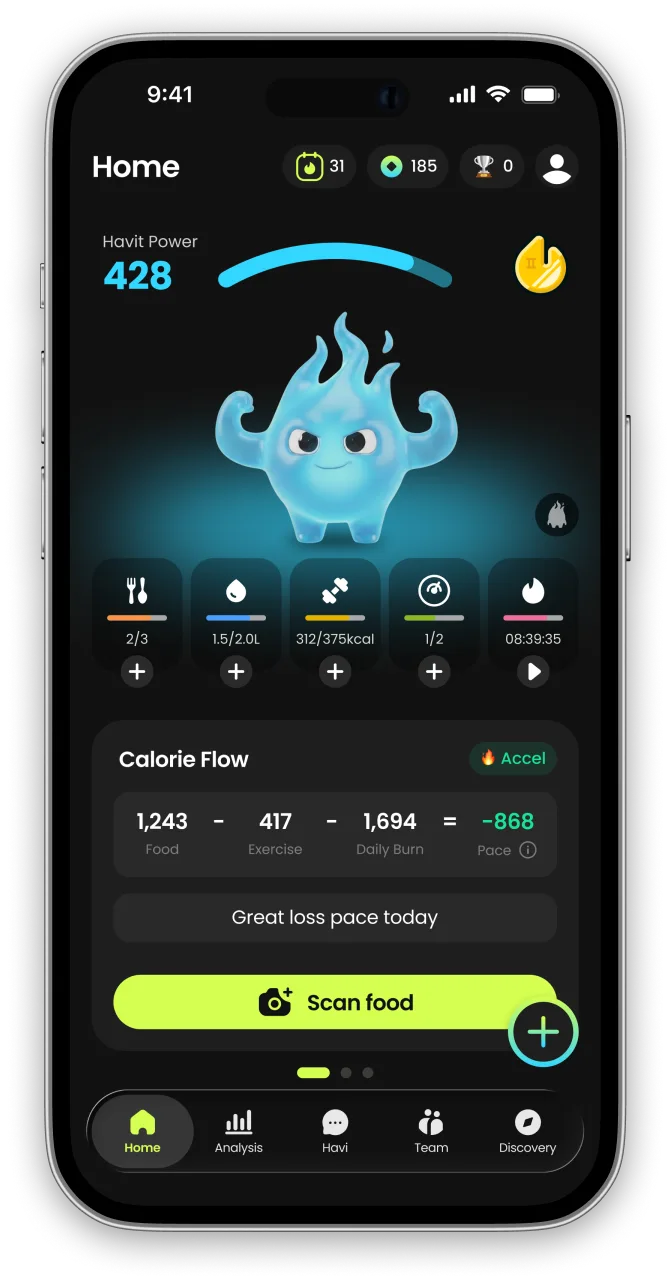
If you want your dose log living next to the daily habits that protect your results — protein, movement, hydration, weight and body-composition trends — a wellness app like HAVIT is a natural home for it.
Compare a few options in our best GLP-1 tracker apps guide and pick what you will actually keep using; consistency matters far more than the brand.

07
Related guides
08
Why HAVIT — Medication + Behavior Change, in One App
GLP-1 medications can meaningfully reduce weight — but the number on the scale is only part of the story.
Roughly 20–40% of the weight lost on GLP-1 therapy can come from lean (muscle) tissue rather than fat (Neeland et al., Diabetes, Obesity and Metabolism, 2024), and results tend to fade once the medication stops unless new habits take their place.
That's why leading guidance treats medication as one part of care, not the whole: the U.S. Preventive Services Task Force recommends that adults with obesity be offered intensive, multicomponent behavioral interventions (USPSTF, Grade B).
HAVIT is built for exactly this moment — one app that unites medication tracking, body composition, nutrition and protein, daily habit-building, and an AI coach that adapts to you.
Across our own 1,090 GLP-1 users, the most consistent trackers built the strongest habits (see the GLP-1 habit report).
Manage the medicine and the muscle — together. Start with HAVIT →

Tirzepatide, Mounjaro, Zepbound: brand vs. molecule
| Brand | What it's approved for | Molecule | Form |
|---|---|---|---|
| Mounjaro | Type 2 diabetes (blood-sugar control) | Tirzepatide | Weekly injection |
| Zepbound | Obesity / chronic weight management | Tirzepatide | Weekly injection |
Frequently asked questions
What is a tirzepatide tracker?
Is tirzepatide the same as Mounjaro and Zepbound?
What is the tirzepatide dose schedule I should log?
What happens if I miss a tirzepatide dose?
How is tirzepatide different from semaglutide?
Is compounded tirzepatide the same as Mounjaro or Zepbound?
Why is protein tracking so important on tirzepatide?
Is there an official tirzepatide tracking app?
What is Havit?
Havit is an AI health companion for weight loss that protects muscle.
Unlike calorie-only trackers, Havit connects AI body-composition estimates, nutrition, hydration, sleep, steps, cycle, mood, and GLP-1 medication in one daily routine — so progress is measured by body composition, not just the number on the scale. Daily missions turn established behavior-change techniques into small repeatable actions, drawing on expertise from professionals formerly at Juvis Diet, one of Korea’s leading metabolic clinics.
In Havit’s own analysis of 1,090 GLP-1 users, people who logged consistently built stronger habits than the general user base. Read the GLP-1 Habit Report
Havit works with or without GLP-1 medication. It is a wellness app, not a medical device; body-composition results are estimates.

Continue in the App
Personalized wellness with your own data


References
- U.S. Food & Drug Administration — Zepbound (tirzepatide) prescribing information (dose escalation, missed dose, injection sites). accessdata.fda.gov accessdata.fda.gov
- Eli Lilly — Zepbound dosing schedule (2.5 mg → 15 mg titration, maintenance doses). zepbound.lilly.com zepbound.lilly.com
- Eli Lilly — How to use Mounjaro: injection sites, rotation, and missed-dose guidance. mounjaro.lilly.com mounjaro.lilly.com
- Eli Lilly — Mounjaro medication guide (4-day / 96-hour missed-dose rule; never two doses within 3 days). pi.lilly.com pi.lilly.com
- Jastreboff AM et al. — Tirzepatide Once Weekly for the Treatment of Obesity (SURMOUNT-1), *New England Journal of Medicine*, 2022. nejm.org nejm.org
- U.S. Food & Drug Administration — Policies for compounders as GLP-1 supply stabilizes (tirzepatide shortage resolved; compounding wind-down). fda.gov fda.gov
- Cleveland Clinic — Tirzepatide injection: how it works, dual GIP/GLP-1 mechanism, and side effects. my.clevelandclinic.org my.clevelandclinic.org
- Frontiers in Clinical Diabetes and Healthcare (via PMC) — GLP-1 agonists, lean-mass loss, and the role of exercise and protein. pmc.ncbi.nlm.nih.gov pmc.ncbi.nlm.nih.gov
- All medical claims verified against the cited FDA label, Eli Lilly materials, and the SURMOUNT-1 publication as of July 2026. Re-review at least every 12 months or sooner if the FDA label changes.*
- </content>
- </invoke>


