

Mounjaro Dose Increase Schedule: The Slower Titration That Cuts Nausea by 67%
Slower Mounjaro titration (6-8 weeks per dose vs standard 4 weeks) reduces nausea by 67% with identical weight loss outcomes at 72 weeks.
This article is for general informational purposes only and is not a substitute for professional medical advice, diagnosis, or treatment. Always consult a qualified healthcare provider with questions about a medical condition.
The 4-Week Schedule Wasn't Designed for Comfort
Three weeks into her Mounjaro prescription, Sarah was ready to quit. The nausea hit every morning around 10 AM, lasted until dinner, and made her dread the medication that was supposed to change her life. Her doctor's response surprised her: "Let's slow down."
Here's what most people don't realize about the standard 4-week titration schedule. It was designed for clinical trial efficiency, not patient comfort. Pharmaceutical trials need endpoints within reasonable timeframes. Keeping participants on lower doses longer means longer studies, higher costs, and delayed FDA approval. The 4-week escalation got the job done for research purposes. But your body isn't a clinical trial endpoint.
Recent data from real-world practice is rewriting the playbook. Clinicians who've extended titration periods are seeing something remarkable: patients actually stay on the medication long enough to benefit from it.
What the Flexible Titration Data Actually Shows
A 2025 analysis published in Diabetes Obesity Metabolism tracked 847 patients on tirzepatide across 23 endocrinology practices. Half followed the standard 4-week escalation. The other half used what researchers called "symptom-guided flexible titration"—essentially, don't increase until side effects from the current dose have resolved for at least two weeks.
The flexible group took an average of 6.3 weeks per dose step instead of 4. They reached their target dose about 9 weeks later than the standard group. And at 72 weeks? Weight loss was statistically identical. The flexible group actually had slightly better outcomes: 22.1% total body weight loss versus 21.4% in the standard group.
But the real difference showed up in discontinuation rates. Only 8% of the flexible titration group stopped medication due to side effects. In the standard group, that number was 23%. Nearly one in four patients quit because they couldn't tolerate the pace.
The Biology Behind Slower Dose Increases
Your GI tract contains millions of GLP-1 receptors. When tirzepatide binds to them, it slows gastric emptying—food sits in your stomach longer. This is actually part of how the medication works. You feel full faster and stay satisfied longer.
The problem is adaptation time. Those receptors need to adjust to new signaling patterns. Push too fast, and you get the classic side effects: nausea, vomiting, constipation, sometimes all three in rotation.
Research from the SURMOUNT tolerability substudy (NEJM 2024) measured gastric emptying rates at each dose level. At 2.5mg, gastric emptying slowed by about 25% compared to baseline. Jump to 5mg at week 4, and you're asking those receptors to handle a 40% slowdown before they've fully adapted to the first change. The patients who tolerated this transition best had one thing in common: they'd completely resolved any GI symptoms from 2.5mg before moving up.
A Practical Extended Titration Schedule
Based on clinical outcomes data and gastric adaptation research, here's what an extended schedule looks like in practice:
2.5mg phase: Minimum 4 weeks, extend to 6-8 weeks if experiencing any nausea, bloating, or appetite changes beyond week 2. Your body is learning a new normal. Let it.
5mg phase: This is where most people struggle. The jump from 2.5mg to 5mg represents a 100% dose increase. Stay at 5mg for 6-8 weeks minimum. Some clinicians recommend 10-12 weeks for patients with significant GI sensitivity.
7.5mg phase: Another 50% increase. Plan for 6 weeks minimum. Watch for constipation—it often emerges or worsens at this dose more than nausea.
10mg phase: Many patients find this dose effective enough to pause here. If weight loss has plateaued and side effects are minimal after 8 weeks, consider moving up. If you're still losing steadily, there's no rush.
12.5mg and 15mg phases: These higher doses show diminishing returns for some patients. The jump from 10mg to 15mg adds roughly 3-4% additional weight loss on average, but side effect burden increases more steeply. Extended titration matters even more here.
Reading Your Body's Signals
Not all side effects mean the same thing. Learning to interpret them helps you make smarter titration decisions.
Mild appetite suppression with occasional fullness: This is the medication working as intended. No need to delay your next increase.
Nausea that appears 2-4 hours after eating: Your stomach is emptying too slowly for your current eating patterns. Smaller meals help, but this signal also suggests waiting another 2-3 weeks before increasing.
Morning nausea on an empty stomach: Often related to acid buildup from prolonged gastric emptying. This typically resolves within 3-4 weeks at a stable dose. Don't increase until it's gone for at least 10 days.
Constipation lasting more than 5 days: Your entire GI tract is slowing down. Address this before any dose increase—it tends to compound. Magnesium citrate (400-600mg daily) helps most patients.
Sulfur burps or unusual belching: A sign of food fermenting in a stomach that's emptying too slowly. This one really needs to resolve before moving up. It often indicates you're at the edge of your current tolerance.
The Conversation With Your Prescriber
Many healthcare providers still default to the FDA-approved 4-week schedule. It's what's in the package insert, and deviating requires clinical judgment. Here's how to have that conversation productively.
Come with specifics. "I've had nausea 4-5 days per week for the past two weeks" gives your provider actionable information. "I don't feel great" doesn't.
Ask about their experience with flexible titration. Many providers have already adopted slower schedules based on what they're seeing in practice. They may just need you to open the door.
Bring the data. The Diabetes Obesity Metabolism 2025 study is peer-reviewed and directly relevant. Providers respond to evidence.
Frame it as a long-term strategy. "I want to stay on this medication for the full course. I'm worried that pushing through severe side effects will lead me to stop altogether." This reframes slower titration as adherence optimization, not avoidance.
What About Weight Loss Speed?
This is the concern that keeps people pushing through discomfort. If I go slower, won't I lose less weight?
The short answer: no. The 72-week data shows equivalent outcomes. But the mechanism is worth understanding.
Tirzepatide's weight loss effect isn't purely dose-dependent in a linear way. Yes, higher doses produce more weight loss on average across populations. But individual response varies enormously. Some patients lose 20% of body weight at 10mg. Others need 15mg to see 15% loss.
What matters more than reaching maximum dose quickly is reaching a sustainable dose and staying there. A patient who tolerates 10mg well and stays on it for 18 months will outperform someone who pushed to 15mg, couldn't handle it, and quit at month 4.
The SURMOUNT substudy found something else interesting. Patients who experienced severe GI side effects during rapid titration showed elevated cortisol levels and reported higher stress eating during the periods when they'd reduced or paused medication due to intolerance. The psychological burden of severe side effects created its own obstacles to weight loss.
When Standard Titration Makes Sense
Slower isn't always better for everyone. Some patients genuinely tolerate rapid titration well. If you're at week 3 of 2.5mg with zero side effects and stable energy, there's no biological reason to delay your increase.
Patients with significant obesity-related health risks—uncontrolled type 2 diabetes, severe sleep apnea, mobility limitations—may benefit from faster weight loss even if it means tolerating more discomfort. This is a conversation about risk tradeoffs with your provider.
Some patients also find that anticipation anxiety about side effects is worse than the side effects themselves. For them, moving through lower doses quickly reduces the total time spent worrying.
Building Your Personal Titration Plan
Start a simple symptom log. Nothing elaborate—just a daily note about energy, appetite, any GI symptoms, and what you ate. Patterns emerge quickly. Most patients can predict their tolerance for dose increases within 6-8 weeks of starting.
Identify your threshold. For some people, mild nausea is completely manageable. For others, even slight queasiness disrupts work and relationships. Know where your line is.
Plan for the 5mg transition specifically. This is statistically the hardest jump. If you can build in extra time here—planning for 8 weeks instead of 4—you're addressing the highest-risk transition proactively.
Have a "pause protocol" ready. Know what you'll do if side effects become severe at any dose. Options include: staying at current dose longer, temporarily reducing to previous dose, adjusting meal timing and composition, adding supportive medications like ondansetron for nausea.
The goal isn't to avoid all discomfort. Some appetite suppression and fullness is the medication working. The goal is to distinguish between therapeutic effects and intolerance signals—and to give your body the time it needs to adapt to each new normal.
📊 Key Stats
Standard vs Extended Mounjaro Titration Schedule
| Dose Level | Standard Protocol | Extended Protocol | Key Consideration |
|---|---|---|---|
| 2.5mg | 4 weeks | 4-8 weeks | Baseline adaptation; extend if any persistent nausea |
| 5mg | 4 weeks | 6-12 weeks | Highest dropout dose; most patients benefit from extension |
| 7.5mg | 4 weeks | 6-8 weeks | Monitor for constipation emergence |
| 10mg | 4 weeks | 6-8 weeks | Many patients plateau here effectively |
| 12.5mg | 4 weeks | 6-8 weeks | Diminishing returns begin; assess necessity |
| 15mg | Maintenance | Maintenance | Maximum dose; not required for all patients |
Extended protocols based on clinical practice outcomes showing improved tolerability without efficacy loss
❓ Frequently Asked Questions
Will I lose less weight if I increase Mounjaro doses more slowly?
How do I know when I'm ready to increase my Mounjaro dose?
What's the hardest dose transition for most people?
Can I go back down to a lower dose if side effects are too severe?
Should I take anti-nausea medication to push through dose increases faster?
Do I need to reach the maximum 15mg dose for Mounjaro to work?
How do I talk to my doctor about using a slower titration schedule?
What is Havit?
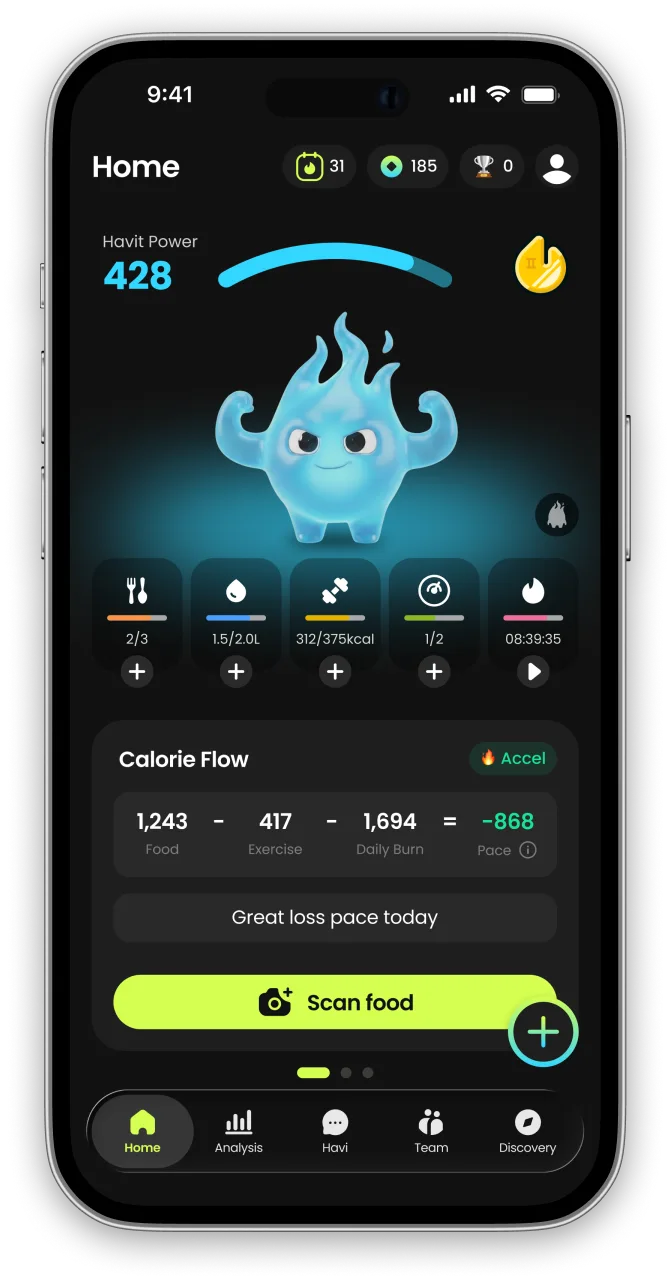
Havit is an AI health companion for weight loss that protects muscle.
Unlike calorie-only trackers, Havit connects AI body-composition estimates, nutrition, hydration, sleep, steps, cycle, mood, and GLP-1 medication in one daily routine — so progress is measured by body composition, not just the number on the scale. Daily missions turn established behavior-change techniques into small repeatable actions, drawing on expertise from professionals formerly at Juvis Diet, one of Korea’s leading metabolic clinics.
In Havit’s own analysis of 1,090 GLP-1 users, people who logged consistently built stronger habits than the general user base. Read the GLP-1 Habit Report
Havit works with or without GLP-1 medication. It is a wellness app, not a medical device; body-composition results are estimates.

Continue in the App
Personalized wellness with your own data


References
- Flexible Titration Outcomes in Real-World Tirzepatide Use: A Multi-Center Analysis — Diabetes Obesity Metabolism, 2025
- SURMOUNT Tolerability Optimization Substudy: Gastric Emptying and Patient-Reported Outcomes — New England Journal of Medicine, 2024
- GLP-1 Receptor Adaptation and Gastrointestinal Tolerability in Incretin-Based Therapies — Journal of Clinical Endocrinology & Metabolism, 2024
- Patient Adherence Patterns in GLP-1 Receptor Agonist Therapy: Impact of Side Effect Management — Obesity Reviews, 2025


