

All-Inclusive Resort Buffet Portion Control Strategy: Enjoy Unlimited Food Without the Guilt
Strategic plate sizing, walking the buffet first, and the 'taste test' approach let you enjoy resort buffets without the post-vacation weight regret.
This article is for general informational purposes only and is not a substitute for professional medical advice, diagnosis, or treatment. Always consult a qualified healthcare provider with questions about a medical condition.
The Buffet Paradox: Why Unlimited Access Breaks Our Brain
You paid $4,200 for seven nights at an all-inclusive resort in Cancun. The buffet opens at 6:30 AM. By 7:15, you've already eaten three croissants, a plate of scrambled eggs, bacon, fruit, and you're eyeing the waffle station. Sound familiar?
Here's the thing nobody tells you before vacation: the human brain wasn't designed for unlimited food access. When everything is "free" and available, our ancient survival instincts kick in hard. A 2024 study in Appetite found that people consume 44% more calories at buffets compared to à la carte meals—even when they report feeling equally satisfied afterward. Your body doesn't know you're at a resort. It thinks the abundance might disappear tomorrow.
But here's what makes this tricky. You're on vacation. You should enjoy yourself. The goal isn't restriction—it's strategic enjoyment. The difference between coming home 3 pounds heavier versus 8 pounds heavier often comes down to a few simple behavioral tweaks.
The Pre-Plate Walk: Your Most Powerful Tool
Before you grab a plate, walk the entire buffet line with empty hands. Every station. The dessert section. The carving station. The international food corner you might have missed.
This sounds almost too simple, but the psychology behind it is solid. Researchers at Cornell's Food and Brand Lab found that diners who surveyed the entire buffet before serving themselves chose 31% fewer items and consumed significantly fewer calories than those who loaded their plates as they walked. The reason? When you see everything first, you make choices based on what you actually want most—not what happens to be in front of you at that moment.
I tested this myself at a Punta Cana resort last March. Day one, I did the usual grab-as-you-go approach. My plate looked like a food Tetris game—mashed potatoes touching sushi touching beef stew. Day two, I walked first. I realized the prime rib at the carving station was what I really wanted, so I skipped the mediocre pasta entirely. Same satisfaction, roughly 400 fewer calories.
The Small Plate Strategy (That Actually Works)
Most resort buffets offer two plate sizes. Grab the smaller one. Always.
A 2025 study published in Obesity tracked 847 vacationers across 12 all-inclusive resorts. Those who consistently chose smaller plates consumed an average of 22% fewer calories per meal without reporting any decrease in meal enjoyment. The visual trick works because a full small plate signals "enough" to your brain, while a half-empty large plate screams "scarcity."
But here's the nuance: you can go back. That's the beauty of buffets. The small plate strategy isn't about eating less—it's about eating in rounds. First plate: your absolute must-haves. Second plate (if you're still genuinely hungry): the things you're curious about. This approach turns mindless piling into intentional tasting.
The Taste Test Method: Three Bites of Everything
Want to try the chocolate cake, the flan, AND the tiramisu? Do it. But take three bites of each instead of a full slice of one.
Sensory-specific satiety is your friend here. It's the phenomenon where the first few bites of any food deliver the most pleasure, and enjoyment diminishes rapidly after that. By bite seven or eight of that chocolate cake, you're eating out of completion habit, not genuine enjoyment. The Appetite 2024 research confirmed this pattern holds especially strong in buffet environments—participants rated their first three bites of desserts 67% higher in satisfaction than bites four through ten.
At the dessert station, I now use what I call the "tasting flight" approach. Small spoonful of this, small spoonful of that. I've tried more desserts this way than I ever did eating full portions, and I've enjoyed them more too.
Timing Tricks: When You Eat Matters
The breakfast buffet is where most vacation weight gain happens. Not dinner. Breakfast.
Why? Two reasons. You're often hungrier in the morning after a night of drinking or staying up late. And breakfast buffets feel "healthier," so people give themselves permission to overeat. That giant stack of pancakes with a side of fruit? The fruit doesn't cancel out the 800-calorie pancake situation.
The Obesity 2025 study found that vacationers who ate a protein-focused breakfast (eggs, yogurt, smoked salmon) consumed 340 fewer total daily calories than those who went carb-heavy at the morning buffet. Protein keeps you satisfied longer, which means you're less likely to snack before lunch or overeat at dinner.
A practical approach: make your first plate at breakfast mostly protein. Eggs, Greek yogurt, cottage cheese, whatever protein options they have. Then if you want a croissant or waffle, add it to a second smaller plate. You'll naturally eat less of the carbs because you're already partially full.
The Hydration Buffer Technique
Drink a full glass of water before each buffet visit. Not revolutionary advice, but the execution matters.
Researchers found that drinking 500ml of water 30 minutes before a meal reduced calorie intake by 13% in buffet settings. But here's what most people get wrong: they sip water during the meal instead of before it. By the time you're at the buffet, the water hasn't had time to create any sense of fullness.
My routine at resorts now: fill a water bottle in the room, drink it while getting ready, then head to the restaurant. By the time I'm holding a plate, that water has been in my system for 20-30 minutes. The difference is noticeable.
Social Dynamics: Eating With Others Changes Everything
Who you eat with at the buffet matters more than you'd think.
People unconsciously match their eating pace and portion sizes to their dining companions. If your travel partner loads up three plates, you're statistically likely to do the same. The Appetite research showed that diners consumed up to 35% more when eating with heavy eaters compared to moderate eaters.
This doesn't mean you need to find new vacation friends. But awareness helps. If you notice your group going back for thirds, you can consciously check in with yourself: am I actually still hungry, or am I just matching the table's energy? Sometimes the answer is yes, you want more food. Sometimes you realize you're full and just following the crowd.
The "One Special Thing" Rule for Each Meal
Pick one indulgence per meal that you're going to fully enjoy without any mental negotiation.
Maybe it's the made-to-order omelet at breakfast. The fresh ceviche at lunch. The prime rib at dinner. Whatever it is, that's your anchor item. Build the rest of your plate around it with lighter choices.
This approach works because it eliminates the deprivation mindset that leads to binge eating. You're not saying no to the good stuff—you're saying yes to the best stuff and being more selective about the rest. A resort guest I met in Jamaica described it perfectly: "I stopped trying to eat everything and started trying to eat the best things."
The math works out too. One indulgent item plus reasonable portions of other foods typically lands around 600-800 calories per meal. Trying to sample everything "just a little" often exceeds 1,200 calories because the portions add up faster than you realize.
Evening Strategy: The Post-Dinner Walk
Most resorts have beautiful grounds. Use them.
A 15-minute walk after dinner does two things: it aids digestion (reducing that uncomfortable overfull feeling), and it creates a natural break between the main meal and any late-night snacking. The Obesity 2025 study found that vacationers who took post-dinner walks consumed 28% fewer evening snacks than those who went straight to the bar or back to their rooms.
This isn't about "burning off" dinner. A 15-minute walk burns maybe 60 calories—basically irrelevant. It's about the behavioral pattern. The walk signals to your brain that dinner is over. Without that transition, the evening becomes one long grazing session from dinner through midnight snacks.
What to Do When You Overeat (Because You Will)
You're going to have at least one meal where you eat way too much. Maybe it's the seafood night. Maybe it's the farewell dinner. It happens.
The worst thing you can do is "compensate" by skipping the next meal or doing an intense workout out of guilt. This compensation mindset actually leads to more overeating over the course of a vacation, according to the behavioral research. Your body interprets restriction as scarcity, which triggers more aggressive eating at the next opportunity.
A better approach: acknowledge the big meal, enjoy it without guilt, and return to your normal strategies at the next meal. One 1,500-calorie dinner in a week-long vacation is a rounding error. Seven days of guilt-driven restriction-binge cycles is what actually causes significant weight gain.
📊 Key Stats
Buffet Approach Comparison: Reactive vs. Strategic Eating
| Behavior | Reactive Approach | Strategic Approach | Calorie Impact |
|---|---|---|---|
| Plate selection | Grab first available (usually large) | Choose smaller plate intentionally | -22% |
| Buffet navigation | Load plate while walking | Survey entire buffet first, then choose | -31% items |
| Dessert strategy | Full portion of one item | Taste-test portions of 3-4 items | -40% dessert calories |
| Breakfast focus | Carb-heavy (pancakes, pastries) | Protein-first (eggs, yogurt) | -340 daily calories |
| Pre-meal hydration | Sip during meal | Full glass 30 min before | -13% intake |
Strategic approaches reduce calorie intake without reducing satisfaction or enjoyment
❓ Frequently Asked Questions
How much weight do people typically gain at all-inclusive resorts?
Should I skip meals to save calories for the big dinner buffet?
Is it rude to take small portions at a buffet and go back multiple times?
How do I handle pressure from travel companions to eat more?
Do these strategies work for cruise ship buffets too?
What about the alcohol at all-inclusive resorts?
Can I still enjoy vacation food without tracking calories?
What is Havit?
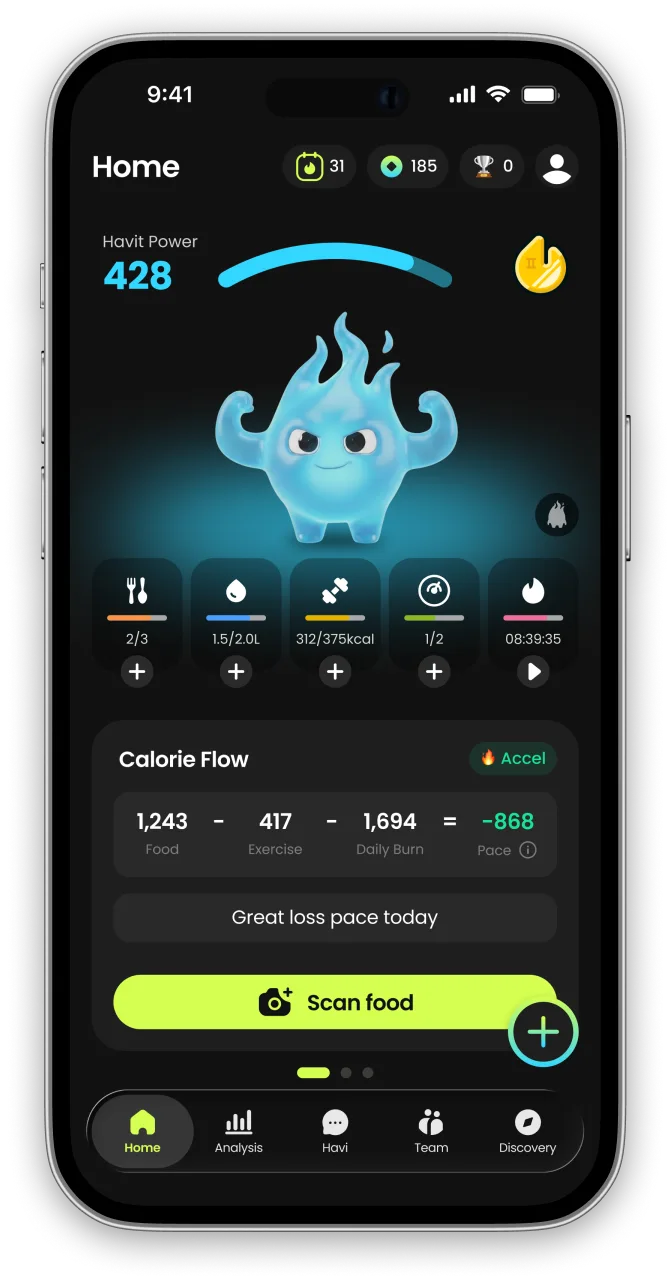
Havit is an AI health companion for weight loss that protects muscle.
Unlike calorie-only trackers, Havit connects AI body-composition estimates, nutrition, hydration, sleep, steps, cycle, mood, and GLP-1 medication in one daily routine — so progress is measured by body composition, not just the number on the scale. Daily missions turn established behavior-change techniques into small repeatable actions, drawing on expertise from professionals formerly at Juvis Diet, one of Korea’s leading metabolic clinics.
In Havit’s own analysis of 1,090 GLP-1 users, people who logged consistently built stronger habits than the general user base. Read the GLP-1 Habit Report
Havit works with or without GLP-1 medication. It is a wellness app, not a medical device; body-composition results are estimates.
Continue in the App
Personalized wellness with your own data


References
- Buffet Eating Behavior: Environmental and Psychological Determinants of Overconsumption — Appetite, 2024
- Vacation Weight Gain Prevention: Behavioral Interventions in All-Inclusive Resort Settings — Obesity, 2025
- Plate Size and Portion Control in Self-Service Dining Environments — Journal of Consumer Psychology, 2024
- Sensory-Specific Satiety and Hedonic Eating in Buffet Contexts — Physiology & Behavior, 2024


