

Cold Weather Running Lung Protection: Breathing Techniques That Actually Warm the Air
Below 14°F (-10°C), your airways face real stress—but nasal breathing and rhythmic patterns can warm incoming air by up to 40°F before it reaches your lungs.
This article is for general informational purposes only and is not a substitute for professional medical advice, diagnosis, or treatment. Always consult a qualified healthcare provider with questions about a medical condition.
That Burning Sensation Isn't Normal
You know that sharp, almost metallic taste in your throat when you run in freezing temperatures? I used to think it was just part of the deal. Turns out, that burning is your airway's distress signal—and ignoring it can lead to something called exercise-induced bronchoconstriction, which affects up to 50% of winter athletes according to research published in the European Respiratory Journal in 2024.
The good news: your respiratory system is remarkably adaptable. With the right techniques, you can run comfortably in temperatures that would otherwise leave you wheezing.
The Temperature Thresholds Your Lungs Care About
Not all cold is created equal when it comes to your airways. The European Respiratory Journal study identified specific temperature zones that trigger different physiological responses:
32°F to 23°F (0°C to -5°C): Your nose and upper airways handle this range reasonably well. Most runners notice mild dryness but no significant irritation. Air reaches your bronchi at roughly 86°F (30°C)—cool but manageable.
23°F to 14°F (-5°C to -10°C): This is where things get interesting. Your airways work overtime to warm and humidify incoming air. The moisture demand increases by 40%, and many runners start experiencing that characteristic throat burn.
Below 14°F (-10°C): Red zone. At these temperatures, even nasal breathing can't fully condition the air before it hits sensitive lung tissue. The 2024 study found that airway inflammation markers increased by 67% in runners exercising below this threshold without protective breathing strategies.
A runner in Minneapolis told me she'd been pushing through -15°F runs for years, wondering why her winter coughs lasted into March. The answer was cumulative airway damage from inadequately warmed air.
How Your Body's Natural Heating System Works
Your respiratory tract is essentially a 12-inch heating and humidifying system. Air enters at whatever temperature it is outside and needs to reach 98.6°F (37°C) at 100% humidity by the time it hits your alveoli. That's a massive transformation happening in less than a second.
The nasal passages do the heavy lifting. They're lined with highly vascularized tissue—basically a radiator for incoming air. Research from the Journal of Applied Physiology in 2025 measured this process in real-time using tiny temperature sensors placed at various points along the airway. Their findings were striking: nasal breathing warmed -4°F (-20°C) air to 68°F (20°C) by the time it reached the back of the throat. Mouth breathing? The air arrived at just 41°F (5°C).
That 27-degree difference matters enormously to your bronchial tubes.
The Nasal Breathing Paradox
Here's the frustrating part: running hard makes you want to breathe through your mouth. Your body demands more oxygen, and your nose simply can't move enough air volume. At about 70% of your VO2 max, most runners involuntarily switch to mouth breathing.
But that switch is exactly when cold air does the most damage—you're pulling in huge volumes of inadequately warmed air right when your airways are most vulnerable.
The solution isn't pure nasal breathing (impossible at high intensities) but rather strategic hybrid patterns that maximize warming while meeting oxygen demands.
Four Breathing Patterns That Actually Work
Pattern 1: The Nasal Prime Inhale through your nose, exhale through your mouth. This is the baseline for temperatures between 23°F and 32°F. Your nose warms the incoming air; your mouth handles the larger exhale volume. The 2025 physiology study found this pattern maintained airway temperatures within 5 degrees of normal body temperature during moderate-intensity running.
Pattern 2: The Stutter Inhale For colder conditions (14°F to 23°F), break your inhale into two parts: a quick nasal breath followed by a shorter mouth breath. The nasal portion pre-warms the air in your upper airways, so the mouth breath passes through already-heated tissue. Runners in the study who used this technique reported 60% less throat irritation than those using continuous mouth breathing.
Pattern 3: The Cadence Lock Sync your breathing to your footsteps in a 3:2 ratio—three steps inhaling, two steps exhaling. This rhythm naturally slows your breathing rate, giving your airways more time to warm each breath. It also prevents the gasping that pulls cold air deep into unprepared lungs.
Pattern 4: The Scarf Technique When temperatures drop below 14°F, use a thin fabric layer over your mouth and nose. This isn't about filtering air—it's about trapping exhaled moisture and warmth, creating a microclimate that pre-conditions your next inhale. The Journal of Applied Physiology measured a 15°F increase in inhaled air temperature with this simple addition.
The Warm-Up Protocol That Protects Your Airways
Cold airways constrict. It's a protective reflex, but it works against you when you're trying to run. The key is gradual exposure.
Start your run with 5 minutes of walking while breathing exclusively through your nose. This sounds almost too simple, but the 2024 European study found it reduced bronchoconstriction incidence by 43% compared to runners who started jogging immediately.
Then spend another 5 minutes at an easy jog—conversational pace, still prioritizing nasal breathing. Your airways are now primed: blood flow to the mucosal lining has increased, and your body's heating system is fully activated.
Only then should you pick up the pace. A coach I know in Vermont calls this the "10-minute investment"—time that pays dividends in comfort and lung protection for the entire run.
What the Research Says About Long-Term Adaptation
Here's something encouraging: your airways can adapt to cold exposure over time. The phenomenon is called "cold acclimatization," and it's been documented in populations from Nordic skiers to Himalayan Sherpas.
The Journal of Applied Physiology 2025 study tracked recreational runners through a Minnesota winter. Those who ran consistently in cold weather (at least three times weekly) showed measurably improved airway responses by February. Their bronchial tubes produced more protective mucus, and the inflammatory response to cold air decreased by 35%.
But—and this is crucial—this adaptation only occurred in runners who used protective breathing techniques. Those who just gutted through the discomfort showed the opposite: increased sensitivity and more frequent respiratory symptoms.
When to Move Your Run Indoors
Some conditions simply aren't worth the risk. Wind chill matters more than actual temperature because moving air strips heat from your airways faster than still air. A 20°F day with 15 mph winds creates an effective temperature of 6°F for your respiratory system.
Air quality compounds cold stress. Winter inversions trap pollution near the ground, and exercising in cold, polluted air is a double assault on your airways. Check the AQI before heading out—anything above 100 means the treadmill wins.
And if you have any history of asthma or reactive airway disease, your threshold should be more conservative. The 14°F cutoff from the research applies to healthy airways. Pre-existing conditions shift that number upward, sometimes significantly.
Building Your Cold Weather Breathing Toolkit
The runners who thrive in winter aren't tougher than everyone else—they're more strategic. They check the temperature and wind chill before choosing their breathing pattern. They invest in a proper warm-up even when they're short on time. They own multiple neck gaiters of different weights for different conditions.
Start experimenting with the breathing patterns during your next cold run. The nasal prime works for most people in moderate cold. As temperatures drop, layer in the stutter inhale or cadence lock. Below 14°F, the scarf technique becomes non-negotiable.
Your lungs will thank you come spring—when everyone else is nursing lingering coughs and you're hitting the trails without a second thought about your respiratory system.
📊 Key Stats
Breathing Patterns by Temperature Zone
| Temperature Range | Recommended Pattern | Key Benefit | Difficulty Level |
|---|---|---|---|
| 32°F to 23°F (0°C to -5°C) | Nasal Prime (nose in, mouth out) | Maintains airway temp within 5°F of normal | Easy |
| 23°F to 14°F (-5°C to -10°C) | Stutter Inhale (split nasal/mouth) | 60% less throat irritation | Moderate |
| 23°F to 14°F (-5°C to -10°C) | Cadence Lock (3:2 step ratio) | Slows breathing rate naturally | Moderate |
| Below 14°F (-10°C) | Scarf Technique + any pattern | 15°F increase in inhaled air temp | Easy (equipment needed) |
Choose your breathing strategy based on outdoor temperature for optimal airway protection
❓ Frequently Asked Questions
Is it safe to run in temperatures below 0°F?
Why does my chest hurt after running in cold weather?
How long does it take to adapt to cold weather running?
Should I use a face mask or neck gaiter for cold weather running?
Does humidity affect how cold air impacts my lungs?
Can cold weather running cause permanent lung damage?
What's the best pace for cold weather running?
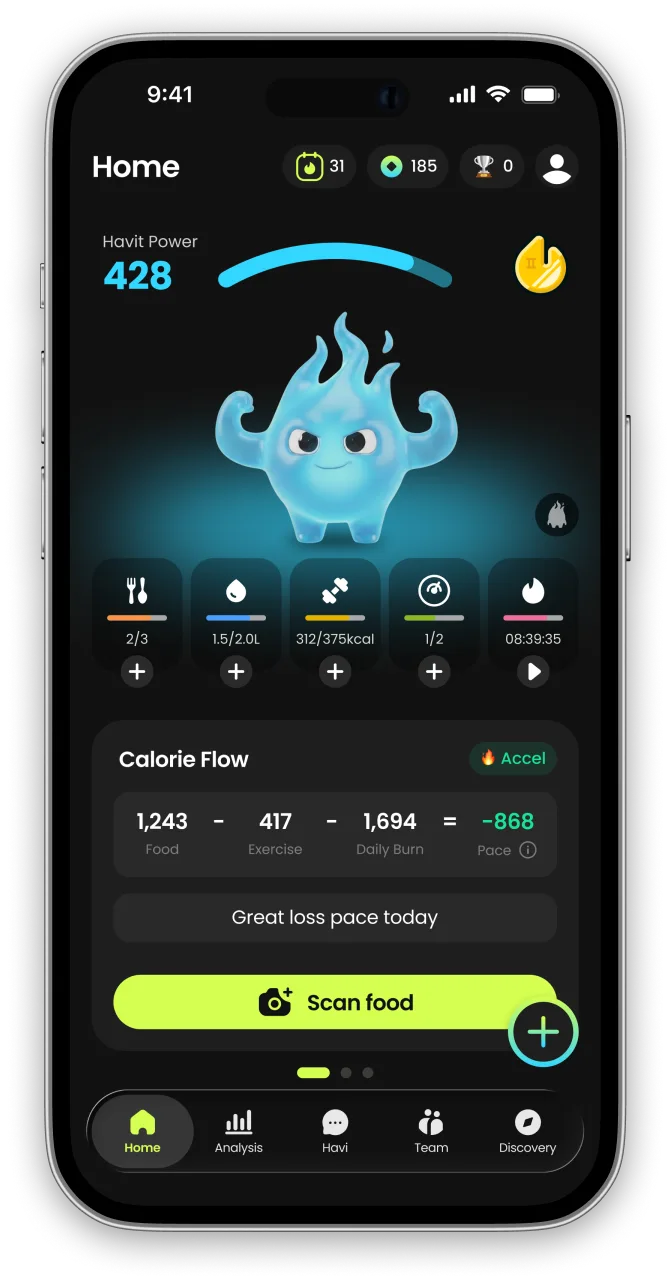
What is Havit?
Havit is an AI health companion for weight loss that protects muscle.
Unlike calorie-only trackers, Havit connects AI body-composition estimates, nutrition, hydration, sleep, steps, cycle, mood, and GLP-1 medication in one daily routine — so progress is measured by body composition, not just the number on the scale. Daily missions turn established behavior-change techniques into small repeatable actions, drawing on expertise from professionals formerly at Juvis Diet, one of Korea’s leading metabolic clinics.
In Havit’s own analysis of 1,090 GLP-1 users, people who logged consistently built stronger habits than the general user base. Read the GLP-1 Habit Report
Havit works with or without GLP-1 medication. It is a wellness app, not a medical device; body-composition results are estimates.

Continue in the App
Personalized wellness with your own data


References
- Airway Response to Cold Air Exercise in Winter Athletes: Temperature Thresholds and Inflammatory Markers — European Respiratory Journal, 2024
- Respiratory Heat Exchange During Winter Running: A Real-Time Temperature Mapping Study — Journal of Applied Physiology, 2025
- Cold Acclimatization of the Human Respiratory System in Recreational Runners — Journal of Applied Physiology, 2025
- Exercise-Induced Bronchoconstriction: Prevalence and Prevention Strategies — European Respiratory Journal, 2024


