

Menstrual Cycle Metabolism and Weight Fluctuation: What Each Phase Does to Your Body
Metabolic rate rises 5-10% in the luteal phase while water retention can add 2-4 pounds—timing nutrition to your cycle helps manage both.
This article is for general informational purposes only and is not a substitute for professional medical advice, diagnosis, or treatment. Always consult a qualified healthcare provider with questions about a medical condition.
That Extra 3 Pounds Isn't Body Fat
You stepped on the scale Monday morning. Up three pounds from last week. You mentally replay everything you ate—nothing unusual. Here's what nobody told you: your menstrual cycle can shift your weight by up to 4 pounds without a single extra calorie consumed. And your metabolism? It's not constant either. It fluctuates by roughly 100-300 calories across your cycle. Understanding these shifts changes everything about how you approach nutrition and fitness.
The Four-Phase Metabolic Rollercoaster
Your cycle isn't just about periods. It's a 28-day (give or take) metabolic journey with four distinct phases, each with its own hormonal signature and energy demands.
The menstrual phase (days 1-5) starts when both estrogen and progesterone hit their lowest points. Your body temperature drops slightly. Energy expenditure sits at baseline. Many women report feeling depleted—and there's biology behind that. Iron losses from bleeding can compound the fatigue.
Then comes the follicular phase (days 6-14). Estrogen climbs steadily. You might notice improved mood, better workout recovery, and increased insulin sensitivity. This is when your body uses carbohydrates most efficiently. A 2024 study in the British Journal of Nutrition found that glucose uptake in muscle tissue peaks during the late follicular phase—meaning those carbs you eat are more likely to fuel workouts than get stored.
Ovulation (around day 14) brings a brief estrogen spike followed by a surge in luteinizing hormone. Some women feel a burst of energy. Others notice mild bloating starting already. Metabolically, this is a transition point.
The luteal phase (days 15-28) is where things get interesting. Progesterone dominates. Your basal metabolic rate increases by 5-10%, according to research published in the Journal of Clinical Endocrinology & Metabolism in 2025. That translates to roughly 100-300 extra calories burned daily. But here's the catch: progesterone also triggers fluid retention and can increase appetite significantly.
Why the Scale Lies During Your Luteal Phase
Let's talk numbers. A woman weighing 140 pounds might see the scale read 143-144 pounds in the week before her period. Where does this phantom weight come from?
Water. Lots of it.
Progesterone causes your kidneys to retain sodium, which pulls water into your tissues. Meanwhile, aldosterone (another hormone that spikes in the luteal phase) amplifies this effect. The result: 1.5-4 pounds of water weight that has absolutely nothing to do with fat gain.
Breast tissue swelling adds to the number. Digestive slowdown (progesterone relaxes smooth muscle, including your intestines) means more food sitting in your GI tract. One study tracking daily weights across multiple cycles found that 78% of participants hit their peak weight 1-2 days before menstruation began.
This isn't a flaw in your body. It's your body preparing for potential pregnancy by holding onto resources. When your period starts and hormone levels crash, that water releases. The scale drops. Nothing about your actual body composition changed.
The Metabolism Boost Nobody Talks About
Here's the part that should make you feel better about luteal phase cravings: you're burning more calories. The 2025 Journal of Clinical Endocrinology & Metabolism study measured resting metabolic rate across 847 menstrual cycles using indirect calorimetry. The average increase during the luteal phase was 7.7%, with some women seeing jumps as high as 11%.
For a woman with a baseline metabolism of 1,500 calories, that's an extra 115-165 calories daily. Over a two-week luteal phase, that adds up to 1,600-2,300 extra calories burned. Not insignificant.
The problem? Appetite often increases by more than the metabolic boost. Progesterone doesn't just raise your temperature and metabolism—it also appears to affect appetite-regulating hormones. Ghrelin (the hunger hormone) tends to be elevated. Leptin (the satiety hormone) becomes less effective. Your brain literally receives stronger "eat" signals and weaker "stop eating" signals.
This isn't lack of willpower. It's endocrinology.
Phase-Specific Nutrition Strategies That Actually Work
Knowing what's happening hormonally lets you work with your body instead of against it.
Menstrual phase (days 1-5): Focus on iron-rich foods—red meat, lentils, spinach with vitamin C to enhance absorption. Energy needs are baseline, so eat normally. Many women naturally crave comfort foods; warm, easily digestible meals make sense here. Don't force intense workouts if you're exhausted.
Follicular phase (days 6-14): This is your carbohydrate window. Insulin sensitivity peaks, so your body handles starches and sugars efficiently. Good time for higher-carb meals around workouts. Estrogen supports muscle protein synthesis, making this an ideal phase for strength training and muscle-building goals. Eat enough protein (aim for 1.6g per kg bodyweight) to capitalize on this anabolic environment.
Ovulation (around day 14): Short window, but notable. Some women experience a slight dip in appetite. If you're trying to maintain a calorie deficit, this might be the easiest few days. Stay hydrated as your body temperature starts rising.
Luteal phase (days 15-28): Here's where strategy matters most. Your metabolism is elevated, so you can eat slightly more without gaining fat. An extra 100-200 calories daily is reasonable. But choose those calories wisely—protein and fiber help manage the increased appetite better than simple carbs. Magnesium-rich foods (dark chocolate, nuts, seeds) may help with PMS symptoms and cravings. Reduce sodium intake in the last week to minimize water retention. Calcium (1,200mg daily) has been shown to reduce PMS symptoms by up to 48% in clinical trials.
Exercise Timing: What the Research Shows
Your hormones affect more than metabolism—they influence exercise performance and recovery.
The follicular phase appears to be optimal for high-intensity training. Estrogen has anti-inflammatory properties and supports muscle repair. A 2024 analysis of female athletes found that strength gains were 10-15% higher when intense resistance training was concentrated in the follicular phase compared to random distribution across the cycle.
The luteal phase presents different challenges. Core body temperature is elevated (by about 0.3-0.5°C), which can impair endurance performance in hot conditions. Progesterone increases breathing rate, which some women experience as feeling more winded during cardio. Coordination and reaction time may be slightly reduced.
This doesn't mean you should skip workouts in the luteal phase. It means adjusting expectations. Moderate-intensity steady-state cardio, yoga, and maintenance-level strength work fit well here. Save the PR attempts for the follicular phase when your body is primed for performance.
Tracking Your Personal Pattern
Averages are useful, but your body isn't average. Individual variation in cycle length, hormone levels, and metabolic response is substantial.
Start simple: track your weight daily at the same time (morning, after bathroom, before eating). After 2-3 cycles, patterns emerge. You'll see your personal high-weight days and low-weight days. You'll notice when your appetite spikes. You'll identify your energy peaks and valleys.
Some women find that their metabolic boost is minimal. Others experience dramatic shifts. One woman might gain 4 pounds of water weight; her friend gains barely one. Knowing your pattern removes the anxiety from normal fluctuations.
Apps that combine cycle tracking with weight trends can help visualize this. But even a simple spreadsheet works. Date, cycle day, weight, energy level (1-10), appetite level (1-10). Three months of data tells you more about your body than any generic advice.
When Fluctuations Signal Something Else
Normal cycle-related weight fluctuation is temporary and predictable. Certain patterns warrant attention.
If you're gaining weight progressively across multiple cycles (not just within a single cycle), that's not hormonal water retention—that's actual tissue change, and you'd want to examine overall calorie balance.
Extreme bloating with severe pain could indicate endometriosis or other conditions. Irregular cycles with unpredictable weight swings might suggest PCOS or thyroid issues. Sudden changes in your established pattern deserve a conversation with a healthcare provider.
The goal isn't to obsess over every fluctuation. It's to understand your baseline so you can recognize when something deviates from your normal.
The Bigger Picture
Your menstrual cycle is a vital sign—a monthly report card on your overall health. Severe PMS, extreme weight fluctuations, or debilitating symptoms aren't just inconveniences to push through. They're information.
Women who work with their cycles rather than ignoring them often report better results in both fitness and weight management. Not because of any magic, but because they've stopped fighting their biology. They eat more when their body burns more. They train hard when their body recovers well. They rest when their body asks for rest.
That three pounds that appeared before your period? It'll be gone in a few days. Your metabolism is doing exactly what it evolved to do. The scale is just too simple a tool to capture the complexity of a cycling female body.
📊 Key Stats
Menstrual Cycle Phases: Metabolism, Weight, and Nutrition at a Glance
| Phase | Days | Metabolic Rate | Weight Trend | Nutrition Focus |
|---|---|---|---|---|
| Menstrual | 1-5 | Baseline | Dropping (water release) | Iron-rich foods, comfort meals |
| Follicular | 6-14 | Baseline | Stable/lowest | Higher carbs, protein for muscle building |
| Ovulation | ~14 | Transitioning up | May start rising | Maintain hydration, moderate intake |
| Luteal | 15-28 | +5-10% | Rising (water retention) | Extra 100-200 cal, magnesium, reduce sodium |
Metabolic and weight patterns vary individually; use this as a starting framework and adjust based on personal tracking.
❓ Frequently Asked Questions
How much weight gain is normal before my period?
Should I eat more during my luteal phase?
Why do I crave carbs and chocolate before my period?
Is it harder to lose weight during certain cycle phases?
When is the best time to do intense workouts during my cycle?
Can birth control affect these metabolic fluctuations?
How long should I track my cycle to understand my personal pattern?
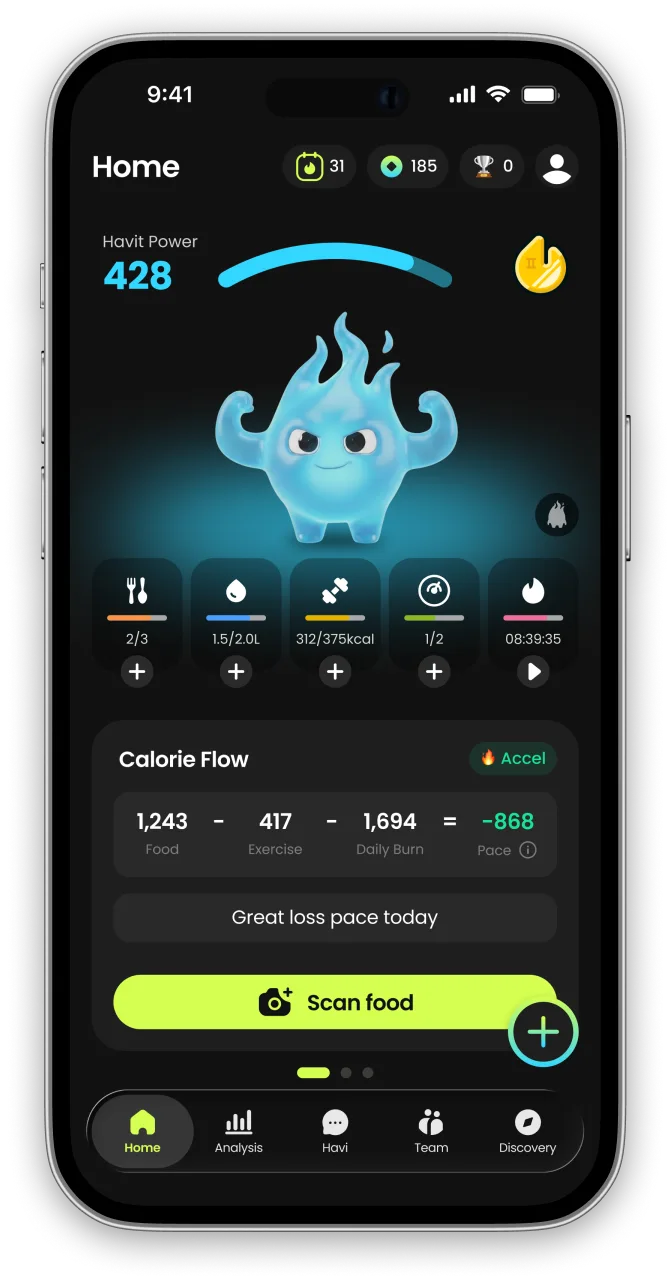
What is Havit?
Havit is an AI health companion for weight loss that protects muscle.
Unlike calorie-only trackers, Havit connects AI body-composition estimates, nutrition, hydration, sleep, steps, cycle, mood, and GLP-1 medication in one daily routine — so progress is measured by body composition, not just the number on the scale. Daily missions turn established behavior-change techniques into small repeatable actions, drawing on expertise from professionals formerly at Juvis Diet, one of Korea’s leading metabolic clinics.
In Havit’s own analysis of 1,090 GLP-1 users, people who logged consistently built stronger habits than the general user base. Read the GLP-1 Habit Report
Havit works with or without GLP-1 medication. It is a wellness app, not a medical device; body-composition results are estimates.
Continue in the App
Personalized wellness with your own data


References
- Resting Metabolic Rate Variations Across the Menstrual Cycle: A Multi-Center Analysis — Journal of Clinical Endocrinology & Metabolism, 2025
- Energy Expenditure and Substrate Utilization During Menstrual Cycle Phases — British Journal of Nutrition, 2024
- Fluid Retention and Body Weight Fluctuations in Premenopausal Women — Journal of Clinical Endocrinology & Metabolism, 2025
- Menstrual Cycle Phase and Exercise Performance in Female Athletes — British Journal of Nutrition, 2024


