
GLP-1 Diet: A 7-Day High-Protein Meal Plan (What to Eat on Ozempic & Wegovy)

This article is for general informational purposes only and is not a substitute for professional medical advice, diagnosis, or treatment. Always consult a qualified healthcare provider with questions about a medical condition.
Quick answer
A dietitian-style GLP-1 diet: 7-day high-protein, high-fiber meal plan, daily targets, nausea swaps, grocery list & FAQ. What to eat on Ozempic & Wegovy.
The best GLP-1 diet is high in protein and fiber and eaten in smaller, slower meals. Aim for 1.2–1.6 g of protein per kg of body weight, 25–35 g of fiber, and 8–10 cups of water daily to protect muscle, ease side effects, and feel full while your appetite is lower.
01
Why your food matters more on a GLP-1
GLP-1 medications work by slowing how fast your stomach empties and turning down appetite signals, so you naturally eat less.
That is exactly why what you eat matters more than ever: with a smaller total intake, every bite has to carry more nutrition.
Two risks show up when people eat too little or eat the wrong things:
- Muscle loss. Rapid weight loss on any plan strips away lean muscle along with fat unless you eat enough protein and do resistance training. Studies and clinical dietitians recommend prioritizing protein specifically to protect muscle during GLP-1 therapy (Healthline).
- Side effects. Nausea and constipation are the most common complaints, especially in the first weeks and after dose increases. Both are heavily influenced by fiber, hydration, meal size, and food choices (UCHealth).
The payoff for getting this right is real: working with a nutrition professional has been reported to reduce side-effect severity by roughly 40% (UCHealth).
02
Your daily GLP-1 nutrition targets
Think of these four numbers as your daily scoreboard. You do not need to be perfect — you need to be consistent.
A simple meal formula: at every meal, build a plate that is protein first, produce/fiber second, smart carbs last. Then eat in that order — vegetables and fiber before starch — and take 20–30 minutes to finish.
Ordering fiber before carbohydrate and eating slowly are practical habits dietitians recommend for blood-sugar and comfort (LietoClinic).
Best foods to eat on a GLP-1
Lean protein
eggs and egg whites, chicken and turkey breast, fish (salmon, tuna — the EPA in fatty fish is a bonus), shrimp, Greek yogurt, cottage cheese, tofu, tempeh, edamame, lentils, and beans.
High-fiber produce
leafy greens, broccoli, berries, apples, tomatoes, carrots, and cruciferous vegetables.
Smart carbs and whole grains
oats, quinoa, brown rice, whole-grain bread, sweet potato, and beans (which count as both protein and fiber).
Healthy fats (in moderation)
olive oil, avocado, nuts, and seeds (chia and flax add fiber too).
Foods to limit
Greasy, fried, ultra-processed, very sugary, very spicy, and high-fat foods sit in your stomach longer and are the most common triggers for nausea and reflux on a GLP-1 (Cleveland Clinic).
Carbonated drinks and alcohol can also worsen discomfort and dehydration.
03
The 7-day GLP-1 high-protein meal plan
Every day below is designed to land near your protein and fiber targets across smaller portions. Portions are intentionally modest — eat to about 80% full and stop.
If a meal feels like too much, save half for your snack slot.
| Day | Breakfast | Lunch | Dinner | Snack |
|---|---|---|---|---|
| Mon | Greek yogurt (200 g) + berries + 1 tbsp chia | Grilled chicken salad, olive oil, chickpeas | Baked salmon, broccoli, ½ cup quinoa | Cottage cheese + apple slices |
| Tue | 2-egg veggie scramble + 1 slice whole-grain toast | Lentil soup + side of leafy greens | Turkey chili with beans and tomato | Edamame (1 cup) |
| Wed | Protein oats (oats + scoop whey + flax) | Tuna bowl: tuna, brown rice, cucumber, avocado | Stir-fried tofu + mixed vegetables | Greek yogurt + walnuts |
| Thu | Cottage cheese + tomato + whole-grain crackers | Chicken & quinoa power bowl with spinach | Shrimp + zucchini noodles + tomato sauce | Hard-boiled eggs (2) |
| Fri | Smoothie: whey, spinach, berries, chia | Turkey & hummus wrap, whole-grain, side salad | Baked cod, roasted sweet potato, green beans | Roasted chickpeas |
| Sat | Veggie omelet + avocado + berries | Salmon poke bowl: salmon, edamame, brown rice | Lean beef + broccoli stir-fry | Greek yogurt + berries |
| Sun | Protein pancakes (oat flour + egg + whey) + berries | Chicken lettuce wraps + lentil side | Tofu & vegetable curry + ½ cup brown rice | Cottage cheese + cucumber |
How to hit ~25–40 g protein per meal: most animal proteins deliver about 20–30 g per palm-sized (3–4 oz) portion; a scoop of whey adds ~20–25 g; Greek yogurt (200 g) and cottage cheese (½ cup) each add ~15–20 g; a cup of edamame or lentils adds ~15–18 g.
Combine two protein sources at meals that skew light.
High-protein recipe ideas (5 minutes or less)
Protein oats
½ cup oats, 1 scoop whey, water/milk, microwave, top with flax and berries. ~30 g protein, high fiber.
The 3-ingredient egg bowl
2 eggs + ½ cup black beans + salsa. ~22 g protein, quick, gentle on the stomach.
No-cook tuna bowl
1 can tuna, ½ avocado, cherry tomatoes, olive oil, lemon over greens. ~30 g protein.
Cottage cheese "dessert"
½ cup cottage cheese, berries, cinnamon, a few crushed nuts. ~18 g protein snack.
04
Nausea-day swaps
On days you feel queasy — usually the first day or two after a dose — shrink portions, go bland, and favor cool over hot and low-fat over greasy.
Cold or room-temperature foods have less aroma, which many people tolerate better.
| Instead of… | Try… |
|---|---|
| Salmon + broccoli | Plain grilled chicken + white rice + a few crackers |
| Protein smoothie with berries | Plain Greek yogurt or a clear broth + saltines |
| Turkey chili (spicy, rich) | Bland scrambled egg + toast |
| Large dinner plate | 3–4 mini "meals" of a few bites each, spaced out |
| Fried or greasy anything | Baked, steamed, or poached versions |
Extra tips: sip water and ginger tea between (not during) meals, don't lie down right after eating, and stop at the first sign of fullness.
If nausea is severe or you can't keep fluids down, contact your provider (Nutrition Ed).
05
Constipation-fighting foods
Constipation is common because you're eating less and your gut is moving slower.
The fix is soluble fiber + water + movement — and fiber without enough water can make things worse, so raise both together (UCHealth).
Soluble fiber
oats, chia and flax seeds, beans and lentils, apples, oranges, and psyllium (Metamucil/Benefiber-type) if your provider approves.
Insoluble fiber & produce
leafy greens, broccoli, carrots, berries, and whole grains.
Hydration helpers
water throughout the day, plus water-rich foods like cucumber, melon, and broth.
Movement
a short daily walk genuinely helps the bowel move.
If you add a fiber supplement, start small and increase water at the same time.
06
Your GLP-1 grocery list
Proteins: eggs, chicken breast, turkey, salmon, cod, canned tuna, shrimp, lean beef, Greek yogurt, cottage cheese, tofu, tempeh, edamame, lentils, canned beans, whey/protein powder.
Produce: spinach and mixed greens, broccoli, zucchini, carrots, cucumber, tomatoes, bell peppers, avocado, berries, apples, oranges, sweet potato.
Grains & pantry: oats, quinoa, brown rice, whole-grain bread and wraps, whole-grain crackers, chickpeas, black beans, lentils.
Fats, seeds & extras: olive oil, chia seeds, flax seeds, walnuts, almonds, hummus, low-sodium broth, ginger tea, herbs and mild spices.

07
Eating out on a GLP-1
Order protein-forward
grilled chicken, fish, steak, or tofu as the anchor; ask for double vegetables instead of fries.
Portion down front
box half your entrée before you start, or order an appetizer plus a side salad instead of a full main.
Go easy on triggers
skip the deep-fried, extra-greasy, and heavily creamed dishes, and limit alcohol and soda.
Eat the produce first
start with the salad or vegetables, then protein, then any starch — and eat slowly.
Cuisine cheats
Japanese (sashimi, edamame, grilled fish), Mediterranean (grilled protein + salad), and Mexican (fajita bowls, no rice) make protein-first ordering easy.
08
Track it so it sticks
The single biggest predictor of hitting your protein and fiber targets is awareness. When you log meals, you can see in seconds whether you're at 40 g of protein or 90 g for the day — and adjust dinner accordingly.
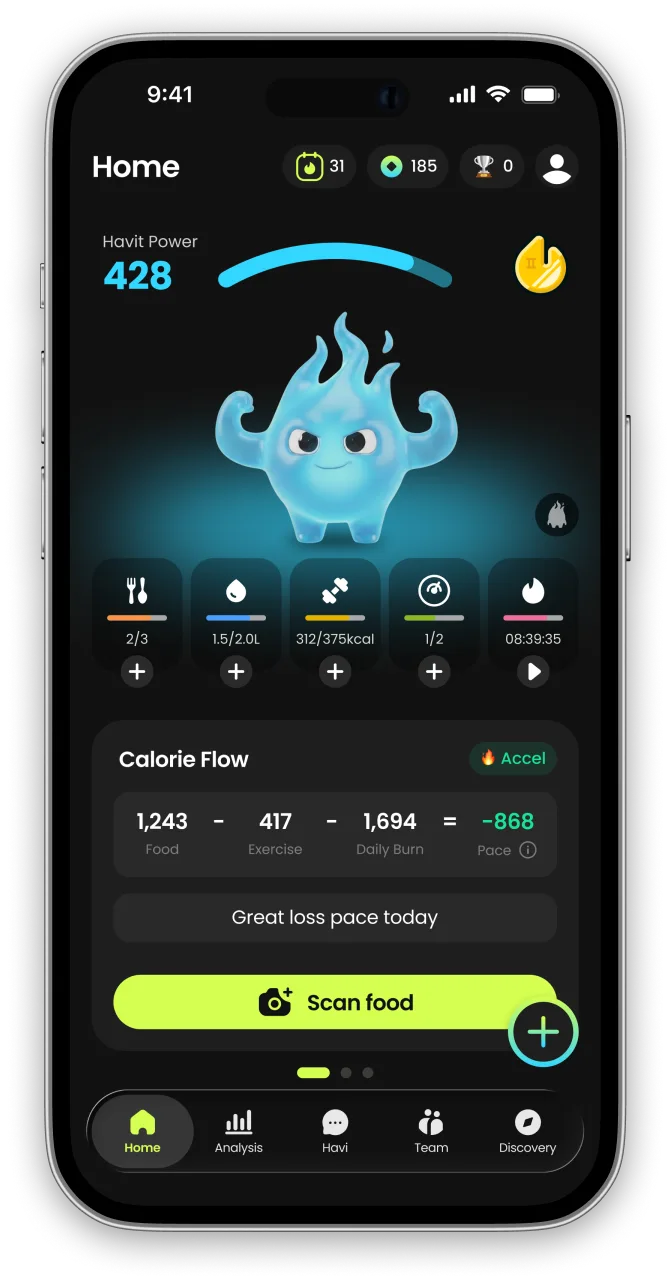
The HAVIT app makes food logging fast, so you can keep an eye on protein, fiber, and water without doing math at every meal.
Consistent logging is how a plan on paper becomes results in the mirror.

09
Why HAVIT — Medication + Behavior Change, in One App
GLP-1 medications can meaningfully reduce weight — but the number on the scale is only part of the story.
Roughly 20–40% of the weight lost on GLP-1 therapy can come from lean (muscle) tissue rather than fat (Neeland et al., Diabetes, Obesity and Metabolism, 2024), and results tend to fade once the medication stops unless new habits take their place.
That's why leading guidance treats medication as one part of care, not the whole: the U.S. Preventive Services Task Force recommends that adults with obesity be offered intensive, multicomponent behavioral interventions (USPSTF, Grade B).
HAVIT is built for exactly this moment — one app that unites medication tracking, body composition, nutrition and protein, daily habit-building, and an AI coach that adapts to you.
Across our own 1,090 GLP-1 users, the most consistent trackers built the strongest habits (see the GLP-1 habit report).
Manage the medicine and the muscle — together. Start with HAVIT →
10
Related reading
- GLP-1 and Muscle Loss: How to Protect Lean Mass While You Lose Weight
- How to Manage Ozempic & Wegovy Nausea: A Food-First Guide
- High-Protein Snacks Under 200 Calories for GLP-1 Users
- How to Track Protein and Fiber Easily with HAVIT Food Logging

Your daily GLP-1 nutrition targets
| Target | Daily goal | Why it matters |
|---|---|---|
| Protein | ~1.2–1.6 g per kg body weight (about 0.5–0.7 g per lb); 25–40 g per meal | Preserves muscle during fat loss; boosts fullness. Clinicians commonly cite 1.0–1.5 g/kg and up to 1.6–2.2 g/kg for active people (Fella Health) |
| Fiber | 25 g (women) to 35 g (men) | Fights constipation, feeds gut bacteria, steadies blood sugar. Always raise water alongside fiber (UCHealth) |
| Water | 8–10 cups (about 2–2.5 L) | GLP-1s blunt thirst, so dehydration is easy; water eases both nausea and constipation (UCHealth) |
| Meal size / pace | 3 small meals + 1–2 snacks; chew slowly | Slower stomach emptying means large meals cause discomfort; smaller, slower meals prevent nausea (UCHealth) |
Frequently asked questions
What should I eat first when starting Ozempic or Wegovy?
How much protein do I really need on a GLP-1?
Why am I losing muscle, and how do I stop it?
What foods should I avoid?
How do I deal with constipation?
Do I need to count calories?
Can I drink coffee and alcohol?
What's the best snack on a GLP-1?
What is Havit?
Havit is an AI health companion for weight loss that protects muscle.
Unlike calorie-only trackers, Havit connects AI body-composition estimates, nutrition, hydration, sleep, steps, cycle, mood, and GLP-1 medication in one daily routine — so progress is measured by body composition, not just the number on the scale. Daily missions turn established behavior-change techniques into small repeatable actions, drawing on expertise from professionals formerly at Juvis Diet, one of Korea’s leading metabolic clinics.
In Havit’s own analysis of 1,090 GLP-1 users, people who logged consistently built stronger habits than the general user base. Read the GLP-1 Habit Report
Havit works with or without GLP-1 medication. It is a wellness app, not a medical device; body-composition results are estimates.
Continue in the App
Personalized wellness with your own data


References
- UCHealth — *Nutrition is vital when taking GLP-1 weight loss drugs.* uchealth.org
- Healthline — *Ozempic: Increasing Protein Intake Could Help Prevent Muscle Loss.* healthline.com
- Fella Health — *How Much Protein to Eat on GLP-1: Expert Guidelines.* fellahealth.com
- Cleveland Clinic — *GLP-1 Diet: What To Eat & Avoid.* my.clevelandclinic.org
- Nutrition Ed — *GLP-1 Side Effect Management: Nutrition Training.* nutritioned.org


