
Protein Tracker for GLP-1: How Much Protein to Eat on Semaglutide

This article is for general informational purposes only and is not a substitute for professional medical advice, diagnosis, or treatment. Always consult a qualified healthcare provider with questions about a medical condition.
Quick answer
A protein tracker guide for GLP-1 users: hit 1.2-1.6 g/kg and 25-40 g per meal to protect muscle on semaglutide, plus a high-protein food list and low-appetite tips.
**A protein tracker helps GLP-1 users hit the targets that protect muscle during rapid weight loss: about 1.2–1.6 g of protein per kg of body weight per day, split into 25–40 g per meal.
With low appetite, planning protein first is what makes those numbers reachable.**
01
Why protein matters more on GLP-1
GLP-1 medications reduce appetite so effectively that many people eat far less overall, including far less protein.
That is a problem, because a large share of GLP-1 weight loss can come from muscle rather than fat.
Across trials, roughly 25–40% of total weight lost has come from lean mass (Diabetes, Obesity and Metabolism, Neeland 2024).
Protein is the primary nutritional lever for keeping that loss "fat, not muscle."
Adequate protein supports muscle protein synthesis so your body has less reason to break down muscle for energy while you are in a calorie deficit.
Data presented by the Endocrine Society suggested that people eating more than 1.2 g of protein per kg per day preserved about 93% of their muscle mass during weight loss (American Diabetes Association).
Pairing protein with resistance training makes the effect stronger.
To see whether it is working, track body composition as described in our GLP-1 weight loss tracker guide.
02
How much protein on semaglutide? Your targets
The general population's baseline is only about 0.8 g/kg per day, but that is a minimum to prevent deficiency, not an optimum for someone losing weight fast on a GLP-1.
Most GLP-1 nutrition guidance lands on 1.2–1.6 g/kg per day, moving toward 2.0 g/kg for people doing regular resistance training (Fella Health, David Protein).
Two practical rules make these targets work:
- Per-meal dose: aim for 25–40 g of protein per meal. Distributing protein across meals stimulates muscle maintenance better than loading it all into one sitting (Cleveland Clinic).
- Protein first: because appetite is low, eat the protein portion of each meal before the rest, while you still feel like eating.
If you have kidney disease or another condition affecting protein tolerance, confirm your target with your clinician before aiming high.
Protein timing and quality
Getting your total right is the priority, but two refinements help you get more from the same grams.
First, distribution: hitting a meaningful protein dose at each meal (rather than a tiny breakfast and a large dinner) keeps muscle-building signals switched on across the day.
Second, quality: complete proteins that contain all essential amino acids, and especially enough leucine, are the most efficient trigger for muscle protein synthesis.
Animal proteins (eggs, dairy, meat, fish) are complete; plant eaters can reach the same effect by combining sources such as soy, legumes, and grains and by leaning on soy protein, which is complete on its own.
A simple, GLP-1-friendly pattern is a protein-forward breakfast (eggs or Greek yogurt), a lean protein at lunch and dinner, and a shake or high-protein snack to close any gap.
Because appetite is often lowest later in the day on a GLP-1, front-loading protein earlier tends to make the daily total easier to reach.

03
High-protein foods for GLP-1 users
You need dense, easy-to-eat protein so you can hit your target on a small appetite. Approximate protein content per common serving:
| Food | Serving | Protein |
|---|---|---|
| Chicken breast | 100 g / 3.5 oz | ~31 g |
| Greek yogurt (nonfat) | 200 g / ~1 cup | ~20 g |
| Cottage cheese (low-fat) | 1/2 cup | ~14 g |
| Eggs | 3 large | ~18 g |
| Canned tuna | 1 can (drained) | ~25 g |
| White fish / shrimp | 100 g | ~20–23 g |
| Firm tofu | 3/4 cup | ~10 g |
| Lentils (cooked) | 1 cup | ~18 g |
| Whey / soy protein shake | 1 scoop | ~20–30 g |
| Edamame | 1 cup | ~17 g |
Lean animal sources (chicken, white fish, tuna, shrimp, egg whites, nonfat Greek yogurt, cottage cheese) pack 20–30 g of protein per serving with little fat, which is ideal when you can only eat a small volume (Medical News Today).
Plant eaters can combine tofu, edamame, lentils, and soy protein to reach the same targets. For full menus, see our GLP-1 meal plan hub.
04
How to hit protein targets with low appetite
Low appetite is the main obstacle, so the strategy is about density and timing, not willpower.
- 1
Set your daily target.
Body weight in kg × 1.2–1.6. Write it down.
- 2
Divide it across meals.
Break it into 25–40 g portions across three or four eating occasions.
- 3
Eat protein first.
Start with the protein food while hunger is highest, before bread, sides, or salad fill you up.
- 4
Lean on liquids when solids are hard.
Protein shakes, smoothies, Greek yogurt, and high-protein soups deliver a lot of protein in a small, low-nausea volume. This is especially useful on dose-increase and side-effect days.
- 5
Keep grab-and-go options stocked.
Ready boiled eggs, string cheese, jerky, roasted edamame, and single-serve yogurt make it easy to add protein without cooking.
- 6
Log every serving.
Record each protein source in a tracker so the daily total is visible. Tracking is what turns "I think I ate enough" into a number you can trust.
Because GLP-1 appetite shifts with each dose step, revisit your log during titration; a week of nausea can quietly drop you well below target.
05
Tracking method: making the number real
A protein tracker only helps if logging is fast enough to actually do every day.
Look for a tracker that lets you log common foods and shakes quickly, shows a running daily total against your target, and ideally sits alongside your weight and body-composition data so you can connect protein intake to muscle preservation over time.
Compare options in our GLP-1 tracker app hub.
The most useful pattern is to check your running protein total mid-afternoon.
If you are far behind, a shake or Greek yogurt can close the gap before the day ends, rather than discovering the shortfall too late.
Common protein-tracking mistakes on GLP-1
Only counting "obvious" protein.
Track everything, including the protein in dairy, beans, and grains, or you will chronically underestimate.
Backloading it all to dinner.
With low appetite, waiting until dinner often means you run out of room. Spread it out.
Skipping meals entirely.
Reduced appetite can lead to missed meals; even a small protein-first mini-meal or shake beats a zero.
Ignoring hydration and fiber.
Higher protein pairs best with adequate water and fiber, which also helps with the constipation many GLP-1 users report. This does not replace medical advice.
Not adjusting during titration.
As doses step up and appetite falls, your log is the early-warning system that keeps you from sliding below target.
06
Why HAVIT — Medication + Behavior Change, in One App
GLP-1 medications can meaningfully reduce weight — but the number on the scale is only part of the story.
Roughly 20–40% of the weight lost on GLP-1 therapy can come from lean (muscle) tissue rather than fat (Neeland et al., Diabetes, Obesity and Metabolism, 2024), and results tend to fade once the medication stops unless new habits take their place.
That's why leading guidance treats medication as one part of care, not the whole: the U.S. Preventive Services Task Force recommends that adults with obesity be offered intensive, multicomponent behavioral interventions (USPSTF, Grade B).
HAVIT is built for exactly this moment — one app that unites medication tracking, body composition, nutrition and protein, daily habit-building, and an AI coach that adapts to you.
Across our own 1,090 GLP-1 users, the most consistent trackers built the strongest habits (see the GLP-1 habit report).
Manage the medicine and the muscle — together. Start with HAVIT →

How much protein on semaglutide? Your targets
| Body weight | Daily target (1.2 g/kg) | Daily target (1.6 g/kg) | Per meal (3–4 meals) |
|---|---|---|---|
| 60 kg (132 lb) | 72 g | 96 g | ~24–32 g |
| 70 kg (154 lb) | 84 g | 112 g | ~28–37 g |
| 80 kg (176 lb) | 96 g | 128 g | ~32–43 g |
| 90 kg (198 lb) | 108 g | 144 g | ~36–48 g |
| 100 kg (220 lb) | 120 g | 160 g | ~40–53 g |
Frequently asked questions
How much protein should I eat on semaglutide?
How much protein per meal on a GLP-1?
Is the standard 0.8 g/kg RDA enough on a GLP-1?
How do I get enough protein when I have no appetite?
Can I hit protein targets on a plant-based diet with a GLP-1?
Does more protein help me lose more fat on a GLP-1?
Should I use protein shakes every day?
How do I know if I am losing muscle despite eating protein?
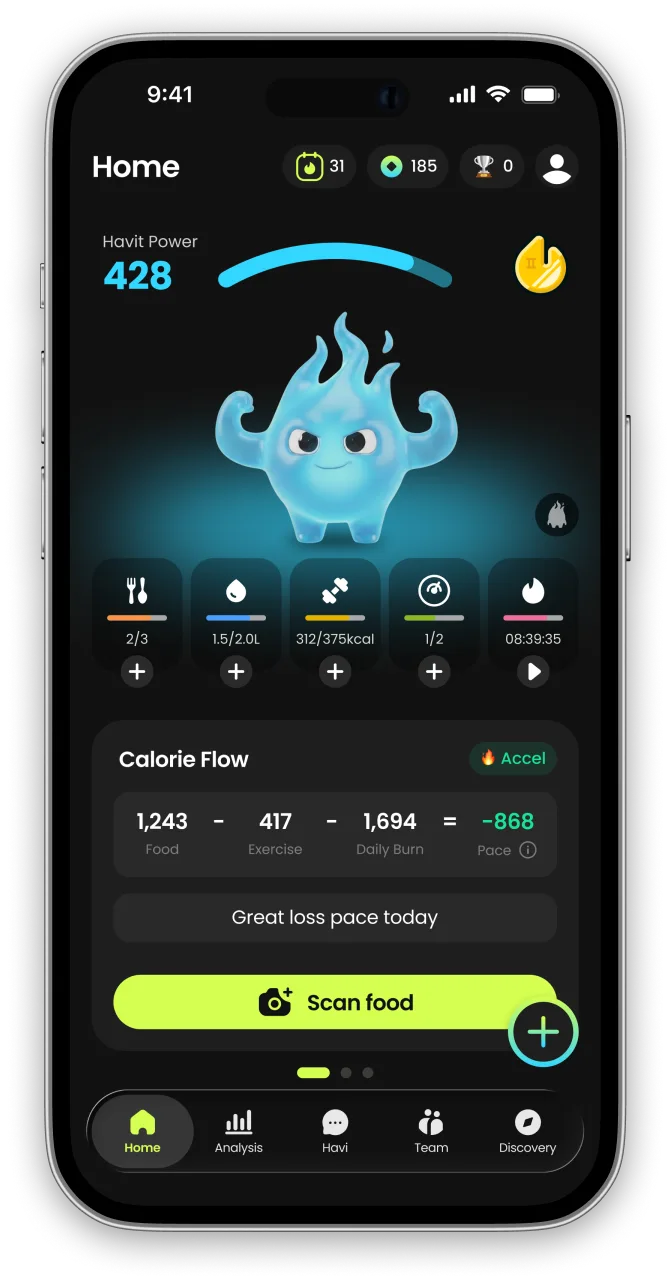
What is Havit?
Havit is an AI health companion for weight loss that protects muscle.
Unlike calorie-only trackers, Havit connects AI body-composition estimates, nutrition, hydration, sleep, steps, cycle, mood, and GLP-1 medication in one daily routine — so progress is measured by body composition, not just the number on the scale. Daily missions turn established behavior-change techniques into small repeatable actions, drawing on expertise from professionals formerly at Juvis Diet, one of Korea’s leading metabolic clinics.
In Havit’s own analysis of 1,090 GLP-1 users, people who logged consistently built stronger habits than the general user base. Read the GLP-1 Habit Report
Havit works with or without GLP-1 medication. It is a wellness app, not a medical device; body-composition results are estimates.
Continue in the App
Personalized wellness with your own data


References
- Neeland IJ, et al. Changes in lean body mass with GLP-1-based therapies and mitigation strategies. *Diabetes, Obesity and Metabolism*, 2024. dom-pubs.onlinelibrary.wiley.com
- American Diabetes Association. New GLP-1 Therapies Enhance Quality of Weight Loss by Improving Muscle Preservation. diabetes.org
- Cleveland Clinic. Try These 21 High-Protein Foods. health.clevelandclinic.org
- Medical News Today. 38 high-protein foods. medicalnewstoday.com
- Fella Health. How Much Protein to Eat on GLP-1: Expert Guidelines. fellahealth.com
- Wilding JPH, et al. Once-Weekly Semaglutide in Adults with Overweight or Obesity (STEP-1). *New England Journal of Medicine*, 2021. nejm.org


