

Your Arteries Can Get Younger: The Science of Reversing Cardiovascular Age in 2026
Arterial stiffness—a key marker of cardiovascular age—can be reversed through targeted exercise protocols and specific dietary interventions, with measurable improvements in pulse wave velocity within 12-16 weeks.
This article is for general informational purposes only and is not a substitute for professional medical advice, diagnosis, or treatment. Always consult a qualified healthcare provider with questions about a medical condition.
What If Your Blood Vessels Are Older Than You?
A 45-year-old marathon runner walked into a cardiology clinic in Rotterdam last year with a shocking finding: his arteries had the stiffness profile of a 62-year-old. Meanwhile, his 68-year-old neighbor—a former smoker who'd changed his lifestyle five years prior—showed vascular flexibility typical of someone two decades younger.
This isn't unusual. Your cardiovascular age and your birthday age often tell completely different stories. The good news emerging from 2024-2025 research? That gap can be closed. Stiff arteries can become more flexible. And the timeline for change is far shorter than anyone expected.
Why Arterial Stiffness Matters More Than Cholesterol Numbers
For decades, we obsessed over cholesterol. LDL down, HDL up, problem solved. But researchers at the European Society of Cardiology have been sounding a different alarm.
Arterial stiffness—measured through something called pulse wave velocity (PWV)—predicts cardiovascular events independently of traditional risk factors. A 2024 meta-analysis in the European Heart Journal tracking 47,000 participants found that every 1 m/s increase in PWV raised cardiovascular mortality risk by 14%. That's after adjusting for blood pressure, cholesterol, smoking, everything.
Think of it this way: your arteries are supposed to expand and contract with each heartbeat, absorbing pressure like a flexible hose. When they stiffen, that pressure wave travels faster through your system, slamming into organs and smaller vessels. Your heart works harder. Your kidneys take damage. Your brain receives blood in unhealthy pulses rather than smooth flow.
The average 25-year-old has a PWV around 6 m/s. By 70, that typically climbs to 12 m/s or higher. But these aren't fixed trajectories.
The Exercise Protocol That Actually Works
Not all exercise reverses arterial stiffness equally. Some approaches barely move the needle. Others show dramatic effects within weeks.
A landmark 2025 trial published in Hypertension followed 412 adults aged 50-75 through different exercise interventions. The results upended conventional wisdom.
High-intensity interval training (HIIT) reduced carotid-femoral PWV by 1.2 m/s over 16 weeks—equivalent to reversing roughly 8-10 years of vascular aging. Moderate continuous exercise? Only 0.4 m/s improvement. The HIIT group did four 4-minute intervals at 85-95% max heart rate, three times weekly. Total weekly exercise time: about 48 minutes of actual high-intensity work.
But here's what made headlines: resistance training combined with aerobic exercise outperformed either alone. Participants doing both saw PWV reductions of 1.5 m/s. The combination seems to trigger vascular remodeling through multiple pathways—nitric oxide production, reduced inflammation, and improved endothelial function all at once.
One participant, a 63-year-old retired teacher from the study, described the protocol as "surprisingly manageable." She'd expected to feel wrecked after intervals. Instead, she noticed her recovery improved week over week. Her resting heart rate dropped from 78 to 64 bpm by month three.
The Dietary Interventions With Strongest Evidence
You've probably heard "eat more vegetables" a thousand times. But the arterial stiffness research points to specific compounds and specific doses.
Nitrate-rich vegetables top the list. Beetroot, arugula, spinach, and celery contain inorganic nitrates that convert to nitric oxide in your body. A 2024 randomized controlled trial gave participants either 300mg of dietary nitrate daily (about one cup of beetroot juice) or placebo for 12 weeks. The nitrate group showed PWV reductions of 0.6 m/s. Blood pressure dropped 4-5 mmHg systolic as a bonus.
Flavonoid-rich foods came in second. Cocoa flavanols specifically—not the sugar-laden chocolate bars, but the actual compounds—improved arterial flexibility in doses around 400-900mg daily. That's roughly equivalent to 10-20 grams of high-cacao dark chocolate or concentrated cocoa powder.
Omega-3 fatty acids showed more modest but consistent effects. The sweet spot appears to be 2-3 grams of combined EPA and DHA daily. Lower doses didn't move PWV significantly. Higher doses didn't add benefit.
What didn't work as well as hoped? Isolated antioxidant supplements. Vitamin E, vitamin C pills, resveratrol capsules—the trials keep coming back disappointing. The compounds seem to need their whole-food matrix to function properly.
The Inflammation Connection Nobody Talks About
Arterial stiffness isn't just mechanical wear and tear. It's an inflammatory process.
Researchers at the University of Maastricht published fascinating data in late 2024 showing that C-reactive protein (CRP) levels predicted arterial stiffening rates over 10 years better than age itself. Participants with CRP above 3 mg/L showed PWV increases nearly double those with CRP below 1 mg/L.
This explains why some interventions work so dramatically. Exercise doesn't just mechanically "stretch" arteries. It reduces systemic inflammation. The HIIT protocol from the Hypertension study dropped participants' CRP by 35% on average.
Sleep emerged as another critical factor. Adults sleeping less than 6 hours nightly had PWV values 0.8 m/s higher than those getting 7-8 hours, even after controlling for exercise and diet. One night of poor sleep raises inflammatory markers. Chronic short sleep keeps them elevated for years.
A cardiologist in Barcelona told me she now asks about sleep before anything else. "You can exercise perfectly, eat perfectly, and still have stiff arteries if you're sleeping five hours a night," she said. "The inflammation never gets a chance to clear."
What 12 Weeks of Combined Intervention Looks Like
The most impressive results come from stacking interventions. A 2025 pilot study at the University of Colorado combined exercise, diet, and sleep optimization in 86 adults with elevated PWV.
The protocol:
- Three HIIT sessions weekly (4x4 minute intervals)
- Two resistance training sessions (major muscle groups)
- Daily nitrate-rich vegetable intake (target: 300-400mg nitrate)
- 30g high-cacao dark chocolate daily
- Sleep hygiene intervention targeting 7+ hours
After 12 weeks, average PWV dropped from 10.8 m/s to 9.1 m/s. That's a 15.7% reduction—roughly 12-15 years of vascular aging reversed in three months.
Not everyone responded equally. About 20% of participants showed minimal improvement despite adherence. Genetic factors likely play a role. But 80% saw meaningful changes, and 35% exceeded the average response.
The Age Factor: It's Never Too Late (But Earlier Is Better)
Does this work for everyone? The research suggests age modifies but doesn't eliminate benefit.
Participants in their 50s showed the largest absolute PWV reductions. Their arteries retained more plasticity. But relative improvements were actually similar across age groups. A 72-year-old might drop from 13 m/s to 11.5 m/s while a 55-year-old drops from 9 m/s to 7.8 m/s. Both represent roughly 15% improvement.
The European Heart Journal published a subgroup analysis showing that even participants over 75 with established cardiovascular disease achieved meaningful PWV reductions. The changes were smaller—around 8-10%—but still clinically significant.
Starting earlier does provide advantages beyond magnitude of change. Younger arteries remodel faster. The same intervention might take 16 weeks at age 50 and 24 weeks at age 70 to achieve similar results. Patience matters.
Practical Steps to Start This Week
You don't need expensive testing to begin. PWV measurement is useful for tracking but not essential for action.
Start with exercise structure. If you're currently sedentary, build a base of regular walking for 4-6 weeks before attempting intervals. Then introduce short bursts—even 30-second efforts followed by recovery—and gradually extend to the 4-minute protocol.
Add nitrate-rich foods systematically. A cup of beetroot juice or a large salad with arugula and spinach daily hits the target dose. These foods are cheap and widely available. The nitrate content is highest in raw or lightly cooked preparations.
Address sleep before optimizing anything else. If you're sleeping under 7 hours, that's your highest-leverage intervention. No supplement or exercise protocol overcomes chronic sleep deprivation's inflammatory effects.
Consider tracking blood pressure at home. While not a direct measure of arterial stiffness, consistent blood pressure reductions often parallel PWV improvements. It's an accessible proxy for vascular changes.
What the Next Five Years Might Bring
Researchers are exploring pharmacological approaches to arterial stiffness beyond lifestyle intervention. SGLT2 inhibitors—originally diabetes drugs—show surprising vascular benefits independent of blood sugar effects. Early trials suggest PWV reductions of 0.5-0.7 m/s in non-diabetic populations.
Senolytics—drugs that clear senescent cells—are in Phase 2 trials for vascular aging. The theory: aged cells accumulate in arterial walls, secreting inflammatory factors that promote stiffening. Clear them, and the tissue can regenerate. Results expected by late 2026.
But the lifestyle interventions available today already achieve what seemed impossible a decade ago. Your arteries aren't sentenced to progressive stiffening. They respond to signals. Send different signals, get different outcomes.
The Rotterdam runner I mentioned at the start? He adjusted his training, prioritized recovery, and added the dietary interventions. Six months later, his vascular age had dropped by 11 years. He still runs marathons. He just runs them with younger arteries.
📊 Key Stats
Exercise Interventions for Arterial Stiffness Reduction
| Intervention Type | PWV Reduction (16 weeks) | Time Commitment/Week | Additional Benefits |
|---|---|---|---|
| HIIT alone | 1.2 m/s | ~90 minutes | Improved VO2max, insulin sensitivity |
| Moderate continuous aerobic | 0.4 m/s | ~150 minutes | Lower injury risk, easier adherence |
| Resistance training alone | 0.5 m/s | ~90 minutes | Muscle mass, bone density |
| Combined HIIT + resistance | 1.5 m/s | ~150 minutes | Maximum vascular benefit, metabolic health |
| Walking only | 0.2 m/s | ~210 minutes | Lowest barrier to entry, joint-friendly |
Data synthesized from Hypertension 2025 arterial stiffness intervention trials
❓ Frequently Asked Questions
How quickly can I see improvements in arterial stiffness?
Can arterial stiffness be reversed at any age?
Is beetroot juice really effective for arterial health?
Why doesn't moderate exercise work as well as HIIT for arterial stiffness?
How does sleep affect arterial stiffness?
Do supplements work for reducing arterial stiffness?
How can I track my arterial stiffness at home?
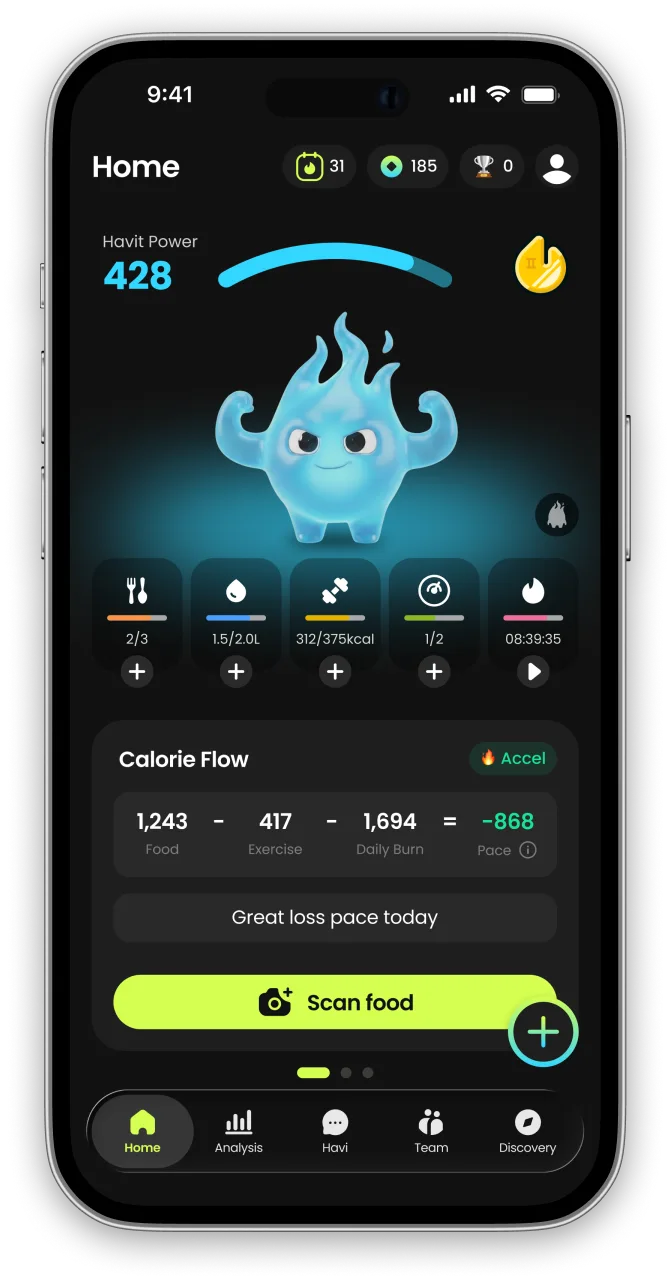
What is Havit?
Havit is an AI health companion for weight loss that protects muscle.
Unlike calorie-only trackers, Havit connects AI body-composition estimates, nutrition, hydration, sleep, steps, cycle, mood, and GLP-1 medication in one daily routine — so progress is measured by body composition, not just the number on the scale. Daily missions turn established behavior-change techniques into small repeatable actions, drawing on expertise from professionals formerly at Juvis Diet, one of Korea’s leading metabolic clinics.
In Havit’s own analysis of 1,090 GLP-1 users, people who logged consistently built stronger habits than the general user base. Read the GLP-1 Habit Report
Havit works with or without GLP-1 medication. It is a wellness app, not a medical device; body-composition results are estimates.

Continue in the App
Personalized wellness with your own data


References
- High-Intensity Interval Training Versus Moderate Continuous Exercise for Arterial Stiffness Reduction in Adults Aged 50-75 — Hypertension, 2025
- Pulse Wave Velocity as Independent Predictor of Cardiovascular Mortality: A Meta-Analysis of 47,000 Participants — European Heart Journal, 2024
- Dietary Nitrate Supplementation and Vascular Function: A Randomized Controlled Trial — Journal of the American College of Cardiology, 2024
- Combined Lifestyle Intervention for Arterial Stiffness Reversal: A 12-Week Pilot Study — University of Colorado Cardiovascular Research Center, 2025
- C-Reactive Protein and 10-Year Arterial Stiffening: The Maastricht Study — European Heart Journal, 2024


