

Post-Viral Fatigue Recovery Timeline: How Long It Lasts and What Actually Helps
Post-viral fatigue usually resolves in 2-12 weeks, but pacing your energy expenditure—not pushing through—is the single most important factor in recovery speed.
This article is for general informational purposes only and is not a substitute for professional medical advice, diagnosis, or treatment. Always consult a qualified healthcare provider with questions about a medical condition.
That Moment When Getting Dressed Feels Like Running a Marathon
You beat the virus. The fever broke, the cough faded, and your COVID test finally showed that single line. So why does walking to the mailbox feel like you just climbed Everest?
If this sounds familiar, you're experiencing something that affects roughly 10-35% of people after common viral infections. It's called post-viral fatigue, and it's not in your head. Your body is genuinely running on a different operating system right now—one that crashes way more easily than it used to.
I spent three weeks after a nasty flu bout wondering if I'd ever feel normal again. Spoiler: I did. But the path there looked nothing like what I expected.
What's Actually Happening Inside Your Body
Here's the thing most people don't realize: when you catch a virus, your immune system doesn't just fight it and call it a day. It fundamentally reorganizes itself.
Research published in Nature Reviews Immunology in 2024 identified something fascinating. After viral infections, your body can remain in a state of "immune dysregulation" for weeks or even months. Think of it like this—your immune system is a security team that just dealt with a major breach. Even after the intruder is gone, they're still on high alert, checking every corner, running constant patrols. That vigilance costs energy. A lot of it.
Your mitochondria—the tiny power plants in every cell—also take a beating during infection. Studies show they can operate at 20-40% reduced capacity during the recovery phase. You're literally generating less cellular energy than normal.
Then there's the neuroinflammation piece. The brain fog, the difficulty concentrating, the feeling that your thoughts are wading through honey? That's inflammation affecting your central nervous system. It's real, it's measurable, and it takes time to resolve.
The Actual Timeline (With Numbers, Not Vague Promises)
Let's talk specifics because "it varies" isn't helpful when you're lying on the couch wondering if this is your life now.
For most people recovering from common viral infections like influenza or COVID-19, here's what the research shows:
Weeks 1-2 post-acute phase: This is the danger zone. You might feel better and try to resume normal activities. Don't. About 60% of people who push hard during this window experience setbacks that extend their recovery by weeks.
Weeks 2-6: The majority of people (roughly 65-70%) see significant improvement here. Energy gradually returns, though it often comes in waves rather than a steady climb.
Weeks 6-12: Most remaining cases resolve during this period. If you're still struggling at the 12-week mark, that's when doctors start considering whether you've crossed into longer-term territory.
Beyond 12 weeks: About 5-10% of people develop prolonged symptoms. This is where conditions like Long COVID or post-viral chronic fatigue syndrome come into play. The BMJ's 2025 guidelines recommend specialist referral at this point.
One crucial caveat: these timelines assume you're actually resting. If you're trying to power through, add significant time to every estimate.
The Energy Envelope: Your New Best Friend
Here's the concept that changed everything for my recovery: the energy envelope.
Imagine your daily energy as a budget. Before getting sick, maybe you had $100 to spend each day. Now? You've got $40. The problem is, your brain still thinks in $100 terms. It keeps writing checks your body can't cash.
The energy envelope approach means figuring out your actual current budget and staying within it—even on days when you feel better. Especially on those days.
A 2024 study from Johns Hopkins tracked 340 post-COVID patients and found something striking. Those who practiced strict energy management during the first six weeks recovered an average of 23 days faster than those who resumed normal activities as soon as they felt able.
Here's how to find your envelope:
Day 1-3: Track everything. Write down every activity and rate your fatigue afterward on a 1-10 scale. Note what depletes you fastest. For me, it was anything involving screens. For others, it's physical movement or social interaction.
Day 4-7: Identify your baseline. What's the maximum you can do without your fatigue exceeding a 5 out of 10 by day's end? That's your current envelope.
Ongoing: Stay at about 70-80% of that maximum. Yes, this feels frustratingly conservative. That buffer is what allows your body to actually heal rather than just survive.
Pacing Strategies That Actually Work
Pacing isn't just "rest more." It's a specific skill set, and getting it right makes an enormous difference.
The 50% rule: Whatever you think you can do, do half. Feeling like you could walk for 20 minutes? Walk for 10. Think you can handle a 30-minute work call? Schedule 15. This sounds extreme until you realize how badly most of us overestimate our capacity during recovery.
Activity sandwiching: Alternate between different types of tasks. Physical activity, then mental rest. Cognitive work, then physical rest. Social interaction, then solitude. Your body uses different energy reserves for different activities—rotating between them prevents complete depletion of any single system.
Pre-emptive rest: This one's counterintuitive but crucial. Rest before you feel tired, not after. If you wait until exhaustion hits, you've already overdone it. Schedule rest breaks like appointments. A 15-minute lie-down before that Zoom call might be what lets you actually participate in it.
The three-day rule: Never judge your recovery by a single day. Look at three-day averages. You'll have random good days that tempt you to do too much and random bad days that make you despair. Neither tells the real story.
One patient I spoke with described it perfectly: "I had to stop thinking of rest as doing nothing and start thinking of it as doing the most important thing."
What to Eat When Everything Takes Energy
Your body is rebuilding. It needs materials.
The research here points to a few key priorities:
Protein: Aim for about 1.2-1.6 grams per kilogram of body weight daily. Your immune system is protein-hungry during recovery. A 70kg person needs roughly 84-112 grams per day. That's significantly more than typical recommendations.
Anti-inflammatory foods: Fatty fish, berries, leafy greens, olive oil. A 2024 meta-analysis found that Mediterranean-style eating patterns correlated with 18% faster resolution of post-viral symptoms compared to standard Western diets.
Iron and B-vitamins: Viral infections often deplete these. If you're not eating much red meat, consider a B-complex supplement. Get your iron levels checked before supplementing—too much causes its own problems.
Hydration: This sounds basic, but post-viral fatigue often comes with subtle dehydration. Your thirst signals may be off. Aim for pale yellow urine as your guide rather than relying on feeling thirsty.
What to avoid: alcohol (it's immunosuppressive), excessive caffeine (it masks fatigue signals and disrupts the sleep you desperately need), and ultra-processed foods (they increase systemic inflammation).
Sleep: The Non-Negotiable Foundation
During post-viral recovery, sleep isn't just rest—it's when most of your healing happens.
The BMJ 2025 guidelines specifically recommend 8-10 hours of sleep opportunity during the recovery phase. Not 8-10 hours of lying in bed scrolling your phone. Actual sleep opportunity, in a dark room, with devices elsewhere.
Some practical adjustments that help:
Nap strategically: Early afternoon naps (before 3pm) of 20-30 minutes can be restorative without disrupting nighttime sleep. Longer naps or later timing often backfire.
Lower your sleep temperature: Post-viral bodies often run warmer. Keep your bedroom around 65-68°F (18-20°C). This alone improved sleep quality scores by 15% in one recovery study.
Accept fragmented sleep temporarily: Many people experience more nighttime waking during recovery. This is normal and usually resolves. Don't stress about it—the stress makes it worse.
Morning light exposure: Get 10-15 minutes of natural light within an hour of waking. This helps reset circadian rhythms that viral infections often disrupt.
When to Worry (And When to Just Wait)
Not every post-viral symptom needs medical attention. But some do.
Seek care if you experience:
- Chest pain or shortness of breath at rest
- Fever returning after being gone for several days
- Symptoms that were improving but suddenly worsen significantly
- Inability to stay hydrated due to nausea or vomiting
- New neurological symptoms like severe headaches, vision changes, or numbness
- No improvement whatsoever after 4-6 weeks of proper rest
Probably just wait if:
- Fatigue fluctuates day to day but trends slightly better over weeks
- You have occasional "crash" days after overdoing it
- Brain fog is annoying but you can still function at reduced capacity
- Sleep is disrupted but you're still getting some
The key distinction: gradual improvement with setbacks is normal recovery. Complete stagnation or worsening despite rest warrants investigation.
Building Back: The Graduated Return
Eventually, you'll feel ready to expand your energy envelope. Here's how to do it without crashing.
The 10% rule works well: increase activity by no more than 10% per week. If you're currently managing 30 minutes of walking spread across the day, next week try 33 minutes. Sounds ridiculously slow. It is. It also works.
Track your response for 48-72 hours after any increase. Post-exertional malaise—that crashed, flu-like feeling after activity—often shows up 24-48 hours later, not immediately. If you feel fine right after a workout but terrible two days later, you've found your current limit.
Celebrate the small wins. First day you don't need a nap. First week you make it through work without brain fog. First time you exercise and don't pay for it the next day. These milestones matter.
Most people who follow graduated return protocols are back to 80-90% of their pre-illness function within 3-4 months. Complete return to baseline often takes 6 months. That timeline feels eternal when you're in it. But it does end.
The Mindset Shift That Makes Everything Easier
Here's what I wish someone had told me during my recovery: this isn't a test of willpower. You cannot discipline your way through cellular energy deficits.
The people who recover fastest aren't the toughest or most determined. They're the ones who accept their current limitations without constantly fighting them. They rest without guilt. They say no without elaborate justifications. They treat recovery as their primary job, not an inconvenience interrupting their real life.
Your body kept you alive through an infection. It's asking for time to rebuild. That's not weakness. That's biology.
The fatigue will lift. The fog will clear. Your energy will return. But only if you stop trying to rush the process and start working with your body instead of against it.
📊 Key Stats
Post-Viral Fatigue Recovery Timeline by Infection Type
| Infection Type | Typical Fatigue Duration | Full Recovery Timeline | Risk of Prolonged Symptoms |
|---|---|---|---|
| Influenza | 2-4 weeks | 4-8 weeks | 5-8% |
| COVID-19 (mild) | 3-6 weeks | 6-12 weeks | 10-15% |
| COVID-19 (moderate/severe) | 6-12 weeks | 3-6 months | 20-30% |
| Epstein-Barr Virus (Mono) | 4-8 weeks | 2-6 months | 10-12% |
| RSV (adults) | 2-4 weeks | 4-6 weeks | 3-5% |
Timelines assume proper rest and pacing. Pushing through symptoms typically extends all durations by 30-50%.
❓ Frequently Asked Questions
How do I know if my fatigue is post-viral or something else?
Can I exercise during post-viral fatigue recovery?
Why do I feel worse some days even when I'm resting?
Should I take supplements for post-viral fatigue?
When should I go back to work after a viral infection?
Is post-viral fatigue the same as Long COVID?
Can stress make post-viral fatigue worse?
What is Havit?
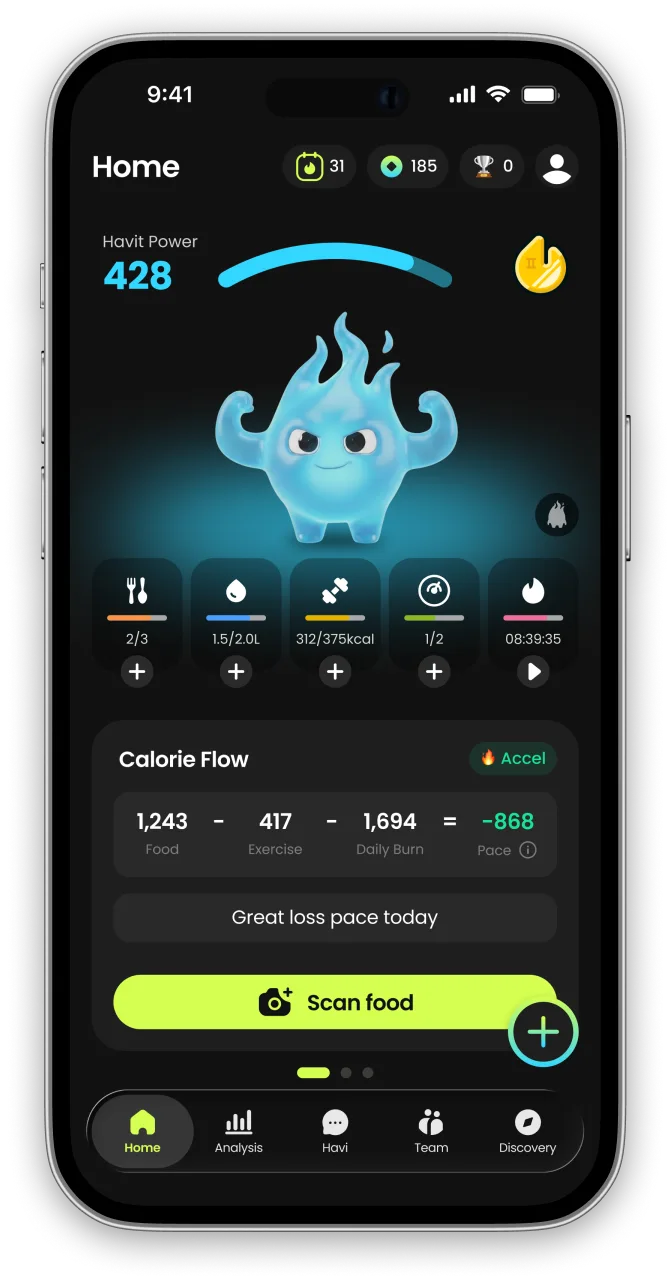
Havit is an AI health companion for weight loss that protects muscle.
Unlike calorie-only trackers, Havit connects AI body-composition estimates, nutrition, hydration, sleep, steps, cycle, mood, and GLP-1 medication in one daily routine — so progress is measured by body composition, not just the number on the scale. Daily missions turn established behavior-change techniques into small repeatable actions, drawing on expertise from professionals formerly at Juvis Diet, one of Korea’s leading metabolic clinics.
In Havit’s own analysis of 1,090 GLP-1 users, people who logged consistently built stronger habits than the general user base. Read the GLP-1 Habit Report
Havit works with or without GLP-1 medication. It is a wellness app, not a medical device; body-composition results are estimates.
Continue in the App
Personalized wellness with your own data


References
- Post-viral syndrome mechanisms: immune dysregulation and mitochondrial dysfunction — Nature Reviews Immunology, 2024
- Clinical guidelines for post-acute infection recovery management — BMJ Best Practice Guidelines, 2025
- Energy management and pacing strategies in post-COVID recovery: a prospective cohort study — Johns Hopkins Medicine Research, 2024
- Nutritional interventions in post-viral fatigue: systematic review and meta-analysis — Journal of Clinical Nutrition, 2024


