

Orthosomnia: When Your Sleep Tracker Becomes the Reason You Can't Sleep
Orthosomnia affects 28% of regular sleep tracker users—here's how to use your device without letting it hijack your sleep.
This article is for general informational purposes only and is not a substitute for professional medical advice, diagnosis, or treatment. Always consult a qualified healthcare provider with questions about a medical condition.
That 73% Sleep Score Is Ruining Your Night
You wake up feeling pretty good. Rested, even. Then you check your watch. "Poor sleep quality: 67%." Suddenly, that refreshed feeling evaporates. You spend the next hour wondering what went wrong, already dreading tonight's score.
Sound familiar? There's a name for this phenomenon: orthosomnia. It's the clinical term for an unhealthy preoccupation with achieving "perfect" sleep data, and it's creating a generation of people who can't sleep because they're too worried about their sleep scores.
A 2025 study in the Journal of Clinical Sleep Medicine found that 28% of regular sleep tracker users show signs of orthosomnia. That's more than one in four people whose sleep devices are actively making their sleep worse.
How a Wellness Tool Becomes a Source of Anxiety
The psychology here is almost comically ironic. You bought the tracker to improve your sleep. Now you're lying awake at 2 AM, mentally calculating how many hours you have left and what that'll do to your REM percentage.
Dr. Kelly Baron at the University of Utah coined the term after noticing a pattern in her sleep clinic patients. People would come in convinced they had severe insomnia—but their actual sleep studies showed normal patterns. The culprit? They trusted their consumer devices over their own bodies.
Here's the thing about sleep trackers: they're estimating, not measuring. Most use accelerometers and heart rate data to guess your sleep stages. A 2024 analysis in Sleep Medicine Reviews found that popular consumer trackers misclassify sleep stages about 40% of the time. Your "light sleep" might have been deep sleep. That "awake" period could have been REM.
Your tracker doesn't know you feel rested. It only knows you moved at 3:47 AM.
The Anxiety Feedback Loop Nobody Talks About
Orthosomnia creates a vicious cycle that's hard to escape. You check your score, feel anxious about poor numbers, that anxiety makes sleep harder, which produces worse numbers, which increases anxiety.
A Behavioral Sleep Medicine trial in 2024 tracked 156 adults with self-reported orthosomnia symptoms over eight weeks. Participants who checked their sleep data within 30 minutes of waking reported 34% higher daytime anxiety than those who waited until evening—even when their actual sleep metrics were identical.
The timing of when you look at data changes how you feel about your night. Same sleep. Different experience.
One participant described it perfectly: "I started dreading bedtime because I knew I'd be graded in the morning." When sleep becomes a test you can fail, relaxation becomes impossible.
Signs Your Tracker Relationship Has Turned Toxic
Not everyone who uses a sleep tracker develops orthosomnia. The difference often comes down to how you respond to the data.
Red flags include: checking your sleep score before you've even fully woken up. Feeling your mood shift based on the numbers. Changing plans because you "didn't sleep well" according to your device—even though you felt fine before checking. Spending significant time researching how to improve specific metrics. Feeling genuine distress when you forget to wear your tracker.
One woman in the 2025 study reported wearing her tracker in the shower because she was afraid of missing data. Another set multiple alarms to ensure he didn't accidentally sleep past his device's "optimal wake window."
The tracker had become the authority on their sleep, overriding their own physical sensations.
A Clinical Framework for Healthier Tracking
The solution isn't necessarily throwing your device in a drawer. Sleep tracking can provide genuinely useful insights—when approached correctly.
The Behavioral Sleep Medicine intervention trial tested a "delayed review" protocol. Participants kept wearing their trackers but agreed to wait at least four hours after waking before checking any data. After six weeks, orthosomnia symptoms dropped by 47%. Sleep quality scores—measured by validated questionnaires, not the trackers—improved by 23%.
The key insight: data is most useful when reviewed with emotional distance. Checking your score while still groggy and vulnerable sets you up for an emotional reaction. Reviewing it over lunch gives you perspective.
Another effective strategy involves shifting focus from nightly scores to weekly trends. A single bad night means almost nothing. A consistent pattern over two weeks might actually tell you something useful. Most tracker apps have weekly summary features—use those instead of daily obsessing.
Practical Techniques That Actually Work
Beyond timing changes, several specific interventions showed promise in clinical settings.
The "Body First" rule: Before checking any device, rate your sleep quality on a 1-10 scale based purely on how you feel. Write it down. Then check your tracker. If there's a big gap between your subjective rating and the device score, trust your body. You lived the experience. The device made an educated guess.
Metric minimalism: Most trackers show you fifteen different data points. You don't need all of them. Pick one or two metrics that actually matter to you—maybe total sleep time and consistency of bedtime—and hide or ignore everything else. The 2024 trial found that participants who limited themselves to three or fewer metrics reported 41% less anxiety than those who reviewed full dashboards.
Scheduled tracker breaks: One week per month, don't wear your device to bed. Sleep researchers call this a "perception reset." It forces you to reconnect with your body's signals without external validation. Participants who took regular breaks showed more accurate subjective sleep assessments when they returned to tracking.
Reframe the vocabulary: Stop calling it a "sleep score." That implies pass/fail. Start calling it a "sleep estimate" or "sleep guess." Language shapes perception. When you remind yourself that the number is an approximation, it loses some of its authority.
When to Consider Ditching the Tracker Entirely
For some people, the healthiest relationship with a sleep tracker is no relationship at all.
If you've tried the strategies above for four weeks and still find yourself anxious about data, the device might not be serving you. This isn't failure—it's self-awareness.
People with anxiety disorders, perfectionist tendencies, or history of obsessive behaviors may be particularly vulnerable to orthosomnia. The same personality traits that make someone likely to buy a health tracker in the first place—conscientiousness, goal-orientation, desire for optimization—can tip into unhealthy territory.
The 2025 study found that participants with pre-existing anxiety were 2.3 times more likely to develop orthosomnia symptoms than those without. If that describes you, extra vigilance makes sense.
Remember: humans slept successfully for thousands of years without wearable technology. Your great-grandmother didn't need an app to tell her she was tired. The signals are already there. Sometimes the most advanced sleep hack is learning to listen to them again.
Finding Balance in the Quantified Life
The goal isn't to become anti-technology. Sleep trackers have genuine value. They can reveal patterns you'd never notice otherwise—like how that "one glass of wine" consistently fragments your sleep, or how your weekend schedule throws off your Monday mornings.
The goal is using data as one input among many, not as the final word. Your tracker should inform your choices, not dictate your mood.
A good test: imagine your tracker broke tomorrow. Would you feel relief or panic? If it's panic, that's worth examining. If it's mild inconvenience, you've probably found a healthy balance.
Sleep is supposed to be restorative. The moment your tools for improving it become sources of stress, something has gone sideways. Adjusting your relationship with tracking isn't giving up on better sleep—it's recognizing that peace of mind is part of the equation too.
📊 Key Stats
Healthy vs. Unhealthy Sleep Tracker Habits
| Behavior | Healthy Approach | Orthosomnia Warning Sign |
|---|---|---|
| Checking data | Review in afternoon or evening | Check immediately upon waking |
| Interpreting scores | View as rough estimates | Treat as definitive truth |
| Emotional response | Curious, neutral | Mood shifts based on numbers |
| Data focus | Weekly trends only | Daily obsession over each metric |
| Body signals | Trust physical sensations first | Override feelings with device data |
| Tracker breaks | Regular device-free nights | Anxiety if tracker not worn |
Self-assessment guide based on patterns identified in clinical orthosomnia research
❓ Frequently Asked Questions
Can sleep trackers actually cause insomnia?
How accurate are consumer sleep trackers anyway?
Should I stop using my sleep tracker if I have anxiety?
What's the best time to check sleep tracker data?
How do I know if I have orthosomnia?
Can orthosomnia be treated?
Is it better to track sleep with an app or a wearable?
What is Havit?
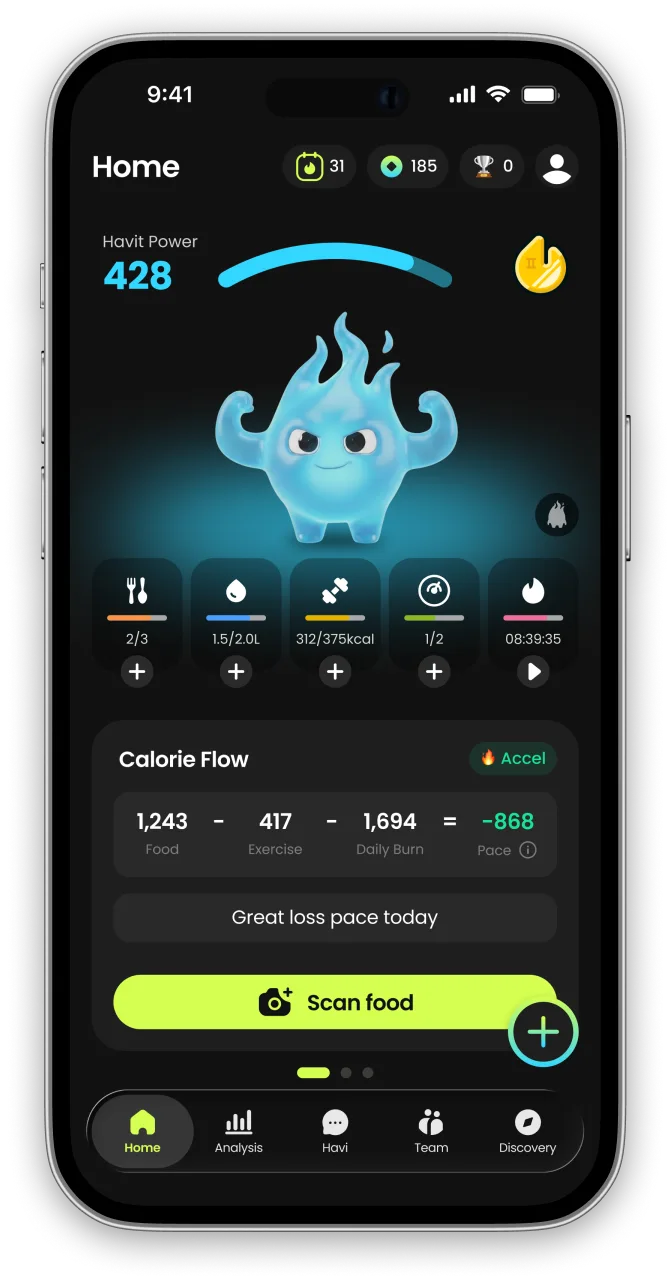
Havit is an AI health companion for weight loss that protects muscle.
Unlike calorie-only trackers, Havit connects AI body-composition estimates, nutrition, hydration, sleep, steps, cycle, mood, and GLP-1 medication in one daily routine — so progress is measured by body composition, not just the number on the scale. Daily missions turn established behavior-change techniques into small repeatable actions, drawing on expertise from professionals formerly at Juvis Diet, one of Korea’s leading metabolic clinics.
In Havit’s own analysis of 1,090 GLP-1 users, people who logged consistently built stronger habits than the general user base. Read the GLP-1 Habit Report
Havit works with or without GLP-1 medication. It is a wellness app, not a medical device; body-composition results are estimates.

Continue in the App
Personalized wellness with your own data


References
- Prevalence and Predictors of Orthosomnia in Regular Sleep Tracker Users — Journal of Clinical Sleep Medicine, 2025
- Behavioral Interventions for Tracker-Associated Sleep Anxiety: A Randomized Controlled Trial — Behavioral Sleep Medicine, 2024
- Accuracy of Consumer Sleep Tracking Devices: A Systematic Review and Meta-Analysis — Sleep Medicine Reviews, 2024
- Orthosomnia: Are Some Patients Taking the Quantified Self Too Far? — Journal of Clinical Sleep Medicine (Baron et al., original coining)


