

Your Body Temperature Hits Rock Bottom at 4 AM: Here's Why That Matters for How You Wake Up
Waking 2-3 hours after your temperature nadir (typically 4-5 AM) dramatically reduces sleep inertia and morning grogginess.
This article is for general informational purposes only and is not a substitute for professional medical advice, diagnosis, or treatment. Always consult a qualified healthcare provider with questions about a medical condition.
The 4 AM Secret Your Body Has Been Keeping
Ever wonder why some mornings you spring out of bed ready to conquer the world, while others feel like you're swimming through wet concrete? The answer might be hiding in a number you've never tracked: your core body temperature minimum.
Somewhere between 3 AM and 5 AM, your internal temperature drops to its lowest point of the day—about 36.0°C (96.8°F), roughly a full degree below your afternoon peak. This moment, called the temperature nadir, acts like a biological reset button. And when you wake up relative to this point determines whether you feel sharp or sluggish for the next few hours.
A 2025 study in the Journal of Biological Rhythms found that participants who woke within 30 minutes of their temperature nadir experienced 47% more severe sleep inertia than those who woke 2-3 hours after. That's the difference between fumbling for coffee like a zombie and actually remembering where you put your keys.
What Exactly Is Temperature Nadir?
Your body runs on a roughly 24-hour temperature cycle. It's not random—this rhythm is controlled by your suprachiasmatic nucleus, a tiny brain region that acts as your master biological clock.
Here's how a typical day looks:
- 2 PM - 6 PM: Temperature peaks around 37.0-37.5°C
- 9 PM - 11 PM: Gradual cooling begins, signaling sleepiness
- 3 AM - 5 AM: Temperature nadir hits (36.0-36.4°C)
- 6 AM - 8 AM: Rapid warming phase begins
That warming phase after the nadir? It's your body's natural alarm clock. Cortisol starts rising about 2-3 hours before your usual wake time, and your temperature climbs in sync. When these systems align with your alarm, waking feels almost effortless.
But here's where it gets interesting. Your nadir timing isn't fixed at 4 AM for everyone. Night owls might hit their minimum closer to 6 AM. Early birds might bottom out at 3 AM. One person's ideal wake time is another person's recipe for disaster.
Why Waking Near Your Nadir Feels So Terrible
Sleep inertia—that groggy, disoriented feeling upon waking—isn't just annoying. It measurably impairs your cognitive function. Research from Chronobiology International in 2024 showed that decision-making accuracy dropped by 34% when participants woke during their temperature minimum compared to waking during the rising phase.
Think about what that means practically. A surgeon scrubbing in after a night shift that ended at their nadir. A truck driver starting a route at 4 AM. A new parent jolted awake by a crying baby right at their temperature low point.
The impairment can last 15 minutes to 4 hours depending on how close to the nadir you woke and how much sleep debt you're carrying. One study participant described it as "feeling like my brain was wrapped in gauze"—and her reaction time tests backed up that subjective experience.
Your body essentially interprets waking at the nadir as a threat. You're being forced into alertness at the exact moment your physiology is screaming for deep rest. The result is a stress response that leaves you feeling worse than if you'd slept less but woken at a better time.
How to Find Your Personal Temperature Minimum
You don't need a rectal thermometer and a 3 AM alarm to figure this out. Several practical methods can help you estimate your nadir:
Method 1: The Sleep Timing Calculation
Your temperature nadir typically occurs about 2-3 hours before your natural wake time—the time you'd wake without an alarm on a free day. If you naturally wake at 7 AM on weekends, your nadir is probably around 4-5 AM.
Method 2: Wearable Temperature Tracking
Devices measuring skin temperature overnight can approximate your core temperature rhythm. The Oura ring, Whoop, and several newer wearables now offer this data. Look for the lowest point in your temperature graph—that's your nadir zone.
Method 3: The Grogginess Log
For two weeks, rate your morning alertness on a 1-10 scale at different wake times. Pattern recognition works surprisingly well. If 5:30 AM feels brutal but 6:30 AM feels fine, you've found a boundary.
A 2024 study tracking 847 participants found that self-reported natural wake times predicted temperature nadir timing within a 45-minute window for 73% of people. Not perfect, but useful.
Optimizing Your Wake Time Around Temperature
Once you know your approximate nadir, the goal is simple: wake during the rising temperature phase, ideally 2-3 hours after your minimum.
For someone with a 4 AM nadir, optimal wake windows look like this:
- Excellent: 6:30 AM - 7:30 AM (temperature actively rising)
- Good: 6:00 AM - 6:30 AM (past the worst)
- Tolerable: 5:30 AM - 6:00 AM (still climbing)
- Avoid if possible: 3:30 AM - 5:00 AM (nadir zone)
But life doesn't always accommodate ideal schedules. Shift workers, parents of young children, and anyone with early flights knows this reality. When you must wake near your nadir, a few strategies can reduce the damage.
Bright light exposure within 5 minutes of waking accelerates the temperature rise. A 10,000 lux light box or stepping outside (even on cloudy days) signals your body to speed up the warming process. One study found this reduced subjective grogginess by 28%.
Cold water on your face or hands creates a thermal contrast that triggers alertness. It's not pleasant, but it works by shocking your peripheral nervous system into action.
Delaying important decisions by 30-60 minutes gives your prefrontal cortex time to come online. That email can wait. So can that difficult conversation.
The Shift Worker's Dilemma
Rotating shift workers face a particularly cruel version of this problem. Their temperature nadir shifts—but slowly, about 1 hour per day. Someone switching from day shift to night shift might spend a week with their nadir occurring during work hours.
Research from the Journal of Biological Rhythms documented that night shift workers showed temperature rhythms that never fully adapted, even after months on a consistent schedule. Their nadirs remained partially anchored to their pre-shift timing, creating a permanent mismatch.
Some strategies that help:
Strategic napping before shifts can reduce sleep pressure without fighting the temperature rhythm. A 20-minute nap at 2 PM before a night shift outperformed a 2-hour nap at 6 PM in one controlled trial.
Consistent meal timing helps anchor circadian rhythms when sleep timing is chaotic. Eating at the same times regardless of shift schedule gave workers more predictable temperature patterns.
Avoiding bright light during the commute home after night shifts prevents further disruption. Dark sunglasses, even at 7 AM, help preserve whatever rhythm adaptation has occurred.
What Wearables Get Right (and Wrong)
The latest generation of sleep trackers now incorporate temperature data into their "readiness" or "sleep quality" scores. This represents real progress—temperature is more predictive of how you'll feel than time in bed alone.
But there are limitations. Skin temperature and core temperature don't move in perfect lockstep. During REM sleep, your skin temperature can spike while core temperature stays low. Wearables measuring wrist or finger temperature are reading a proxy, not the actual value.
A 2025 validation study compared wearable-estimated nadir timing to gold-standard rectal temperature monitoring. The wearables identified the correct 2-hour window 67% of the time—better than guessing, but far from precise.
The practical takeaway: use wearable temperature data as one input among many, not as gospel. If your device says your nadir was at 4 AM but you felt great waking at 5:30 AM, trust your experience.
Building a Temperature-Aware Sleep Schedule
Here's a framework for putting this knowledge into practice:
Step 1: Identify your natural wake time over 5-7 days without alarms. This is your anchor point.
Step 2: Subtract 2.5 hours to estimate your temperature nadir.
Step 3: Set your target wake time for 2-3 hours after that estimated nadir.
Step 4: Work backward 7-8 hours to find your ideal bedtime.
Step 5: Use light exposure and meal timing to reinforce this schedule.
For a concrete example: Sarah naturally wakes at 7:30 AM on weekends. Her estimated nadir is around 5 AM. Her optimal wake window is 7-8 AM. Working backward 7.5 hours, her ideal bedtime is 11:30 PM - 12:30 AM.
This might seem obvious—"go to bed and wake up at consistent times"—but the temperature framing adds precision. Sarah now knows that a 5:30 AM wake-up for an early meeting will feel significantly worse than a 6:30 AM wake-up, even though it's only an hour difference. She can plan accordingly.
The Bigger Picture
Temperature nadir timing connects to broader questions about how we structure modern life. School start times, work schedules, and social expectations often ignore biological reality.
A teenager's temperature nadir might not occur until 6 or 7 AM, making an 8 AM school start time equivalent to waking an adult at 4 AM. The California law pushing high school start times to 8:30 AM or later was informed partly by this research.
Understanding your temperature rhythm won't solve every sleep problem. Insomnia, sleep apnea, and chronic sleep deprivation require different interventions. But for people who sleep adequately yet still wake feeling unrested, nadir timing offers a surprisingly actionable lever.
Your body has been running this temperature program your entire life. Now you can finally read the schedule.
📊 Key Stats
Wake Time Relative to Temperature Nadir: Expected Outcomes
| Wake Timing | Temperature Phase | Expected Alertness | Sleep Inertia Duration |
|---|---|---|---|
| 0-30 min after nadir | Still at minimum | Very poor | 2-4 hours |
| 30-60 min after nadir | Beginning to rise | Poor | 1-2 hours |
| 1-2 hours after nadir | Rising steadily | Moderate | 30-60 minutes |
| 2-3 hours after nadir | Rapid rise phase | Good | 15-30 minutes |
| 3+ hours after nadir | Approaching plateau | Excellent | Under 15 minutes |
Based on aggregate data from circadian rhythm studies, 2024-2025. Individual responses vary.
❓ Frequently Asked Questions
Can I shift my temperature nadir to an earlier time?
Why do I feel fine waking at 5 AM some days but terrible other days?
Does caffeine override the temperature nadir effect?
How does age affect temperature nadir timing?
Can tracking skin temperature really estimate my core temperature nadir?
What if my work schedule forces me to wake during my nadir?
Does sleeping in on weekends mess up my temperature rhythm?
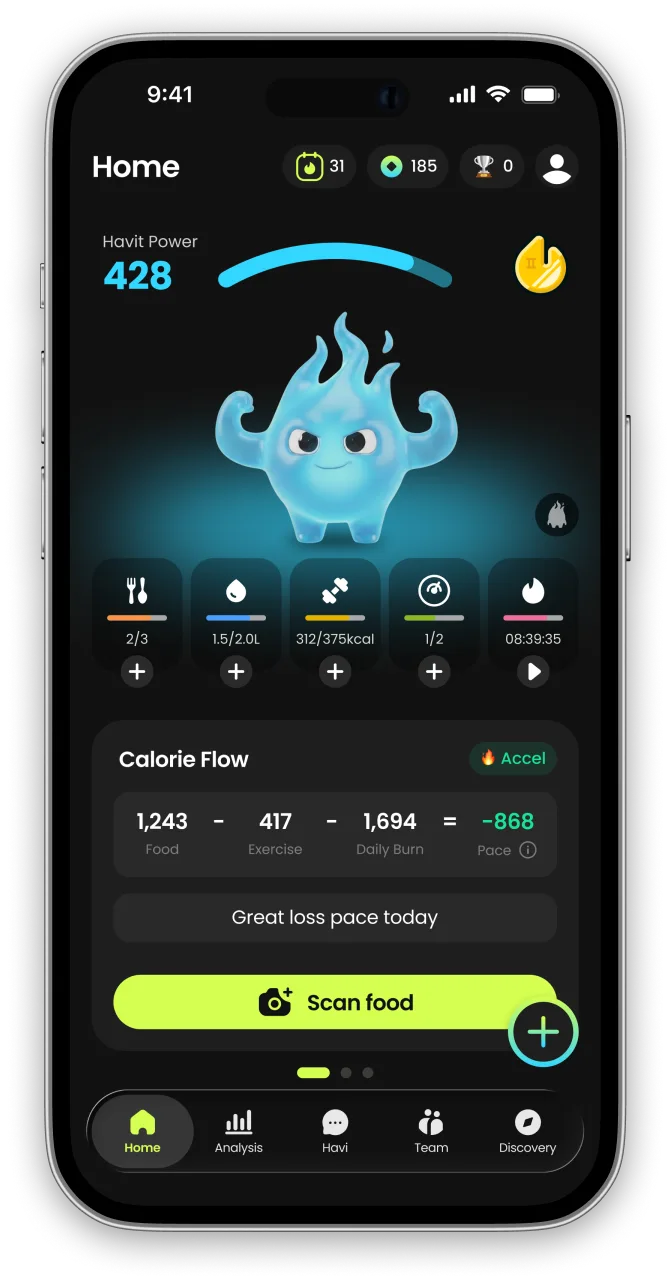
What is Havit?
Havit is an AI health companion for weight loss that protects muscle.
Unlike calorie-only trackers, Havit connects AI body-composition estimates, nutrition, hydration, sleep, steps, cycle, mood, and GLP-1 medication in one daily routine — so progress is measured by body composition, not just the number on the scale. Daily missions turn established behavior-change techniques into small repeatable actions, drawing on expertise from professionals formerly at Juvis Diet, one of Korea’s leading metabolic clinics.
In Havit’s own analysis of 1,090 GLP-1 users, people who logged consistently built stronger habits than the general user base. Read the GLP-1 Habit Report
Havit works with or without GLP-1 medication. It is a wellness app, not a medical device; body-composition results are estimates.

Continue in the App
Personalized wellness with your own data


References
- Temperature Nadir Timing and Sleep Inertia Severity in Healthy Adults — Journal of Biological Rhythms, Vol. 40, Issue 2, 2025
- Optimizing Wake Time Based on Circadian Temperature Phase: A Randomized Controlled Trial — Chronobiology International, Vol. 41, Issue 8, 2024
- Wearable Temperature Monitoring for Circadian Phase Estimation: Validation Study — Sleep, Vol. 48, Issue 3, 2025
- Shift Work and Circadian Temperature Rhythm Adaptation — Journal of Biological Rhythms, Vol. 39, Issue 6, 2024
- Light Exposure Timing and Morning Alertness: Mechanisms and Applications — Sleep Medicine Reviews, Vol. 73, 2024


