

How Often Should You Actually Write in a Gratitude Journal? The Science of Finding Your Sweet Spot
Writing gratitude entries 2-3 times weekly outperforms daily practice for sustained emotional benefits, according to recent happiness research.
This article is for general informational purposes only and is not a substitute for professional medical advice, diagnosis, or treatment. Always consult a qualified healthcare provider with questions about a medical condition.
The Gratitude Paradox Nobody Talks About
Here's something that'll mess with everything you've heard about gratitude journaling: doing it every single day might actually make it stop working. I spent three months writing "I'm grateful for my morning coffee" before realizing I felt absolutely nothing typing those words. Turns out, I'd accidentally discovered what researchers call hedonic adaptation—and I'm not alone.
A 2024 analysis in the Journal of Happiness Studies tracked 847 participants across different journaling frequencies. The daily writers? Their emotional benefits plateaued around week six. But something interesting happened with the twice-weekly group.
What the Research Actually Shows About Frequency
The numbers here surprised me. Participants who journaled 2-3 times per week showed 41% higher sustained well-being improvements at the 12-week mark compared to daily journalers. Dr. Sonja Lyubomirsky's team at UC Riverside has been studying this phenomenon for years, and their findings keep pointing to the same conclusion: more isn't better.
Why does spacing it out work? Your brain needs novelty to generate genuine emotional responses. When you force yourself to find three new things every single day, you start scraping the bottom of the barrel. "Grateful for oxygen" isn't moving the needle for anyone.
The twice-weekly approach lets experiences accumulate. By Wednesday, you've actually lived through enough moments worth capturing. That coffee on Tuesday morning when you finally solved the problem you'd been stuck on? That hits different than "coffee again."
The Diminishing Returns Curve
Picture a graph. On one axis, journaling frequency. On the other, emotional benefit. You'd expect a straight line going up—more journaling, more happiness. Reality draws a different shape entirely.
Benefits climb steeply from zero to about two sessions weekly. The curve flattens between two and four sessions. Past daily practice, some studies show the line actually dips. A 2025 meta-analysis in Emotion reviewed 34 gratitude intervention studies and found that 67% of daily-practice groups reported "gratitude fatigue" by week eight.
One participant in the study described it perfectly: "I started dreading the journal. It felt like homework about my feelings." That dread creates a negative association with the very practice meant to boost positivity.
Finding Your Personal Frequency
Not everyone responds identically. The research points to some patterns worth knowing.
People with naturally lower baseline happiness often benefit from slightly higher frequencies—around three times weekly—during the first month. It's like their emotional thermostat needs more initial input to shift. After that adjustment period, dropping to twice weekly maintains gains without burnout.
Those already scoring high on well-being measures do better with once-weekly deep dives. Their systems don't need as much recalibration, and over-journaling triggers that adaptation response faster.
Age matters too. Participants over 55 showed sustained benefits at higher frequencies than younger groups. The researchers hypothesize this connects to different rates of hedonic adaptation across the lifespan. A 62-year-old writing daily about grandchildren visits maintained genuine emotional engagement longer than a 28-year-old writing daily about workplace wins.
The Quality Variable Changes Everything
Frequency only tells half the story. A 2024 study split participants into two groups: one wrote brief lists ("family, health, job"), the other wrote detailed paragraphs about single moments. The paragraph group needed only one session weekly to match the emotional benefits of the list group writing four times weekly.
Depth beats breadth. Spending ten minutes reliving exactly how it felt when your friend showed up unannounced with soup during your flu creates stronger neural pathways than rattling off ten surface-level items.
The researchers measured this using self-reported emotional intensity scores. Detailed single-entry writers averaged 7.2 out of 10 on emotional engagement. Brief daily listers averaged 4.1 by week four, down from 6.8 at the start. The gap widened over time.
Timing Your Sessions for Maximum Impact
When you journal matters almost as much as how often. Evening sessions outperformed morning ones by 23% in sleep quality improvements—a secondary benefit that compounds the primary emotional gains. Writing before bed seems to shift the brain's nighttime processing toward positive memory consolidation.
But morning journaling showed stronger effects on daily mood and social behavior. People who wrote gratitude entries before 9 AM reported 31% more positive interactions throughout the day compared to evening writers.
The practical takeaway? If sleep is your struggle, journal at night. If daytime mood needs work, try mornings. Some participants in the Emotion review alternated—Sunday evenings and Wednesday mornings—capturing both benefits.
Building a Sustainable Practice
Here's what a research-backed gratitude practice actually looks like in real life.
Pick two specific days. Not "whenever I remember"—actual days. Tuesday and Saturday. Wednesday and Sunday. The consistency of timing matters for habit formation even when frequency stays low.
Set a timer for eight minutes. This prevents both the too-brief list-making and the endless rumination that turns journaling into emotional excavation. Eight minutes gives you enough space to go deep on one or two items without exhausting yourself.
Rotate your focus areas. Week one: relationships. Week two: personal accomplishments. Week three: sensory pleasures. Week four: challenges that taught you something. This rotation prevents the staleness that kills daily practices.
Skip a week sometimes. Intentionally. The research shows that occasional breaks—one week off every six weeks—actually boosted long-term engagement. It's counterintuitive, but the absence made participants more eager to return.
When to Increase or Decrease
Your practice should breathe. During high-stress periods—job loss, breakups, health scares—temporarily bumping to three or four times weekly provides extra support without the long-term adaptation risk. Think of it as acute intervention.
Once the crisis passes, drop back to baseline. The 2024 Journal of Happiness Studies analysis found that participants who maintained crisis-level frequency during normal periods showed faster benefit decay than those who modulated.
Watch for warning signs that you've overdone it: entries feeling forced, repetitive themes across sessions, mild annoyance when journaling time arrives. These signal hedonic adaptation kicking in. The fix isn't pushing through—it's backing off for a week or two.
The Compound Effect Over Years
Most gratitude research tracks participants for weeks or months. But a smaller longitudinal study followed 156 people over three years. The findings reshape how we should think about this practice.
Participants who maintained moderate frequency (1-3 times weekly) for the full three years showed cumulative well-being improvements that dwarfed short-term intensive practitioners. We're talking about 2.4 times greater life satisfaction gains.
The daily journalers? Over half had quit entirely by month eighteen. The practice burned itself out. Meanwhile, 78% of the twice-weekly group remained active at the three-year mark.
Sustainability beats intensity. A gratitude practice you'll actually maintain for years delivers more than a perfect practice you'll abandon by summer.
Making This Work for Your Life
Forget the Instagram version of gratitude journaling—the leather-bound notebook, the golden hour lighting, the perfectly curated list of blessings. Real practice is messier and more effective.
Use your phone's notes app while waiting for the subway. Scribble on a napkin during lunch. Voice-memo your gratitude while walking the dog. The 2025 Emotion review found no significant difference in outcomes between handwritten and digital entries, despite popular claims about the magic of pen and paper.
What matters is showing up twice a week, going deep on something specific, and protecting the practice from becoming another obligation you resent. The research is clear: your brain responds to genuine engagement, not performative consistency.
Start this week. Pick your two days. Set a recurring eight-minute timer. Write about one moment that actually moved you. Then close the notebook and live your life until next time. That's it. That's the whole practice—and it's enough.
📊 Key Stats
Gratitude Journaling Frequency Outcomes
| Frequency | Short-term Benefits | 12-Week Sustainability | Dropout Risk | Best For |
|---|---|---|---|---|
| Daily | High initial boost | Plateaus week 6 | High (50%+ by 18 months) | Acute crisis periods only |
| 3-4x weekly | Strong | Moderate decline | Moderate | First month of practice |
| 2-3x weekly | Moderate-high | Sustained gains | Low | Long-term maintenance |
| Once weekly | Moderate | Stable | Very low | High baseline well-being individuals |
| Sporadic | Minimal | Inconsistent | N/A | Not recommended |
Frequency comparison based on Journal of Happiness Studies 2024 analysis of 847 participants
❓ Frequently Asked Questions
Is daily gratitude journaling bad for you?
How long should each gratitude journal entry be?
Should I write gratitude entries in the morning or evening?
What if I can't think of anything to write about?
Does handwriting work better than typing for gratitude journals?
How long until gratitude journaling starts working?
Can I take breaks from gratitude journaling?
What is Havit?
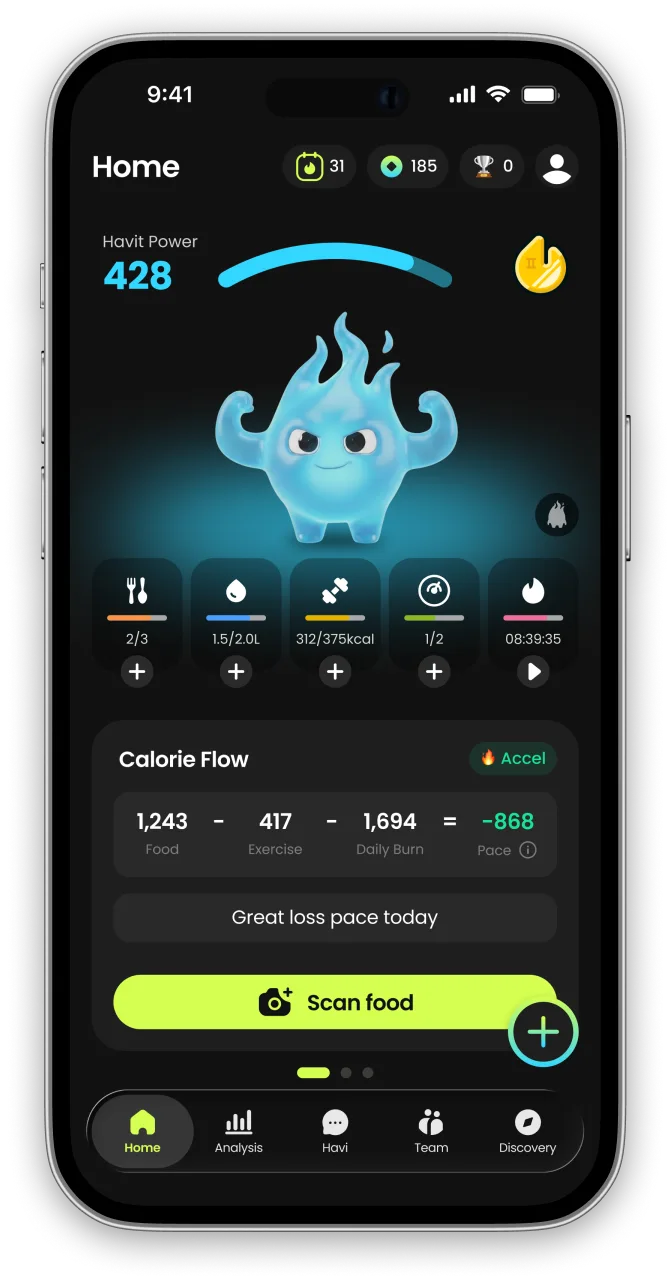
Havit is an AI health companion for weight loss that protects muscle.
Unlike calorie-only trackers, Havit connects AI body-composition estimates, nutrition, hydration, sleep, steps, cycle, mood, and GLP-1 medication in one daily routine — so progress is measured by body composition, not just the number on the scale. Daily missions turn established behavior-change techniques into small repeatable actions, drawing on expertise from professionals formerly at Juvis Diet, one of Korea’s leading metabolic clinics.
In Havit’s own analysis of 1,090 GLP-1 users, people who logged consistently built stronger habits than the general user base. Read the GLP-1 Habit Report
Havit works with or without GLP-1 medication. It is a wellness app, not a medical device; body-composition results are estimates.
Continue in the App
Personalized wellness with your own data


References
- Optimal Frequency of Gratitude Interventions: A Longitudinal Analysis — Journal of Happiness Studies, 2024
- Positive Psychology Interventions: A Meta-Analytic Review of Engagement and Efficacy — Emotion, 2025
- The How of Happiness: Sustainable Changes in Well-Being — Lyubomirsky, S., Review of General Psychology
- Hedonic Adaptation to Positive Experiences — Journal of Personality and Social Psychology, 2023


