
Best GLP-1 Tracker Apps in 2026: An Honest Buyer's Guide

This article is for general informational purposes only and is not a substitute for professional medical advice, diagnosis, or treatment. Always consult a qualified healthcare provider with questions about a medical condition.
Quick answer
How to choose the best GLP-1 tracker app in 2026. Compare dose logging, side-effect tracking, food & protein, reminders, privacy, and price — honestly.
Medical disclaimer: This article is for educational purposes only and is not medical advice. Always follow the instructions from your prescribing clinician and pharmacist. Do not change your dose based on an app.
If you're on Ozempic, Wegovy, Mounjaro, or Zepbound, you already know the hard part isn't week one — it's staying consistent over months while managing side effects, protein intake, and a once-weekly injection you can't afford to forget.
A good GLP-1 tracker app turns that mental load into a system. A bad one is just another calorie counter with a syringe icon bolted on.
This is an honest, vendor-neutral buyer's guide.
We'll define the criteria that actually matter, show you a comparison table of the real category players, and be clear about where popular calorie apps fall short.
No app is perfect for everyone — the goal is to help you pick the right one.
01
Why a Dedicated GLP-1 Tracker Beats a Generic Calorie App
GLP-1 medications changed the weight-loss playbook.
As of 2025, roughly 1 in 8 U.S. adults report having used a GLP-1 drug, and about 12% are currently taking one for weight management (KFF, Statista).
But usage is only half the story.
Real-world studies show that roughly half of patients discontinue GLP-1 therapy within a year, with side effects and adherence gaps among the leading reasons (AJMC, Cleveland Clinic).
That's the exact problem a purpose-built tracker is designed to solve.
A generic calorie app (MyFitnessPal, Cronometer, Cal AI) counts macros — useful, but it doesn't know that your nausea spikes 48 hours after a dose, that you're due for a shot on Sunday, or that you should rotate injection sites.
A dedicated GLP-1 tracker organizes your entire journey around the shot.
Key Stats: The GLP-1 Landscape in 2026
Figures reflect the most recent available surveys as of mid-2026 and vary by methodology.
02
How to Choose a GLP-1 Tracker App: 7 Criteria
Use these seven criteria as a checklist.
Weight them by what matters to you — someone battling nausea will prioritize side-effect logging; someone protecting muscle mass will prioritize protein tracking.
- Dose and injection-site logging
This is the non-negotiable core. Your app should let you log the drug, the dose (in mg), the date/time, and where you injected.
Site rotation matters — repeatedly injecting the same spot can cause irritation or lumps.
A visual body map that reminds you to alternate sites is the single feature that separates a real GLP-1 tracker from a repurposed calorie app.
- Side-effect correlation
Because 40–70% of users experience GI side effects, the ability to log symptoms against your dose timeline is enormously useful.
When you can see that your nausea consistently peaks two days post-injection, you can plan lighter meals, hydrate, and talk to your clinician with actual data instead of a vague memory.
- Food and protein logging
On a GLP-1, appetite drops sharply — which is the point, but it creates a real risk of under-eating protein and losing muscle alongside fat.
The best trackers make protein visible, not buried three taps deep. Some let you log by photo, barcode, or quick search.
If muscle preservation is your goal, protein-first logging is essential.
- Reminders and scheduling
A once-weekly injection is surprisingly easy to forget, and a daily oral dose (like Rybelsus) even more so.
Look for countdowns to your next shot, missed-dose handling, and titration-schedule support so the app knows when your dose is scheduled to step up.
- Progress tracking (weight + photos)
Weight fluctuates day to day, so trend graphs beat single numbers.
Progress photos are quietly one of the most motivating features during plateaus, when the scale stalls but your body is still changing.
Bonus points for syncing with Apple Health or Google Fit so weight flows in automatically.
- Privacy of health data
You're storing sensitive medical information: your medication, your body, your symptoms. Read the privacy policy. Does the app sell or share data with advertisers? Is data encrypted?
Can you export and delete it? In the U.S., most consumer wellness apps are not covered by HIPAA, so the app's own policy is your only protection.
Treat this as a first-class criterion, not an afterthought.
- Price and value
Free isn't always better, and expensive isn't always worth it.
Some trackers are fully free; others gate progress photos, medication-level charts, or data export behind a subscription (commonly around $40–50/year).
Decide which features you'll actually use before paying.

03
Comparison Table: GLP-1 Tracker Apps in 2026
The table below groups apps into two honest categories: purpose-built GLP-1 trackers and general calorie apps that people sometimes try to use for GLP-1 tracking.
The distinction matters.
| App | Dose + site logging | Side-effect tracking | Food/protein | Reminders | Progress photos | Price model | Best for |
|---|---|---|---|---|---|---|---|
| MeAgain | Yes (shots & pills, injection sites) | Yes (18 common + custom) | Yes (multiple methods) | Yes | Yes | Free + paid tiers | All-in-one lifestyle dashboard |
| Shotsy | Yes (visual site map) | Yes | Yes (calories, protein, water) | Yes (countdowns) | Premium | Free core; premium ~$49.99/yr | Multi-med schedules, PDF export |
| MyFitnessPal | Basic (added GLP-1 logging in 2026) | Basic symptom logging | Yes (strong food database) | Yes | No (not GLP-1 specific) | Free + Premium | People who already live in MFP |
| Cronometer | No | No | Yes (best micronutrient depth) | Limited | No | Free + Gold | Micronutrient precision, not GLP-1 |
| Cal AI | No (winding down into MFP) | No | Yes (photo AI) | Limited | No | Paid | Photo-based calorie counting only |
| HAVIT | Yes (dose + injection log) | Yes | Yes (protein-forward) | Yes | Yes | Free + optional coach | Habit-building + coaching around your shot |
Ratings and pricing change frequently — verify in the App Store or Google Play before you commit. Sources: MeAgain, Shotsy, MyFitnessPal.
The gap: why calorie apps aren't GLP-1 trackers
Here's the honest positioning. Cronometer and Cal AI do not track your dose, injection site, or shot schedule at all — they're excellent nutrition tools, but they were never designed for the medication side of your journey. MyFitnessPal added basic GLP-1 dose and symptom logging in 2026, which narrows the gap, but it still lacks a rotating injection-site map and estimated medication-level curves.
If the medication is your journey, a purpose-built tracker will always fit better than a calorie counter with a bolt-on.
04
Matching the App to Your Goal
- "I keep forgetting my shot." Prioritize reminders, countdowns, and missed-dose handling. Any dedicated tracker (MeAgain, Shotsy, HAVIT) covers this well.
- "Side effects are wrecking me." Prioritize symptom logging tied to your dose timeline so you can spot patterns and brief your clinician.
- "I'm scared of losing muscle." Prioritize protein-forward food logging and pair it with resistance training. This is where a calorie app's depth can complement a GLP-1 tracker.
- "I want one app for everything." Look for an all-in-one that combines dose, food, weight, photos, and coaching so you're not juggling three tools.
- "Privacy is my top concern." Read every policy, prefer apps with clear data-export/delete controls, and avoid anything that shares data with advertisers.

05
A Note on Accuracy and Safety
No app replaces your care team. "Estimated medication-level" graphs are based on published half-life data and are educational approximations, not measurements of the drug in your body.
Never adjust your dose because of what an app shows. Use your tracker to bring better questions and better data to your clinician — that's where its real value lies.
06
The Bottom Line
The best GLP-1 tracker app in 2026 is the one that matches your biggest challenge: forgetfulness, side effects, protein, or motivation.
Dedicated trackers (MeAgain, Shotsy, HAVIT) beat generic calorie apps on the medication side because they're built around the shot.
Calorie apps like Cronometer still shine for nutrition depth — just don't expect them to manage your dose. Pick the tool you'll actually open every day.
If you want dose logging, side-effect insight, protein-first food tracking, and gentle coaching in one place — without the mental overhead of stitching apps together — try the HAVIT app. It's built to keep you consistent on your GLP-1 journey, one week at a time.

07
Why HAVIT — Medication + Behavior Change, in One App
GLP-1 medications can meaningfully reduce weight — but the number on the scale is only part of the story.
Roughly 20–40% of the weight lost on GLP-1 therapy can come from lean (muscle) tissue rather than fat (Neeland et al., Diabetes, Obesity and Metabolism, 2024), and results tend to fade once the medication stops unless new habits take their place.
That's why leading guidance treats medication as one part of care, not the whole: the U.S. Preventive Services Task Force recommends that adults with obesity be offered intensive, multicomponent behavioral interventions (USPSTF, Grade B).
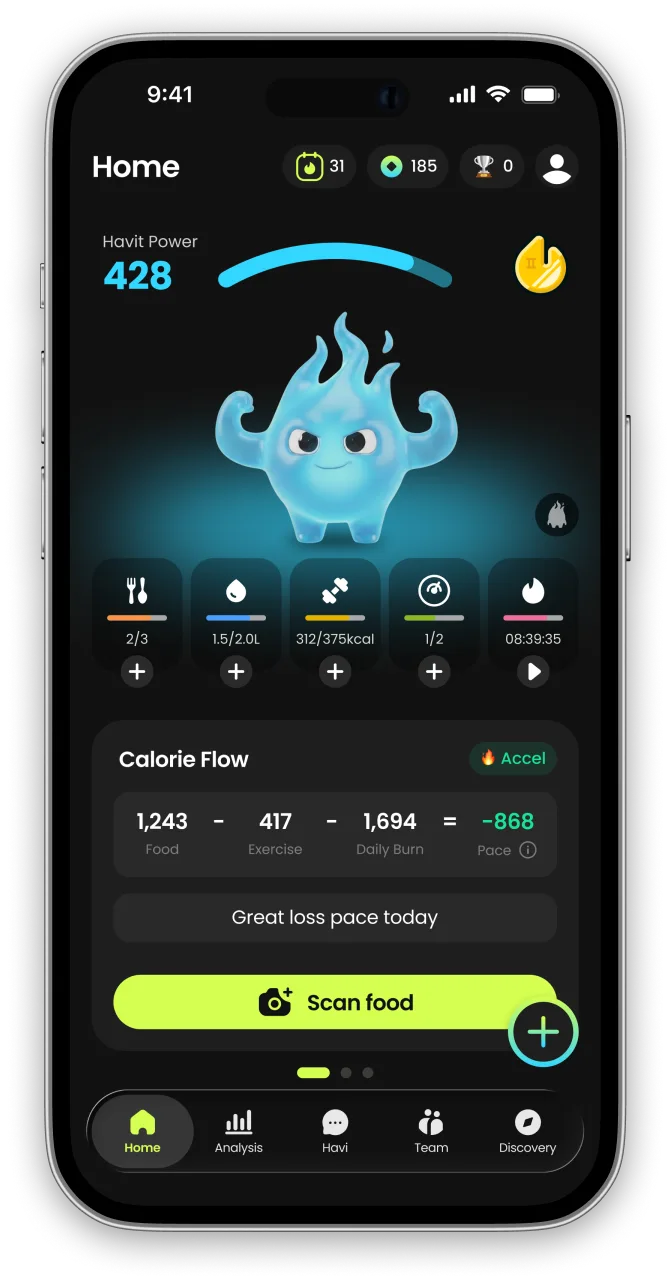
HAVIT is built for exactly this moment — one app that unites medication tracking, body composition, nutrition and protein, daily habit-building, and an AI coach that adapts to you.
Across our own 1,090 GLP-1 users, the most consistent trackers built the strongest habits (see the GLP-1 habit report).
Manage the medicine and the muscle — together. Start with HAVIT →
Why a Dedicated GLP-1 Tracker Beats a Generic Calorie App
| Metric | Figure | Source |
|---|---|---|
| U.S. adults who have used a GLP-1 | ~1 in 8 (12.4%) | Statista, 2025 |
| Adults currently using a GLP-1 (RAND panel) | 11.8% | RAND, 2025 |
| Patients who discontinue within 1 year | ~50%+ (varies by population) | AJMC |
| GI side effects (nausea, constipation, etc.) | 40–70% of treated patients | BioSpace |
| Highest-use age group (currently using) | Adults 50–64 (~22%) | KFF |
Frequently asked questions
What is the best GLP-1 tracker app in 2026?
Can I just use MyFitnessPal to track my Ozempic or Wegovy?
Is there a free GLP-1 tracker app?
What should a GLP-1 diary track?
Do GLP-1 tracker apps sync with Apple Health or Google Fit?
Are GLP-1 tracker apps HIPAA-protected?
Can an app tell me how much medication is in my body?
Which app is best for protecting muscle on a GLP-1?
What is Havit?
Havit is an AI health companion for weight loss that protects muscle.
Unlike calorie-only trackers, Havit connects AI body-composition estimates, nutrition, hydration, sleep, steps, cycle, mood, and GLP-1 medication in one daily routine — so progress is measured by body composition, not just the number on the scale. Daily missions turn established behavior-change techniques into small repeatable actions, drawing on expertise from professionals formerly at Juvis Diet, one of Korea’s leading metabolic clinics.
In Havit’s own analysis of 1,090 GLP-1 users, people who logged consistently built stronger habits than the general user base. Read the GLP-1 Habit Report
Havit works with or without GLP-1 medication. It is a wellness app, not a medical device; body-composition results are estimates.
Continue in the App
Personalized wellness with your own data


References
- Statista. *1 in 8 Americans Now Use GLP-1 Drugs for Weight Loss* (2025). statista.com
- RAND Corporation. *New Weight Loss Drugs: GLP-1 Agonist Use and Side Effects in the United States* (2025). rand.org
- KFF. *KFF Health Tracking Poll — GLP-1 use and demographics.* kff.org
- AJMC. *GLP-1 RA Adherence Shows Drop-Off After 1 Year.* ajmc.com
- Cleveland Clinic Newsroom. *What Happens When Patients Stop Taking GLP-1 Drugs?* (2026). newsroom.clevelandclinic.org
- BioSpace. *GLP-1 Side Effects Only One Factor Driving Patient Discontinuation Rates.* biospace.com
- U.S. FDA. *FDA Approves New Medication for Chronic Weight Management.* fda.gov
- Stanford Medicine. *GLP-1s 101: What the science says about weight loss, side effects, and safe use* (2026). med.stanford.edu
- GoodRx. *Comparing Ozempic, Wegovy and Other GLP-1 Drugs.* goodrx.com
- MyFitnessPal Blog. *How MyFitnessPal Supports Your GLP-1 Journey.* blog.myfitnesspal.com


