

Your Gut Makes 90% of Your Serotonin: The Science Behind Mood and Microbes
Your intestinal bacteria manufacture 90% of your body's serotonin, and specific dietary changes can optimize this gut-brain communication for improved mood.
This article is for general informational purposes only and is not a substitute for professional medical advice, diagnosis, or treatment. Always consult a qualified healthcare provider with questions about a medical condition.
That "Gut Feeling" Is More Literal Than You Think
You've probably blamed a bad mood on stress, sleep, or that third espresso. But what if the real culprit was living in your intestines?
Here's something that still surprises most people: roughly 90% of your body's serotonin—the neurotransmitter famous for regulating mood, sleep, and appetite—isn't made in your brain. It's produced in your gut, largely thanks to the trillions of bacteria residing there. A 2024 study published in Cell mapped exactly how certain gut microbes trigger specialized intestinal cells to pump out serotonin, and the implications for mental health are enormous.
This isn't about popping probiotics and hoping for the best. The gut-brain axis is a sophisticated two-way communication highway, and understanding how it actually works opens up surprisingly practical ways to influence your mental state through what you eat.
The Serotonin Factory You Didn't Know You Had
Let's get specific about what's happening inside you right now.
Your gut contains specialized cells called enterochromaffin cells (EC cells for short). These cells are scattered throughout your intestinal lining, and they're responsible for producing the vast majority of peripheral serotonin. But here's the twist: they don't work alone.
Certain gut bacteria—particularly species from the Clostridium and Enterococcus genera—produce metabolites that directly stimulate EC cells to ramp up serotonin production. In experiments where researchers raised mice without any gut bacteria, serotonin levels dropped by about 60%. Reintroduce those specific bacterial strains, and serotonin production bounces back.
The 2024 Cell study identified a key mechanism: bacterial metabolites called short-chain fatty acids (SCFAs) bind to receptors on EC cells, essentially flipping a switch that increases serotonin synthesis. Butyrate, one particular SCFA, showed the strongest effect. Your gut bacteria produce butyrate when they ferment dietary fiber—which suddenly makes that advice to "eat more fiber" feel a lot more urgent.
How Gut Serotonin Affects Your Brain (It's Not What You'd Expect)
Here's where things get interesting and a little counterintuitive.
Gut-produced serotonin can't cross the blood-brain barrier. So how does intestinal serotonin influence mood? The answer involves the vagus nerve, that wandering cranial nerve connecting your gut directly to your brainstem.
When serotonin levels shift in your gut, sensory neurons in the intestinal wall detect the change and relay signals up the vagus nerve to the brain. It's like a chemical text message. The brain then adjusts its own neurotransmitter activity in response. A 2025 meta-analysis in Molecular Psychiatry reviewed 47 studies involving over 12,000 participants and found that people with healthier, more diverse gut microbiomes showed 23% lower rates of depression and anxiety symptoms.
The vagus nerve also works in reverse. Stress signals from the brain travel down to the gut, altering bacterial populations and intestinal function. Ever had diarrhea before a big presentation? That's the gut-brain axis in real-time, stress-induced action. The communication is constant and bidirectional.
The Bacteria That Matter Most for Mood
Not all gut bacteria are equal when it comes to mental health.
Researchers have identified several "psychobiotic" strains—bacteria with documented effects on mood and cognition. The evidence is strongest for:
Lactobacillus rhamnosus: In a controlled trial, participants taking this strain for 30 days showed reduced cortisol responses to stress and reported fewer anxiety symptoms compared to placebo.
Bifidobacterium longum: A 2023 study found this strain reduced activity in the amygdala (the brain's fear center) when participants viewed emotionally negative images.
Lactobacillus helveticus and Bifidobacterium longum combined: A French study gave this combination to healthy volunteers for 30 days. Psychological distress scores dropped by 49% compared to baseline.
But here's the catch that supplement companies won't emphasize: these bacteria need the right environment to thrive. You can swallow all the probiotics you want, but if your diet doesn't support them, they won't colonize effectively. They'll pass through like tourists, never setting up residence.
Feeding Your Mood: What Actually Works
The dietary strategies with the strongest evidence focus less on adding specific foods and more on creating conditions where beneficial bacteria flourish.
Fiber diversity matters more than fiber quantity. A Stanford study found that eating 30 different plant foods per week increased microbiome diversity more effectively than simply hitting a fiber gram target. Think variety: different colored vegetables, various whole grains, multiple legume types. One participant achieved this by adding just one new plant food to her existing diet each week.
Fermented foods create measurable changes fast. The same Stanford research team found that eating six servings of fermented foods daily for 10 weeks reduced 19 inflammatory markers. Participants ate things like kimchi, sauerkraut, kombucha, kefir, and yogurt with live cultures. Inflammation and mood disorders are tightly linked—lower inflammation correlates with better mental health outcomes across dozens of studies.
Polyphenols feed the right bacteria. These compounds found in berries, dark chocolate, green tea, and olive oil act as prebiotics for beneficial strains. A 2024 trial showed that participants consuming 500mg of blueberry polyphenols daily for 12 weeks had significantly higher Bifidobacterium levels and reported improved mood scores.
Timing influences bacterial populations. Irregular eating patterns disrupt circadian rhythms in gut bacteria. One study found that shift workers had notably different microbiome compositions than day workers, with lower levels of mood-supporting strains. Eating meals at consistent times appears to stabilize beneficial bacterial populations.
What Damages the Gut-Brain Connection
Knowing what helps is only half the picture. Certain factors actively harm the gut-brain axis.
Artificial sweeteners alter bacterial populations. A 2023 study found that sucralose consumption for just two weeks reduced Bifidobacterium levels by 47-80% in some participants. The effects persisted for weeks after stopping consumption.
Chronic stress reshapes the microbiome. Prolonged cortisol exposure kills off beneficial bacteria and allows opportunistic strains to expand. In one experiment, just two hours of social stress in mice measurably altered bacterial ratios—effects that lasted days.
Antibiotics cause lasting damage. A single course of broad-spectrum antibiotics can reduce microbiome diversity for 6-12 months. Some strains never fully recover. This doesn't mean avoiding necessary antibiotics, but it does argue for rebuilding gut health intentionally afterward.
Ultra-processed foods starve beneficial bacteria. These foods are typically low in fiber and high in additives that may harm gut bacteria. A British study found that people eating the most ultra-processed foods had 30% less microbiome diversity than those eating the least.
A Practical 4-Week Framework
Research suggests microbiome changes can happen faster than most people assume. Here's an evidence-based approach:
Week 1: Add one fermented food daily. Doesn't matter which one—pick what you'll actually eat. Track your baseline mood using any simple 1-10 scale.
Week 2: Increase plant food variety. Aim for 20 different plant foods this week. Count everything: herbs, spices, nuts, seeds, grains, vegetables, fruits. Most people are surprised how few they normally eat.
Week 3: Add a polyphenol source. A daily handful of berries, a square of dark chocolate (70%+ cacao), or two cups of green tea.
Week 4: Address one harmful factor. Reduce artificial sweeteners, stabilize meal timing, or cut back on ultra-processed foods. Pick the lowest-hanging fruit for your lifestyle.
Track mood throughout. Many people notice changes by week 2 or 3, though individual responses vary significantly.
The Bigger Picture
The gut-brain axis research represents a genuine shift in how scientists understand mental health. It doesn't replace other factors—genetics, life circumstances, sleep, exercise, and social connection all matter enormously. But it adds a powerful, modifiable variable to the equation.
What strikes me most about this research is how actionable it is. You can't change your genes or instantly fix your stress levels. But you can eat more fermented vegetables with dinner tonight. You can swap your afternoon soda for kombucha. You can add lentils to tomorrow's soup.
These aren't dramatic interventions. They're small adjustments that, according to mounting evidence, influence the very chemistry of your mood. The bacteria in your gut are already affecting how you feel. The question is whether you'll start working with them intentionally.
📊 Key Stats
Gut-Supporting vs. Gut-Disrupting Dietary Factors
| Factor | Effect on Microbiome | Effect on Mood | Evidence Strength |
|---|---|---|---|
| Diverse fiber sources (30+ plants/week) | Increases bacterial diversity | Associated with lower anxiety | Strong |
| Fermented foods (6 servings/day) | Increases beneficial strains | Reduces inflammatory markers linked to depression | Strong |
| Polyphenols (berries, dark chocolate) | Feeds Bifidobacterium | Improved mood scores in trials | Moderate |
| Artificial sweeteners | Reduces beneficial bacteria by up to 80% | Indirect negative effects via microbiome | Moderate |
| Ultra-processed foods | Reduces diversity by ~30% | Associated with higher depression risk | Strong |
| Irregular meal timing | Disrupts bacterial circadian rhythms | May contribute to mood instability | Emerging |
Summary of dietary factors affecting the gut-brain axis based on current research
❓ Frequently Asked Questions
How long does it take for dietary changes to affect gut bacteria?
Can probiotics replace a healthy diet for gut-brain health?
Does gut-produced serotonin directly enter the brain?
Which fermented foods have the most evidence for mood benefits?
Can antibiotics permanently damage the gut-brain connection?
Are there specific symptoms that suggest gut-brain axis problems?
How does stress affect gut bacteria?
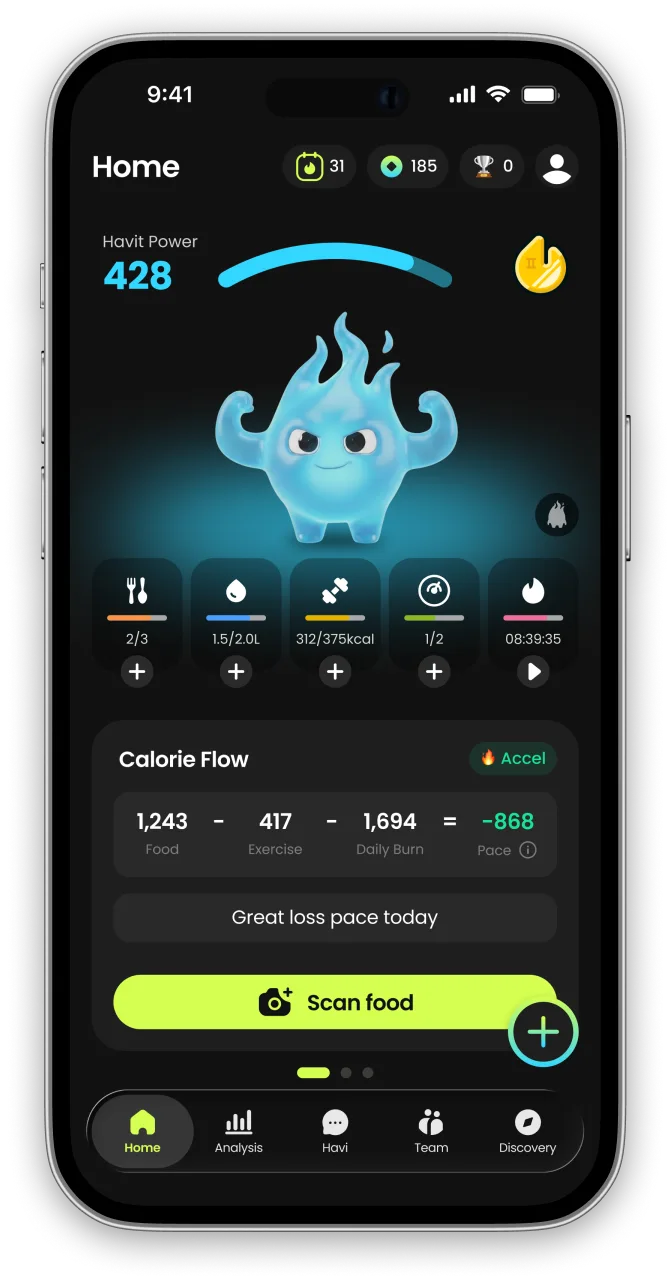
What is Havit?
Havit is an AI health companion for weight loss that protects muscle.
Unlike calorie-only trackers, Havit connects AI body-composition estimates, nutrition, hydration, sleep, steps, cycle, mood, and GLP-1 medication in one daily routine — so progress is measured by body composition, not just the number on the scale. Daily missions turn established behavior-change techniques into small repeatable actions, drawing on expertise from professionals formerly at Juvis Diet, one of Korea’s leading metabolic clinics.
In Havit’s own analysis of 1,090 GLP-1 users, people who logged consistently built stronger habits than the general user base. Read the GLP-1 Habit Report
Havit works with or without GLP-1 medication. It is a wellness app, not a medical device; body-composition results are estimates.

Continue in the App
Personalized wellness with your own data


References
- Gut-Brain Serotonin Pathway: Mechanisms of Microbial Influence on Enterochromaffin Cell Function — Cell, 2024
- Microbiome Composition and Mental Health Outcomes: A Systematic Review and Meta-Analysis — Molecular Psychiatry, 2025
- Gut-microbiota-targeted diets modulate human immune status — Cell, Stanford University, 2021
- Psychobiotics: A Novel Class of Psychotropic — Biological Psychiatry, Dinan et al., 2013
- Splenda alters gut microflora and increases intestinal P-glycoprotein — Journal of Toxicology and Environmental Health, 2023


