

Winter Outdoor Running in Cold Weather: The Complete Safety Protocol for 2026
Layer strategically by temperature zones, protect your airways below -10°C, and warm up indoors—your winter running performance depends on preparation, not toughness.
This article is for general informational purposes only and is not a substitute for professional medical advice, diagnosis, or treatment. Always consult a qualified healthcare provider with questions about a medical condition.
That First Breath of -15°C Air Will Humble You Fast
I watched a seasoned marathoner—someone who'd finished Boston three times—stop dead in her tracks during a January morning run in Minnesota. The temperature had dropped to -18°C overnight. She'd dressed warm enough. Her legs felt fine. But that first deep inhale of arctic air hit her lungs like swallowing broken glass, and she turned around at the 400-meter mark.
Cold weather running isn't about willpower. It's about physiology, and your respiratory system couldn't care less about your marathon PR.
New research from the Journal of Applied Physiology published in late 2025 has changed how exercise scientists think about cold-weather performance. The old advice—"just add layers"—turns out to be dangerously incomplete. What matters is a systematic approach that accounts for temperature thresholds, wind chill multipliers, and the surprisingly vulnerable tissue lining your airways.
Your Lungs Aren't Built for This (But They Can Adapt)
Here's something most runners don't realize: the air you breathe reaches your lungs at nearly body temperature, regardless of outside conditions. Your respiratory tract works overtime to warm and humidify incoming air. At -20°C, that's a 57-degree temperature swing happening in the few centimeters between your nose and your bronchi.
The 2025 cold exercise physiology research found that this warming process extracts significant moisture from airway tissue. Runners breathing through their mouths in sub-zero conditions lost 42% more airway surface liquid compared to nose-breathers at the same pace. That moisture loss triggers inflammation, bronchospasm, and the characteristic "cold air cough" that can linger for hours after a winter run.
The fix isn't complicated, but it requires gear most runners skip. A simple buff or neck gaiter pulled over your mouth creates a microclimate of warm, humid air. The fabric traps exhaled moisture and returns it on your next breath. Scandinavian researchers found this single intervention reduced post-exercise airway symptoms by 67% in runners training below -10°C.
Temperature-Based Layering: The Zone System
Forget the generic "dress for 10 degrees warmer" advice. That rule falls apart below freezing and completely fails in wind. Instead, think in temperature zones, each requiring specific layering decisions.
Zone 1: 5°C to -5°C (The Deceptive Range)
This is where most cold-weather running injuries happen. Temperatures feel manageable, so runners underdress. But once you're sweating at kilometer three, that moisture becomes a liability. A 2024 study from Scandinavia tracked 847 recreational runners and found hypothermia risk actually peaked in this "moderate cold" range—not in extreme conditions where people prepare more carefully.
Base layer: Lightweight merino or synthetic moisture-wicking. Skip cotton entirely. Mid layer: Optional thin fleece or running vest for torso only. Outer layer: Wind-resistant shell, not insulated.
Zone 2: -5°C to -15°C (Serious Cold)
Your body's peripheral circulation starts shutting down aggressively here. Blood retreats from extremities to protect your core, which means fingers and toes get cold fast regardless of how warm you feel overall.
Base layer: Medium-weight merino, full coverage. Mid layer: Technical fleece or soft shell. Outer layer: Wind-blocking jacket with pit zips for ventilation. Extremities: Thermal running gloves (not cotton), ear coverage mandatory, consider a second thin sock layer.
Zone 3: Below -15°C (Extreme Protocol)
The Journal of Applied Physiology research suggests this is where recreational runners should seriously question whether outdoor training makes sense. Elite athletes in Nordic countries continue training in these conditions, but they've built specific cold adaptations over years. For most runners, the performance decrements and injury risks outweigh benefits.
If you do run: Full face coverage, chemical hand warmers in mittens (not gloves), reflective outer layer (winter means low visibility), and a planned route that keeps you within 10 minutes of shelter at all times.
The Wind Chill Multiplier Nobody Calculates
A -10°C day with 25 km/h wind feels like -18°C on exposed skin. But here's what the wind chill index doesn't capture: your running speed adds to that wind.
Running at 10 km/h into a 15 km/h headwind creates an effective 25 km/h wind exposure. The Scandinavian research team developed a "dynamic wind chill" calculation for runners that accounts for pace and direction. Their data showed that a runner moving at moderate pace in -8°C with a 20 km/h headwind experienced equivalent tissue cooling to standing still at -19°C.
Practical application: Plan your route so you run into the wind during your first half (when you're fresh and generating maximum heat) and return with the wind at your back (when you're fatigued and producing less metabolic warmth).
The 15-Minute Indoor Warm-Up Protocol
Skipping warm-up in cold weather is like skipping the defrost cycle on your car windshield. You might get away with it, but you're stressing systems that weren't designed for immediate peak performance.
Cold muscles are stiff muscles. Tendons and ligaments lose elasticity as temperature drops. The 2025 research found that runners who warmed up indoors for 12-15 minutes before cold exposure showed 23% better running economy in the first kilometer compared to those who warmed up outside.
The protocol that worked best in the studies:
- 5 minutes of dynamic stretching (leg swings, hip circles, arm rotations)
- 5 minutes of light jogging in place or jumping jacks
- 3-5 minutes of running-specific drills (high knees, butt kicks)
Then dress in your outer layers and head out immediately. You want to hit the cold while your core temperature is elevated and your muscles are primed.
Hydration Lies Your Body Tells in Winter
You don't feel thirsty when it's cold. This is a physiological trick, not evidence that you need less fluid.
Cold air holds less moisture than warm air, so you're losing water vapor with every exhale—you just can't see it as dramatically as summer sweat. The Scandinavian sports medicine data showed winter runners arrived home with nearly identical fluid deficits as summer runners, despite drinking 40% less during their workouts.
Cold also triggers increased urine production (that's why you need to pee more in winter). Combined with reduced thirst sensation, this creates a perfect setup for chronic mild dehydration that accumulates over a training block.
Practical fix: Drink on a schedule, not by thirst. Set a timer if needed. Warm fluids work better—they're more appealing and they don't fight against your core temperature maintenance.
When to Stay Inside: Hard Cutoffs That Protect You
The 2025 research established some clear boundaries that should override motivation:
Absolute cutoff: -25°C or colder (actual temperature, not wind chill) Frostbite can occur on exposed skin in under 10 minutes. No training benefit justifies this risk.
Conditional cutoff: -15°C to -25°C Only proceed if you have proper gear, a planned route with shelter access, and someone who knows your expected return time.
Respiratory cutoff: Any temperature if you have asthma or exercise-induced bronchoconstriction Consult with a healthcare provider about your specific thresholds. Some athletes can train safely in moderate cold with proper medication timing; others need to move workouts indoors below 0°C.
Surface cutoff: Ice coverage greater than 30% of your route Slip-and-fall injuries spike in winter running. A sprained ankle ends your season faster than a few missed outdoor workouts.
The Comeback Protocol After Cold Exposure
What you do in the 30 minutes after a cold run matters more than most runners realize. Your body is still in vasoconstriction mode—blood vessels constricted, circulation prioritizing your core. Jumping straight into a hot shower can cause blood pressure swings and dizziness.
Better approach: Remove wet layers immediately. Put on dry clothes. Drink something warm. Let your body temperature normalize for 10-15 minutes before showering. If your fingers or toes are numb, warm them gradually—run cool (not cold, not hot) water over them, or hold them against your torso.
The Scandinavian researchers noted that runners who followed a structured post-run warming protocol reported 34% fewer episodes of post-exercise coughing and chest tightness compared to those who rushed through recovery.
Building Cold Tolerance Over Time
Here's encouraging news from the 2025 research: cold adaptation is real and achievable. Runners who consistently trained in cold conditions over 6-8 weeks showed measurable improvements in cold tolerance, including faster peripheral rewarming, reduced shivering threshold, and better maintenance of running economy in low temperatures.
The key word is "consistently." Sporadic cold exposure doesn't build adaptation—it just creates repeated stress without allowing your body to adjust. If you want to become a better winter runner, you need regular cold exposure throughout the season, starting with milder temperatures and progressively working toward your local extremes.
Start your winter running season in October or November, when temperatures are cool but not brutal. Build your cold tolerance gradually. By January, your body will handle -10°C runs that would have felt impossible in early fall.
The runners who struggle most with winter are the ones who train indoors until January, then suddenly expect their bodies to perform in conditions they've never experienced. Your physiology needs time to adapt. Give it that time, and winter running transforms from survival mode into genuine training.
📊 Key Stats
Temperature Zone Layering System for Winter Running
| Temperature Zone | Base Layer | Mid Layer | Outer Layer | Key Considerations |
|---|---|---|---|---|
| Zone 1: 5°C to -5°C | Lightweight merino or synthetic | Optional thin fleece/vest | Wind-resistant shell (uninsulated) | Highest hypothermia risk due to underdressing |
| Zone 2: -5°C to -15°C | Medium-weight merino, full coverage | Technical fleece or soft shell | Wind-blocking jacket with pit zips | Thermal gloves mandatory, ear coverage required |
| Zone 3: Below -15°C | Heavy merino, complete coverage | Insulated mid layer | Full wind/weather protection | Face coverage, hand warmers, shelter access within 10 min |
Layer recommendations based on 2024-2025 Scandinavian cold weather exercise research
❓ Frequently Asked Questions
Is it safe to run outside in sub-zero temperatures?
Why do my lungs burn when running in cold weather?
Should I breathe through my nose or mouth when running in cold weather?
How should I adjust my hydration for winter running?
Can I build tolerance to running in cold weather?
What's the best way to warm up before a cold weather run?
How do I plan my running route for wind chill?
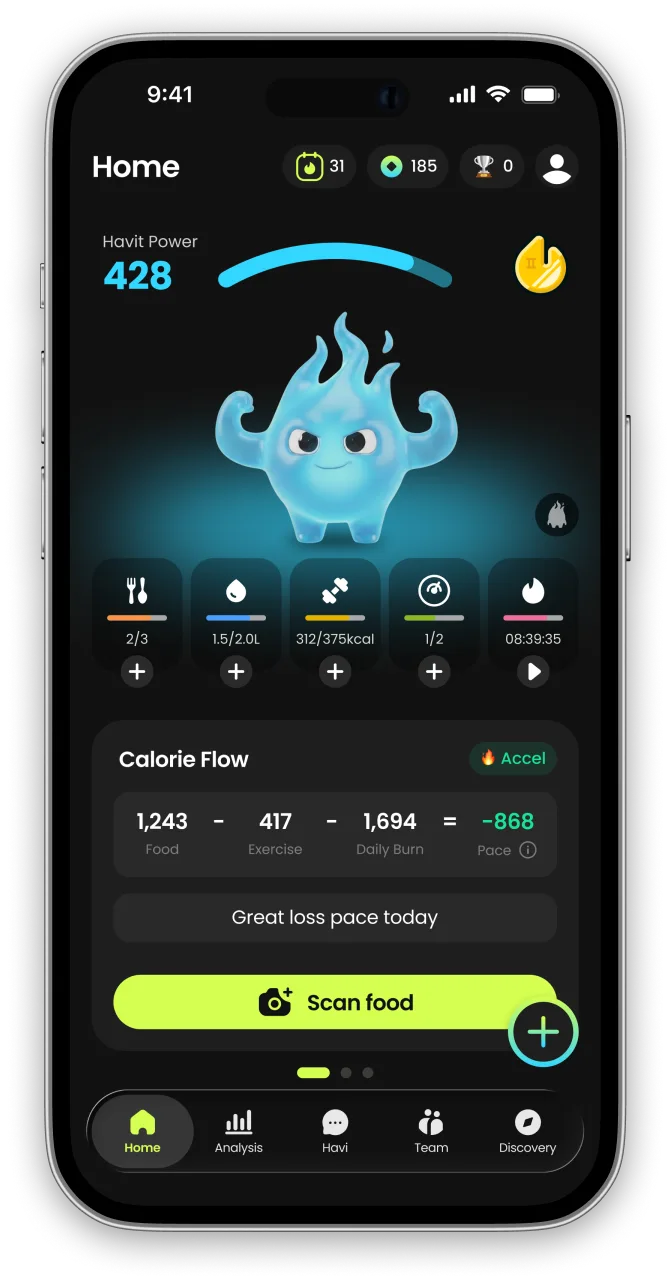
What is Havit?
Havit is an AI health companion for weight loss that protects muscle.
Unlike calorie-only trackers, Havit connects AI body-composition estimates, nutrition, hydration, sleep, steps, cycle, mood, and GLP-1 medication in one daily routine — so progress is measured by body composition, not just the number on the scale. Daily missions turn established behavior-change techniques into small repeatable actions, drawing on expertise from professionals formerly at Juvis Diet, one of Korea’s leading metabolic clinics.
In Havit’s own analysis of 1,090 GLP-1 users, people who logged consistently built stronger habits than the general user base. Read the GLP-1 Habit Report
Havit works with or without GLP-1 medication. It is a wellness app, not a medical device; body-composition results are estimates.

Continue in the App
Personalized wellness with your own data


References
- Respiratory Heat and Water Loss During Cold Weather Exercise: Mechanisms and Mitigation Strategies — Journal of Applied Physiology, 2025
- Cold Adaptation in Recreational Runners: A Longitudinal Study of Nordic Training Populations — Scandinavian Journal of Medicine & Science in Sports, 2024
- Dynamic Wind Chill Calculations for Moving Athletes: Implications for Cold Weather Training — Scandinavian Journal of Medicine & Science in Sports, 2024
- Pre-Exercise Warming Protocols and Running Economy in Sub-Zero Conditions — Journal of Applied Physiology, 2025


