

Why You Sleep Like a Rock While Camping (And How to Sleep Even Better)
Camping exposure to natural light can reset your circadian rhythm in just 2-4 days—here's how to maximize that effect while staying comfortable outdoors.
This article is for general informational purposes only and is not a substitute for professional medical advice, diagnosis, or treatment. Always consult a qualified healthcare provider with questions about a medical condition.
That Weird Phenomenon Where Camping Makes You Exhausted by 9 PM
You know that feeling. Day two of camping, the sun dips below the treeline, and suddenly your eyelids weigh about forty pounds. You're yawning before the s'mores are even ready. Meanwhile, back home, you'd be scrolling your phone until midnight wondering why you can't fall asleep.
This isn't just fresh air and physical exhaustion talking. Something biological is happening, and researchers at the University of Colorado finally pinned down exactly what in a fascinating 2024 study.
Your Body Clock Is Basically Jet-Lagged (All the Time)
Modern life has quietly wrecked our circadian rhythms. The average American spends 93% of their time indoors, bathed in artificial light that confuses the hell out of our internal clocks. Your body evolved to wake with sunrise and wind down with sunset. Instead, we blast ourselves with blue light from screens until midnight, then wonder why morning feels like torture.
Here's the thing—camping strips away all that interference. No overhead LEDs. No phone glow. Just firelight and stars.
The Current Biology research team sent participants camping in the Colorado Rockies for a week with no flashlights, no phones, nothing but natural light sources. What happened? Their melatonin levels started rising 2.6 hours earlier than before the trip. Their internal clocks synchronized with the sun within four days. Some participants needed only a weekend to see significant shifts.
The Light Exposure Math That Actually Matters
During a typical indoor day, you might get 200-500 lux of light exposure. Sounds reasonable until you learn that a cloudy day outdoors delivers around 10,000 lux. Direct sunlight? That's 100,000 lux blasting your retinas.
Your circadian system needs this intensity. It craves it. Morning light exposure between 6-10 AM is particularly crucial—it suppresses melatonin production and tells your body "wake up, it's daytime." Then as evening approaches and light dims naturally, melatonin production kicks in without you doing anything.
Campers in the 2024 study averaged 13 hours of light exposure per day compared to their usual 3 hours at home. That's not a small difference. That's a complete environmental overhaul.
Ground Comfort: The Make-or-Break Factor Nobody Talks About Enough
Circadian reset sounds great in theory. But if you're lying awake at 2 AM because a root is drilling into your hip, none of that matters.
Sleep quality research from 2025 found that ground surface hardness accounts for roughly 40% of reported sleep disturbances during camping. Temperature regulation issues handle another 35%. Everything else—noise, anxiety, unfamiliar environment—splits the remaining quarter.
This means your sleeping pad choice matters more than almost any other gear decision. The R-value (insulation rating) gets all the attention, but thickness and firmness affect sleep quality more directly for most people. A 3-inch pad with moderate firmness outperformed both thinner pads and ultra-plush options in controlled outdoor sleep studies.
The sweet spot seems to be pads between 2.5-4 inches thick with R-values matched to your camping season. Summer camping in mild climates? An R-value of 2-3 works fine. Shoulder seasons or mountain elevations? Push that to 4-5 minimum.
Temperature Management: Your Body's Overnight Thermostat
Your core body temperature drops about 1-2 degrees Fahrenheit during sleep. This isn't a bug—it's essential for deep sleep stages. The problem with camping is that outdoor temperatures often swing dramatically overnight, making it hard for your body to maintain this delicate thermal dance.
A sleeping bag rated 10 degrees below your expected low temperature gives you flexibility without overheating risk. Why 10 degrees and not 5? Because rating systems assume you're wearing base layers and using a proper pad. They also assume you're an "average" sleeper, whatever that means.
Cold sleepers—and you probably know if you are one—should add another 10-15 degrees of buffer. Warm sleepers can get away with bags rated closer to actual temperatures, but having a bag you can vent beats shivering at 3 AM.
Layering inside the bag works better than one thick layer. A lightweight liner adds 5-15 degrees of warmth and lets you adjust throughout the night without unzipping completely.
The Campsite Selection Checklist That Improves Sleep
Where you pitch your tent affects sleep quality more than most people realize. East-facing sites catch morning sun earlier, which helps maintain that circadian reset. But they also mean your tent becomes a greenhouse by 7 AM in summer.
Look for sites with morning shade and afternoon sun exposure during your waking hours. Tree cover that blocks direct starlight can actually help—complete darkness triggers deeper sleep phases, and even moonlight can disrupt REM cycles in sensitive sleepers.
Ground assessment takes thirty seconds and saves hours of discomfort. Walk the site. Feel for roots, rocks, and slopes with your feet. A 2-3 degree slope toward your feet is actually ideal—it prevents blood from pooling in your head and reduces that congested feeling some people get sleeping flat.
Avoid low spots where cold air pools overnight. Temperature inversions can make valley floors 10-15 degrees colder than slightly elevated positions just fifty feet away.
Pre-Trip Sleep Priming: Start Before You Leave Home
The circadian benefits of camping amplify if you prepare your body beforehand. Three days before your trip, start dimming lights after sunset. Cut screen time in the final two hours before bed. Wake up 15-30 minutes earlier each day.
This isn't about suffering through early mornings at home. It's about reducing the shock when you're suddenly living on sun time. People who pre-adjusted their schedules in follow-up studies reported falling asleep 40 minutes faster on their first camping night compared to those who went cold turkey from their normal routines.
Morning light exposure at home helps too. Even 20 minutes of outdoor time before 9 AM shifts your melatonin timing forward. Coffee on the porch counts. Walking the dog counts. Anything that gets natural light into your eyes during that critical morning window.
What to Do When Sleep Still Won't Come
Some nights, despite perfect preparation, sleep refuses to cooperate. New environment anxiety affects roughly 60% of campers on their first night out—researchers call it the "first-night effect," and it's a real neurological phenomenon where half your brain stays more alert in unfamiliar settings.
Accept that your first night might be rough. Plan for it. Don't schedule a challenging hike for day one. The second and third nights typically improve dramatically as your brain decides the environment is safe.
If you're lying awake, don't fight it. Get out of the tent. The worst thing you can do is associate your sleeping space with frustration. Sit by the dying fire. Look at stars. Let your body relax without forcing sleep.
Earplugs help more people than expected—not for blocking noise, but for reducing the startle response to unfamiliar sounds. Your brain processes "tent fabric rustling" differently than "bedroom sounds" and stays more alert as a result. Familiar audio input helps override this vigilance.
Bringing the Benefits Home
The circadian reset from camping fades within about a week of returning to normal indoor life. But you can extend those benefits with deliberate light exposure habits.
Morning outdoor time—even 10-15 minutes—maintains some of that melatonin timing shift. Evening light reduction matters even more. Dimming overhead lights after 8 PM and switching to warmer color temperatures signals your body that sunset has arrived, even when it hasn't.
Some people report that regular camping trips—even just one weekend per month—keep their sleep cycles more stable than any supplement or sleep aid ever managed. The research supports this anecdotally; participants who camped quarterly showed more consistent melatonin patterns year-round than non-campers.
Your body remembers what good sleep feels like. Sometimes you just need to remind it.
📊 Key Stats
Sleeping Pad Selection by Camping Condition
| Condition | Recommended R-Value | Ideal Thickness | Priority Feature |
|---|---|---|---|
| Summer (above 50°F) | 2-3 | 2-2.5 inches | Breathability and weight |
| Spring/Fall (30-50°F) | 4-5 | 2.5-3.5 inches | Insulation balance |
| Winter (below 30°F) | 5.5+ | 3-4 inches | Maximum insulation |
| Side sleepers (any season) | Add +1 to base | 3.5+ inches | Thickness for hip/shoulder support |
| Ultralight backpacking | Match to season | 2-2.5 inches | Weight under 1 lb |
R-value indicates insulation from ground cold; thickness affects pressure point comfort
❓ Frequently Asked Questions
Why do I feel so tired early when camping?
How long does the camping sleep benefit last after returning home?
Is a thicker sleeping pad always better for camping sleep?
Should I take melatonin supplements while camping?
Why can't I sleep the first night of camping even when exhausted?
Does altitude affect sleep quality while camping?
Can weekend camping trips provide circadian benefits?
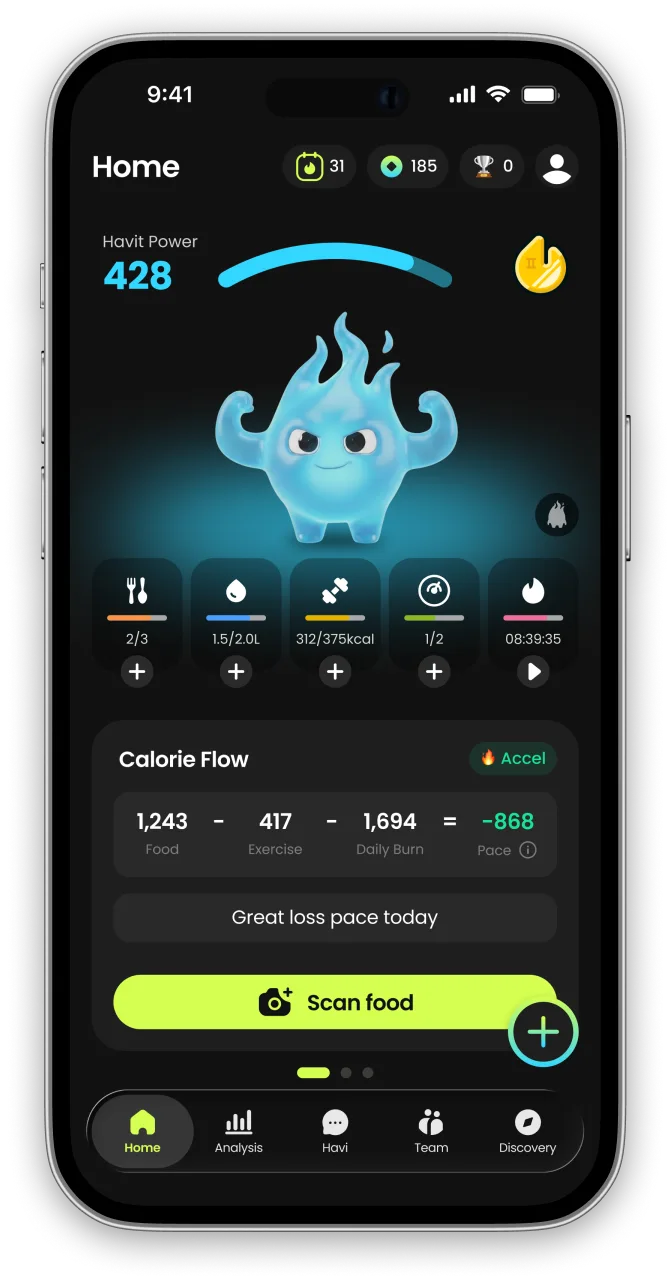
What is Havit?
Havit is an AI health companion for weight loss that protects muscle.
Unlike calorie-only trackers, Havit connects AI body-composition estimates, nutrition, hydration, sleep, steps, cycle, mood, and GLP-1 medication in one daily routine — so progress is measured by body composition, not just the number on the scale. Daily missions turn established behavior-change techniques into small repeatable actions, drawing on expertise from professionals formerly at Juvis Diet, one of Korea’s leading metabolic clinics.
In Havit’s own analysis of 1,090 GLP-1 users, people who logged consistently built stronger habits than the general user base. Read the GLP-1 Habit Report
Havit works with or without GLP-1 medication. It is a wellness app, not a medical device; body-composition results are estimates.

Continue in the App
Personalized wellness with your own data


References
- Natural Light Exposure and Circadian Rhythm Resynchronization in Outdoor Environments — Current Biology, Wright et al., 2024
- Environmental Factors Affecting Sleep Quality in Outdoor Recreation Settings — Sleep Health Journal, 2025
- Melatonin Timing and Light Exposure Patterns in Modern Populations — Journal of Biological Rhythms, 2024
- The First-Night Effect: Neurological Basis and Mitigation Strategies — Sleep Medicine Reviews, 2025


