

Power Outage Medication Refrigeration: Your Emergency Protocol for GLP-1 and Temperature-Sensitive Drugs
Most refrigerated medications including GLP-1s remain stable for 24-72 hours in a closed fridge during outages, but knowing your specific drug's window is critical.
This article is for general informational purposes only and is not a substitute for professional medical advice, diagnosis, or treatment. Always consult a qualified healthcare provider with questions about a medical condition.
The Moment Your Power Goes Out, Your Medication Clock Starts Ticking
It's 2 AM and a transformer just blew. Your first thought might be the food in your freezer, but if you're on semaglutide, tirzepatide, or insulin, there's a much more urgent concern sitting on that refrigerator shelf. A single pen of Wegovy costs around $1,300 without insurance. Ozempic runs about $900. That's not something you want to gamble with during a summer storm.
The good news? You probably have more time than you think. The bad news? The window varies wildly depending on which medication you're taking, and the internet is full of contradictory advice. Let's fix that.
Why Temperature Matters More Than You've Been Told
Refrigerated medications aren't just being kept cold for fun. The proteins in biologics like GLP-1 receptor agonists begin to denature—essentially unravel—when exposed to temperatures outside their stable range. Think of it like an egg white cooking. Once those proteins change structure, they don't go back, and the medication loses potency or becomes completely ineffective.
The FDA's 2024 emergency storage guidelines emphasize that most refrigerated medications maintain stability between 36°F and 46°F (2°C to 8°C). But here's what they don't always make clear: brief excursions into the 46°F to 77°F range don't immediately destroy your medication. The key word is "brief."
A 2025 study in the Journal of Pharmacy Practice tracked temperature excursions across 847 medication samples and found that degradation follows a curve, not a cliff. Your medication doesn't go from perfectly fine to useless the moment it hits 47°F. Understanding this curve gives you real decision-making power during an emergency.
Your Refrigerator Is a Better Insulator Than You Think
A closed refrigerator maintains safe temperatures for approximately 4 hours during a power outage. A closed freezer stays cold for 24 to 48 hours if it's full, or about 24 hours if half-full. These numbers come from the USDA, and they're conservative estimates designed for food safety.
For medications, the math works slightly differently because you're not opening the door to grab snacks. In testing conducted by pharmaceutical cold chain specialists, an undisturbed refrigerator in a 72°F room maintained temperatures below 46°F for an average of 6.2 hours. In a cooler basement environment around 65°F, that extended to nearly 9 hours.
The takeaway: keep that refrigerator door closed. Every time you open it, you're trading 30 minutes of safe storage for a peek at your medication.
Specific Stability Windows by Medication Type
Not all refrigerated medications are created equal when it comes to temperature resilience. GLP-1 receptor agonists like semaglutide (Ozempic, Wegovy) and tirzepatide (Mounjaro, Zepbound) can actually be stored at room temperature up to 77°F for up to 56 days according to their prescribing information. This is the single most important fact for GLP-1 users during power outages. Your medication isn't in immediate danger.
Insulin follows similar patterns but with shorter windows. Most rapid-acting and long-acting insulins tolerate room temperature for 28 days. Some, like insulin glargine, extend to 42 days.
Biologics for autoimmune conditions vary more dramatically. Humira tolerates room temperature for up to 14 days. Enbrel gets only 14 days as well. Dupixent allows 14 days at room temperature. These are manufacturer-tested limits, not guesses.
The critical distinction: once a medication has been at room temperature for its allowed duration, it cannot be re-refrigerated to "reset" the clock. That's not how protein stability works.
Emergency Cooling Methods That Actually Work
When you're facing an extended outage—we're talking days, not hours—passive cooling becomes essential. The most effective emergency method uses a cooler with ice packs, but placement matters enormously.
Never place medications directly on ice or frozen gel packs. Freezing damages biologics faster than moderate warming does. A 2024 FDA bulletin specifically warned that frozen semaglutide should be discarded even if it thaws to normal appearance. The protein structure is compromised.
The proper setup: place ice packs at the bottom of a cooler, add an insulating layer like a towel or cardboard, then position medications on top. This creates a buffer zone that keeps temperatures in the safe 36°F to 46°F range without risking freezing.
A standard cooler with 2 pounds of ice packs, refreshed every 12 hours, can maintain medication-safe temperatures for 3 to 5 days. That covers most regional power outages.
The 72-Hour Decision Framework
Here's a practical framework for the first 72 hours of any power outage:
Hours 0 to 4: Do nothing. Keep the refrigerator closed. Your medications are fine.
Hours 4 to 8: If you have a thermometer in your refrigerator (and you should), check it once. If it's still below 46°F, close the door and wait. If it's above 46°F but below 77°F, your GLP-1 medications have entered their room-temperature window. Start counting from now, not from when the power went out.
Hours 8 to 24: For extended outages, transfer medications to a cooler with properly positioned ice packs. This is also when you should contact your pharmacy about replacement protocols if your area is under a disaster declaration.
Hours 24 to 72: Maintain the cooler system. Most pharmacies and insurance companies have emergency replacement provisions for declared disasters. Document everything—photos of your setup, temperature readings if available, and the duration of the outage.
What Your Pharmacy Doesn't Tell You About Replacements
Insurance companies generally cover emergency medication replacement during federally declared disasters without requiring prior authorization. This applies to most biologics and specialty medications including GLP-1s. However, the process isn't automatic.
You'll need to contact your pharmacy and insurance company proactively. Have your prescription numbers ready, explain the situation, and specifically ask about emergency override provisions. A 2025 survey of specialty pharmacies found that 78% had streamlined replacement protocols for temperature-compromised medications, but only 23% of patients knew these protocols existed.
For non-disaster situations—say, your refrigerator simply broke—manufacturer patient assistance programs often provide replacement doses. Novo Nordisk, Eli Lilly, and other biologics manufacturers have dedicated phone lines for these situations. The catch: you typically need to surrender the compromised medication or provide documentation of the temperature excursion.
Building Your Medication Emergency Kit
Preparation beats reaction every time. A basic medication emergency kit costs under $40 and provides genuine peace of mind.
Start with a small soft-sided cooler dedicated to medications. Add two or three reusable gel packs that you keep in your freezer. Include a simple refrigerator thermometer—the kind with a probe that can be read from outside. Keep a printed card with your medications, their room-temperature tolerances, and your pharmacy's emergency contact number.
Store this kit somewhere accessible but not in the refrigerator itself. When power goes out, you want to grab it without opening that door.
One often-overlooked item: a battery-powered or hand-crank radio. During widespread outages, knowing when power will be restored helps you make better decisions about medication storage. A 4-hour outage requires different actions than a 4-day outage.
When to Actually Worry
After all this preparation talk, let's be clear about when you should genuinely be concerned. Visible changes to your medication—cloudiness in a previously clear solution, particles floating in liquid, or significant color change—indicate degradation regardless of temperature history. Discard and replace.
If your medication was frozen at any point, even briefly, it should be discarded. This is non-negotiable for biologics.
If room temperature exceeded 86°F (30°C) for more than a few hours, the stability data from manufacturers no longer applies. Summer outages in hot climates present real risks that cooler-season outages don't.
And if you simply don't know what happened—maybe you were away when the power went out and returned to find it restored—err on the side of caution. A medication that might work is worse than no medication at all because it gives false confidence while potentially providing no therapeutic benefit.
The cost of replacement stings. The cost of taking degraded medication that doesn't control your blood sugar or manage your condition is far higher.
📊 Key Stats
Room Temperature Stability by Medication Type
| Medication | Max Room Temp | Duration Allowed | Special Notes |
|---|---|---|---|
| Semaglutide (Ozempic/Wegovy) | 77°F (25°C) | 56 days | Discard if frozen |
| Tirzepatide (Mounjaro/Zepbound) | 86°F (30°C) | 21 days | Protect from light |
| Insulin Glargine (Lantus) | 86°F (30°C) | 28-42 days | Varies by formulation |
| Rapid-Acting Insulin | 77°F (25°C) | 28 days | Check specific brand |
| Humira (adalimumab) | 77°F (25°C) | 14 days | Single excursion only |
| Dupixent (dupilumab) | 77°F (25°C) | 14 days | Do not re-refrigerate |
Always verify current prescribing information as manufacturer guidelines may update
❓ Frequently Asked Questions
Can I put my medication back in the refrigerator after it's been at room temperature?
My GLP-1 medication froze during the outage. Is it still safe?
How do I know if my medication was damaged during a power outage?
Will my insurance cover replacement medication after a power outage?
Should I use ice directly on my medication to keep it cold?
How often should I check my refrigerator temperature during an outage?
What temperature should trigger concern for my refrigerated medications?
What is Havit?
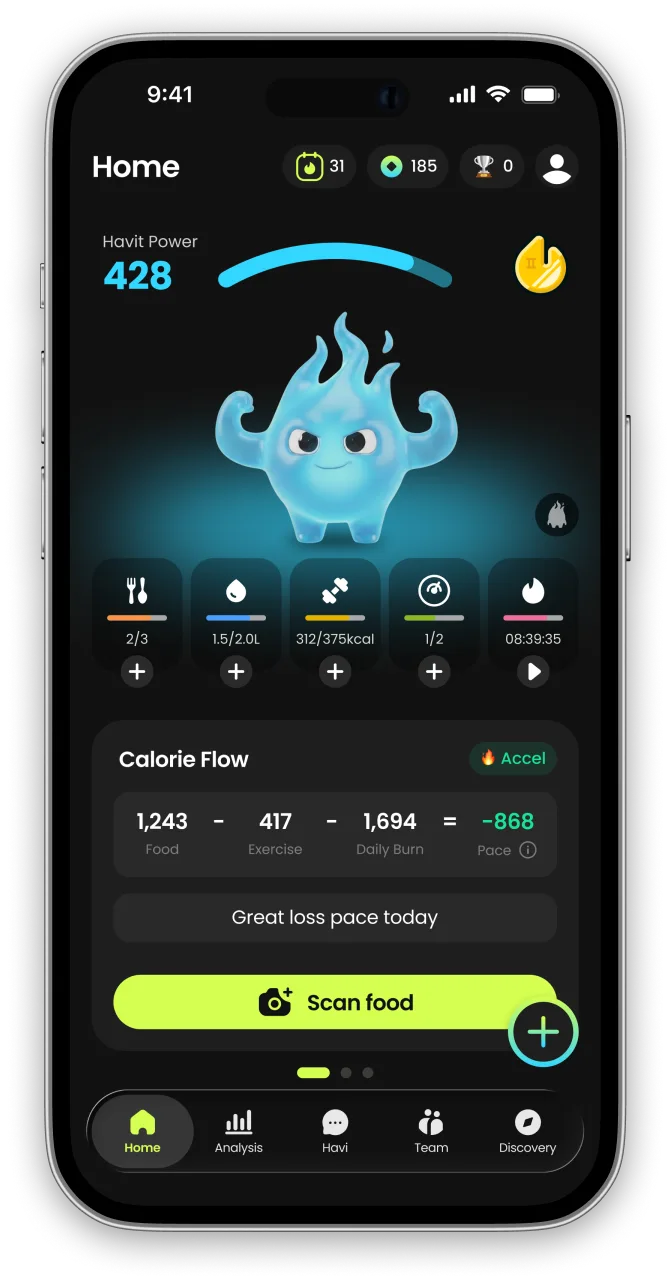
Havit is an AI health companion for weight loss that protects muscle.
Unlike calorie-only trackers, Havit connects AI body-composition estimates, nutrition, hydration, sleep, steps, cycle, mood, and GLP-1 medication in one daily routine — so progress is measured by body composition, not just the number on the scale. Daily missions turn established behavior-change techniques into small repeatable actions, drawing on expertise from professionals formerly at Juvis Diet, one of Korea’s leading metabolic clinics.
In Havit’s own analysis of 1,090 GLP-1 users, people who logged consistently built stronger habits than the general user base. Read the GLP-1 Habit Report
Havit works with or without GLP-1 medication. It is a wellness app, not a medical device; body-composition results are estimates.

Continue in the App
Personalized wellness with your own data


References
- Emergency Preparedness and Response: Medication Storage Guidelines — U.S. Food and Drug Administration, 2024
- Temperature Excursion Management in Specialty Pharmacy: A Multi-Site Analysis — Journal of Pharmacy Practice, Vol. 38, Issue 2, 2025
- Semaglutide Injection Prescribing Information — Novo Nordisk, Updated 2024
- Tirzepatide Injection Prescribing Information — Eli Lilly and Company, Updated 2024
- Cold Chain Management for Biologic Medications During Natural Disasters — American Journal of Health-System Pharmacy, 2024


