

Post-Surgery Recovery Nutrition: Why Your Protein Needs Jump 50-100% for Wound Healing
Surgery triggers a metabolic storm requiring 1.5-2g protein per kg body weight daily, with specific amino acids like arginine and glutamine playing starring roles in wound closure.
This article is for general informational purposes only and is not a substitute for professional medical advice, diagnosis, or treatment. Always consult a qualified healthcare provider with questions about a medical condition.
Your Body Just Declared a Construction Emergency
Three days after my neighbor's knee replacement, she asked me why she felt like she could eat an entire rotisserie chicken. Her body wasn't being dramatic. It was screaming for building materials.
Surgery creates what researchers call a "hypermetabolic state." Think of it like this: if your body normally runs a small home renovation crew, post-surgery it's suddenly managing a full-scale emergency reconstruction project. The workforce needs to triple. The supply trucks need to run constantly. And protein? That's your primary building material.
A 2024 analysis in Nutrition in Clinical Practice found that surgical patients who met elevated protein targets healed incisions 23% faster than those eating their normal amounts. Not a little faster. Nearly a quarter faster. That's the difference between returning to work in three weeks versus four.
The Math Behind Your Increased Needs
Normally, adults need about 0.8 grams of protein per kilogram of body weight. For a 70kg person, that's 56 grams daily—roughly two chicken breasts and a cup of Greek yogurt.
After surgery, that number jumps to 1.5-2.0 grams per kilogram. Same 70kg person now needs 105-140 grams. That's not a modest increase. It's nearly doubling your intake.
Why so dramatic? Your body is simultaneously running three protein-intensive processes. Wound closure requires collagen synthesis, which devours amino acids. Immune function ramps up to prevent infection, requiring antibody production. And muscle preservation becomes critical because your body, if starved for protein, will cannibalize its own tissue.
The Advances in Wound Care journal documented this in 2025: patients consuming less than 1.2g/kg showed measurable muscle loss within the first week post-surgery, even when total calories were adequate. Protein specifically—not just food in general—determines whether you heal while maintaining strength.
Not All Proteins Heal Equally
Here's where it gets interesting. Your body doesn't just need "protein." It needs specific amino acids in specific quantities.
Arginine tops the list. This amino acid serves as a precursor to nitric oxide, which dilates blood vessels and delivers oxygen to healing tissue. Wound sites are essentially construction zones that need constant deliveries. Arginine keeps the roads open. Clinical trials show that 17-25 grams of supplemental arginine daily accelerates wound closure in surgical patients.
Glutamine comes next. Your gut and immune cells burn through glutamine like a car burns fuel. During the stress response after surgery, glutamine demand skyrockets. The problem? Glutamine is "conditionally essential"—your body makes it normally, but can't keep up during recovery. Supplementing 20-30 grams daily has shown benefits in multiple surgical populations.
Then there's the trio of branched-chain amino acids: leucine, isoleucine, and valine. These directly signal muscle preservation. Leucine in particular triggers something called mTOR, a molecular switch that tells your body to build tissue rather than break it down. You'll find these concentrated in whey protein, eggs, and chicken.
Timing Matters More Than You'd Think
Eating 140 grams of protein in one massive dinner won't cut it. Your body can only utilize about 25-40 grams of protein per meal for tissue synthesis. Excess gets burned for energy or converted to fat.
This means surgical recovery demands protein distribution across 4-5 eating occasions. Breakfast, lunch, dinner, plus one or two snacks. Each containing 25-35 grams.
A practical day might look like: three eggs with cheese at breakfast (25g), Greek yogurt with nuts mid-morning (20g), a chicken breast at lunch (35g), cottage cheese afternoon snack (25g), and fish with legumes at dinner (40g). That's 145 grams, spread across the day, maximizing utilization.
The first meal matters especially. After overnight fasting, your body enters a mildly catabolic state. Breaking that fast with protein—not just coffee and toast—signals tissue preservation from the day's start.
What Hospital Food Gets Wrong
Standard hospital meals typically provide 60-70 grams of protein daily. For a recovering surgical patient, that's roughly half of what's needed. The 2024 Nutrition in Clinical Practice review called this gap "a systematic failure in acute care nutrition."
Jell-O, broth, white bread, apple juice. These recovery staples contain virtually no protein. They're easy to digest, sure. But they're not helping you heal.
If you're facing surgery, plan ahead. Pack protein powder. Ask family to bring Greek yogurt, string cheese, deli turkey. Request nutrition services consultation—most hospitals have dietitians who can modify your meal plan if asked. The squeaky wheel gets the protein.
One orthopedic surgeon I spoke with now sends patients home with specific protein targets written on their discharge papers, right alongside wound care instructions. "I got tired of seeing preventable complications," he said. "Undereating protein is the most fixable problem in surgical recovery."
The Zinc and Vitamin C Connection
Protein doesn't work alone. Two micronutrients deserve special attention.
Zinc functions as a cofactor for over 300 enzymes involved in tissue repair. Wound fluid contains zinc concentrations 15-20 times higher than blood plasma—your body actively concentrates zinc at injury sites. Surgical patients often show depleted zinc levels within days. Oysters, beef, pumpkin seeds, and fortified cereals provide the best sources. Supplementing 15-30mg daily is common practice in wound care protocols.
Vitamin C enables collagen cross-linking—the process that gives scar tissue its strength. Without adequate C, collagen forms but remains weak and prone to reopening. The recommended daily allowance of 90mg is maintenance-level. Surgical recovery may require 500-1000mg daily, according to wound care specialists.
Think of it like construction: protein provides the steel beams, zinc provides the welding equipment, and vitamin C provides the rivets that hold everything together.
When Appetite Disappears
Here's the cruel irony of surgical recovery: your body needs dramatically more nutrition precisely when you least feel like eating. Pain medications cause nausea. Anesthesia suppresses appetite. Stress hormones make food unappealing.
Practical workarounds exist. Liquid protein (shakes, smoothies, bone broth with collagen) goes down easier than solid food. Cold foods often appeal more than hot when nausea lurks. Small portions every 2-3 hours beat large meals.
Protein powder becomes genuinely useful here—not as a fitness supplement, but as a medical tool. Thirty grams of whey protein in 8 ounces of milk delivers 38 grams of high-quality protein in a form most people can tolerate even when queasy.
Some patients find that the first bite is the hardest. Once they start eating, appetite returns. Setting phone alarms for protein snacks helps when the motivation to eat has vanished.
The Timeline of Recovery Nutrition
Protein needs don't stay elevated forever. The most intense demand occurs during the first 2-3 weeks, when wound closure is most active. After that, needs gradually decrease but remain above baseline for 6-8 weeks as internal tissue remodeling continues.
Major surgeries—cardiac, abdominal, joint replacement—require longer periods of elevated intake than minor procedures. A wisdom tooth extraction might need enhanced nutrition for a week. A hip replacement might need two months.
The wound itself provides feedback. Healthy healing shows pink, gradually shrinking edges. Slow healing shows pale tissue, persistent redness, or delayed closure. If your wound isn't progressing as expected, inadequate protein intake should be the first suspect.
One study tracked 287 colorectal surgery patients and found that those meeting protein targets for the full 6-week recovery period had a 34% lower rate of wound complications than those who returned to normal eating after two weeks. Patience with the elevated intake pays off.
📊 Key Stats
Protein Requirements: Normal vs. Post-Surgery Recovery
| Factor | Normal Adult | Post-Surgery Recovery |
|---|---|---|
| Daily protein (per kg body weight) | 0.8g/kg | 1.5-2.0g/kg |
| For 70kg person (total daily) | 56 grams | 105-140 grams |
| Meals with protein | 2-3 daily | 4-5 daily |
| Protein per eating occasion | 15-25 grams | 25-35 grams |
| Arginine needs | Baseline (body produces) | 17-25g supplemental |
| Glutamine needs | Baseline (body produces) | 20-30g supplemental |
| Duration of elevated needs | N/A | 6-8 weeks post-surgery |
Surgical recovery demands roughly double the protein intake of normal maintenance, distributed across more frequent meals.
❓ Frequently Asked Questions
How soon after surgery should I start increasing protein intake?
Can I get enough protein from regular food, or do I need supplements?
Is plant protein as effective as animal protein for wound healing?
What if I have kidney disease and was told to limit protein?
How do I know if I'm getting enough protein during recovery?
Does the type of surgery affect how much extra protein I need?
Should I take arginine and glutamine supplements, or can I get enough from food?
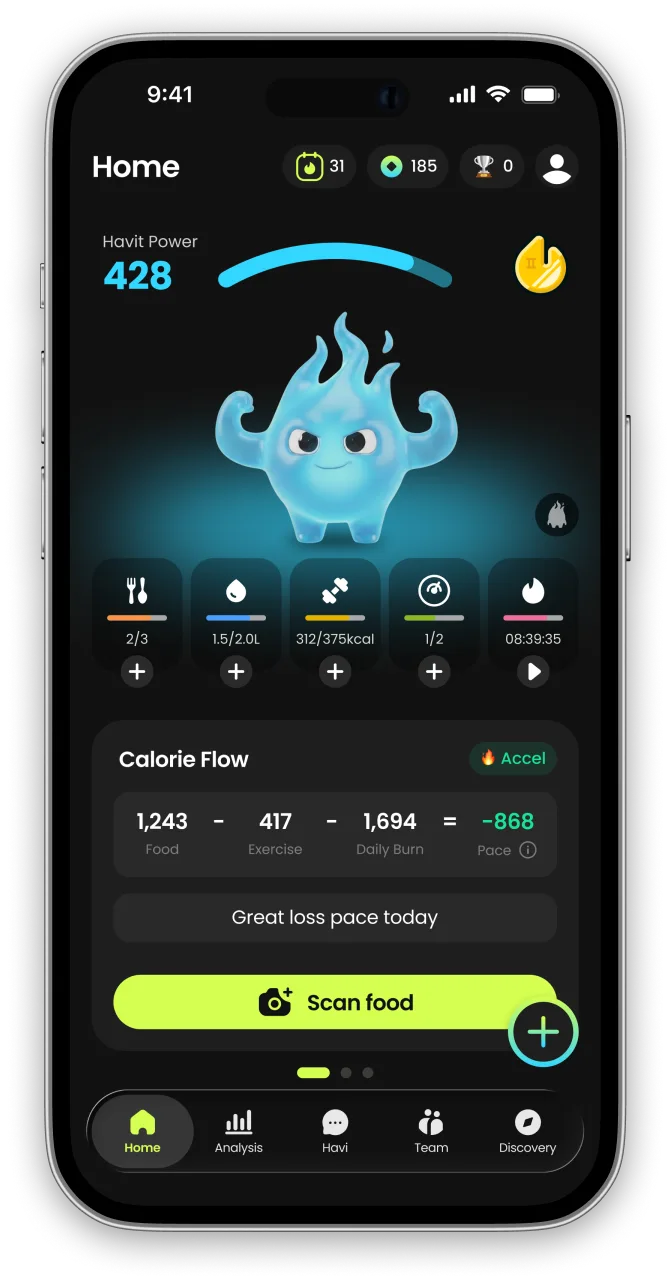
What is Havit?
Havit is an AI health companion for weight loss that protects muscle.
Unlike calorie-only trackers, Havit connects AI body-composition estimates, nutrition, hydration, sleep, steps, cycle, mood, and GLP-1 medication in one daily routine — so progress is measured by body composition, not just the number on the scale. Daily missions turn established behavior-change techniques into small repeatable actions, drawing on expertise from professionals formerly at Juvis Diet, one of Korea’s leading metabolic clinics.
In Havit’s own analysis of 1,090 GLP-1 users, people who logged consistently built stronger habits than the general user base. Read the GLP-1 Habit Report
Havit works with or without GLP-1 medication. It is a wellness app, not a medical device; body-composition results are estimates.

Continue in the App
Personalized wellness with your own data


References
- Protein Requirements and Surgical Recovery Outcomes: A Systematic Review — Nutrition in Clinical Practice, 2024
- Amino Acid Supplementation in Wound Healing: Current Evidence and Clinical Applications — Advances in Wound Care, 2025
- Perioperative Nutrition Guidelines for Enhanced Recovery — Journal of Parenteral and Enteral Nutrition, 2024
- Micronutrient Status and Surgical Wound Complications — Advances in Wound Care, 2025


