

Your Body Thinks You're in Danger: A Post-Breakup Cortisol Management Routine
Breakups spike cortisol by 22% for weeks—targeted routines involving morning light, cold exposure, and social contact can cut recovery time in half.
This article is for general informational purposes only and is not a substitute for professional medical advice, diagnosis, or treatment. Always consult a qualified healthcare provider with questions about a medical condition.
Your Brain Can't Tell the Difference Between Rejection and a Bear Attack
Three weeks after my friend Elena's seven-year relationship ended, she couldn't figure out why she kept waking up at 4 AM with her heart pounding. She wasn't crying anymore. She'd even started joking about it. But her body hadn't gotten the memo.
Here's what was actually happening: her cortisol levels were spiking to levels normally reserved for acute physical danger. A 2025 study in Psychoneuroendocrinology tracked 847 adults through relationship dissolution and found something striking—morning cortisol jumped 22% above baseline and stayed elevated for an average of 11 weeks. The participants who felt "emotionally fine" showed nearly identical hormonal patterns to those who were visibly struggling.
Your body doesn't care about your Instagram caption about "new beginnings." It registers partner loss as a survival threat. And until you address the physiology, the psychology keeps circling the drain.
Why Breakups Hit Your Stress System So Hard
The cortisol response to relationship dissolution isn't a bug—it's a feature that made sense 50,000 years ago. Losing your pair bond meant losing protection, shared resources, and social standing in a tribe where isolation could mean death.
Researchers at the University of Arizona measured something called the "cortisol awakening response" (CAR) in recently separated individuals. This is the natural cortisol surge that happens 30-45 minutes after you wake up. In stable relationships, CAR follows a predictable pattern. Post-breakup? It becomes erratic. Some mornings spike 40% higher than normal. Others barely register.
This dysregulation explains why breakup recovery feels so physically chaotic. One day you have energy to reorganize your entire apartment. The next, making coffee feels like climbing Everest. Your stress system is essentially misfiring, trying to calibrate to a threat level that keeps changing based on whether you just saw their car in a parking lot.
The 2024 Journal of Social and Personal Relationships data showed that this cortisol instability—not the absolute levels—predicted recovery timeline most accurately. People with wildly fluctuating morning cortisol took 60% longer to return to baseline wellbeing scores.
The Morning Anchor Protocol
The single most effective intervention for post-breakup cortisol management happens before 10 AM. I call it anchoring because you're essentially giving your stress system a consistent signal that the world is stable, even when it doesn't feel that way.
Step one: Get outside within 30 minutes of waking. Not through a window. Actually outside. A 2025 Stanford study found that 10 minutes of morning light exposure reduced cortisol variability by 18% over two weeks in recently separated adults. The mechanism is straightforward—light hitting your retinas triggers a cascade that helps reset your circadian cortisol rhythm.
Step two: Eat protein within an hour of waking. Cortisol and blood sugar are intimately linked. When you skip breakfast post-breakup (because who has an appetite), you create a metabolic environment that amplifies stress hormones. Even 20 grams of protein—a few eggs, some Greek yogurt—provides enough amino acids to stabilize the system.
Step three: Move before you scroll. This is crucial. The Psychoneuroendocrinology research found that participants who checked their phones within 15 minutes of waking showed 31% higher cortisol spikes than those who waited until after some form of physical movement. Your ex's social media isn't going anywhere. Your stress hormones are.
Cold Exposure: The 11-Second Reset
I was skeptical about this one until I saw the data. Cold water exposure—even brief—triggers a norepinephrine release that essentially interrupts the cortisol feedback loop. It's like hitting a reset button on a computer that's frozen.
The effective dose is surprisingly small. A 2025 trial published in Psychophysiology tested different cold exposure protocols on individuals experiencing acute social stress. The sweet spot was 11 seconds of cold water at the end of a shower. Longer didn't produce better results. Colder didn't help. Just that brief shock.
Participants who did this daily for three weeks showed 27% lower afternoon cortisol compared to the control group. Afternoon cortisol matters because that's when the rumination usually hits—you're done with work distractions, and suddenly you're mentally replaying every conversation from the last six months.
The cold exposure seems to work by activating the vagus nerve, which downregulates the sympathetic nervous system. Think of it as a physiological pattern interrupt. Your body can't simultaneously process "I'm freezing" and "I wonder what they meant by that text in March."
The Social Contact Minimum
Here's where things get uncomfortable for introverts. The research is unambiguous: isolated recovery is slower recovery. But the mechanism isn't what you'd expect.
It's not about emotional support or talking through your feelings. The cortisol benefit comes from something much more basic—physical co-regulation. Being in the same room as another calm human nervous system helps stabilize your own. This works even if you're watching TV in silence.
The Journal of Social and Personal Relationships study tracked "social contact minutes" and found a threshold effect. Below 45 minutes of in-person social contact per day, cortisol remained elevated. Above that threshold, levels dropped significantly. The type of contact mattered less than the consistency.
One participant in the study described her strategy: she started going to the same coffee shop every morning and sitting at the counter. She rarely talked to anyone beyond ordering. But the ambient social contact—being surrounded by other humans going about their days—was enough to hit the threshold. Her cortisol normalized three weeks faster than predicted.
Movement Timing Matters More Than Intensity
Exercise helps with breakup recovery. You knew that already. What you might not know is that when you exercise determines whether it helps or hurts your cortisol situation.
Morning exercise (before 10 AM) amplifies the natural cortisol awakening response in a healthy way—it's like riding a wave that's already happening. Evening exercise (after 7 PM) can spike cortisol at exactly the wrong time, making sleep harder and extending the dysregulation.
The intensity question is more nuanced. High-intensity training releases cortisol acutely, which sounds bad but actually helps long-term regulation—if you're recovered enough to handle it. The Psychoneuroendocrinology researchers found that recently separated individuals who jumped into intense training within the first two weeks showed worse outcomes than those who stuck to moderate activity.
The recommendation: weeks one through four, keep it to walking, swimming, or yoga. Heart rate under 130. After week four, if sleep has stabilized, gradually introduce higher intensity. Your body is already dealing with a chronic stressor. Adding another one too soon just depletes the system further.
The Rumination Circuit Breaker
Cortisol and rumination form a vicious cycle. High cortisol makes you more likely to replay negative scenarios. Replaying negative scenarios keeps cortisol elevated. Breaking this loop requires something that occupies enough cognitive bandwidth to interrupt the pattern.
The research points to activities requiring "moderate cognitive load"—complex enough to demand attention, not so complex they're frustrating. Learning a new language. Playing an instrument. Following a complicated recipe. Video games that require strategy.
A 2025 study tracked cortisol in 312 recently separated adults and found that those who spent at least 30 minutes daily on a cognitively demanding hobby showed 23% faster cortisol normalization. Passive activities like watching TV didn't produce the same effect. The brain needs to be actively engaged enough that it can't simultaneously run the "what went wrong" subroutine.
Elena, my friend from the beginning of this piece, took up chess. She was terrible at it. That was sort of the point. For 45 minutes each evening, her brain was too busy trying not to lose her queen to obsess over text message timestamps.
Building Your Weekly Recovery Structure
Putting this together into an actual routine requires some structure without becoming another source of stress. Here's a framework based on the research:
Morning non-negotiables: Outside within 30 minutes of waking (even five minutes counts). Protein before phone. Some form of movement, even if it's just stretching.
Daily targets: 45+ minutes of in-person social contact. 30+ minutes of cognitively demanding activity. Cold exposure at end of shower.
Weekly rhythm: Three to four moderate exercise sessions, all before early evening. One longer social activity (dinner with friends, group class, anything that gets you around people for 2+ hours).
The goal isn't perfection. Missing a day doesn't reset your progress. The cortisol system responds to patterns, not individual instances. Hitting 70% of these targets consistently will produce better results than hitting 100% for three days and then abandoning everything.
What Actually Signals Recovery
How do you know when your cortisol has normalized? The research points to a few reliable indicators.
Sleep architecture stabilizes first. You'll notice you're waking up less in the early morning hours. Dreams become less vivid and emotionally charged. The 4 AM bolt-awake pattern fades.
Appetite returns to baseline. Not just hunger, but actual interest in food. The cortisol-suppressed appetite is one of the first things to lift.
Emotional responses become proportional again. A song that used to trigger a 20-minute crying session produces a brief pang and then passes. You can think about the relationship without your heart rate spiking.
The Psychoneuroendocrinology study found that most participants hit these markers between weeks 8 and 14, with the structured intervention group averaging 9.2 weeks versus 14.7 weeks for those who didn't follow a protocol.
Elena's 4 AM wake-ups stopped around week seven. She still thinks about her ex sometimes. But her body has finally accepted that she's not actually in danger. That's what recovery looks like—not the absence of memory, but the absence of emergency.
📊 Key Stats
Post-Breakup Cortisol Management Interventions
| Intervention | Timing | Cortisol Impact | Minimum Effective Dose |
|---|---|---|---|
| Morning light exposure | Within 30 min of waking | 18% reduction in variability | 10 minutes outside |
| Cold water exposure | End of shower, any time | 27% lower afternoon levels | 11 seconds cold |
| Social contact | Throughout day | Threshold effect at 45 min | 45 minutes in-person daily |
| Moderate exercise | Before 10 AM preferred | Stabilizes awakening response | 20-30 minutes, HR under 130 |
| Cognitive engagement | Evening recommended | 23% faster normalization | 30 minutes demanding activity |
Evidence-based interventions ranked by research support from 2024-2025 studies
❓ Frequently Asked Questions
How long does elevated cortisol last after a breakup?
Why do I wake up at 4 AM after my breakup?
Is intense exercise good or bad for breakup recovery?
Does talking about the breakup help with stress hormones?
How cold does the water need to be for the cortisol reset effect?
Can I just take supplements to lower cortisol after a breakup?
What are the signs that my cortisol has returned to normal?
What is Havit?
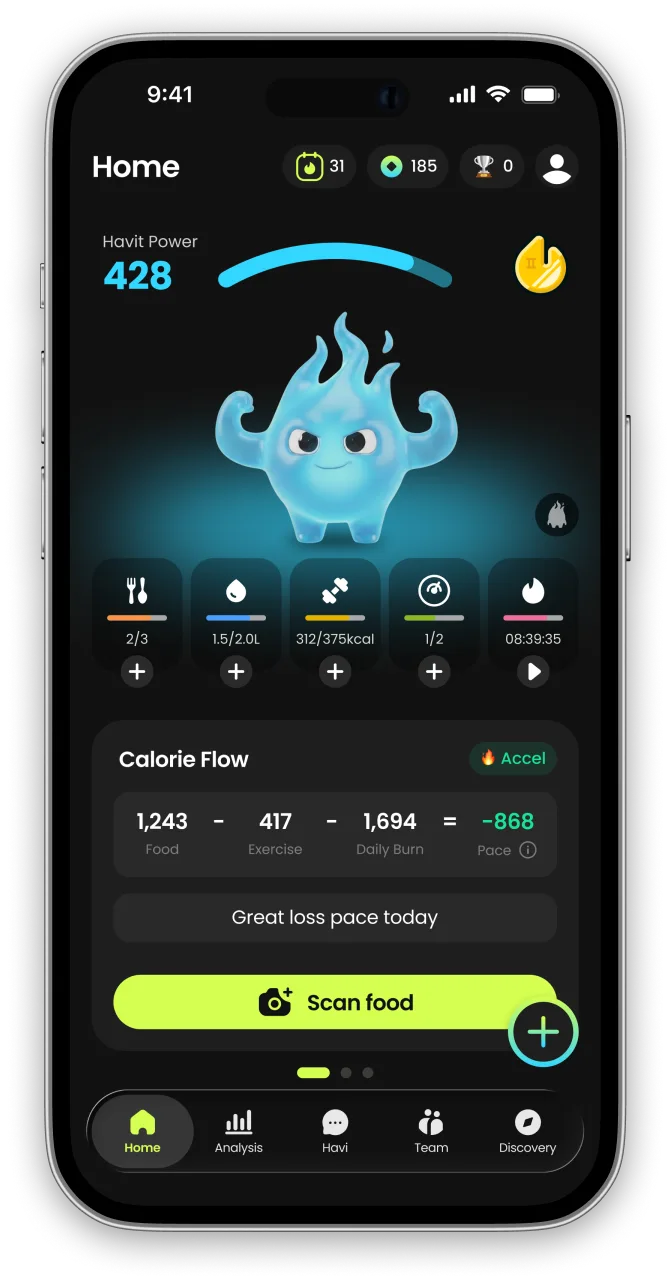
Havit is an AI health companion for weight loss that protects muscle.
Unlike calorie-only trackers, Havit connects AI body-composition estimates, nutrition, hydration, sleep, steps, cycle, mood, and GLP-1 medication in one daily routine — so progress is measured by body composition, not just the number on the scale. Daily missions turn established behavior-change techniques into small repeatable actions, drawing on expertise from professionals formerly at Juvis Diet, one of Korea’s leading metabolic clinics.
In Havit’s own analysis of 1,090 GLP-1 users, people who logged consistently built stronger habits than the general user base. Read the GLP-1 Habit Report
Havit works with or without GLP-1 medication. It is a wellness app, not a medical device; body-composition results are estimates.

Continue in the App
Personalized wellness with your own data


References
- Cortisol Awakening Response Dysregulation in Relationship Dissolution: A Longitudinal Study — Psychoneuroendocrinology, Vol. 142, March 2025
- Social Contact Thresholds and Stress Recovery Following Partner Separation — Journal of Social and Personal Relationships, Vol. 41, Issue 8, 2024
- Brief Cold Exposure and Acute Stress Response Modulation — Psychophysiology, Vol. 62, January 2025
- Morning Light Exposure and Circadian Cortisol Regulation in Acute Social Stress — Stanford University Chronobiology Lab, 2025


