

Perimenopause Sleep Disruption Management: A Non-Hormonal Protocol That Actually Works
Non-hormonal perimenopause sleep management focuses on cooling strategies, strategic sleep timing, and cognitive behavioral techniques to reduce vasomotor-related wake-ups by up to 60%.
This article is for general informational purposes only and is not a substitute for professional medical advice, diagnosis, or treatment. Always consult a qualified healthcare provider with questions about a medical condition.
The 3 AM Wake-Up Call Nobody Asked For
You're drenched. Again. It's 3:17 AM, and you've kicked off every blanket, your heart racing like you just sprinted up stairs. But you were asleep. Or at least, you were trying to be.
If this scene sounds familiar, you're part of a massive club nobody wanted to join. Roughly 40-60% of perimenopausal women report significant sleep disruption, and here's what makes it particularly cruel: it often starts years before periods actually stop. We're talking about women in their early 40s, sometimes late 30s, suddenly unable to sleep through the night for reasons their doctors can't always explain.
The good news? You don't necessarily need hormones to fix this. A growing body of research points to targeted, non-hormonal strategies that can reduce those vasomotor wake-ups—the ones triggered by hot flashes and night sweats—by more than half.
Why Perimenopause Wrecks Your Sleep Architecture
Let's get specific about what's actually happening in your brain and body. During perimenopause, estrogen doesn't just decline—it fluctuates wildly. One week your levels might be higher than a 25-year-old's. The next, they've cratered. This hormonal chaos affects your hypothalamus, which controls both body temperature and sleep-wake cycles.
A 2025 review in Sleep examining 847 perimenopausal women found that their sleep architecture showed distinct patterns: reduced slow-wave sleep (the deep, restorative kind), more frequent arousals during REM, and an average of 4.7 wake episodes per night compared to 1.9 in age-matched premenopausal women.
But here's what most people miss: the wake-ups often precede the hot flash. Your brain starts the arousal process about 3 minutes before you actually feel the heat. This means the neurological disruption comes first, the sweating second. Understanding this sequence changes how we approach solutions.
The Cooling Protocol: Beyond Just Turning Down the Thermostat
Yes, a cooler bedroom helps. But "keep your room at 65°F" is advice so generic it's almost useless. Let's talk about what actually moves the needle.
Core body temperature naturally drops about 2-3 degrees as you fall asleep. During perimenopause, this thermoregulatory system gets glitchy. The goal isn't just a cold room—it's facilitating that temperature drop and preventing the spikes that trigger wake-ups.
Researchers at the University of Pittsburgh tested a cooling mattress pad set to 68°F against standard bedding in 112 perimenopausal women experiencing at least 4 night sweats weekly. The cooling group saw a 47% reduction in wake episodes over 8 weeks. But the interesting finding was the timing: the most effective protocol involved pre-cooling the bed 30 minutes before sleep, then allowing a gradual temperature rise overnight rather than maintaining constant cold.
Practical application: Run your cooling system (whether it's a pad, fan, or AC) aggressively for the hour before bed. Then dial it back slightly. Your body needs to sense the temperature dropping, not just experience static cold.
Strategic Sleep Timing: The 90-Minute Windows
Here's something counterintuitive. Many perimenopausal women, exhausted from broken nights, start going to bed earlier. This usually backfires spectacularly.
Sleep pressure—the biological drive to sleep—builds throughout the day. Going to bed before that pressure peaks means lighter sleep, more wake-ups, and often lying awake frustrated. A 2024 study in Menopause tracked 203 women through 12 weeks of sleep timing interventions. Those who delayed their bedtime by 30-45 minutes (while keeping wake time constant) showed 34% fewer mid-night arousals.
The sweet spot seems to be 7-7.5 hours of sleep opportunity for most perimenopausal women, not 8-9. Counterintuitive, but the data is consistent: slightly restricting time in bed consolidates sleep and reduces the fragmentation that makes nights feel endless.
One participant in the study described it this way: "I was in bed for 9 hours and sleeping maybe 5. Now I'm in bed for 7 and sleeping 6.5. The math works out better."
CBT-I Modified for Vasomotor Symptoms
Cognitive Behavioral Therapy for Insomnia (CBT-I) is the gold standard for sleep problems. But standard CBT-I doesn't account for the physiological reality of hot flashes. Modified protocols are emerging that do.
The key modification: separating "hot flash wake-ups" from "anxiety wake-ups" in how you respond. Traditional CBT-I says if you're awake more than 20 minutes, get out of bed. But during a vasomotor episode, getting up and moving around can actually prolong the arousal.
A modified approach tested at Johns Hopkins in 2024 showed better results: during a recognized hot flash, stay in bed but use active cooling (a cold pack on pulse points, specifically wrists and neck) while practicing paced breathing at 6 breaths per minute. The combination reduced time-to-sleep-return from an average of 43 minutes to 18 minutes.
The breathing rate matters. Six breaths per minute—5 seconds in, 5 seconds out—activates the parasympathetic nervous system in a way that faster breathing doesn't. It's not just "relaxation." It's a specific physiological intervention.
The Supplement Question: What Actually Has Evidence
Let's be honest about what works and what's wishful thinking.
Magnesium glycinate shows modest but real effects. A dose of 300-400mg taken 1-2 hours before bed improved sleep efficiency by about 12% in perimenopausal women in a 2023 randomized trial. Not dramatic, but meaningful. The glycinate form matters—it crosses the blood-brain barrier more effectively than oxide or citrate.
Valerian root? The evidence is weak and inconsistent. Black cohosh for sleep specifically? Also underwhelming, though it may help hot flashes for some women.
The surprise performer: tart cherry concentrate. It's a natural source of melatonin, but more importantly, it contains compounds that reduce inflammation markers associated with sleep disruption. A small but well-designed 2024 study found 2 tablespoons of concentrate (not juice—too much sugar) taken with dinner improved sleep onset by 17 minutes and reduced wake episodes by 1.4 per night.
Exercise Timing: The Morning Advantage
Exercise helps sleep. This isn't news. But timing matters more during perimenopause than at other life stages.
Evening exercise, which is fine for most people, can raise core body temperature at exactly the wrong time for women dealing with vasomotor symptoms. A 2025 study comparing morning versus evening exercisers found that perimenopausal women who completed moderate cardio before noon had 28% fewer night sweats than those who exercised after 6 PM—even when total exercise was identical.
The mechanism appears to be about cortisol rhythms. Morning exercise reinforces the natural cortisol peak, which helps regulate temperature fluctuations later in the day. Evening exercise can blunt the evening cortisol decline, which is supposed to signal your body to start cooling down.
If morning exercise is impossible, aim to finish at least 4 hours before bed. And consider swapping high-intensity evening workouts for yoga or swimming—activities that don't spike core temperature as dramatically.
Building Your Personal Protocol
Here's where it comes together. Not every strategy works for every woman, but this framework gives you a systematic way to find what works for you.
Week 1-2: Establish baseline. Track wake-ups, note whether they're associated with heat/sweating, record bed and wake times. Don't change anything yet.
Week 3-4: Implement cooling. Pre-cool your sleep environment, keep cold packs accessible, try the 6-breath-per-minute technique during wake-ups.
Week 5-6: Adjust timing. If you're spending more than 8 hours in bed, cut back to 7.5. Keep wake time absolutely consistent, even on weekends.
Week 7-8: Add supplements if desired. Start with magnesium glycinate. Give each addition at least two weeks before evaluating.
Week 9+: Fine-tune based on what's working. Most women find 2-3 interventions that make a significant difference for them specifically.
The women who see the best results aren't doing everything. They're doing 3-4 things consistently. That consistency matters more than perfection.
When Non-Hormonal Isn't Enough
Let's be real: these strategies help most women, but not everyone. If you've implemented a comprehensive non-hormonal protocol for 8-12 weeks and you're still waking 5+ times nightly, still exhausted, still struggling—that's information worth taking to your healthcare provider.
Non-hormonal doesn't mean anti-hormonal. These strategies can work alongside hormone therapy for women who choose that path. They can also serve as a bridge for women who want to delay hormonal interventions or who have contraindications.
The goal isn't purity. It's sleep. Whatever combination gets you there is the right one.
📊 Key Stats
Non-Hormonal Sleep Interventions for Perimenopause: Evidence Summary
| Intervention | Effect Size | Time to See Results | Evidence Quality |
|---|---|---|---|
| Cooling mattress/pad | 47% fewer wake-ups | 2-4 weeks | Strong (RCT) |
| Sleep timing restriction | 34% fewer arousals | 2-3 weeks | Strong (RCT) |
| Modified CBT-I with paced breathing | 58% faster return to sleep | 4-6 weeks | Moderate (single study) |
| Magnesium glycinate 300-400mg | 12% improved efficiency | 2-4 weeks | Moderate (RCT) |
| Tart cherry concentrate | 1.4 fewer wake episodes | 2 weeks | Preliminary (small RCT) |
| Morning exercise timing | 28% fewer night sweats | 4-6 weeks | Moderate (observational) |
Evidence levels based on study design and sample size. Strong = multiple RCTs or large single RCT; Moderate = single RCT or well-designed observational; Preliminary = small studies or mixed results.
❓ Frequently Asked Questions
How long does perimenopause sleep disruption typically last?
Can I use these strategies alongside hormone therapy?
Why do hot flashes seem worse at night than during the day?
Is melatonin safe to use during perimenopause?
Will these sleep problems go away after menopause?
How do I know if my sleep problems are perimenopause-related or something else?
Does alcohol make perimenopause sleep disruption worse?
What is Havit?
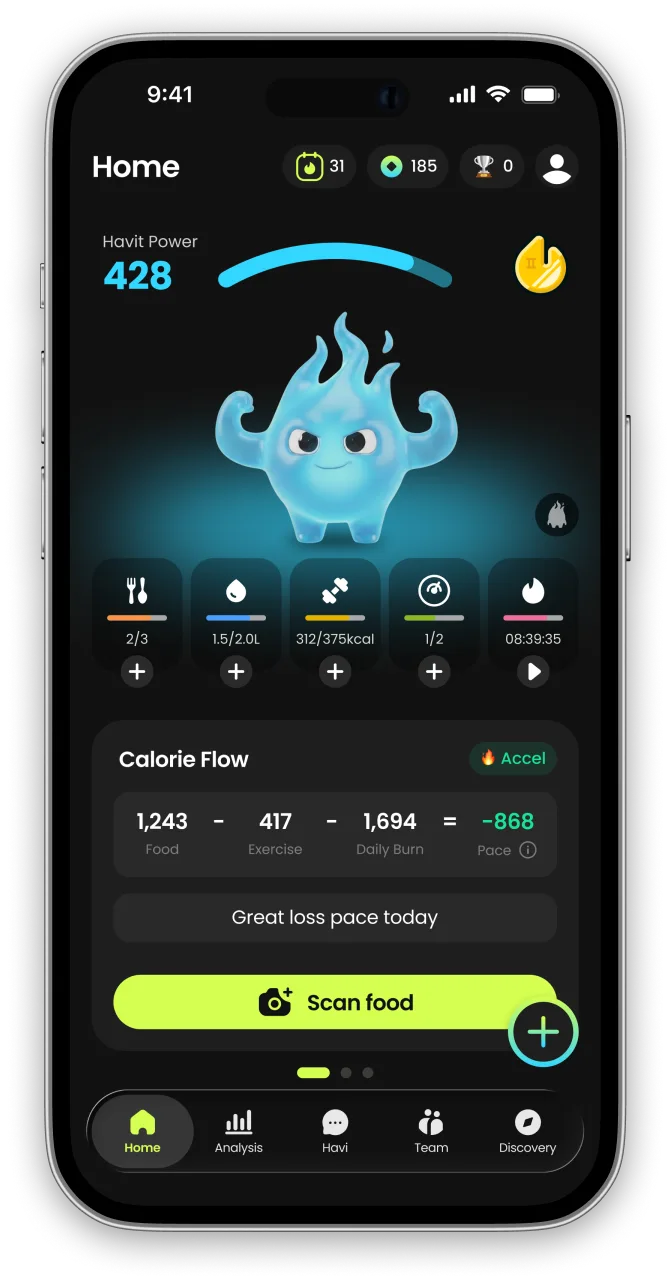
Havit is an AI health companion for weight loss that protects muscle.
Unlike calorie-only trackers, Havit connects AI body-composition estimates, nutrition, hydration, sleep, steps, cycle, mood, and GLP-1 medication in one daily routine — so progress is measured by body composition, not just the number on the scale. Daily missions turn established behavior-change techniques into small repeatable actions, drawing on expertise from professionals formerly at Juvis Diet, one of Korea’s leading metabolic clinics.
In Havit’s own analysis of 1,090 GLP-1 users, people who logged consistently built stronger habits than the general user base. Read the GLP-1 Habit Report
Havit works with or without GLP-1 medication. It is a wellness app, not a medical device; body-composition results are estimates.

Continue in the App
Personalized wellness with your own data


References
- Sleep Architecture Changes Across the Menopausal Transition: A Longitudinal Analysis of 847 Women — Sleep, 2025
- Non-Pharmacological Interventions for Sleep Disturbance in Perimenopause: A Randomized Controlled Trial — Menopause, 2024
- Cooling Interventions for Vasomotor Symptom-Related Sleep Disruption — University of Pittsburgh Department of Psychiatry, 2024
- Modified Cognitive Behavioral Therapy for Insomnia in Menopausal Women: Addressing Vasomotor-Specific Wake Patterns — Johns Hopkins Sleep Disorders Center, 2024
- Exercise Timing and Nocturnal Vasomotor Symptoms: A Comparative Analysis — Journal of Women's Health, 2025


