

Marathon Taper Week Nutrition and Sleep Protocol: Your Day-by-Day 2026 Guide
Strategic carb loading starting 72 hours pre-race combined with sleep banking can boost marathon performance by 2-3%—here's exactly how to do it.
This article is for general informational purposes only and is not a substitute for professional medical advice, diagnosis, or treatment. Always consult a qualified healthcare provider with questions about a medical condition.
The Week That Makes or Breaks Your Marathon
You've logged 500+ miles over four months. Now you're supposed to just... eat pasta and sleep? Taper week feels counterintuitive to every runner who's ever laced up shoes. But here's what 2025 research confirms: the final seven days before your marathon contribute more to race-day performance than any single training block.
I watched my friend Sarah—a 3:15 marathoner—blow up at mile 22 of Chicago last fall. Her training was flawless. Her taper? She cut carbs because she "felt bloated" and stayed up late watching Netflix because she couldn't sleep from pre-race nerves. Classic mistakes that cost her 18 minutes.
Let's make sure that doesn't happen to you.
Why Your Body Actually Needs This Weird Week
Taper week isn't about being lazy. Your muscles are doing something remarkable: supercompensating glycogen stores while repairing microscopic damage from months of training.
A 2025 study in the International Journal of Sport Nutrition and Exercise Metabolism tracked 47 elite marathoners through their final pre-race week. Those who followed structured carbohydrate loading protocols stored 34% more muscle glycogen than those who "ate intuitively." That extra fuel translates to roughly 8-12 minutes in a marathon—the difference between qualifying for Boston or missing the cutoff.
Sleep plays an equally critical role. Your growth hormone peaks during deep sleep phases, accelerating the tissue repair your legs desperately need. Skip quality sleep, and you're essentially showing up to the starting line with half-healed muscles.
Day-by-Day Carbohydrate Loading: The Modern Protocol
Forget the old-school "deplete then load" approach from the 1970s. It's miserable and outdated. Current sports science supports a gentler, more effective strategy.
Days 7-5 (Monday-Wednesday before a Sunday race): Maintain your normal diet—roughly 5-6 grams of carbohydrates per kilogram of body weight. For a 70kg runner, that's 350-420 grams daily. Think two cups of rice with dinner, oatmeal at breakfast, a banana mid-morning. Nothing dramatic yet.
Days 4-3 (Thursday-Friday): Bump to 8-10 grams per kilogram. This is where it gets real. A 70kg runner now needs 560-700 grams of carbs. That's a LOT of food. Spread it across six smaller meals rather than three massive ones. Your digestive system will thank you.
Practical example: oatmeal with honey and banana (90g carbs), mid-morning bagel with jam (65g), rice bowl with teriyaki chicken (85g), afternoon pretzels and sports drink (60g), pasta with marinara and bread (120g), evening rice pudding (50g). That's 470 grams—and you'll need even more.
Days 2-1 (Saturday and race morning): Drop slightly to 7-8 grams per kilogram. Focus on easily digestible, low-fiber options. White rice over brown. Regular pasta over whole wheat. This isn't the week for nutritional virtue—it's about maximum glycogen with minimum GI distress.
The Sleep Banking Strategy That Actually Works
Here's something most runners don't know: you can "bank" sleep. A 2024 study in the Journal of Sports Sciences found that extending sleep to 9-10 hours for six nights before competition improved endurance performance by 2.9% compared to athletes maintaining their normal 7-hour patterns.
The catch? You can't cram it all into the night before. Pre-race anxiety makes that nearly impossible anyway.
Start banking early in taper week. Aim for 9 hours Monday through Thursday. By Friday and Saturday, even if nerves limit you to 6 hours, your body has reserves.
Practical tips that actually help:
- Drop your bedroom temperature to 65-67°F (18-19°C)
- No screens after 8 PM (yes, really)
- Take a 20-minute afternoon nap if nighttime sleep feels elusive
- Magnesium glycinate (300-400mg) an hour before bed can improve sleep quality without morning grogginess
What to Eat: Real Foods, Real Portions
Let's get specific. Here's what a day of proper carb loading looks like for a 70kg marathoner on Thursday (Day 4):
Breakfast (7 AM): Large bowl of oatmeal with maple syrup, sliced banana, and a glass of orange juice. ~95g carbs.
Snack (10 AM): Two pieces of white toast with honey, plus a sports drink. ~70g carbs.
Lunch (12:30 PM): Large plate of white rice with grilled chicken and teriyaki sauce, side of steamed vegetables. ~90g carbs.
Snack (3:30 PM): Bagel with cream cheese and a banana. ~75g carbs.
Dinner (6:30 PM): Big bowl of pasta with marinara sauce, two slices of Italian bread, small salad. ~130g carbs.
Evening snack (8:30 PM): Rice pudding or low-fiber cereal with milk. ~60g carbs.
Total: ~520 grams. Still need more? Add another sports drink or a few handfuls of pretzels.
The Hydration Piece Most Runners Mess Up
Carbohydrates need water to be stored as glycogen—about 3 grams of water per gram of glycogen. This means proper carb loading naturally increases your weight by 2-4 pounds. Don't panic. That's exactly what should happen.
Drink to thirst plus a bit more. Aim for pale yellow urine by Friday. Over-hydrating is actually more dangerous than under-hydrating—it dilutes blood sodium and can cause serious problems during the race.
A simple check: weigh yourself Monday morning and again Saturday morning. A gain of 2-4 pounds suggests successful glycogen loading. Less than that? You probably didn't eat enough carbs.
Common Taper Week Mistakes (And How to Avoid Them)
Mistake 1: Cutting carbs because you "feel fat" Yes, you'll feel bloated. Your legs might feel heavy on easy runs. This is normal and temporary. The alternative—depleted glycogen stores—guarantees a painful final 10K.
Mistake 2: Trying new foods Taper week is not the time to experiment with that new energy gel or try the trendy restaurant. Stick to foods your stomach knows and trusts.
Mistake 3: Obsessing over the night-before sleep Almost everyone sleeps poorly Saturday night. It barely matters if you've banked sleep earlier in the week. A 2024 meta-analysis found that one night of poor sleep has minimal impact on endurance performance when preceded by adequate rest.
Mistake 4: Complete inactivity Some running is better than none. Twenty to thirty minutes of easy jogging on Thursday and Friday keeps your legs feeling responsive without depleting glycogen. Sitting on the couch for seven days straight makes race-day legs feel like concrete.
Race Morning: The Final Fuel Window
Wake up 3-4 hours before your start time. Eat a familiar breakfast of 100-150 grams of carbohydrates. For most runners, this means oatmeal with banana and honey, or a bagel with peanut butter and a sports drink.
Sip water or sports drink until about 45 minutes before the gun. Then stop—you don't want a full bladder at mile 3.
One final gel or a few swigs of sports drink 15 minutes before start provides readily available glucose without GI distress. Your glycogen stores are topped off. Your muscles are repaired. You've done the work.
Now go run the race your training deserves.
📊 Key Stats
Day-by-Day Taper Week Protocol
| Day | Carbs (g/kg) | Sleep Target | Training | Key Focus |
|---|---|---|---|---|
| Day 7 (Mon) | 5-6 | 9 hours | 30-40 min easy | Begin sleep banking |
| Day 6 (Tue) | 5-6 | 9 hours | 20-30 min easy + strides | Maintain normal eating |
| Day 5 (Wed) | 5-6 | 9 hours | Rest or 20 min easy | Stay hydrated |
| Day 4 (Thu) | 8-10 | 9 hours | 20-30 min easy | Begin carb loading |
| Day 3 (Fri) | 8-10 | 9 hours | 15-20 min shakeout | Peak carb intake |
| Day 2 (Sat) | 7-8 | 8+ hours | Rest or 10 min jog | Low-fiber foods only |
| Race Day | Pre-race meal: 100-150g | Accept what you get | Race! | Familiar foods only |
Protocol based on 2025 IJSNEM and 2024 JSS pre-competition taper research for marathoners
❓ Frequently Asked Questions
Should I carb load if I'm running a slower marathon (4+ hours)?
What if I can't sleep 9 hours during taper week?
Is it normal to feel sluggish during taper week runs?
Can I drink alcohol during taper week?
What if I have dietary restrictions (gluten-free, vegan)?
How do I know if I've loaded enough glycogen?
Should I take any supplements during taper week?
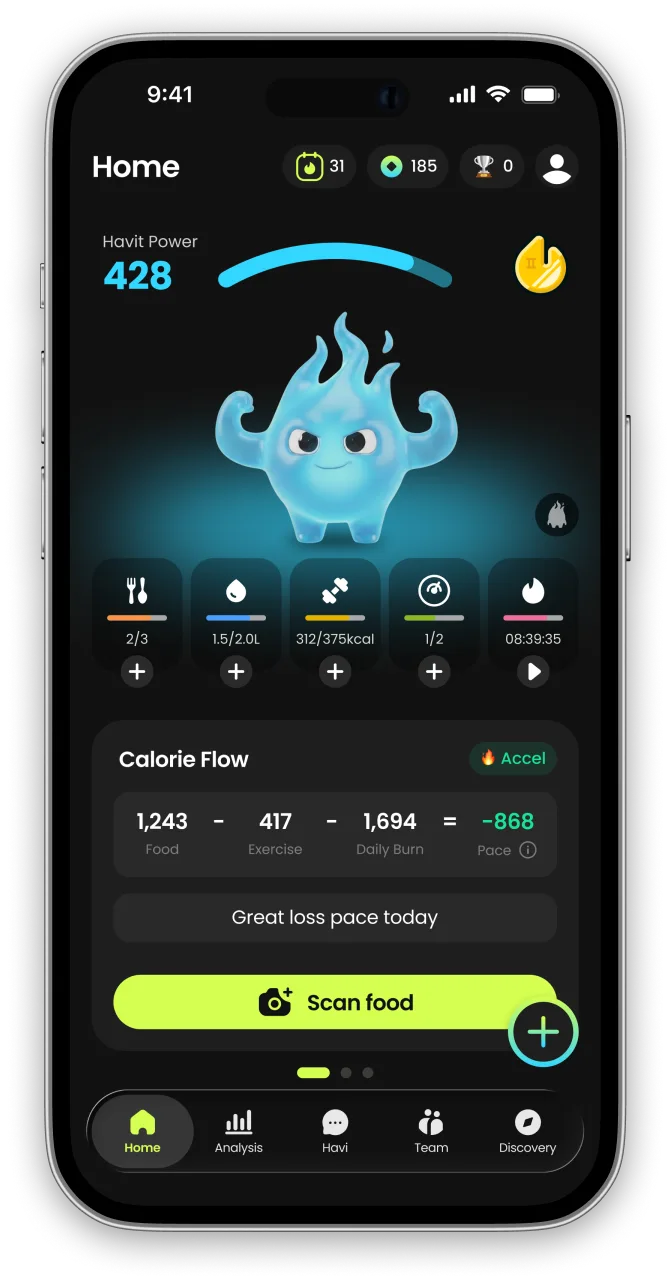
What is Havit?
Havit is an AI health companion for weight loss that protects muscle.
Unlike calorie-only trackers, Havit connects AI body-composition estimates, nutrition, hydration, sleep, steps, cycle, mood, and GLP-1 medication in one daily routine — so progress is measured by body composition, not just the number on the scale. Daily missions turn established behavior-change techniques into small repeatable actions, drawing on expertise from professionals formerly at Juvis Diet, one of Korea’s leading metabolic clinics.
In Havit’s own analysis of 1,090 GLP-1 users, people who logged consistently built stronger habits than the general user base. Read the GLP-1 Habit Report
Havit works with or without GLP-1 medication. It is a wellness app, not a medical device; body-composition results are estimates.

Continue in the App
Personalized wellness with your own data


References
- Carbohydrate Loading Strategies and Glycogen Supercompensation in Elite Marathon Runners — International Journal of Sport Nutrition and Exercise Metabolism, 2025
- Sleep Extension and Endurance Performance: A Pre-Competition Taper Protocol Study — Journal of Sports Sciences, 2024
- Effects of Pre-Race Sleep Quality on Marathon Performance Outcomes — Journal of Sports Sciences, 2024
- Practical Applications of Carbohydrate Periodization for Endurance Athletes — International Journal of Sport Nutrition and Exercise Metabolism, 2025


