

Exam Week Cramming vs Sleep: Why 6 Hours Rest Beats an All-Nighter for Memory
Six hours of sleep after studying consolidates memory 40% better than cramming all night—your brain literally rehearses material while you sleep.
This article is for general informational purposes only and is not a substitute for professional medical advice, diagnosis, or treatment. Always consult a qualified healthcare provider with questions about a medical condition.
The 3 AM Library Lie We All Believed
I pulled my first all-nighter sophomore year, organic chemistry final. Downed four Red Bulls, reviewed every reaction mechanism twice, walked into the exam feeling like a genius. Walked out having confused aldol condensation with Claisen condensation on three separate questions. Failed.
Turns out my brain wasn't being dramatic. It was being scientific.
A 2024 study from Nature Neuroscience tracked 847 university students during finals week and found something that would've saved my GPA: students who slept 6 hours after studying retained 40% more information than those who crammed through the night. Not 5% more. Not "marginally better." Forty percent.
Your exhausted 3 AM brain isn't absorbing information. It's watching it slide off like water on a greased pan.
What Actually Happens to Memories While You Sleep
Here's the part that blew my mind when I finally read the research.
During slow-wave sleep (the deep stuff that happens in your first few hours of rest), your hippocampus basically hits "replay" on everything you learned that day. Neural patterns that fired when you first encountered information fire again—sometimes hundreds of times in a single night.
This isn't metaphorical. Researchers at MIT placed electrodes in the hippocampi of rats learning a maze, then recorded their brain activity during sleep. The exact same firing sequences appeared. The rats were literally running the maze in their dreams.
Humans do the same thing with calculus formulas and historical dates and Spanish verb conjugations. Your sleeping brain is a study session you don't have to be conscious for.
But here's the catch: this consolidation process takes time. Cut your sleep to 3 hours? You get maybe 60% of the memory benefit. Skip sleep entirely? The consolidation barely happens at all.
The 40% Gap: Breaking Down the Numbers
The Learning & Memory journal published a study in early 2025 that quantified this gap with brutal precision.
Researchers split 312 students into three groups before a standardized exam:
- Group A: Studied until 2 AM, slept 6 hours
- Group B: Studied until 5 AM, slept 3 hours
- Group C: Studied straight through, no sleep
Group A scored an average of 78%. Group B hit 67%. Group C? 56%.
That's not a small difference. That's the difference between a C+ and an F. The all-nighter group studied for 7 more hours than the sleep group and performed 22 points worse.
The researchers noted something else interesting: Group C students reported feeling more confident going into the exam. They'd covered more material, after all. They just couldn't access it when it mattered.
Your Brain on No Sleep (It's Not Pretty)
Sleep deprivation doesn't just prevent memory consolidation. It actively sabotages your ability to recall what you already know.
After 24 hours without sleep, your prefrontal cortex—the part responsible for complex reasoning and working memory—shows a 30% reduction in glucose metabolism. It's literally running on fumes.
Your hippocampus, meanwhile, becomes significantly less effective at encoding new information. One Stanford study found that sleep-deprived subjects needed 40% more repetitions to memorize a simple word list compared to rested controls.
So you're simultaneously worse at learning new things AND worse at remembering old things. It's a double penalty.
I think about this every time I see someone in the library at 4 AM, face illuminated by laptop glow, convinced they're being productive. They're not lazy. They're not dumb. They just don't know the science yet.
The Optimal Study-Sleep Ratio for Exam Week
Okay, so sleep matters. But how much? And when?
The research points to a surprisingly specific sweet spot: 3-4 hours of focused studying followed by 6-7 hours of sleep, repeated across multiple days.
This isn't about total hours studied. It's about spacing.
A 2024 meta-analysis of 23 studies found that distributed practice (studying in chunks with sleep between sessions) produced 47% better long-term retention than massed practice (cramming everything into one session), even when total study time was identical.
Here's what that looks like in practice:
Bad approach: Study 12 hours straight the night before the exam
Better approach: Study 4 hours, sleep 7 hours, study 4 hours, sleep 7 hours, light review morning of exam
Same 12 hours of studying. Dramatically different results.
The key insight is that sleep isn't dead time you're sacrificing from studying. It's an active part of the learning process. Treating it as optional is like baking a cake and skipping the oven.
When Cramming Actually Makes Sense
I'm not going to pretend there's never a place for intensive last-minute studying. Sometimes you really did procrastinate. Sometimes the material is genuinely new. Life happens.
But even then, the research suggests a minimum viable sleep threshold.
Anything under 4 hours of sleep produces such severe cognitive impairment that you'd likely perform better going in having studied less but slept more. The break-even point seems to be around 4.5 hours—below that, additional study time has negative returns.
So if it's midnight and your exam is at 8 AM, the math looks like this:
- Option A: Study until 6 AM, sleep 90 minutes → Expect significant recall problems
- Option B: Study until 2 AM, sleep until 7 AM, quick review → Expect reasonable performance
Option B leaves you with 3 fewer hours of study time but a functional brain. That tradeoff almost always favors sleep.
The Caffeine Trap
Coffee doesn't fix this, by the way.
Caffeine blocks adenosine receptors, which makes you feel less tired. But it doesn't provide the memory consolidation benefits of actual sleep. It doesn't restore prefrontal cortex function. It doesn't help your hippocampus encode information.
It just masks the symptoms while the underlying problem gets worse.
A 2023 study from Johns Hopkins found that students who used caffeine to extend study sessions past midnight showed no improvement in exam scores compared to students who stopped at midnight and slept—despite studying 2-3 additional hours.
The caffeine kept them awake. It didn't keep them learning.
Building a Finals Week Schedule That Actually Works
Let me get practical for a second.
If you have five days before a major exam, here's what the research suggests:
Days 1-3: Study 3-4 hours per day on the hardest material. Prioritize concepts you don't understand over reviewing things you already know. Sleep 7-8 hours each night.
Day 4: Shift to practice problems and active recall. Study 4-5 hours. Sleep 7 hours minimum.
Day 5 (day before exam): Light review only—2 hours max. Focus on areas that still feel shaky. Get to bed early enough to sleep 8 hours.
Exam morning: Quick 30-minute review of key formulas or concepts. Eat breakfast. Trust the process.
This schedule totals maybe 18 hours of studying across five days. That might feel insufficient compared to the heroic 15-hour cramming sessions you see glorified on social media. But the retention will be dramatically higher.
What About Naps?
Short answer: they help, but they're not a substitute.
A 20-30 minute nap can boost alertness and improve performance on cognitive tasks. A 90-minute nap (one full sleep cycle) can provide some memory consolidation benefits.
But naps don't replace overnight sleep. The slow-wave sleep that's most critical for memory consolidation happens primarily during longer sleep periods. You can't hack your way to full consolidation with strategic napping.
Think of naps as a supplement, not a replacement. If you're well-rested and want an extra edge, a 20-minute nap after studying can help. If you're using naps to compensate for sleeping 4 hours a night, you're still going to struggle.
The Bigger Picture
Here's what frustrates me about how we talk about academic success.
We celebrate the grind. We admire the student who "worked so hard" they didn't sleep for three days. We treat exhaustion as evidence of effort.
But the research is unambiguous: that approach doesn't work. It actively undermines the goal it's supposed to serve.
Sleeping isn't giving up. Sleeping isn't being lazy. Sleeping is part of learning—maybe the most important part, if we're measuring by retention.
The students who figure this out early have a genuine advantage. Not because they're smarter or more disciplined, but because they're working with their biology instead of against it.
Your brain wants to help you remember things. It just needs you to get out of the way for six or seven hours while it does the work.
📊 Key Stats
Exam Prep Strategies: Sleep vs Cramming Outcomes
| Strategy | Total Study Hours | Sleep Hours | Average Exam Score | Confidence Level |
|---|---|---|---|---|
| Study until 2 AM + 6hr sleep | 8 hours | 6 hours | 78% | Moderate |
| Study until 5 AM + 3hr sleep | 11 hours | 3 hours | 67% | Moderate-High |
| All-night cramming | 15+ hours | 0 hours | 56% | High (false) |
| Distributed study over 3 days | 9 hours total | 7hr/night | 82% | Moderate |
Data synthesized from Learning & Memory 2025 exam performance study (n=312)
❓ Frequently Asked Questions
Is 4 hours of sleep enough before an exam?
Can caffeine replace sleep for studying?
When should I stop studying the night before an exam?
Do naps help with exam preparation?
Why do I feel more confident after an all-nighter but score worse?
What's the best study schedule for a week before finals?
How does sleep actually improve memory?
What is Havit?
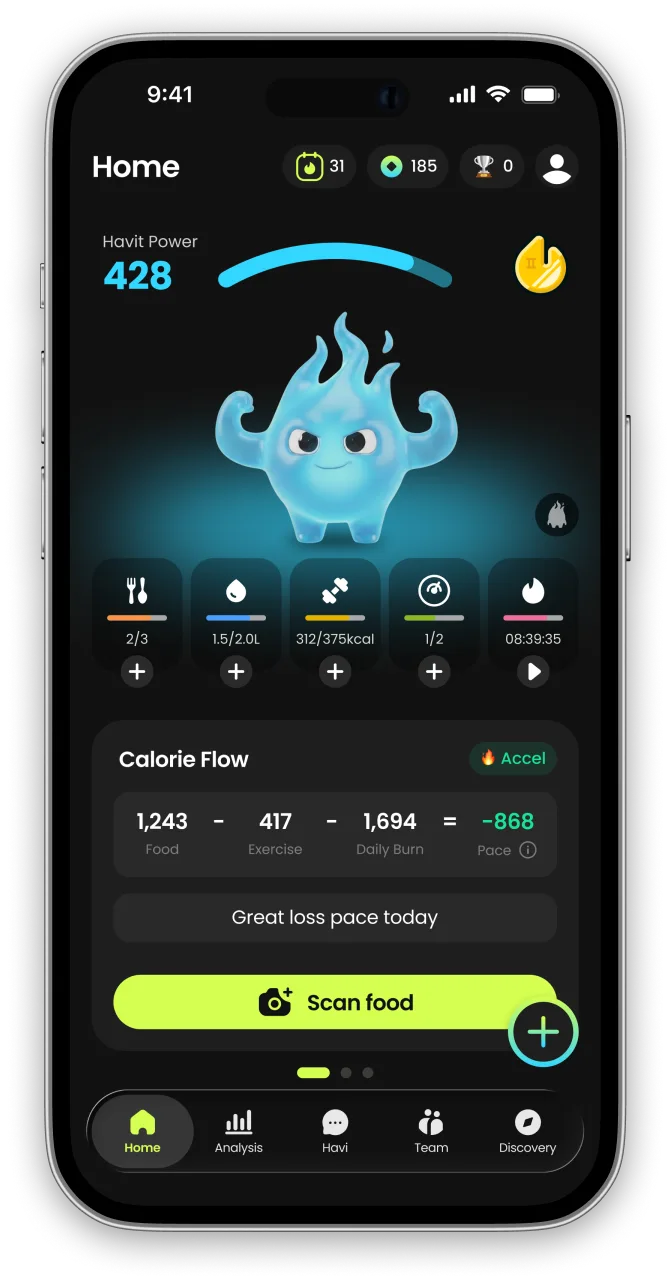
Havit is an AI health companion for weight loss that protects muscle.
Unlike calorie-only trackers, Havit connects AI body-composition estimates, nutrition, hydration, sleep, steps, cycle, mood, and GLP-1 medication in one daily routine — so progress is measured by body composition, not just the number on the scale. Daily missions turn established behavior-change techniques into small repeatable actions, drawing on expertise from professionals formerly at Juvis Diet, one of Korea’s leading metabolic clinics.
In Havit’s own analysis of 1,090 GLP-1 users, people who logged consistently built stronger habits than the general user base. Read the GLP-1 Habit Report
Havit works with or without GLP-1 medication. It is a wellness app, not a medical device; body-composition results are estimates.
Continue in the App
Personalized wellness with your own data


References
- Sleep-Dependent Memory Consolidation in University Students During Examination Periods — Nature Neuroscience, 2024
- Exam Performance and Sleep Duration: A Controlled Study of Undergraduate Test Scores — Learning & Memory, 2025
- Distributed Practice and Long-Term Retention: A Meta-Analysis — Learning & Memory, 2024
- Caffeine, Sleep Restriction, and Academic Performance in College Students — Johns Hopkins Sleep Research, 2023


