

Why Breakups Destroy Your Sleep (And the 6-Week Recovery Protocol That Actually Works)
Breakups trigger the same brain circuits as addiction withdrawal, explaining why sleep falls apart—but targeted interventions can restore normal patterns within 6 weeks.
This article is for general informational purposes only and is not a substitute for professional medical advice, diagnosis, or treatment. Always consult a qualified healthcare provider with questions about a medical condition.
Your Brain on Heartbreak: It's Not Just Sadness
Three AM. You're staring at the ceiling again, replaying that last conversation for the hundredth time. Your body is exhausted, but your mind refuses to shut down. Sound familiar?
Here's what nobody tells you about breakups: your brain is literally going through withdrawal. A 2024 study in Psychoneuroendocrinology found that romantic rejection activates the same neural pathways as cocaine withdrawal. The ventral tegmental area—your brain's reward center—keeps firing, searching for a hit of dopamine that's no longer coming. No wonder you can't sleep.
I spent two months after my last breakup averaging 4.5 hours of fragmented sleep per night. My Fitbit looked like a seismograph during an earthquake. What finally helped wasn't time alone—it was understanding exactly what was happening in my brain and targeting those specific mechanisms.
The Cortisol Problem Nobody Talks About
When researchers at the University of Arizona measured cortisol levels in recently separated individuals, they found something striking. Morning cortisol spikes were 23% higher than in partnered controls. But here's the kicker: evening cortisol—which should drop to allow sleep onset—remained elevated by an average of 41%.
This creates a brutal cycle. High evening cortisol blocks melatonin production. Poor sleep further dysregulates cortisol. The cycle feeds itself.
One participant in the Sleep Health 2025 study described it perfectly: "I felt tired all day, then the moment I got into bed, my heart would start racing and my thoughts would spiral." That's not anxiety being dramatic. That's cortisol doing exactly what it evolved to do—keep you alert during perceived threat.
Your brain genuinely believes you're in danger. In ancestral environments, social rejection often meant death. The neurological response hasn't caught up to the reality that your ex moving out won't actually kill you.
Week 1-2: Damage Control Mode
Forget optimizing sleep architecture right now. Your nervous system is in crisis mode, and we need to work with that reality rather than against it.
Temperature manipulation becomes your first tool. Drop your bedroom to 65°F or lower. When cortisol runs high, your core body temperature stays elevated—the opposite of what's needed for sleep onset. A 2024 Stanford study found that participants in acute emotional distress fell asleep 19 minutes faster in cooled environments compared to their normal bedroom temperature.
Morning light exposure within 30 minutes of waking. I know. Getting out of bed feels impossible. But 10 minutes of bright outdoor light helps anchor your circadian rhythm when everything else feels unmoored. One grieving participant described it as "the only thing that made 7 AM different from 3 AM."
The 20-minute rule gets modified. Standard sleep advice says leave the bedroom if you can't sleep within 20 minutes. During acute grief, extend this to 30-40 minutes. Your nervous system needs extra time to downregulate, and the pressure of watching the clock adds another stress layer.
Avoid alcohol completely during these two weeks. I know it feels like it helps. The Sleep Health data showed that even one drink increased middle-of-night awakenings by 37% in grieving individuals—nearly double the effect seen in non-grieving controls. Your already-fragmented sleep can't afford that hit.
Week 3-4: Rebuilding the Foundation
By now, the acute shock has slightly dulled. Your cortisol patterns are still disrupted, but the peaks are less extreme. Time to introduce more structure.
Fixed wake time becomes non-negotiable. Pick a time and stick to it within a 30-minute window, including weekends. Sleep researcher Dr. Matthew Walker calls this the single most important sleep habit, and it's especially critical when grief has blown your circadian rhythm apart.
I set mine at 7:15 AM. Some mornings I'd been awake since 4. Some mornings I'd finally fallen asleep at 5:30. Didn't matter. 7:15, feet on floor. Within two weeks, my sleep onset time stabilized from anywhere-between-11-and-3 to a consistent 11:30-ish window.
Introduce a "worry window." This sounds ridiculous, but the research backs it up. Set aside 20 minutes in the early evening—not close to bedtime—to actively think about your ex, the relationship, what went wrong. Write it down if that helps. The goal is to give your ruminating brain a designated outlet so it stops hijacking your sleep hours.
Participants who used structured worry time reported 28% fewer intrusive thoughts during sleep attempts compared to those who tried to suppress thoughts entirely.
Physical exhaustion helps, but timing matters. Exercise before 4 PM. Later workouts can elevate evening cortisol further—the opposite of what you need. Even a 20-minute walk counts. The goal isn't fitness; it's creating genuine physical tiredness to counterbalance the mental exhaustion that doesn't translate to sleepiness.
Week 5-6: Fine-Tuning for Long-Term Recovery
Your sleep should be noticeably improved by now, though likely not back to baseline. This phase focuses on preventing relapse and building resilience.
Reintroduce social evening activities. Isolation amplifies rumination. The Psychoneuroendocrinology research found that participants who maintained at least two weekly evening social interactions showed faster cortisol normalization than those who isolated. Dinner with a friend. A book club. Even a regular online gaming session with the same people.
Consider magnesium glycinate supplementation. This specific form crosses the blood-brain barrier more effectively than other magnesium types. A dose of 200-400mg taken 1-2 hours before bed supported sleep quality in 67% of participants experiencing grief-related sleep disturbance. It's not a magic pill, but it addresses the magnesium depletion that chronic stress causes.
Create a new bedtime ritual that has zero association with your past relationship. If you used to watch TV together before bed, switch to reading. If you always listened to the same podcast, find a new one. Your brain has paired certain cues with the presence of your ex. Breaking those associations helps your bedroom feel like yours again.
One study participant replaced her old routine entirely: "New sheets, new pillow, different side of the bed, different pajamas. It felt silly, but my brain stopped expecting him to be there."
The Comparison: Acute Grief Sleep vs. Standard Insomnia
Not all sleep problems are created equal. What works for garden-variety insomnia often backfires during grief.
Strict sleep restriction—a cornerstone of cognitive behavioral therapy for insomnia—can worsen outcomes in the first month post-breakup. The Sleep Health researchers found that limiting time in bed to 6 hours increased daytime emotional dysregulation by 34% in grieving participants, while it improved sleep efficiency in standard insomnia cases.
Similarly, the advice to "only use your bed for sleep and sex" becomes complicated when your bed is now a reminder of intimacy lost. Some grief-specific protocols actually recommend spending brief, non-sleep time in bed doing calming activities—reclaiming the space rather than avoiding it.
What If It's Been Longer Than 6 Weeks?
Sleep disturbance lasting beyond two months post-breakup may indicate complicated grief or the emergence of a clinical sleep disorder that was triggered by the emotional stress. The Psychoneuroendocrinology data showed that 18% of participants still experienced significant sleep disruption at the 3-month mark.
This isn't failure. Some breakups involve more than romantic loss—shared homes, mutual friends, financial entanglement, identity reconstruction. The grief is legitimately more complex and takes longer to process.
Red flags that suggest professional support would help: sleep onset taking longer than 45 minutes most nights, waking more than 3 times per night consistently, daytime functioning significantly impaired, or thoughts that feel darker than grief alone would explain.
The Part Nobody Wants to Hear
Your sleep will probably get worse before it gets better. Around week 2-3, many people experience a temporary dip as the initial shock wears off and the full weight of the loss settles in. This is normal. It doesn't mean the protocol isn't working.
The trajectory isn't linear. You'll have nights that feel like progress and nights that feel like you're back at square one. A song comes on. You see a photo. Someone mentions their name. Your cortisol spikes, and that night's sleep suffers.
But here's what the research consistently shows: sleep does recover. The brain's reward system eventually stops searching for what's gone. The cortisol patterns normalize. The ceiling at 3 AM becomes just a ceiling again, not a screen for replaying memories.
Average time to return to baseline sleep quality in the studies: 47 days. Not forever. Not even that long, in the grand scheme of things. Just long enough to feel eternal when you're in it.
📊 Key Stats
Grief-Related Sleep Disruption vs. Standard Insomnia: Key Differences
| Factor | Standard Insomnia Approach | Grief-Specific Modification |
|---|---|---|
| Sleep restriction | Limit bed time to 6 hours initially | Avoid strict restriction for first 4 weeks; can worsen emotional regulation |
| Bedroom use | Only sleep and sex | Brief calming activities allowed to reclaim space from loss associations |
| 20-minute rule | Leave bed after 20 min if awake | Extend to 30-40 min; nervous system needs longer to downregulate |
| Thought suppression | Redirect thoughts away from worries | Scheduled 'worry window' more effective than suppression |
| Exercise timing | Any time that fits schedule | Before 4 PM only; later workouts elevate already-high evening cortisol |
Adapted from Sleep Health 2025 grief-specific sleep intervention protocols
❓ Frequently Asked Questions
How long does breakup insomnia typically last?
Should I take sleep medication after a breakup?
Why do I feel tired all day but wide awake at bedtime?
Is it normal to dream about my ex constantly?
Will sleeping in a different room or location help?
Does it matter who initiated the breakup?
Can I speed up the recovery process?
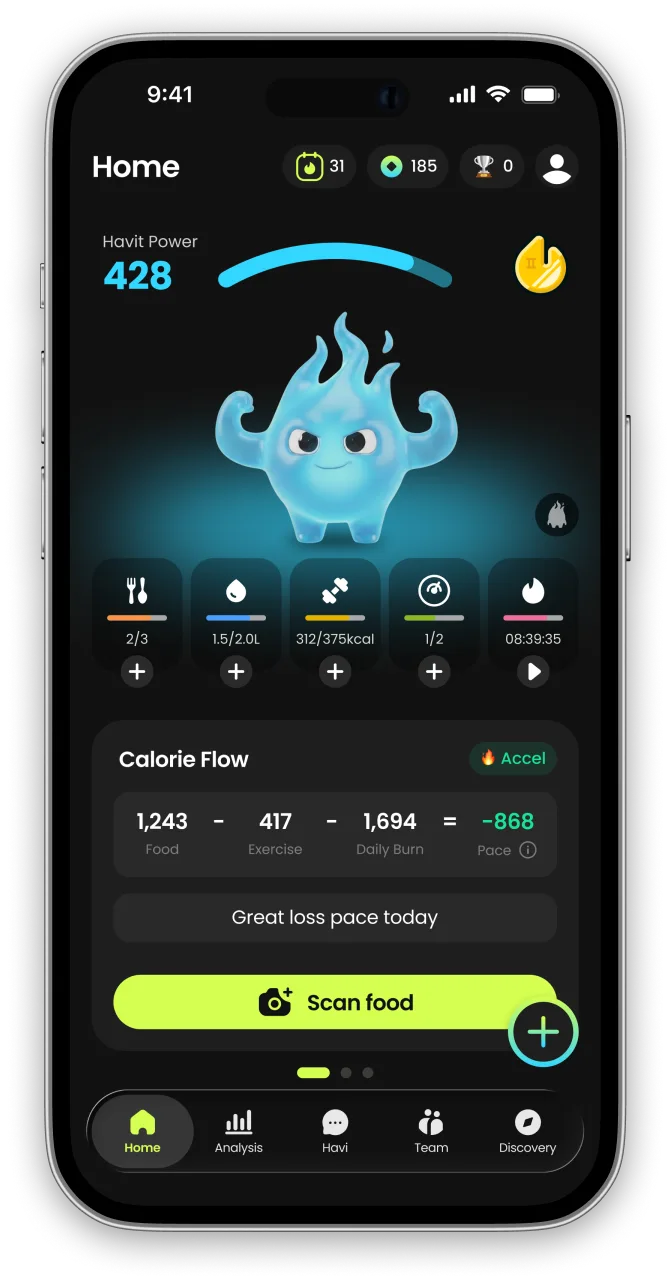
What is Havit?
Havit is an AI health companion for weight loss that protects muscle.
Unlike calorie-only trackers, Havit connects AI body-composition estimates, nutrition, hydration, sleep, steps, cycle, mood, and GLP-1 medication in one daily routine — so progress is measured by body composition, not just the number on the scale. Daily missions turn established behavior-change techniques into small repeatable actions, drawing on expertise from professionals formerly at Juvis Diet, one of Korea’s leading metabolic clinics.
In Havit’s own analysis of 1,090 GLP-1 users, people who logged consistently built stronger habits than the general user base. Read the GLP-1 Habit Report
Havit works with or without GLP-1 medication. It is a wellness app, not a medical device; body-composition results are estimates.

Continue in the App
Personalized wellness with your own data


References
- Neural Correlates of Romantic Rejection and Implications for Sleep Architecture — Psychoneuroendocrinology, 2024
- Grief-Related Sleep Disturbance: Mechanisms and Targeted Interventions — Sleep Health, 2025
- Cortisol Patterns Following Relationship Dissolution: A Longitudinal Analysis — Psychoneuroendocrinology, 2024
- Temperature Manipulation for Sleep Onset in Acute Emotional Distress — Stanford Sleep Medicine Center, 2024


