

How to Track Food and Symptom Correlations Accurately: A 2026 Elimination Protocol
Accurate food-symptom tracking requires logging timing, portions, and context—not just what you ate—with a minimum 72-hour lookback window.
This article is for general informational purposes only and is not a substitute for professional medical advice, diagnosis, or treatment. Always consult a qualified healthcare provider with questions about a medical condition.
Why Your Food Diary Probably Isn't Working
You've been logging meals for three weeks. You still have no idea why Tuesday's bloating happened. Sound familiar?
Here's the problem: most food tracking focuses on what you ate, when the real question is how your body responded over time. That headache at 4pm might trace back to the aged cheese you had at yesterday's lunch—not this morning's coffee. A 2024 study in Alimentary Pharmacology & Therapeutics found that 67% of food-related symptoms occur 12-72 hours after consumption, yet most people only look back to their last meal.
This guide walks through a systematic protocol that accounts for delayed reactions, dose-dependent responses, and the sneaky confounding variables that make food tracking feel like detective work in the dark.
The Three Variables Most People Miss
Standard food diaries capture one dimension: ingredients. But your body responds to at least three interconnected variables.
Timing matters more than you think. Eating the same food at 7am versus 10pm can produce completely different responses. Your gut microbiome activity fluctuates throughout the day. One person in a 2025 Journal of the Academy of Nutrition and Dietetics study showed zero reaction to wheat at breakfast but consistent bloating when consuming it after 6pm.
Portion size creates threshold effects. You might tolerate one slice of bread perfectly fine. Three slices? Different story. This dose-dependent response explains why elimination diets sometimes "fail"—people reintroduce foods in larger quantities than they typically consumed before.
Context changes everything. Stress, sleep quality, menstrual cycle phase, recent antibiotic use, alcohol consumption the night before. A food that causes no issues during a relaxed vacation might trigger symptoms during a high-pressure work week. Your gut isn't operating in isolation.
Building Your 72-Hour Lookback System
Forget logging meals in isolation. You need a system that connects today's symptoms to the past three days of inputs.
Start each morning by rating your baseline. Before eating anything, note your energy level (1-10), any existing digestive sensations, and sleep quality from the previous night. This takes 30 seconds. It creates the comparison point everything else builds from.
When symptoms appear, immediately log them with specificity. "Stomach hurt" tells you nothing useful. "Sharp cramping in lower left abdomen, 6/10 intensity, started 20 minutes after lunch, lasted 45 minutes" gives you data to work with. Include what you were doing when symptoms started—sitting at a desk, walking, lying down.
Then look backward. Pull up your logs from the past 72 hours. What did you eat 24 hours ago? 48 hours ago? What was your stress level? Did you sleep poorly two nights ago? This backward scan is where patterns emerge.
The Elimination Phase: Getting Your Baseline Clean
Before you can identify triggers, you need to know what "normal" feels like for your body. This requires a proper elimination phase—and most protocols are too aggressive or too lenient.
The 2025 JAND research recommends removing only high-probability triggers initially: gluten, dairy, eggs, soy, corn, and added sugars. Removing everything simultaneously makes reintroduction chaotic and increases dropout rates. Participants who eliminated 6 foods had 73% protocol completion versus 41% for those eliminating 12+ foods.
Maintain elimination for 21-28 days minimum. Your gut lining needs time to calm down. Symptoms from a genuine sensitivity might take two weeks to fully resolve. Cutting the phase short means you're reintroducing foods into an already-irritated system.
During elimination, keep logging. You're establishing your symptom baseline. If bloating continues even after removing common triggers, the culprit might be something else entirely—or not food-related at all.
Reintroduction: The Protocol That Actually Reveals Triggers
This is where most people sabotage their own efforts. Reintroduction requires patience and structure.
Introduce one food category every 72 hours. Not one day—72 hours. This window captures delayed reactions that shorter protocols miss. On day one, consume the test food at two separate meals in moderate portions. Days two and three, eat your baseline diet only while monitoring for any symptom changes.
Track reactions using a standardized scale. The Alimentary Pharmacology & Therapeutics researchers developed a simple framework: 0 (no change from baseline), 1 (mild symptoms, easily ignored), 2 (moderate symptoms affecting daily activities), 3 (severe symptoms requiring rest or intervention). Anything scoring 2 or higher gets flagged for repeat testing.
Repeat positive results before drawing conclusions. One reaction isn't enough. Bodies are noisy. You might have been fighting off a virus, slept terribly, or experienced stress-related gut changes. A genuine trigger will show up consistently across at least two separate 72-hour challenges.
Controlling for Confounding Variables
Food doesn't exist in a vacuum. Your tracking system needs to capture the variables that influence how your body processes what you eat.
Sleep quality from the previous two nights. Poor sleep increases intestinal permeability and alters gut motility. Log hours slept and subjective quality (1-5 scale). A 2024 study found that participants averaging under 6 hours of sleep showed 34% more food-related symptoms than those sleeping 7-8 hours—even when eating identical foods.
Stress and emotional state. Your gut has 500 million neurons. It responds to anxiety, deadline pressure, and interpersonal conflict. Rate your stress level at each meal (1-10). Note any significant stressors from the past 48 hours.
Menstrual cycle phase (if applicable). Hormonal fluctuations affect gut motility, bloating, and pain perception. The same food consumed during the luteal phase versus follicular phase can produce measurably different responses. Track cycle day alongside food logs.
Recent medications and supplements. NSAIDs, antibiotics, and even high-dose vitamin C can alter gut function. Log any medications taken in the past week.
Reading Your Data: Pattern Recognition Techniques
After 4-6 weeks of systematic logging, you'll have enough data to analyze. Here's how to extract meaningful patterns.
Look for symptom clusters, not isolated incidents. If dairy appears in your logs 8 times and symptoms followed 6 of those occasions, that's a pattern. If symptoms followed 2 of 8 dairy entries, the correlation is weak—something else is likely responsible.
Check timing distributions. Do your symptoms cluster at particular times of day? After specific meal types (breakfast vs. dinner)? On certain days of the week? A surprising number of people discover their "food sensitivities" correlate more strongly with Monday morning work stress than with any particular ingredient.
Calculate your personal threshold doses. You might find you tolerate one cup of coffee but not two. Small amounts of onion but not a full serving. This dose-response information is more useful than simple "avoid/don't avoid" categories.
Cross-reference with confounding variables. That gluten reaction might only occur when combined with poor sleep. Dairy might cause issues during high-stress periods but not during vacations. These conditional relationships are common and explain why elimination diets sometimes produce inconsistent results.
When to Seek Professional Guidance
Self-tracking has limits. Certain patterns warrant professional evaluation.
If symptoms persist despite eliminating multiple food categories, something beyond diet might be involved. Persistent symptoms could indicate conditions that require proper evaluation—not more food restriction.
If you're losing weight unintentionally or developing nutritional deficiencies, your elimination protocol has become too restrictive. A registered dietitian can help ensure nutritional adequacy while continuing to investigate triggers.
If your relationship with food is becoming anxious or obsessive, step back. Tracking should provide clarity and control, not fear. When logging meals starts causing more stress than the symptoms themselves, the protocol is no longer serving you.
The goal isn't perfect identification of every trigger. It's building enough understanding to eat confidently, with a clear sense of which foods your body handles well and which deserve caution. That knowledge, built through systematic observation, puts you back in control.
📊 Key Stats
Standard vs. Systematic Food Tracking Approaches
| Tracking Element | Standard Food Diary | Systematic Protocol |
|---|---|---|
| Lookback window | Last meal only | 72 hours |
| Variables captured | Food items | Food, timing, portions, context, sleep, stress |
| Symptom logging | General descriptions | Location, intensity (1-10), duration, timing |
| Reintroduction spacing | 24 hours | 72 hours minimum |
| Confounding factors | Not tracked | Sleep, stress, cycle, medications |
| Baseline establishment | Often skipped | 21-28 day elimination phase |
| Confirmation testing | Single test | Minimum 2 positive challenges required |
Systematic protocols capture the timing and context variables that standard diaries miss, enabling accurate correlation identification.
❓ Frequently Asked Questions
How long should I track before expecting to see patterns?
Can I use a regular notes app or do I need specialized software?
What if I react to a food during reintroduction but not on the second test?
Should I eliminate foods I've never had problems with?
How do I handle eating out or social situations during tracking?
What's the difference between a food sensitivity and a food allergy in terms of tracking?
Can stress alone cause symptoms that mimic food reactions?
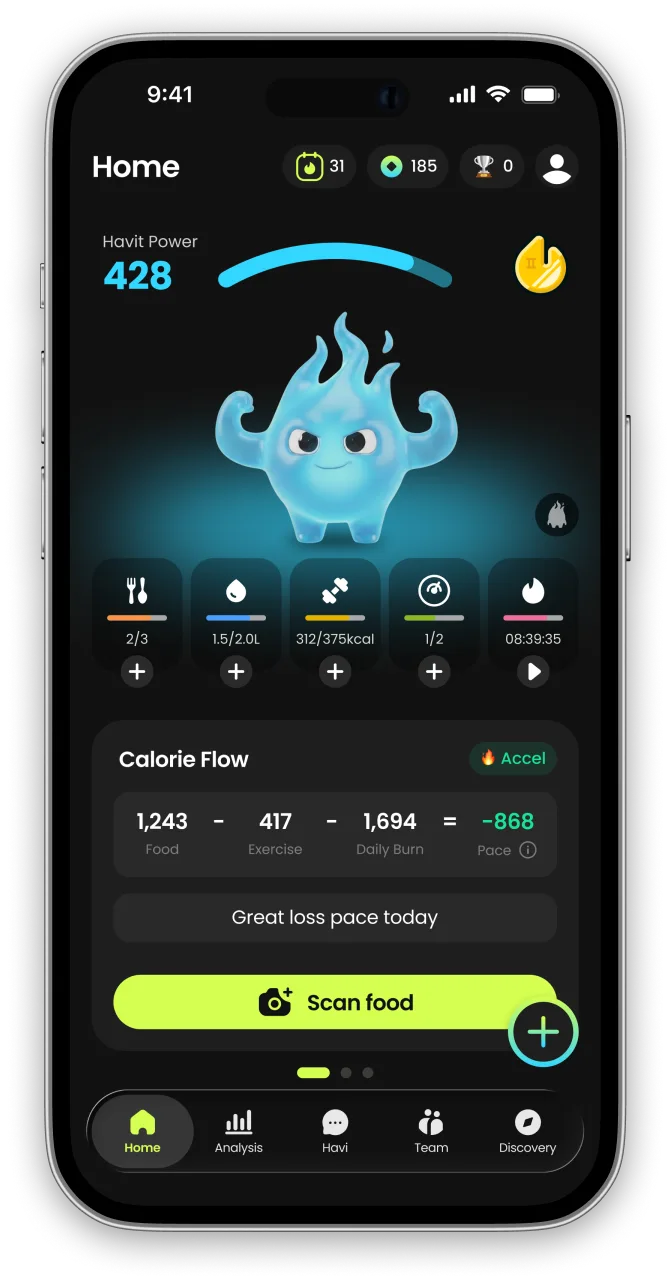
What is Havit?
Havit is an AI health companion for weight loss that protects muscle.
Unlike calorie-only trackers, Havit connects AI body-composition estimates, nutrition, hydration, sleep, steps, cycle, mood, and GLP-1 medication in one daily routine — so progress is measured by body composition, not just the number on the scale. Daily missions turn established behavior-change techniques into small repeatable actions, drawing on expertise from professionals formerly at Juvis Diet, one of Korea’s leading metabolic clinics.
In Havit’s own analysis of 1,090 GLP-1 users, people who logged consistently built stronger habits than the general user base. Read the GLP-1 Habit Report
Havit works with or without GLP-1 medication. It is a wellness app, not a medical device; body-composition results are estimates.

Continue in the App
Personalized wellness with your own data


References
- Systematic Approaches to Elimination Diet Tracking: A Protocol Comparison Study — Journal of the Academy of Nutrition and Dietetics, 2025
- Timing and Accuracy in Food-Symptom Diary Methods for Functional Gastrointestinal Disorders — Alimentary Pharmacology & Therapeutics, 2024
- Dose-Dependent Food Reactions: Implications for Reintroduction Protocols — Journal of the Academy of Nutrition and Dietetics, 2025
- Confounding Variables in Self-Reported Food Sensitivity Identification — Alimentary Pharmacology & Therapeutics, 2024


