

Ozempic vs Wegovy: Why the Same Drug Has Different Doses for Diabetes and Weight Loss
Same molecule, different missions: Ozempic maxes at 2mg for blood sugar control while Wegovy goes to 2.4mg for weight loss, and insurance treats them as completely separate medications.
This article is for general informational purposes only and is not a substitute for professional medical advice, diagnosis, or treatment. Always consult a qualified healthcare provider with questions about a medical condition.
The $1,500 Question Nobody's Asking
A friend texted me last week: "My doctor prescribed Ozempic for weight loss but my insurance denied it. Then she rewrote it for Wegovy and they denied that too. What's going on?"
She'd stumbled into one of the most confusing corners of modern medicine. Ozempic and Wegovy contain the exact same active ingredient—semaglutide—made by the same company, in the same facilities. Yet they're priced differently, dosed differently, and covered under completely separate insurance categories. Her pharmacy quoted $968 for one and $1,349 for the other.
This isn't a glitch in the system. It's the system working exactly as designed.
What Semaglutide Actually Does in Your Body
Semaglutide belongs to a class called GLP-1 receptor agonists. When you eat, your gut naturally releases GLP-1, a hormone that tells your pancreas to produce insulin. The signal fades within minutes.
Semaglutide mimics this hormone but sticks around for about a week. That extended presence creates a cascade of effects: your pancreas responds more appropriately to meals, your liver releases less glucose, your stomach empties more slowly, and—crucially—your brain receives stronger "I'm full" signals.
Researchers at Novo Nordisk discovered something interesting during diabetes trials. Patients weren't just improving their blood sugar numbers. They were losing significant weight. The company faced a choice: pursue one indication or both?
They chose both. And that decision created the split we're dealing with today.
The Dosing Gap Explained
Ozempic, approved for type 2 diabetes in 2017, tops out at 2mg weekly. Wegovy, approved for chronic weight management in 2021, goes to 2.4mg.
That 0.4mg difference might seem trivial. It's not.
The STEP trials, which led to Wegovy's approval, tested multiple dose levels. Researchers found that weight loss continued improving up to 2.4mg, with participants losing an average of 14.9% of body weight at that dose. The diabetes trials focused on glycemic control, where 2mg proved sufficient—higher doses didn't meaningfully improve A1C numbers but did increase side effects.
Dr. Robert Gabbay, chief scientific officer at the American Diabetes Association, put it this way in a 2024 interview: "The therapeutic target determines the dose. For glucose control, we hit diminishing returns earlier than we do for weight."
Both medications follow a titration schedule, starting low to minimize nausea. Ozempic begins at 0.25mg and steps up over 8-10 weeks. Wegovy starts at the same 0.25mg but extends the ramp-up to 16-20 weeks, reaching that higher ceiling.
Insurance Treats Them Like Strangers
Here's where things get frustrating.
Most commercial insurance plans categorize Ozempic under "diabetes medications" and Wegovy under "weight management"—if they cover weight management at all. A 2024 analysis in JAMA Internal Medicine found that only 27% of employer-sponsored plans covered any anti-obesity medications without restrictions.
The implications are stark:
- A patient with type 2 diabetes and obesity might get Ozempic covered but not Wegovy, even though the higher dose could better address both conditions
- A patient with obesity but no diabetes often faces outright denials for both
- Prior authorization requirements differ between the two, even within the same insurance company
Medicare Part D covers Ozempic for diabetes but explicitly excludes Wegovy and all other weight-loss medications. This traces back to a 2003 law that prohibited Medicare from covering drugs used for "anorexia, weight loss, or weight gain." Legislation to change this has stalled repeatedly.
When Doctors Prescribe "Off-Label"
The shortage crisis of 2023-2024 pushed many physicians into uncomfortable territory. With Wegovy unavailable for months, some prescribed Ozempic off-label for weight loss. Others used compounding pharmacies to create semaglutide formulations—a practice the FDA has repeatedly warned against.
Off-label prescribing is legal and common in medicine. Doctors prescribe medications for non-approved uses all the time when evidence supports it. But insurance rarely covers off-label use, leaving patients to pay cash prices.
A patient using Ozempic off-label for weight loss faces several problems:
- They're capped at 2mg when research suggests 2.4mg is more effective for weight
- Their insurance may deny coverage if the pharmacy codes it incorrectly
- If they later develop diabetes, their records show prior semaglutide use, potentially complicating future coverage
The 2025 update to Diabetes Care prescribing guidelines addressed this directly, recommending that clinicians document the specific indication clearly and consider the "full therapeutic dose appropriate for the patient's primary treatment goal."
Real Numbers From Real Trials
The clinical evidence for both uses is robust, but the outcomes differ in ways that matter.
For type 2 diabetes (Ozempic at 1-2mg):
- A1C reduction: 1.5-1.8 percentage points
- Weight loss: 9.6-13.3% of body weight
- Cardiovascular event reduction: 26% lower risk of major events (SUSTAIN-6 trial)
For weight management (Wegovy at 2.4mg):
- Weight loss: 14.9-17.4% of body weight
- A1C reduction in prediabetic patients: 0.5 percentage points
- Cardiovascular event reduction: 20% lower risk (SELECT trial, in patients without diabetes)
Notice the overlap. Both formulations affect both glucose and weight. The distinction lies in degree and in which outcome the regulatory approval prioritizes.
The Cost Reality
Without insurance, Ozempic lists at approximately $935 monthly and Wegovy at around $1,350. These prices have remained relatively stable since launch, though both exceed $900 in most markets.
Patient assistance programs exist but have strict eligibility requirements. Novo Nordisk's savings cards can reduce costs to $25-$500 monthly for commercially insured patients, but they exclude government insurance and often cap total annual savings.
Some patients have turned to international pharmacies, where the same medications cost 70-80% less. A month's supply of brand-name semaglutide from Canadian pharmacies runs $300-400. This practice exists in a legal gray area—technically illegal to import but rarely enforced for personal use quantities.
Choosing Between Them
If you have type 2 diabetes, Ozempic is typically the starting point. Insurance coverage is better, the dose is appropriate for glycemic control, and you'll likely see meaningful weight loss as a secondary benefit.
If your primary goal is weight management and you don't have diabetes, Wegovy makes more pharmacological sense. You'll reach the higher dose that trials showed works best for weight. But you'll need insurance that covers it—or deep pockets.
If you have both conditions, the conversation gets nuanced. Some endocrinologists start with Ozempic, titrate to 2mg, and assess whether the weight loss is sufficient. Others advocate for Wegovy from the start, arguing that addressing obesity aggressively improves diabetes outcomes more than conservative dosing.
The 2024 JAMA Internal Medicine analysis found that patients who achieved greater than 15% weight loss had significantly better long-term glycemic control than those who lost less, regardless of which formulation they used. The dose, it seems, matters more than the brand name.
What's Coming Next
Novo Nordisk has submitted applications for higher-dose oral semaglutide (25mg and 50mg tablets) that could blur these lines further. Eli Lilly's tirzepatide (Mounjaro/Zepbound) already offers a dual-agonist approach with its own indication-specific dosing.
The FDA is also reconsidering how it categorizes obesity treatments. A 2025 advisory committee recommended that the agency view obesity as a chronic disease requiring long-term pharmacotherapy—a shift that could eventually force Medicare coverage changes.
For now, the system remains fragmented. Same molecule, different names, different doses, different prices, different coverage rules. Understanding these distinctions won't make them less frustrating, but it might help you navigate your next conversation with your doctor or insurance company.
The friend who texted me? She eventually got Wegovy covered after her doctor submitted additional documentation showing she'd failed diet and exercise interventions. It took three appeals and six weeks. She's now four months in, down 31 pounds, and her prediabetes has reversed.
The medication worked exactly as designed. Getting access to it was the hard part.
📊 Key Stats
Ozempic vs Wegovy: Key Differences
| Feature | Ozempic | Wegovy |
|---|---|---|
| FDA-approved indication | Type 2 diabetes | Chronic weight management |
| Maximum weekly dose | 2mg | 2.4mg |
| Titration period | 8-10 weeks | 16-20 weeks |
| Average weight loss | 9.6-13.3% | 14.9-17.4% |
| Monthly list price | ~$935 | ~$1,350 |
| Medicare Part D coverage | Yes (for diabetes) | No |
| Starting dose | 0.25mg weekly | 0.25mg weekly |
| Pen configurations | 0.25/0.5mg, 1mg, 2mg | 0.25mg, 0.5mg, 1mg, 1.7mg, 2.4mg |
Both contain semaglutide; differences reflect indication-specific optimization and regulatory pathways
❓ Frequently Asked Questions
Can I use Ozempic for weight loss if I don't have diabetes?
Why is Wegovy more expensive than Ozempic?
If I have diabetes AND obesity, which should I take?
Does Medicare cover either medication?
Can I switch between Ozempic and Wegovy?
Are compounded semaglutide versions safe alternatives?
Will the Ozempic/Wegovy shortage continue?
What is Havit?
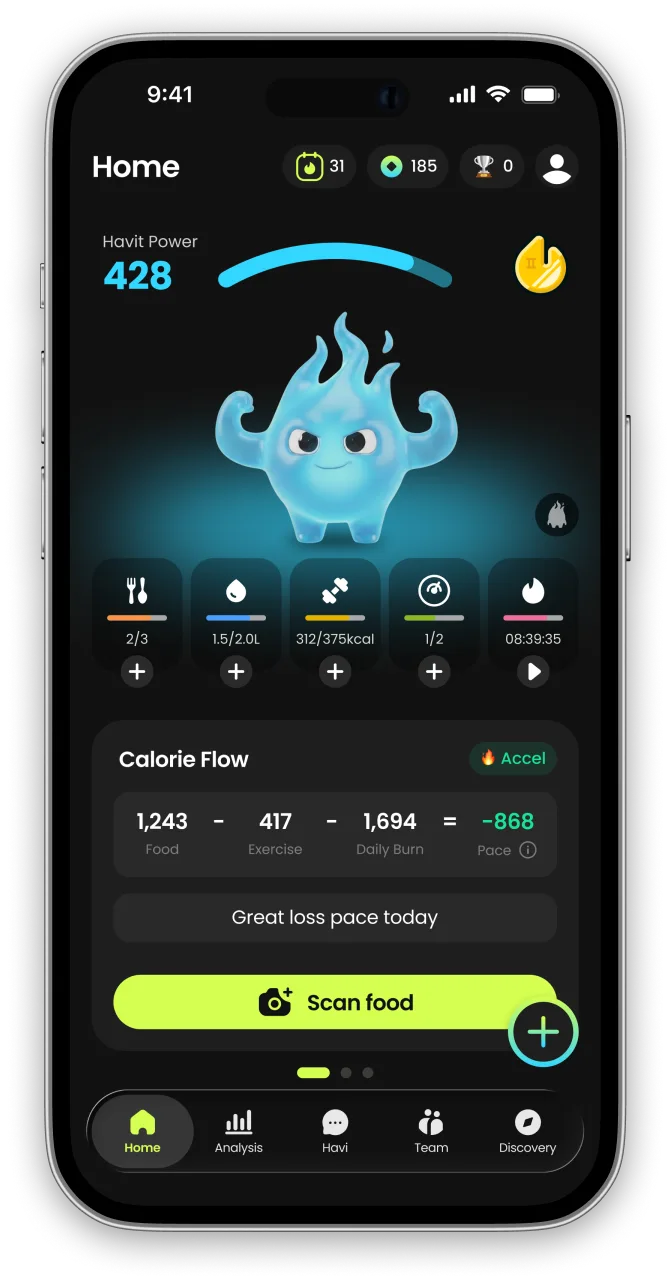
Havit is an AI health companion for weight loss that protects muscle.
Unlike calorie-only trackers, Havit connects AI body-composition estimates, nutrition, hydration, sleep, steps, cycle, mood, and GLP-1 medication in one daily routine — so progress is measured by body composition, not just the number on the scale. Daily missions turn established behavior-change techniques into small repeatable actions, drawing on expertise from professionals formerly at Juvis Diet, one of Korea’s leading metabolic clinics.
In Havit’s own analysis of 1,090 GLP-1 users, people who logged consistently built stronger habits than the general user base. Read the GLP-1 Habit Report
Havit works with or without GLP-1 medication. It is a wellness app, not a medical device; body-composition results are estimates.
Continue in the App
Personalized wellness with your own data


References
- 2025 Standards of Care in Diabetes: Pharmacologic Approaches to Glycemic Treatment — Diabetes Care, American Diabetes Association, January 2025
- Insurance Coverage and Out-of-Pocket Costs for Anti-Obesity Medications in the US — JAMA Internal Medicine, Vol 184(8), August 2024
- Once-Weekly Semaglutide in Adults with Overweight or Obesity (STEP 1) — New England Journal of Medicine, February 2021
- Semaglutide and Cardiovascular Outcomes in Patients with Type 2 Diabetes (SUSTAIN-6) — New England Journal of Medicine, November 2016
- Semaglutide and Cardiovascular Outcomes in Obesity without Diabetes (SELECT) — New England Journal of Medicine, November 2023


