

When to Increase Your Ozempic Dose: A Plateau-Breaking Guide for 2026
Increase your GLP-1 dose when weight loss stalls for 4+ weeks AND you're tolerating your current dose well—but never rush the timeline.
This article is for general informational purposes only and is not a substitute for professional medical advice, diagnosis, or treatment. Always consult a qualified healthcare provider with questions about a medical condition.
The 6-Week Wall Nobody Warned You About
You've been on 0.5mg of semaglutide for five weeks. The first month felt magical—down 8 pounds, appetite finally quiet, jeans fitting again. Then week six hits. The scale hasn't moved in 12 days. Your appetite is creeping back. You're eyeing that leftover pizza with renewed interest.
Sound familiar? You've just met the dose escalation question that haunts roughly 70% of GLP-1 users at some point in their journey.
Here's what most people get wrong: they either panic and push for a dose increase too early, or they wait so long that they lose momentum entirely. The sweet spot exists, but finding it requires understanding what your body is actually telling you.
What a Real Weight Loss Plateau Looks Like
Not every slow week is a plateau. Your body isn't a machine that drops exactly 1.2 pounds every seven days. Water retention from a salty meal can mask two weeks of fat loss. Muscle gain from new exercise habits can offset the scale entirely.
A true plateau—the kind that signals your current dose may have maxed out its effectiveness—has specific characteristics. Weight remains stable (within 1-2 pounds) for four consecutive weeks minimum. Appetite suppression noticeably decreases from your peak experience on this dose. You're following your nutrition plan consistently, not sneaking extra portions.
Researchers at the University of Copenhagen tracked 847 semaglutide users and found that genuine metabolic adaptation typically begins around week 8-12 at each dose level. Before that point, weight fluctuations usually reflect normal biological variation rather than medication ceiling.
The distinction matters enormously. Jumping doses because of a two-week stall often means experiencing stronger side effects without meaningful benefit.
The Side Effect Tolerance Test
Before asking "should I increase?" ask this: "How am I handling my current dose?"
Your body gives clear signals about readiness for escalation. Nausea should be minimal or absent for at least two weeks. Bowel habits should have normalized. Energy levels should feel stable, not depleted.
A 2024 analysis in Lancet Diabetes & Endocrinology examined 2,100 patients across multiple dose escalation protocols. Those who waited until side effects fully resolved before increasing reported 34% fewer severe gastrointestinal events than those who escalated on schedule regardless of tolerance.
Think of it like altitude acclimatization. Climbers don't push to the next camp while still gasping for breath at their current elevation. They wait until breathing feels manageable, then move up.
One patient I spoke with described her experience perfectly: "At 0.5mg, I had mild nausea for about ten days, then felt completely normal. My doctor wanted to increase at week four, but I asked to wait until week six because I'd read about the tolerance approach. By the time I moved to 1.0mg, the transition was almost seamless."
The Standard Timeline vs. Your Timeline
Pharmaceutical protocols suggest a straightforward escalation: start at 0.25mg, increase to 0.5mg after four weeks, then to 1.0mg after another four weeks, potentially reaching 2.4mg for weight management.
But clinical practice tells a different story. The 2025 Diabetes Care guidelines now explicitly recommend "individualized titration based on tolerability and response" rather than rigid four-week intervals.
What does individualized actually mean?
For someone experiencing robust weight loss and minimal side effects, staying at a lower dose longer often makes sense. Why introduce potential complications when the current approach works? A 43-year-old teacher in the Copenhagen study lost 47 pounds over 14 months while never exceeding 1.0mg—her body simply responded exceptionally well to moderate dosing.
Conversely, someone with excellent tolerance but modest results might benefit from slightly faster escalation. The key word is slightly. Jumping from 0.5mg directly to 1.7mg, which some providers attempt, dramatically increases discontinuation rates due to intolerable side effects.
Reading Your Hunger Signals Accurately
Appetite suppression works differently than most people expect. It's not an on/off switch. At effective doses, you'll notice thoughts about food becoming less intrusive. Meals satisfy you faster. The urge to snack between meals diminishes.
When these effects fade noticeably—not completely, but noticeably—that's meaningful data.
Keep a simple log for one week before your dose increase conversation. Rate your hunger before each meal on a 1-10 scale. Note how much food satisfies you. Track evening snacking urges specifically, since this is where appetite suppression often weakens first.
Bringing this data to your provider transforms the conversation from "I feel like it's not working as well" to "My pre-dinner hunger scores increased from averaging 3 to averaging 6 over the past three weeks, and I'm finishing meals I previously couldn't complete."
Providers respond to specificity. Vague concerns get vague responses.
The Metabolic Adaptation Reality
Your body adapts to GLP-1 medications. This isn't failure—it's biology doing exactly what biology does.
After 12-16 weeks at any given dose, receptor sensitivity often decreases slightly. The medication still works, but the dramatic effects of early weeks naturally moderate. Research from Novo Nordisk's phase 3 trials showed average weekly weight loss dropping from 1.1% of body weight in months 1-3 to 0.4% in months 4-6 at stable doses.
This slowdown doesn't necessarily mean you need more medication. For many people, the reduced rate represents sustainable loss that continues steadily. Pushing for faster results through aggressive dose escalation can backfire—higher doses maintained long-term show diminishing returns in some patients.
The question becomes: what's your goal? If you're losing 2-3 pounds monthly at your current dose with minimal side effects, that's 24-36 pounds annually. Not headline-grabbing, but genuinely transformative over time.
When Your Provider Says Wait
Sometimes you'll feel ready for an increase, but your provider recommends patience. This can feel frustrating, especially when you're eager for faster progress.
Common reasons for delay include recent blood work showing values that need monitoring, other medications that interact with higher GLP-1 doses, or your provider's clinical experience suggesting your body needs more adjustment time.
Ask specifically: "What would need to change for you to feel comfortable with an increase?" This gives you actionable information rather than vague reassurance.
If the answer involves waiting for certain lab values to stabilize, ask which values and what targets. If it involves more time, ask for a specific timeline and what you should track in the meantime.
Good providers welcome these questions. They indicate engagement with your own care.
The Dose Ceiling Question
Not everyone reaches the maximum approved dose. Not everyone should.
The 2.4mg semaglutide dose approved for weight management works well for some patients and proves intolerable for others. About 23% of clinical trial participants couldn't maintain the highest dose due to persistent side effects, according to pooled data from the STEP trials.
Finding your optimal dose—the level where benefits remain strong and side effects remain manageable—matters more than hitting maximum. A patient stable at 1.7mg with consistent 0.5% weekly weight loss and no nausea is in a better position than one at 2.4mg who misses doses due to feeling terrible.
Your ceiling might be 1.0mg. It might be 2.4mg. The only way to know is careful, patient escalation with honest assessment at each level.
Practical Steps Before Your Next Appointment
Gather your data before requesting a dose change. Weight trends over the past 6-8 weeks, not just the past few days. Side effect notes, including what you experienced and when it resolved. Appetite observations with some specificity. Any changes in other health markers you've noticed.
Consider your honest assessment of adherence. Missed doses, inconsistent injection timing, or significant dietary changes all affect results independently of dose level. If you've been less consistent lately, addressing that might matter more than increasing medication.
Prepare your questions. Beyond "can I increase," ask about what to expect at the next level, how long to trial the new dose before evaluating, and what warning signs should prompt contact between appointments.
The conversation works best as collaboration rather than request. You're bringing information; your provider is bringing clinical expertise. Together, you're making a decision.
What Success Actually Looks Like
Three years into the GLP-1 era for weight management, we have enough data to know that sustainable success rarely follows the dramatic early-month trajectory indefinitely.
Patients maintaining significant weight loss long-term typically describe a pattern: rapid initial loss, gradual slowdown, eventual stabilization at a dose and weight that feels sustainable. The total journey takes 12-18 months for most people, not the 6 months that social media timelines might suggest.
Dose escalation is one tool in that journey. Patience is another. Sometimes the right answer to "should I increase my dose?" is "not yet"—and that's not failure. That's strategy.
📊 Key Stats
Dose Escalation Readiness Indicators
| Factor | Ready to Increase | Wait Longer |
|---|---|---|
| Weight trend | Stable 4+ weeks despite adherence | Fluctuating or still declining |
| Nausea/GI symptoms | Minimal or absent for 2+ weeks | Still experiencing regularly |
| Appetite suppression | Noticeably decreased from peak | Still strong and effective |
| Energy levels | Stable and normal | Fatigued or depleted |
| Time at current dose | 8+ weeks minimum | Less than 6 weeks |
| Adherence | Consistent timing and no missed doses | Irregular or missed doses recently |
Use this framework for self-assessment before discussing escalation with your provider
❓ Frequently Asked Questions
How long should I stay at each Ozempic dose before increasing?
Is a 2-week weight stall a sign I need a higher dose?
Can I skip doses to reach a higher dose faster?
What if I have side effects but my weight loss has stalled?
Does everyone need to reach the maximum 2.4mg dose?
How do I know if slow weight loss means I need more medication or just patience?
What should I bring to my appointment when asking about a dose increase?
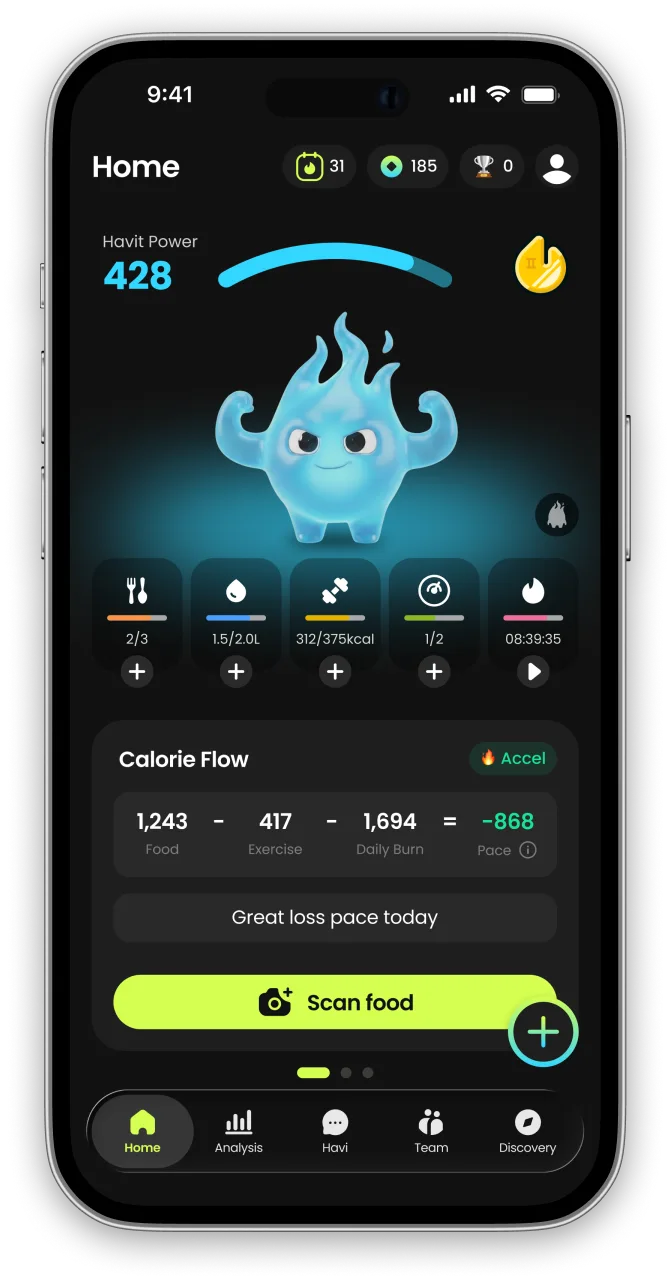
What is Havit?
Havit is an AI health companion for weight loss that protects muscle.
Unlike calorie-only trackers, Havit connects AI body-composition estimates, nutrition, hydration, sleep, steps, cycle, mood, and GLP-1 medication in one daily routine — so progress is measured by body composition, not just the number on the scale. Daily missions turn established behavior-change techniques into small repeatable actions, drawing on expertise from professionals formerly at Juvis Diet, one of Korea’s leading metabolic clinics.
In Havit’s own analysis of 1,090 GLP-1 users, people who logged consistently built stronger habits than the general user base. Read the GLP-1 Habit Report
Havit works with or without GLP-1 medication. It is a wellness app, not a medical device; body-composition results are estimates.

Continue in the App
Personalized wellness with your own data


References
- Individualized semaglutide dose optimization: A post-hoc analysis of STEP trial outcomes — Lancet Diabetes & Endocrinology, 2024
- Clinical guidance for GLP-1 receptor agonist titration in obesity management — Diabetes Care, 2025
- Long-term tolerability patterns in semaglutide users: Copenhagen cohort study — University of Copenhagen Metabolic Research Center, 2024
- STEP trials pooled safety analysis: Dose-dependent adverse event patterns — Novo Nordisk clinical data submission, FDA archives


