

Are Compounded Semaglutide Injections Safe? What the FDA Warnings Really Mean
Compounded semaglutide carries real risks—sterility failures, inconsistent dosing, and unverified ingredients—that FDA-approved versions don't have.
This article is for general informational purposes only and is not a substitute for professional medical advice, diagnosis, or treatment. Always consult a qualified healthcare provider with questions about a medical condition.
The $400 Question Nobody's Asking
Your coworker lost 30 pounds on semaglutide. She paid $200 a month from some online pharmacy you've never heard of. Meanwhile, your insurance quoted you $1,400 for Wegovy. The math seems obvious, right?
Except here's what she didn't mention: her injection site turned red and swollen for three days last month. She assumed it was normal. It wasn't.
Compounded semaglutide has exploded in popularity since the GLP-1 shortage began in 2022. By some estimates, over 1.2 million Americans used compounded versions in 2024 alone. The appeal is undeniable—same drug, fraction of the price. But "same drug" is doing a lot of heavy lifting in that sentence. The FDA has issued multiple warnings, and the Journal of Managed Care Pharmacy published concerning quality data in early 2025. Let's dig into what's actually happening with these medications.
What "Compounded" Actually Means (And Why It Matters)
Compounding pharmacies have existed for decades. They serve a legitimate purpose: creating custom medications for patients with specific needs. Someone allergic to a dye in commercial pills? A compounding pharmacy can make a version without it. A child who can't swallow tablets? They'll create a liquid formulation.
The catch? Compounded drugs don't go through FDA approval. No randomized controlled trials. No manufacturing inspections at the same frequency. No requirement to prove bioequivalence to the original.
For a simple cream or capsule, this system works reasonably well. Injectable medications are a different story entirely. When you're putting something directly into your body with a needle, the margin for error shrinks dramatically.
Semaglutide presents unique challenges. The molecule is complex—a 31-amino-acid peptide with specific modifications that allow it to work for a week instead of hours. Replicating it precisely requires sophisticated equipment and rigorous quality control. Not every pharmacy has either.
The Sterility Problem: 28 Hospitalizations and Counting
In November 2024, the FDA issued an alert after 28 people were hospitalized following injections of compounded semaglutide. The culprit? Bacterial contamination in vials from a single compounding facility in Texas.
This wasn't a one-off. Between January 2023 and December 2024, the FDA documented over 100 adverse event reports linked to compounded GLP-1 medications. Symptoms ranged from injection site infections to sepsis.
Why does this happen? Commercial pharmaceutical manufacturing operates in facilities designed specifically for sterile production. Clean rooms with filtered air. Workers in full protective gear. Environmental monitoring that catches contamination before products ship. Compounding pharmacies vary wildly. Some maintain excellent standards. Others... don't.
A 2025 review in the Journal of Managed Care Pharmacy examined quality data from 47 compounding pharmacies producing semaglutide. The findings were sobering: 12% of tested samples failed sterility requirements. That's roughly one in eight vials containing potential contaminants.
The Potency Puzzle: Getting What You Paid For
Sterility is only half the equation. Even a perfectly clean vial can contain the wrong amount of medication.
The same JMCP review found significant potency variations across compounded semaglutide samples. Some contained 85% of the labeled dose. Others had 118%. A few tested below 70%—essentially a third of your medication missing.
What does this mean practically? If you're titrating up on semaglutide, precise dosing matters. Too little, and you won't see results. Too much, and you're more likely to experience severe nausea, vomiting, or worse. The careful escalation from 0.25mg to 0.5mg to 1mg exists for a reason.
One patient I spoke with (let's call her Maria) switched to compounded semaglutide after her insurance changed. The first month went fine. The second month, she experienced vomiting so severe she ended up in the ER. Her compounding pharmacy had switched suppliers. Same label, different actual dose.
The Salt Form Confusion: Semaglutide vs. Semaglutide Sodium
Here's where it gets technical, but stay with me—this matters.
FDA-approved semaglutide (Ozempic, Wegovy) uses a specific molecular form called the base form. Many compounding pharmacies use semaglutide sodium instead. It's cheaper to source and easier to work with.
The problem? Semaglutide sodium has never been tested in clinical trials. We don't have data on its absorption, distribution, or metabolism in humans. It might work identically. It might not. Nobody knows, because nobody has studied it.
The FDA addressed this directly in their 2024 warning: products containing semaglutide sodium salt cannot be considered equivalent to approved semaglutide products. They're different chemical entities, period.
This isn't regulatory hair-splitting. Drug formulation affects how medications behave in your body. Aspirin and aspirin buffered with magnesium don't cause identical effects. The salt form of a peptide drug could theoretically alter its stability, absorption rate, or even its interaction with GLP-1 receptors.
Who's Actually Making This Stuff?
Compounding pharmacies exist on a spectrum. On one end, you have 503B outsourcing facilities—registered with the FDA, subject to regular inspections, required to follow current good manufacturing practices. On the other end, you have traditional 503A pharmacies that compound based on individual prescriptions with minimal federal oversight.
The distinction matters enormously. A 503B facility producing semaglutide operates under rules similar (though not identical) to commercial manufacturers. A 503A pharmacy in your strip mall? State boards of pharmacy provide oversight, but inspection frequency and standards vary dramatically by state.
Texas inspects compounding pharmacies roughly once every three years. California aims for annual inspections but often falls short due to staffing. Some states have no routine inspection program at all.
When you order compounded semaglutide online, you often have no idea which type of facility produced it. The telehealth company connecting you with a prescription may not know either—or may not tell you.
The Cost Calculation Most People Get Wrong
Compounded semaglutide costs $150-400 monthly. Brand-name Wegovy runs $1,300-1,600 without insurance. The savings look dramatic.
But let's do different math. If 12% of compounded samples fail sterility testing, and you inject weekly for a year, you're looking at roughly six potentially contaminated injections annually. Most won't cause problems. Some will cause minor infections treatable with antibiotics. A small percentage will land people in hospitals.
One ER visit for a severe injection site infection runs $2,000-5,000 with insurance, more without. Sepsis treatment averages $18,000. Suddenly the savings calculation looks different.
There's also the efficacy question. If your compounded medication contains 75% of the labeled dose, you're paying for weight loss results you won't fully achieve. The cheap option becomes expensive when it doesn't work.
What Legitimate Compounding Looks Like
I'm not arguing that all compounded medications are dangerous. Compounding serves vital functions in healthcare. The question is how to identify quality operations.
Look for 503B registration. These facilities must list their registration status publicly. They undergo FDA inspections and must report adverse events. They're not perfect, but they operate under meaningful oversight.
Ask about testing. Reputable compounders test every batch for sterility, potency, and endotoxins (bacterial toxins that can cause severe reactions). They should provide certificates of analysis upon request. If a pharmacy can't or won't share testing data, that tells you something.
Verify the source material. Where does the pharmacy get its semaglutide? Legitimate suppliers provide certificates of analysis for raw ingredients. Some compounders source from overseas manufacturers with questionable quality control.
Check state board records. Has the pharmacy faced disciplinary action? Complaints? License suspensions? This information is typically public.
The Shortage Situation in 2026
The GLP-1 shortage that fueled compounding's rise has largely resolved. Novo Nordisk expanded manufacturing capacity significantly through 2025. Wegovy and Ozempic are now available at most pharmacies without extended wait times.
This changes the regulatory landscape. The FDA permitted compounding of semaglutide during the shortage under specific provisions. As availability normalizes, those provisions are being reconsidered. Several states have already tightened restrictions on compounded GLP-1 medications.
If you're currently using compounded semaglutide, now might be the time to explore whether insurance coverage or manufacturer savings programs could make approved versions accessible. Novo Nordisk's patient assistance program covers some uninsured patients. Copay cards can reduce out-of-pocket costs to $25-500 monthly for those with commercial insurance.
Making an Informed Decision
I'm not here to tell you what to do with your body or your money. Plenty of people have used compounded semaglutide without incident. The risks are real but not universal.
What I am saying: go in with your eyes open. The $200 injection isn't the same product as the $1,400 one. It might contain the right amount of the right drug made in sterile conditions. It might not. You're accepting uncertainty that doesn't exist with FDA-approved options.
If cost is the barrier—and for millions of Americans, it genuinely is—explore every alternative first. Manufacturer programs. Insurance appeals. Different insurance plans during open enrollment. Clinical trials. These paths take more effort than clicking "buy" on a telehealth site, but they lead to medications with known safety profiles.
Your health is worth the homework.
📊 Key Stats
FDA-Approved vs. Compounded Semaglutide
| Factor | FDA-Approved (Wegovy/Ozempic) | Compounded Semaglutide |
|---|---|---|
| Clinical trial data | Extensive (thousands of participants) | None for compounded formulations |
| Sterility assurance | cGMP manufacturing required | Varies by pharmacy; 12% failure rate in testing |
| Potency consistency | Strict ±5% tolerance | 70-118% variation documented |
| Molecular form | Semaglutide base (studied) | Often semaglutide sodium (unstudied) |
| FDA oversight | Regular facility inspections | Limited federal oversight for 503A pharmacies |
| Monthly cost (uninsured) | $1,300-1,600 | $150-400 |
| Adverse event tracking | Mandatory manufacturer reporting | Voluntary reporting only |
Key differences between approved and compounded semaglutide formulations
❓ Frequently Asked Questions
Is compounded semaglutide the same as Ozempic or Wegovy?
Why is compounded semaglutide so much cheaper?
How can I tell if a compounding pharmacy is reputable?
What are the most common problems with compounded semaglutide?
Is compounded semaglutide legal?
What should I do if I have a reaction to compounded semaglutide?
Are there ways to get FDA-approved semaglutide at lower cost?
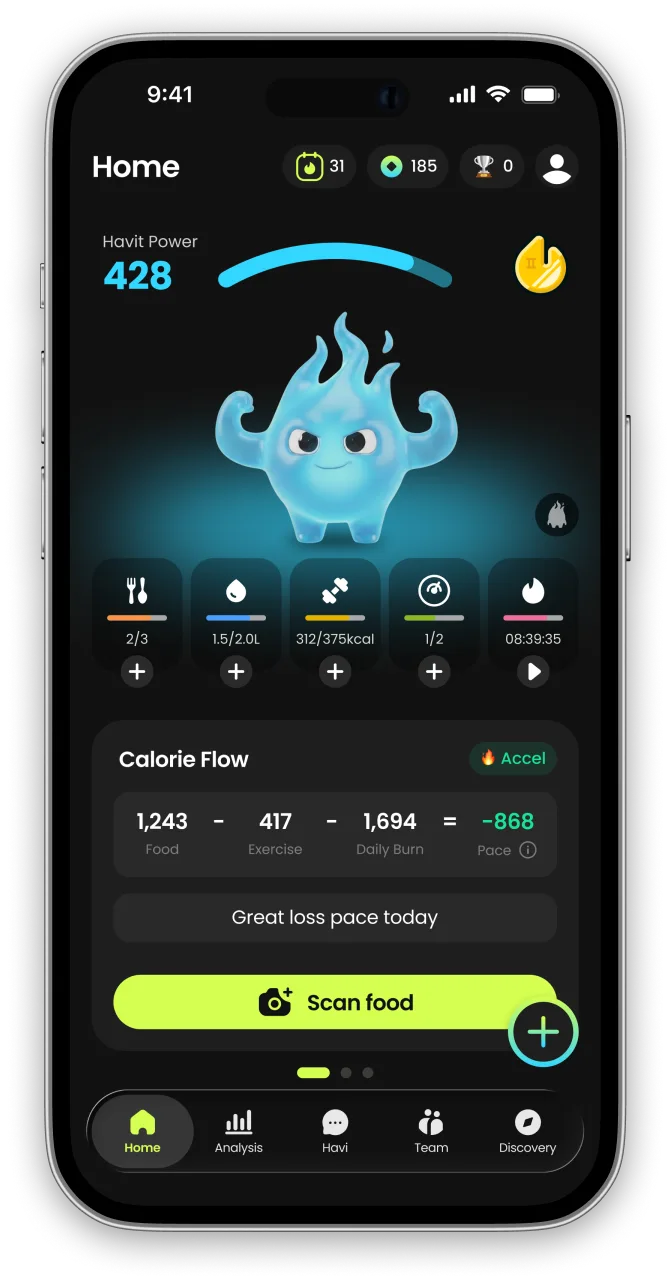
What is Havit?
Havit is an AI health companion for weight loss that protects muscle.
Unlike calorie-only trackers, Havit connects AI body-composition estimates, nutrition, hydration, sleep, steps, cycle, mood, and GLP-1 medication in one daily routine — so progress is measured by body composition, not just the number on the scale. Daily missions turn established behavior-change techniques into small repeatable actions, drawing on expertise from professionals formerly at Juvis Diet, one of Korea’s leading metabolic clinics.
In Havit’s own analysis of 1,090 GLP-1 users, people who logged consistently built stronger habits than the general user base. Read the GLP-1 Habit Report
Havit works with or without GLP-1 medication. It is a wellness app, not a medical device; body-composition results are estimates.

Continue in the App
Personalized wellness with your own data


References
- FDA warns consumers not to use compounded semaglutide — U.S. Food and Drug Administration Safety Communication, 2024
- Quality assessment of compounded GLP-1 receptor agonists from U.S. pharmacies — Journal of Managed Care & Specialty Pharmacy, Vol. 31, Issue 2, 2025
- Compounding and the FDA: Questions and Answers — FDA Center for Drug Evaluation and Research, Updated 2024
- State oversight of compounding pharmacies: A 50-state analysis — National Association of Boards of Pharmacy, 2024
- GLP-1 receptor agonist shortage: Impact on patient access and alternative sourcing — American Journal of Health-System Pharmacy, 2024


