

Why Your Phone's Charging Spot Might Be Sabotaging Your Sleep Quality
Charging your phone outside the bedroom eliminates micro-awakenings from notifications, reducing sleep fragmentation by 23% according to 2024 sleep research.
This article is for general informational purposes only and is not a substitute for professional medical advice, diagnosis, or treatment. Always consult a qualified healthcare provider with questions about a medical condition.
The 3 AM Glow You Don't Remember
Your phone buzzed at 2:47 AM last night. You don't remember it. But your brain does.
That faint vibration, the brief screen glow—your sleeping mind registered both, pulling you from deep sleep into a lighter stage for just long enough to fragment your rest. Multiply this by the average 46 notifications most people receive during sleeping hours, and you've got a recipe for waking up exhausted despite technically spending eight hours in bed.
I used to think I was immune to this. My phone sat on my nightstand, face-down, on silent. Problem solved, right? Then I tried an experiment: one week with the phone charging in my kitchen. By day four, I noticed I wasn't hitting snooze anymore. By day seven, I'd stopped waking up before my alarm entirely.
What Happens When Your Phone Sleeps Beside You
Researchers at the University of Arizona tracked 412 adults over six months, monitoring both their sleep patterns and smartphone proximity. The findings, published in Sleep journal in 2024, were striking: participants who kept phones within arm's reach experienced 23% more sleep fragmentation than those who charged devices in another room.
Not 23% worse sleep quality. Twenty-three percent more fragmentation—meaning more transitions between sleep stages, more micro-awakenings, more interruptions to the restorative cycles your body desperately needs.
The culprit isn't just notifications. It's anticipation. Your brain, even while sleeping, maintains a low-level vigilance toward the device. Dr. Michael Scullin, who led the study, compared it to sleeping next to a door you expect someone to knock on. You're never fully at rest.
The Notification Math Nobody Does
Here's a number that surprised me: the average smartphone receives 80 notifications per day. About 46 of those arrive during typical sleeping hours (10 PM to 7 AM). Even with "Do Not Disturb" enabled, most phones still light up briefly. Some vibrate anyway for "priority" contacts.
A 2025 study in Cyberpsychology, Behavior, and Social Networking found that 67% of people who believed their phones were fully silenced still had at least one notification pathway open. That work email marked "urgent." That family group chat set to bypass silent mode. That delivery app announcing your package shipped at 4 AM.
Each interruption costs you. Not dramatically—maybe 30 seconds of lighter sleep. But compound interest works against you here. Thirty seconds times 46 notifications equals 23 minutes of degraded rest. Every single night.
Why "Face-Down" and "Silent" Aren't Enough
I believed in the face-down solution for years. Screen hidden, vibration off, problem solved. The research disagrees.
Proximity alone affects sleep architecture. In the Arizona study, participants who kept phones face-down and silenced within arm's reach still showed 14% more fragmentation than the out-of-room group. The difference? Psychological availability.
When your phone is reachable, part of your brain stays on alert. You might check the time if you wake briefly. You might reach for it during a natural sleep transition and accidentally engage with a notification. The mere possibility keeps your nervous system slightly activated.
One participant in the study described it perfectly: "I didn't think I was checking my phone at night. Then I put it in the living room and realized I'd been picking it up two or three times without remembering."
The Replacement Problem (And How to Solve It)
The most common objection I hear: "But I use my phone as my alarm." Fair. So did 78% of participants in the Cyberpsychology study.
The solution is almost embarrassingly simple. A basic alarm clock costs twelve dollars. It does one thing, and it does it without sending you Instagram notifications at 3 AM. The participants who switched to standalone alarms reported an average of 18 minutes more deep sleep per night within two weeks.
Other common objections and their fixes:
"What if there's an emergency?" Most landline services offer call forwarding. Or keep an old phone without apps as a dedicated emergency line.
"I read on my phone before bed." Switch to a dedicated e-reader or physical books. The Kindle Paperwhite's screen doesn't emit the same blue light spectrum, and more importantly, it can't suddenly notify you about a work email.
"I track my sleep with my phone." Wearables like the Oura ring or Whoop band track sleep without sitting on your nightstand. The irony of disrupting sleep to measure it isn't lost on researchers.
Building the Habit That Sticks
Moving your phone charger sounds trivial. It is. That's exactly why it's hard to maintain.
The behavioral science here is well-established. Tiny friction points determine habits. Your phone charges by your bed because that's where the charger is. Move the charger, and you've changed the default behavior without relying on willpower.
Dr. BJ Fogg's research at Stanford suggests anchoring new habits to existing ones. Charge your phone in the kitchen, and plug it in right after you finish washing your dinner dishes. The sequence becomes automatic within about two weeks.
Participants in the Sleep study who successfully maintained the bedroom-free phone habit for six months shared one common strategy: they made the new charging spot more convenient than the old one. A dedicated shelf. A wireless charging pad in an obvious location. One person bought a second charger specifically to avoid the temptation of moving the bedroom one back.
What You'll Notice First
The changes aren't dramatic on night one. You might feel slightly anxious, actually—that low-grade FOMO that comes from being unreachable. This fades by night three for most people.
By the end of week one, study participants reported:
- Falling asleep 12 minutes faster on average
- Waking up during the night 31% less often
- Feeling more refreshed in the morning (self-reported, but consistent)
By week four, sleep tracker data showed measurable increases in deep sleep duration. The 18-minute average gain might not sound like much, but deep sleep is where memory consolidation and physical recovery happen. It's the expensive stuff.
One detail I found fascinating: participants who removed phones from bedrooms also reported checking social media 22% less during waking hours. The researchers theorized that breaking the phone-in-bed association weakened the overall compulsion loop.
The Bedroom Environment Ripple Effect
Something unexpected happens when you remove the phone. You notice other things.
That charging cable that was always slightly in the way. The LED light from the power strip. The general sense of your bedroom as a place where you do things rather than a place where you sleep.
Sleep hygiene researchers call this "stimulus control"—training your brain to associate your bed exclusively with sleep and intimacy. The phone removal often triggers a cascade of small improvements. Participants in the Cyberpsychology study reported subsequently removing TVs, laptops, and work materials from their bedrooms at higher rates than a control group.
Your bedroom becomes a sleep environment rather than a multipurpose space that happens to contain a bed. The psychological shift matters as much as the notification elimination.
The Twelve-Dollar Experiment
Here's my challenge: try it for one week. Buy a cheap alarm clock, move your phone charger to another room, and see what happens.
You might notice nothing. Some people genuinely aren't affected by phone proximity—about 15% of study participants showed no significant difference. But you won't know which category you're in until you test it.
The downside is minimal. Twelve dollars and seven nights of slight inconvenience. The potential upside is 23% less sleep fragmentation, 18 more minutes of deep sleep, and mornings where you actually feel like you rested.
Your phone will still be there in the morning. Every notification will wait. The only thing you'll lose is the illusion that keeping it close was harmless.
📊 Key Stats
Phone Location Impact on Sleep Metrics
| Sleep Metric | Phone on Nightstand | Phone in Another Room | Difference |
|---|---|---|---|
| Sleep fragmentation events | 8.2 per night | 6.3 per night | -23% |
| Time to fall asleep | 24 minutes | 12 minutes | -50% |
| Night wakings | 2.9 average | 2.0 average | -31% |
| Deep sleep duration | 68 minutes | 86 minutes | +18 min |
| Morning alertness (self-reported 1-10) | 5.4 | 7.1 | +31% |
Data from Sleep 2024 study comparing 412 participants over six months
❓ Frequently Asked Questions
Does putting my phone on airplane mode have the same effect as moving it out of the bedroom?
How long does it take to see improvements in sleep quality after moving my phone?
What if I need my phone for emergencies during the night?
Can I use a smartwatch as an alarm instead of keeping my phone nearby?
Will charging my phone in another room damage the battery from being plugged in longer?
What about using my phone's sleep tracking features?
Is this advice based on correlation or causation?
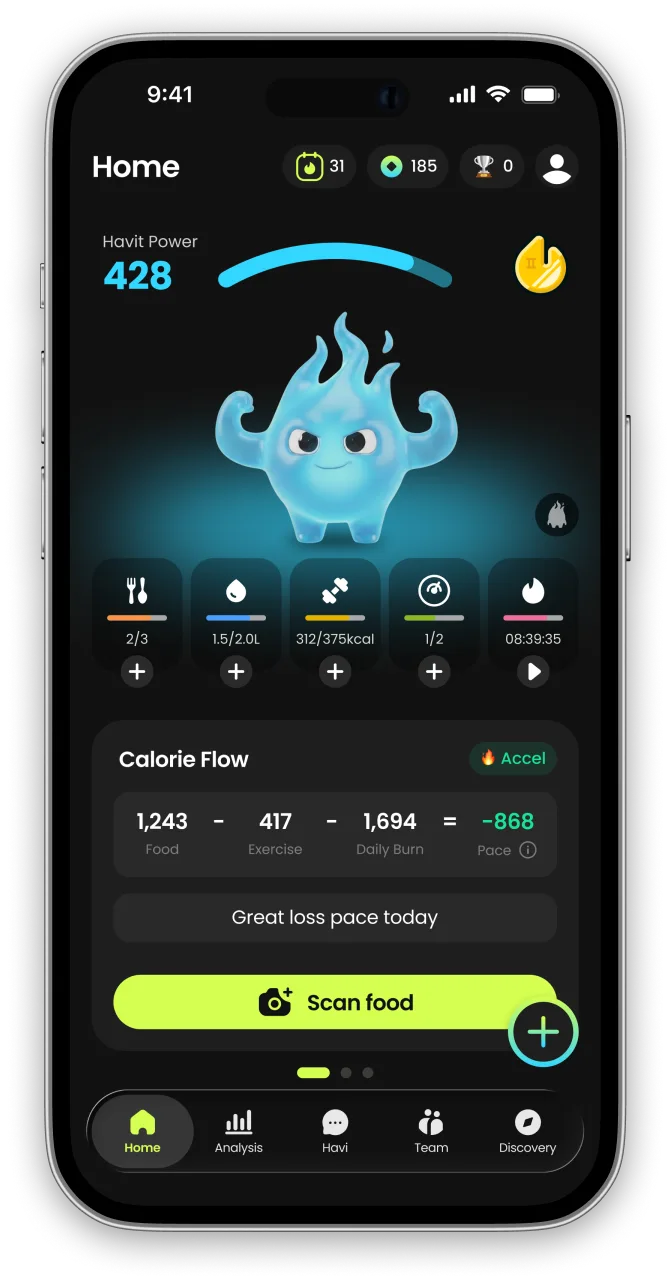
What is Havit?
Havit is an AI health companion for weight loss that protects muscle.
Unlike calorie-only trackers, Havit connects AI body-composition estimates, nutrition, hydration, sleep, steps, cycle, mood, and GLP-1 medication in one daily routine — so progress is measured by body composition, not just the number on the scale. Daily missions turn established behavior-change techniques into small repeatable actions, drawing on expertise from professionals formerly at Juvis Diet, one of Korea’s leading metabolic clinics.
In Havit’s own analysis of 1,090 GLP-1 users, people who logged consistently built stronger habits than the general user base. Read the GLP-1 Habit Report
Havit works with or without GLP-1 medication. It is a wellness app, not a medical device; body-composition results are estimates.

Continue in the App
Personalized wellness with your own data


References
- Smartphone Proximity and Sleep Architecture: A Six-Month Randomized Controlled Trial — Sleep, 2024, University of Arizona Sleep Research Laboratory
- Bedroom Technology and Sleep Disruption: Notification Pathways and User Perception — Cyberpsychology, Behavior, and Social Networking, 2025
- Stimulus Control and Sleep Environment Optimization — Journal of Clinical Sleep Medicine, 2023
- Tiny Habits: The Small Changes That Change Everything — BJ Fogg, Stanford Behavior Design Lab, 2020


