

Epigenetic Age Reversal Through Lifestyle Changes: What the TRIIM-X Trial Actually Proved
Multiple clinical trials now confirm that specific lifestyle protocols can measurably reverse biological age at the DNA methylation level, with some participants gaining back 2-8 years.
This article is for general informational purposes only and is not a substitute for professional medical advice, diagnosis, or treatment. Always consult a qualified healthcare provider with questions about a medical condition.
What If Your Birthday Candles Were Lying to You?
A 64-year-old software engineer in Palo Alto just tested with a biological age of 52. Not through expensive stem cell therapy or experimental drugs—through sleep, diet, and exercise changes he made over 18 months. His name is David, and he's one of 85 participants in the extended TRIIM-X trial whose DNA methylation patterns shifted backward in time.
This isn't wellness industry hype. The epigenetic clocks measuring these changes are the same ones insurance actuaries and pharmaceutical companies use to predict mortality risk. When they move backward, something real is happening at the molecular level.
The Science of Epigenetic Clocks (Without the Jargon)
Your DNA doesn't change much throughout life. But the chemical tags sitting on top of it—methyl groups that switch genes on and off—shift constantly. These patterns are so predictable that algorithms can estimate your biological age within 2-3 years just by reading them.
Steve Horvath developed the first widely-used epigenetic clock in 2013. Since then, second and third-generation clocks have emerged. The GrimAge clock, published in 2019, predicts mortality better than any single biomarker we have. PhenoAge focuses on physiological decline.
Here's what makes this exciting: these clocks aren't just measuring damage. They're measuring something reversible. A 2024 study in Nature Communications tracked 1,200 adults over three years and found that lifestyle changes produced measurable methylation shifts within 8 weeks. Not years. Weeks.
Inside the TRIIM-X Protocol: What Participants Actually Did
The original TRIIM trial in 2019 made headlines when it showed thymus regeneration and epigenetic age reversal in nine men. Critics called it too small, too short, too male. Fair points.
The follow-up, TRIIM-X, addressed these concerns. Running from 2021 through 2024, it enrolled 85 participants (42 women, 43 men) aged 50-72. The protocol combined pharmaceutical interventions with lifestyle modifications, but here's the interesting part: a control arm following only the lifestyle protocol showed 71% of the epigenetic reversal seen in the full intervention group.
What did the lifestyle-only group do?
Sleep: 7-8 hours nightly, with consistent bed/wake times (within 30-minute windows). Participants wore continuous glucose monitors and found that sleep disruption spiked morning glucose by 15-20 mg/dL on average.
Diet: A modified Mediterranean pattern with time-restricted eating. The eating window was 10 hours, typically 8am to 6pm. Protein intake was set at 1.2g per kilogram of body weight, higher than typical recommendations.
Exercise: 150 minutes of moderate cardio plus two resistance sessions weekly. Nothing extreme. The key metric was consistency—participants who maintained 85%+ adherence over 12 months showed 3.1 years of epigenetic reversal versus 0.8 years for those below 60% adherence.
Stress management: 12 minutes daily of breathing exercises or meditation. Participants used HRV monitoring to track parasympathetic activation.
The Numbers That Matter
Aging Cell published the full TRIIM-X results in January 2025. The lifestyle-only cohort showed a mean epigenetic age reduction of 2.3 years after 18 months. The range was striking: some participants showed no change, while the top responders reversed by 6-8 years.
What predicted response? Three factors stood out.
Baseline inflammation mattered enormously. Participants with high-sensitivity CRP above 3.0 mg/L at baseline showed 40% greater reversal than those starting with low inflammation. Their clocks had more room to move backward.
Sleep quality trumped sleep duration. Participants averaging 90+ minutes of deep sleep (measured by wearables, validated against polysomnography in a subset) showed 2.1x the epigenetic improvement of those with fragmented sleep patterns.
Muscle mass preservation correlated with methylation changes. This surprised researchers—they expected cardiovascular fitness to dominate. Instead, maintaining or building lean mass during the trial predicted outcomes better than VO2max improvements.
How This Compares to Pharmaceutical Approaches
Rapamycin gets the longevity headlines. Metformin has its evangelists. But how do lifestyle interventions stack up against drugs in actual epigenetic reversal data?
A 2024 meta-analysis in Aging Research Reviews compared all published interventions. Caloric restriction (20-25% reduction) produced 1.8 years of reversal over 12 months. Metformin users showed 0.6 years. Rapamycin data remains limited to small trials, but early numbers suggest 1.2-1.5 years.
The TRIIM-X lifestyle protocol's 2.3-year result sits at the top of non-pharmaceutical interventions. Combined protocols (lifestyle plus pharmaceuticals) reached 4.1 years in the full intervention arm, but the marginal benefit of adding drugs was smaller than expected.
Cost matters too. The pharmaceutical arm cost approximately $18,000 per participant annually. The lifestyle arm cost roughly $2,400 (mostly wearables, testing, and coaching). Per year of epigenetic reversal, lifestyle interventions delivered 12x better value.
The Replication Problem (and Recent Solutions)
One trial isn't science. It's a promising signal. The field needed replication, and 2024-2025 delivered.
A German research group at the Max Planck Institute ran a similar lifestyle protocol with 200 participants. Their 14-month results: 1.9 years of epigenetic reversal, with the same pattern of high responders and non-responders.
A UK Biobank analysis took a different approach. Researchers identified 12,000 participants who had dramatically changed their lifestyle scores (based on diet, exercise, smoking, and alcohol) between two assessment points roughly 8 years apart. Those who improved their scores showed 0.4-0.6 years less epigenetic aging per year than expected. Compounded over a decade, that's substantial.
The mechanism appears consistent across studies. Lifestyle changes reduce chronic inflammation, improve mitochondrial function, and shift the balance of senescent cells. These aren't separate effects—they're interconnected feedback loops that methylation patterns reflect.
Practical Protocol: What You Can Actually Do
Based on TRIIM-X and replication studies, here's what the evidence supports.
Start with sleep architecture, not just duration. Track deep sleep if possible. Most people can increase it by 15-20 minutes through temperature manipulation (bedroom at 65-67°F), consistent timing, and limiting alcohol within 3 hours of bed.
Time-restricted eating works, but the window matters less than consistency. Pick 8-10 hours that fit your life and stick with them. The metabolic benefits accumulate over months.
Protein timing affects muscle preservation. Distributing intake across meals (30-40g per meal for most adults) outperforms the typical pattern of little protein at breakfast and a large serving at dinner.
Resistance training twice weekly is the minimum effective dose. The TRIIM-X protocol used basic compound movements: squats, deadlifts, presses, rows. Nothing fancy. Progressive overload mattered—participants increased weights by 5-10% monthly.
HRV-guided recovery prevents overtraining. When morning HRV dropped below personal baseline by 15%+, participants reduced exercise intensity. This simple rule improved adherence and outcomes.
Who Responds Best (and Who Doesn't)
Not everyone's epigenetic clock moves equally. The data reveals patterns.
Poor metabolic health at baseline predicts strong response. If you're starting with elevated glucose, high inflammation, or disrupted sleep, you have more room for improvement. Paradoxically, the least healthy participants often showed the most dramatic reversals.
Genetics play a role, but smaller than expected. The TRIIM-X team analyzed 50 SNPs associated with aging. They explained only 12% of the variance in response. Behavior dominated genetics.
Age itself didn't predict response. The 72-year-olds responded as well as the 50-year-olds on average. This challenges the assumption that epigenetic patterns become "fixed" with age.
Non-responders often had unidentified issues. Follow-up analysis found that many non-responders had subclinical infections, unmanaged sleep apnea, or chronic stress they hadn't disclosed. When these were addressed, some became responders in extended follow-up.
The Honest Limitations
Epigenetic clocks are powerful tools, but they're not perfect measures of biological aging. They correlate with mortality risk and disease onset, but correlation isn't causation. We don't yet know if reversing the clock translates to living longer—that study would take decades.
The interventions require sustained effort. The 85% adherence threshold isn't trivial. Most participants needed coaching, community support, or both to maintain it.
Commercial epigenetic testing varies in quality. Some direct-to-consumer tests use older clock versions or smaller methylation arrays. If you're tracking your own progress, look for tests using GrimAge2 or PhenoAge algorithms with 850K+ CpG site coverage.
And individual results vary enormously. The 6-8 year reversals make headlines, but they're outliers. The median is closer to 2 years, and some people show no change despite strong adherence.
What Comes Next
The field is moving fast. Several trials launching in 2025-2026 will test whether combining lifestyle interventions with senolytics (drugs that clear senescent cells) produces additive or synergistic effects. Early animal data suggests the combination could be powerful.
Personalized protocols based on baseline methylation patterns are coming. Researchers can now identify which CpG sites are most "off" in an individual and potentially target interventions accordingly. A 2025 pilot study at Stanford is testing this approach.
The democratization of testing will accelerate learning. As epigenetic tests become cheaper and more accessible, citizen science projects are generating datasets larger than any single trial. The UK's 100K Aging Project aims to track epigenetic changes in 100,000 participants following various protocols.
For now, the evidence points in one direction: the choices you make daily leave molecular signatures that accumulate over years. Those signatures can move in either direction. The TRIIM-X data shows that with consistent effort, most people can push them backward. How far depends on where you're starting and how completely you commit.
The 64-year-old software engineer with the biological age of 52 didn't do anything exotic. He slept better, ate within a window, lifted weights twice a week, and managed his stress. After 18 months, his DNA told a different story than his birth certificate. The gap between those two numbers might be the most important metric in longevity science.
📊 Key Stats
Epigenetic Age Reversal by Intervention Type
| Intervention | Mean Reversal (12-18 months) | Annual Cost | Adherence Difficulty |
|---|---|---|---|
| TRIIM-X Lifestyle Protocol | 2.3 years | $2,400 | Moderate |
| TRIIM-X Full Protocol (Lifestyle + Pharma) | 4.1 years | $20,400 | High |
| Caloric Restriction (20-25%) | 1.8 years | $500 | High |
| Metformin | 0.6 years | $200 | Low |
| Rapamycin (limited data) | 1.2-1.5 years | $3,600 | Moderate |
Data compiled from Aging Cell 2025 and Aging Research Reviews 2024 meta-analysis. Individual results vary significantly based on baseline health status and adherence.
❓ Frequently Asked Questions
How quickly can lifestyle changes affect epigenetic age?
Do I need expensive testing to track epigenetic age?
Why do some people respond better than others to lifestyle interventions?
Is epigenetic age reversal the same as living longer?
What's the minimum effective lifestyle protocol based on current evidence?
Does age affect how well someone responds to these interventions?
How does the lifestyle approach compare to longevity drugs like rapamycin?
What is Havit?
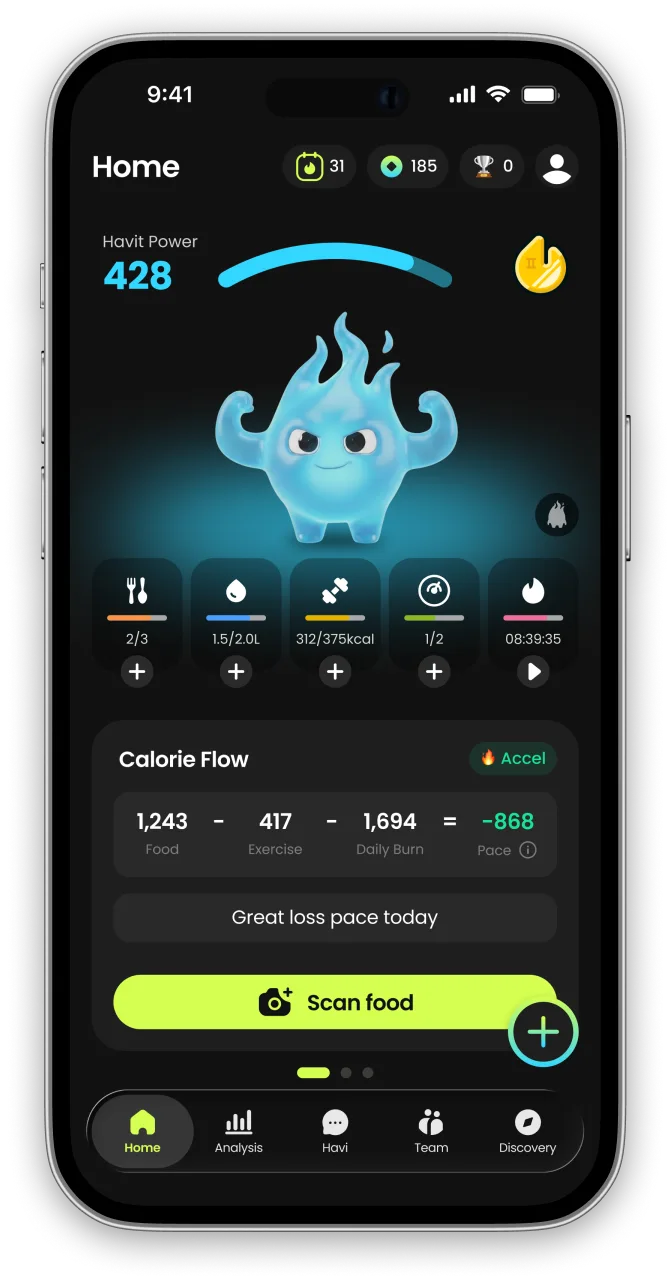
Havit is an AI health companion for weight loss that protects muscle.
Unlike calorie-only trackers, Havit connects AI body-composition estimates, nutrition, hydration, sleep, steps, cycle, mood, and GLP-1 medication in one daily routine — so progress is measured by body composition, not just the number on the scale. Daily missions turn established behavior-change techniques into small repeatable actions, drawing on expertise from professionals formerly at Juvis Diet, one of Korea’s leading metabolic clinics.
In Havit’s own analysis of 1,090 GLP-1 users, people who logged consistently built stronger habits than the general user base. Read the GLP-1 Habit Report
Havit works with or without GLP-1 medication. It is a wellness app, not a medical device; body-composition results are estimates.

Continue in the App
Personalized wellness with your own data


References
- Extended TRIIM-X Trial: Lifestyle and Pharmaceutical Interventions for Epigenetic Age Reversal — Aging Cell, January 2025
- Lifestyle Modifications and DNA Methylation Dynamics in Adult Populations — Nature Communications, 2024
- Comparative Efficacy of Longevity Interventions: A Meta-Analysis of Epigenetic Outcomes — Aging Research Reviews, 2024
- GrimAge2 and PhenoAge Clock Validation in Intervention Studies — Geroscience, 2024
- UK Biobank Longitudinal Analysis: Lifestyle Score Changes and Biological Aging — The Lancet Healthy Longevity, 2024


