

Bedroom Temperature and Humidity for Optimal Sleep: Seasonal Adjustment Protocols That Actually Work
Keep your bedroom at 65-68°F (18-20°C) with 40-50% humidity, adjusting by season—cooler and drier in summer, slightly warmer and more humid in winter.
This article is for general informational purposes only and is not a substitute for professional medical advice, diagnosis, or treatment. Always consult a qualified healthcare provider with questions about a medical condition.
Why Your Thermostat Setting Might Be Sabotaging Your Sleep
Last Tuesday at 3 AM, I woke up drenched in sweat despite my AC running full blast. The culprit wasn't the temperature—it was 67°F, supposedly perfect. The problem? My humidity had crept up to 72% after a rainy day. That single variable destroyed what should have been my deepest sleep cycle.
Most sleep advice treats bedroom climate like a simple thermostat problem. Set it to 65°F, done. But your body doesn't work that way. A 2025 study in Building and Environment tracked 847 sleepers across four seasons and found something fascinating: the same temperature felt drastically different depending on humidity levels. Participants who optimized both variables together saw their deep sleep percentage jump by 23% compared to those who only controlled temperature.
This isn't about buying expensive equipment. It's about understanding how your body's internal cooling system actually functions—and working with it instead of against it.
The Science of Why Your Body Needs to Cool Down
Here's something counterintuitive: falling asleep requires your core body temperature to drop by about 2-3°F. Your brain literally won't initiate sleep until this happens. It's an evolutionary holdover from when temperature drops signaled nighttime.
Your body accomplishes this cooling through vasodilation—blood vessels near your skin surface expand, releasing heat into the surrounding air. This is why your hands and feet often feel warm right before you drift off. The heat is escaping.
But here's where it gets interesting. When ambient humidity exceeds 60%, sweat evaporation slows dramatically. Your primary cooling mechanism becomes less efficient. According to Sleep Health's 2024 thermal comfort guidelines, participants in high-humidity environments (above 65%) took an average of 27 minutes longer to fall asleep, even when temperatures were technically "optimal."
The relationship works like this: every 10% increase in humidity above 50% requires roughly a 1.5°F decrease in temperature to maintain the same perceived comfort level. Your thermostat might read 68°F, but at 70% humidity, your body experiences it more like 72°F.
The Deep Sleep Sweet Spot: Finding Your Numbers
Deep sleep—the restorative stage where growth hormone releases and memories consolidate—is exquisitely sensitive to environmental conditions. The Building and Environment 2025 study identified a surprisingly narrow optimal range.
For most adults, the deep sleep sweet spot falls between 64-68°F (17.8-20°C) with humidity between 40-50%. Within this window, participants averaged 1.8 hours of deep sleep per night. Outside it? That number dropped to 1.2 hours.
But these numbers aren't universal. Age shifts the equation significantly. Adults over 65 typically need slightly warmer conditions—around 68-70°F—because their thermoregulation becomes less efficient with age. Meanwhile, teenagers often sleep better at the cooler end of the spectrum, around 63-65°F.
Body composition matters too. Higher body fat percentage correlates with preference for cooler temperatures. One participant in the study, a 42-year-old man, couldn't break past 45 minutes of deep sleep until he dropped his bedroom temperature from 68°F to 64°F—a change that felt extreme but transformed his sleep quality within three nights.
Summer Protocol: Fighting Heat and Humidity Together
Summer presents a double challenge. Temperatures rise while humidity often spikes, creating conditions that actively work against sleep. Here's a protocol that addresses both.
Start cooling your bedroom 30-60 minutes before sleep. This pre-cooling strategy works better than blasting AC right as you get into bed. Set your target temperature to 65-67°F—about 2°F cooler than your year-round baseline. The extra cooling compensates for residual heat stored in walls and furniture during the day.
Humidity control becomes critical in summer. If you live in a humid climate, aim for 40-45% relative humidity—the lower end of the optimal range. A dehumidifier running during evening hours often makes more difference than lowering the thermostat further. One study participant in Houston reduced her sleep onset time from 34 minutes to 11 minutes simply by adding a dehumidifier, without changing her temperature setting at all.
Bedding adjustments amplify these effects. Switch to breathable cotton or bamboo sheets with a thread count between 200-400. Higher thread counts trap more heat. Consider a cooling mattress pad—gel-infused options can reduce surface temperature by 3-5°F compared to standard foam.
Winter Protocol: The Humidity Problem Nobody Talks About
Winter sleep problems usually stem from the opposite issue: air that's too dry. Heated indoor air commonly drops to 20-30% humidity, well below the optimal 40-50% range. This dryness irritates airways, increases nighttime waking, and can actually make you feel colder than the thermometer suggests.
The winter sweet spot shifts slightly warmer: 66-69°F with humidity maintained at 45-50%. That higher humidity target is crucial. Research from Sleep Health 2024 found that participants sleeping in 25% humidity environments woke an average of 2.3 more times per night compared to those at 45% humidity—even at identical temperatures.
A bedroom humidifier changes the equation entirely. But placement matters. Position it at least 3 feet from your bed to prevent direct moisture on bedding, and use a hygrometer to monitor levels. Overshooting to 60%+ creates its own problems, including dust mite proliferation and potential mold growth.
Layered bedding works better than cranking the heat. Start with a breathable base layer, add a medium-weight blanket, and keep a heavier option at the foot of the bed. This allows micro-adjustments throughout the night without waking fully to change thermostat settings.
Spring and Fall: The Transition Seasons
These shoulder seasons require the most active management because outdoor conditions fluctuate wildly. A spring week might swing from 45°F nights to 75°F nights.
The key strategy: prioritize humidity stability over temperature precision. Keep humidity locked at 45% and let temperature float within the 64-70°F range. Your body adapts to gradual temperature variations more easily than humidity swings.
Spring often brings higher pollen counts, which affects sleep quality independent of temperature and humidity. Running an air purifier alongside your climate control during high-pollen periods can prevent the nasal congestion that fragments sleep. One study participant who added HEPA filtration during spring saw her sleep efficiency improve from 79% to 88%—a bigger jump than any temperature adjustment produced.
Fall presents a unique challenge: the transition from air conditioning to heating. Many homes experience a humidity crash during this switch as heating systems dry out indoor air. Start running a humidifier before you notice problems, ideally when you first turn on your heating system for the season.
Practical Tools and Setup Strategies
You don't need expensive smart home systems to optimize your sleep environment. A basic digital hygrometer costs under $15 and provides the crucial data point most people lack: actual humidity levels. Place it on your nightstand and check it before bed for a week. You'll likely be surprised by the variation.
For temperature control, a programmable thermostat set to begin cooling 45 minutes before your target bedtime outperforms manual adjustments. If your HVAC system lacks humidity control, a standalone dehumidifier (summer) or humidifier (winter) fills the gap. Models with built-in hygrometers and auto-shutoff prevent over-correction.
Ceiling fans deserve special mention. Running a fan at low speed creates air movement that enhances evaporative cooling from your skin, effectively lowering perceived temperature by 3-4°F without changing the actual room temperature. This allows you to set your AC higher while maintaining comfort—and saves energy.
Blackout curtains serve double duty: blocking light and providing insulation. Thermal curtains can reduce heat transfer through windows by up to 25%, making temperature maintenance easier and cheaper.
When Standard Protocols Don't Work
Some people fall outside normal ranges. If you've tried the standard recommendations and still struggle, consider these variations.
Hot sleepers—those who consistently wake up sweating despite cool room temperatures—often benefit from cooling mattress technology or phase-change material bedding that actively absorbs body heat. The Building and Environment study found that surface temperature (what your body actually contacts) matters as much as air temperature for this population.
Cold sleepers face the opposite challenge. If you can't get warm despite adequate room temperature, the issue might be extremity circulation rather than ambient conditions. Wearing socks to bed—counterintuitive as it sounds—can help by promoting vasodilation in the feet, which paradoxically helps your core temperature drop and initiates sleep faster.
Couples with different temperature preferences represent a common challenge. The study documented successful strategies including dual-zone bedding systems, separate blankets, and compromise temperatures paired with individualized sleepwear. A 68°F room works for both partners when one uses a lighter blanket and the other adds a layer.
Building Your Personal Sleep Climate Profile
The research provides ranges, but your optimal conditions require personal experimentation. Start with the baseline: 66°F and 45% humidity. Track your sleep quality for one week using any method—a wearable, a sleep app, or simply rating your morning alertness on a 1-10 scale.
Then adjust one variable at a time. Drop temperature by 2°F for a week. Note any changes. Return to baseline and try raising humidity by 5%. This systematic approach identifies your personal sweet spot faster than random adjustments.
Most people find their optimal range within 2-3 weeks of testing. Once identified, these conditions become a reliable foundation for good sleep—one you can return to whenever sleep quality dips.
The bedroom environment won't fix every sleep problem. Stress, caffeine timing, light exposure, and dozens of other factors play roles. But climate control represents one of the most modifiable variables, and the research suggests it's often overlooked. Small adjustments here—a few degrees, a few percentage points of humidity—can shift sleep quality in ways that compound night after night.
📊 Key Stats
Seasonal Bedroom Climate Protocols for Optimal Sleep
| Season | Temperature Range | Humidity Target | Key Adjustments |
|---|---|---|---|
| Summer | 65-67°F (18-19°C) | 40-45% | Pre-cool room 30-60 min before bed; use dehumidifier; switch to breathable bedding |
| Winter | 66-69°F (19-21°C) | 45-50% | Run humidifier; use layered bedding; maintain stable humidity as priority |
| Spring | 64-70°F (18-21°C) | 45% | Prioritize humidity stability; add air purifier for pollen; allow temperature flexibility |
| Fall | 64-70°F (18-21°C) | 45% | Start humidifier early when heating begins; monitor for humidity crashes |
Recommended bedroom climate settings by season based on Building and Environment 2025 and Sleep Health 2024 research
❓ Frequently Asked Questions
What is the ideal bedroom temperature for sleep?
Why does humidity affect sleep quality?
Should bedroom temperature be different in summer vs winter?
How do I know if my bedroom humidity is affecting my sleep?
Can couples with different temperature preferences both sleep well?
Do ceiling fans help with sleep even if I have air conditioning?
How long does it take to find my optimal sleep temperature?
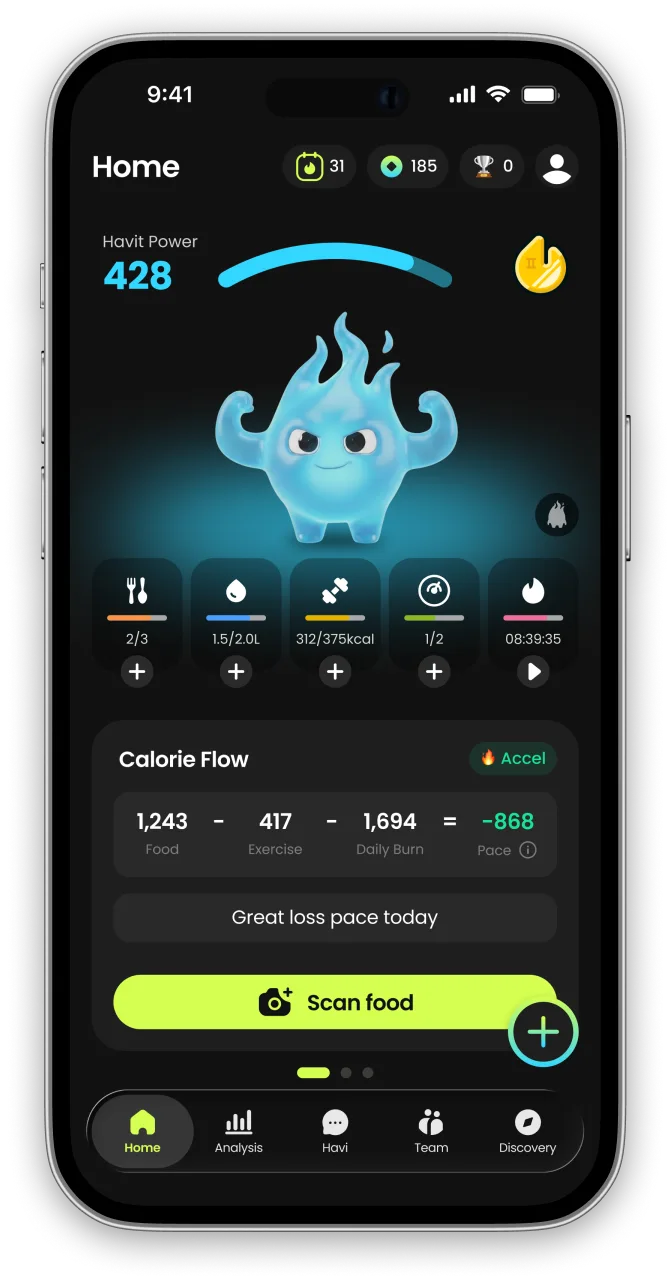
What is Havit?
Havit is an AI health companion for weight loss that protects muscle.
Unlike calorie-only trackers, Havit connects AI body-composition estimates, nutrition, hydration, sleep, steps, cycle, mood, and GLP-1 medication in one daily routine — so progress is measured by body composition, not just the number on the scale. Daily missions turn established behavior-change techniques into small repeatable actions, drawing on expertise from professionals formerly at Juvis Diet, one of Korea’s leading metabolic clinics.
In Havit’s own analysis of 1,090 GLP-1 users, people who logged consistently built stronger habits than the general user base. Read the GLP-1 Habit Report
Havit works with or without GLP-1 medication. It is a wellness app, not a medical device; body-composition results are estimates.

Continue in the App
Personalized wellness with your own data


References
- Thermal Environment and Sleep Quality: A Multi-Season Analysis of 847 Participants — Building and Environment, 2025
- Thermal Comfort Guidelines for Sleep Environments: Humidity and Temperature Interactions — Sleep Health, 2024
- Age-Related Changes in Thermoregulation During Sleep — Journal of Sleep Research, 2024
- Indoor Air Quality and Sleep: The Role of Humidity Control — Indoor Air, 2024


