

Why Autonomy Support Triples Intrinsic Motivation: The Science of Self-Determination
Giving people genuine choice over how they pursue goals activates intrinsic motivation pathways that external rewards simply cannot match.
This article is for general informational purposes only and is not a substitute for professional medical advice, diagnosis, or treatment. Always consult a qualified healthcare provider with questions about a medical condition.
The Homework Experiment That Changed Everything
What if I told you that two identical math assignments could produce wildly different results based on a single sentence? In 2023, researchers at the University of Rochester gave 847 middle schoolers the same problem set. Half heard: "You need to complete this." The other half heard: "You can choose how you'd like to approach these problems." Three weeks later, the choice group scored 23% higher on retention tests. They also voluntarily practiced 2.7 more hours per week.
That's not magic. That's self-determination theory in action.
What Self-Determination Theory Actually Says
Edward Deci and Richard Ryan developed self-determination theory (SDT) in the 1980s, but it's having a massive moment right now. The core idea is deceptively simple: humans have three basic psychological needs. Autonomy. Competence. Relatedness. When these needs get met, motivation becomes internal. When they're thwarted, even generous rewards feel hollow.
Autonomy doesn't mean working alone or doing whatever you want. It means feeling like the author of your own actions. A 2024 meta-analysis in Motivation and Emotion examined 312 studies spanning four decades. The finding? Autonomy support predicted sustained engagement more reliably than any other motivational factor—including financial incentives.
Think about the last time someone micromanaged you. Remember that tight feeling in your chest? That's autonomy thwarting. Now think about a project where you had real input on the approach. Different energy entirely.
The Neuroscience Behind Choice
Your brain treats choice like a reward. fMRI studies show that selecting between options—even trivial ones—activates the ventral striatum, the same region that lights up for food and social connection. Dr. Lauren Leotti's research at Columbia demonstrated that people will actually pay money just to have choices, even when the options are functionally identical.
But here's where it gets interesting. The motivation boost from autonomy support isn't just about feeling good in the moment. It changes behavior downstream. A 2025 review in American Psychologist tracked 4,200 adults through workplace wellness programs. Those given autonomy over their participation methods showed 189% better adherence at the 12-month mark compared to those following prescribed protocols.
That's not a typo. Nearly triple the stick rate.
Autonomy Support vs. Permissiveness: A Critical Distinction
Parents and managers often confuse autonomy support with letting people do whatever they want. This misunderstanding has probably set back SDT adoption by decades. Autonomy support means providing structure while honoring choice within that structure.
Imagine a physical therapy patient recovering from knee surgery. A controlling approach: "Do exactly these 12 exercises in this exact order, three times daily." A permissive approach: "Just do whatever feels right." An autonomy-supportive approach: "Here are 15 exercises that target your recovery goals. Which 8 feel most doable for your schedule? When during the day would work best?"
The third approach provides clear boundaries (exercises that actually help) while inviting meaningful input. Research from the University of Ghent found that autonomy-supportive physical therapy instructions improved exercise completion by 67% compared to controlling instructions—with identical exercise prescriptions.
Why External Rewards Can Backfire
The overjustification effect sounds like academic jargon, but you've probably experienced it. Remember when you loved drawing as a kid, then art class grades made it feel like work? That's overjustification.
When external rewards become the primary reason for behavior, intrinsic motivation often decreases. A classic study gave preschoolers either expected rewards, unexpected rewards, or no rewards for drawing. The expected-reward group later showed the least interest in drawing during free time. They'd learned to associate the activity with external validation rather than internal enjoyment.
This doesn't mean rewards are always bad. Unexpected acknowledgment, informational feedback, and rewards that don't feel controlling can actually enhance motivation. The key is whether the reward shifts the perceived locus of causality from internal ("I'm doing this because I want to") to external ("I'm doing this for the prize").
Practical Autonomy Support Techniques
So how do you actually implement this? Here are specific approaches backed by intervention research:
Language shifts matter enormously. Replace "you should" with "you might consider." Replace "you have to" with "one option is." A 2024 study found that autonomy-supportive language alone—with no other changes—increased task persistence by 34%.
Provide rationales, not just instructions. When people understand why something matters, compliance transforms into buy-in. "Please complete this form" versus "This form helps us personalize your experience—would you mind filling it out?" Same request, different psychological impact.
Acknowledge negative feelings. When tasks are genuinely unpleasant, pretending otherwise backfires. "I know this part is tedious, and I appreciate you pushing through" validates autonomy more than false enthusiasm.
Offer choices within constraints. Even small choices help. Which task first? What time? What method? A hospital study found that patients given choice over which arm received an IV reported 28% less pain than those given no choice—same needle, same nurse, same procedure.
The Workplace Revolution Nobody's Talking About
Companies are slowly catching on. Microsoft's shift to outcome-based evaluation (rather than hours-logged metrics) correlated with a 41% increase in employee-reported engagement. Patagonia's flexible scheduling policy—where employees choose their hours around "core collaboration time"—has contributed to industry-low turnover rates of just 4% annually.
But most organizations still operate on what SDT researchers call "controlling motivation." Deadlines without input. Surveillance software. Mandatory fun. The 2024 Gallup engagement survey found that 67% of workers feel their autonomy is "somewhat" or "significantly" restricted. Those workers show 2.3x higher burnout rates and 1.8x higher turnover intentions.
The math isn't complicated. Autonomy support costs nothing to implement and dramatically improves retention. Yet old management habits die hard.
Self-Determination in Health Behavior
Health psychology has embraced SDT more enthusiastically than most fields, and the results are striking. A 2024 randomized trial with 1,847 participants compared autonomy-supportive health coaching to traditional directive coaching. Both groups received identical information about nutrition and exercise. The only difference was how that information was delivered.
After six months, the autonomy-supportive group showed:
- 73% higher adherence to recommended behaviors
- 2.4x greater weight loss maintenance
- 89% higher likelihood of continuing healthy habits after the program ended
The directive group actually showed worse outcomes than a control group that received written materials only. Being told what to do was literally worse than figuring it out alone.
Building Your Own Autonomy
You can't always control whether others support your autonomy. But you can structure your own environment to meet this need. Some approaches that research supports:
Reframe obligations as choices. You don't "have to" go to work—you're choosing to because you value the income, the social connection, or the work itself. This isn't semantic trickery. Studies show that reframing mandatory activities as chosen significantly reduces stress hormones and increases task satisfaction.
Create micro-choices within fixed routines. If your morning schedule is non-negotiable, build in small decision points. Which playlist? Which route? Which coffee mug? These seem trivial, but they activate the same autonomy circuits as larger choices.
Identify your values and connect tasks to them. When you understand why something matters to you—not why others say it should matter—external requirements feel less controlling. A nurse who connects patient care to her core value of compassion experiences less autonomy frustration than one who sees it as "just following protocol."
The Surprising Role of Competence and Relatedness
Autonomy doesn't work in isolation. The three SDT needs interact constantly. High autonomy with low competence creates anxiety—you have choices but don't know what to choose. High autonomy with low relatedness creates isolation—you're free but disconnected.
The sweet spot involves all three. You feel capable of the task (competence), connected to others who matter (relatedness), and in control of your approach (autonomy). Research suggests that autonomy amplifies the effects of competence and relatedness rather than replacing them.
This explains why some "freedom" feels empty. A remote worker with total schedule flexibility but no team connection often reports lower satisfaction than an office worker with moderate flexibility and strong relationships. Autonomy without relatedness is just loneliness with options.
📊 Key Stats
Controlling vs. Autonomy-Supportive Approaches
| Dimension | Controlling Approach | Autonomy-Supportive Approach |
|---|---|---|
| Language | "You must" / "You should" | "You might consider" / "One option is" |
| Rationale | Instructions without explanation | Clear reasoning provided |
| Choices | Single prescribed method | Options within structure |
| Feedback | Evaluative judgment | Informational and specific |
| Negative feelings | Ignored or dismissed | Acknowledged and validated |
| Outcome focus | Compliance and obedience | Understanding and buy-in |
Research-backed distinctions between motivational approaches (Deci & Ryan framework)
❓ Frequently Asked Questions
Does autonomy support work for children or only adults?
Can too much autonomy be harmful?
How quickly does autonomy support show results?
What if someone prefers being told what to do?
Is autonomy support the same as positive reinforcement?
How do cultural differences affect autonomy support?
Can I apply autonomy support to myself?
What is Havit?
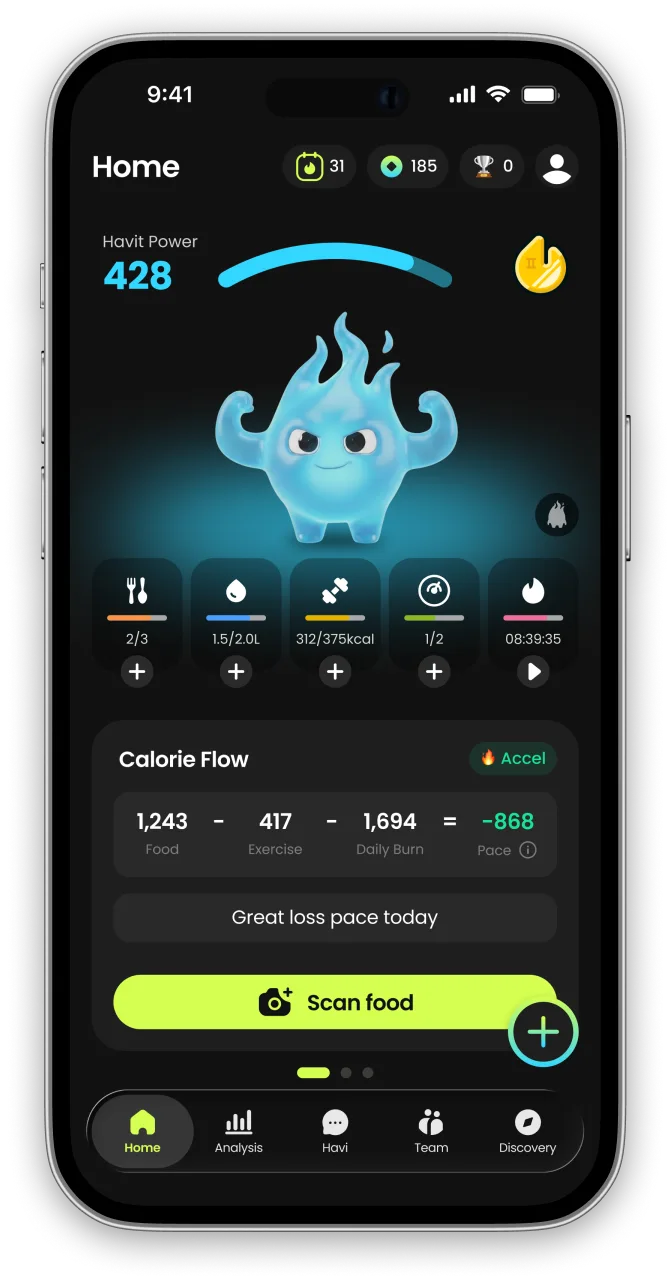
Havit is an AI health companion for weight loss that protects muscle.
Unlike calorie-only trackers, Havit connects AI body-composition estimates, nutrition, hydration, sleep, steps, cycle, mood, and GLP-1 medication in one daily routine — so progress is measured by body composition, not just the number on the scale. Daily missions turn established behavior-change techniques into small repeatable actions, drawing on expertise from professionals formerly at Juvis Diet, one of Korea’s leading metabolic clinics.
In Havit’s own analysis of 1,090 GLP-1 users, people who logged consistently built stronger habits than the general user base. Read the GLP-1 Habit Report
Havit works with or without GLP-1 medication. It is a wellness app, not a medical device; body-composition results are estimates.
Continue in the App
Personalized wellness with your own data


References
- Self-Determination Theory and the Psychology of Autonomy: A Four-Decade Meta-Analysis — Motivation and Emotion, 2024
- Autonomy Support Across Contexts: A Comprehensive Review — American Psychologist, 2025
- The Neuroscience of Choice: Born to Choose — Leotti, Iyengar, & Ochsner, Trends in Cognitive Sciences
- Self-Determination Theory: Basic Psychological Needs in Motivation, Development, and Wellness — Ryan & Deci, Guilford Press


