

What Your Smartwatch ECG Actually Sees (And What It Misses): Single-Lead vs Clinical Reality
Single-lead wearable ECGs excel at detecting atrial fibrillation but miss most other cardiac conditions that require multiple viewing angles.
This article is for general informational purposes only and is not a substitute for professional medical advice, diagnosis, or treatment. Always consult a qualified healthcare provider with questions about a medical condition.
The Reading That Scared My Neighbor Into the ER
Last month, my neighbor Tom showed me his Apple Watch ECG. "Inconclusive," it said. He'd been having chest tightness during his morning runs. The watch couldn't tell him what was wrong, just that something might be off. He went to the ER, got a 12-lead ECG, and discovered he had a left bundle branch block—a condition his $400 smartwatch never could have identified.
Tom's watch wasn't broken. It was doing exactly what it was designed to do. The problem is that most of us don't understand what that design actually includes—and more importantly, what it excludes.
One Wire vs Twelve: Why the Difference Matters
Imagine trying to understand a 3D sculpture by looking at it through a keyhole. That's essentially what single-lead ECG does with your heart.
Your heart generates electrical signals that spread in three dimensions. A clinical 12-lead ECG places electrodes at ten specific points on your body, creating twelve different "viewing angles" of this electrical activity. Each lead captures a unique perspective. Lead II watches the heart's electrical flow from a different angle than lead V5. Together, they create a complete picture.
A smartwatch? It captures one angle. The electrical signal travels from your wrist through your finger when you touch the crown. That's it. One perspective on a complex three-dimensional event.
This single view happens to be excellent for detecting one specific thing: the chaotic electrical patterns of atrial fibrillation. The Heart Rhythm Society's 2025 review of consumer ECG devices found that modern smartwatches detect AFib with 98.3% sensitivity when the rhythm is actually present. That's genuinely impressive.
But AFib represents just one condition among dozens that ECGs can reveal.
What Single-Lead Does Well
Let's give credit where it's due. For atrial fibrillation screening, wearable ECGs have changed the game.
Before smartwatches, catching AFib required either symptoms severe enough to send someone to a doctor or pure luck during a routine checkup. Many people have paroxysmal AFib—episodes that come and go. They might feel fine during their annual physical, then have an episode at 3 AM that nobody ever documents.
The Apple Watch AFib History feature, cleared by the FDA in 2024, can now estimate the percentage of time a user spends in AFib over weeks or months. A study published in the Journal of the American College of Cardiology tracked 2,847 participants and found that wearable-detected AFib led to anticoagulant prescriptions in 34% of previously undiagnosed cases. Some of these people would have had strokes. Now they're on blood thinners.
Single-lead also reliably captures:
- Heart rate and basic rhythm regularity
- Premature atrial contractions (PACs) in most cases
- Premature ventricular contractions (PVCs) with about 85% accuracy
- General rhythm patterns over time
For a device you wear while sleeping, exercising, and living your life, that's meaningful data.
The Blind Spots Nobody Talks About
Here's where the marketing gets quiet.
ST-segment changes—the critical marker for heart attacks—require specific leads to detect depending on which coronary artery is blocked. An inferior wall heart attack shows up clearly in leads II, III, and aVF. A lateral wall event appears in leads I, aVL, V5, and V6. Your smartwatch captures something roughly equivalent to lead I. If your heart attack involves the inferior or posterior wall, your watch might show nothing unusual while you're having a cardiac emergency.
The JACC 2024 study on wearable ECG limitations tested 412 patients with confirmed cardiac conditions against their smartwatch readings. The results were sobering:
- Left ventricular hypertrophy: detected in only 23% of confirmed cases
- Right bundle branch block: 31% detection rate
- Left bundle branch block: 28% detection rate
- ST elevation (heart attack marker): 41% detection rate overall, dropping to 12% for inferior events
- Wolff-Parkinson-White syndrome: 19% detection rate
These aren't obscure conditions. Left ventricular hypertrophy affects an estimated 15-20% of adults with hypertension. Bundle branch blocks become increasingly common after age 50.
The "Inconclusive" Problem
Tom's "inconclusive" reading represents another limitation that doesn't get enough attention.
Smartwatches require clean signals. Movement artifacts, poor skin contact, low battery, electrical interference—any of these can corrupt the reading. The Heart Rhythm 2025 review found that 18-24% of smartwatch ECG attempts result in inconclusive readings, compared to less than 3% for clinical ECGs performed by trained technicians.
What happens when someone gets an inconclusive reading during symptoms? Some people, like Tom, go to the ER. Others assume it's a technical glitch and ignore it. Neither response is ideal.
The watches also struggle with very fast or very slow heart rates. Below 50 bpm or above 150 bpm, accuracy drops significantly. Unfortunately, these extremes are exactly when you'd most want reliable data.
Real-World Scenarios: What Gets Caught, What Gets Missed
Let me walk through some specific situations.
Scenario 1: Sarah, 67, occasional palpitations Her watch catches multiple episodes of irregular rhythm over three weeks. Her doctor orders a formal Holter monitor, which confirms paroxysmal AFib. She starts on apixaban. The watch potentially prevented a stroke. This is the ideal use case.
Scenario 2: Mike, 52, chest pressure during exercise His watch shows normal sinus rhythm during and after his symptoms. He assumes he's fine. Three weeks later, he has a heart attack. His blockage was in the right coronary artery, causing inferior ischemia that single-lead ECG couldn't see. The normal reading provided false reassurance.
Scenario 3: Elena, 34, racing heart episodes Her watch catches a heart rate of 180 bpm but can't determine the rhythm type. Is it SVT? Atrial flutter? Ventricular tachycardia? The clinical implications differ enormously, but the watch just shows "high heart rate." Partial information without context.
Scenario 4: David, 71, no symptoms His watch's background monitoring catches an AFib episode during sleep that he never felt. His cardiologist evaluates his stroke risk and recommends anticoagulation. Another win for passive monitoring.
How Doctors Actually Use This Data
I spoke with a cardiologist friend about how she handles patients who bring in smartwatch data. Her perspective was illuminating.
"I love when patients bring me AFib readings," she said. "It's actionable. I can correlate it with their symptoms, their risk factors, and decide on next steps."
"What I worry about is the patient who says 'My watch says I'm fine' when they're having symptoms that warrant investigation. The watch can't rule things out. It can only rule certain things in."
This asymmetry matters. A positive finding (AFib detected) is useful. A negative finding (normal sinus rhythm) doesn't mean your heart is healthy. It means one specific view of your heart's electrical activity looked normal at that moment.
The Technology Gap: Why 12 Leads Can't Fit on Your Wrist
You might wonder why companies don't just add more leads to smartwatches. Physics makes this hard.
A true 12-lead ECG requires electrodes on specific anatomical locations: right arm, left arm, left leg, and six positions across the chest. The spatial relationships between these points are what create the different viewing angles. Your wrist simply can't replicate this geometry.
Some companies are trying creative solutions. Withings has a watch that captures two leads by having users touch electrodes on opposite sides of the watch case. Research prototypes have explored chest straps that pair with wrist devices. But none of these approaches come close to clinical 12-lead capability.
The fundamental limitation isn't processing power or sensor quality. It's anatomy.
Setting Realistic Expectations
So what should you actually expect from your wearable ECG?
Expect it to:
- Catch atrial fibrillation with high accuracy
- Track your heart rate trends over time
- Notice rhythm irregularities that warrant follow-up
- Provide documentation of what your heart was doing during symptoms
- Potentially catch AFib episodes you'd otherwise miss
Don't expect it to:
- Rule out heart attacks
- Detect structural heart problems
- Identify all types of arrhythmias
- Replace clinical evaluation for concerning symptoms
- Provide complete cardiac assessment
The technology is genuinely useful within its lane. The danger comes from assuming the lane is wider than it is.
When to Trust the Watch, When to Trust Your Body
Here's a practical framework.
If your watch detects AFib and you feel fine, take it seriously. Asymptomatic AFib is common and still carries stroke risk. Show your doctor.
If your watch shows normal rhythm but you're having chest pain, shortness of breath, or severe palpitations, get evaluated anyway. Your symptoms matter more than a single-lead reading.
If you get repeated inconclusive readings during symptoms, that's actually useful information. It tells your doctor that something was happening that the watch couldn't interpret.
If you're using the watch for general wellness tracking and occasional peace of mind, that's perfectly reasonable. Just maintain appropriate humility about what the data represents.
The Future: Better, But Not Complete
Researchers are working on algorithms that extract more information from single-lead signals. Machine learning can sometimes detect patterns that human cardiologists miss. A 2025 preprint showed an AI model detecting left ventricular dysfunction from single-lead ECGs with 78% accuracy—far better than raw visual interpretation.
But these advances still can't overcome the fundamental physics problem. You can't see the back of a building from the front, no matter how good your camera is. Some cardiac events simply don't appear in the single-lead view.
The most promising development might be better integration between wearable data and clinical care. Imagine your watch detecting something unusual and automatically transmitting the data to your cardiologist's office, triggering a same-day 12-lead ECG. The wearable becomes a screening tool that feeds into proper clinical evaluation rather than a standalone assessment.
What Tom Learned
My neighbor's story ended well. His left bundle branch block turned out to be a chronic condition, not an acute emergency. But it explained his exercise intolerance and led to a cardiology referral he wouldn't have otherwise gotten.
Would he have eventually been diagnosed without the watch? Probably. The chest tightness would have eventually driven him to a doctor. But the watch's "inconclusive" reading accelerated his timeline.
That's perhaps the most honest way to think about wearable ECG: it's an early warning system, not a comprehensive assessment. It catches some things brilliantly. It misses others completely. And it occasionally nudges people toward clinical care they need but might have delayed.
Understanding these boundaries doesn't diminish the technology. It just means using it wisely.
📊 Key Stats
Single-Lead Wearable ECG vs 12-Lead Clinical ECG Detection Capabilities
| Condition | Single-Lead Detection | 12-Lead Detection | Clinical Significance |
|---|---|---|---|
| Atrial Fibrillation | Excellent (98%) | Excellent (99%+) | Stroke risk assessment |
| Heart Attack (Inferior) | Poor (12%) | Excellent (95%+) | Emergency intervention |
| Heart Attack (Anterior) | Moderate (58%) | Excellent (95%+) | Emergency intervention |
| Left Bundle Branch Block | Poor (28%) | Excellent (95%+) | Pacemaker evaluation |
| Left Ventricular Hypertrophy | Poor (23%) | Good (85%) | Hypertension management |
| Wolff-Parkinson-White | Poor (19%) | Excellent (95%+) | Ablation consideration |
| Premature Ventricular Contractions | Good (85%) | Excellent (98%) | Arrhythmia monitoring |
Detection rates based on JACC 2024 wearable ECG limitations study with 412 confirmed cardiac patients
❓ Frequently Asked Questions
Can my smartwatch detect a heart attack?
Why does my smartwatch ECG keep saying 'inconclusive'?
Is a normal smartwatch ECG reading reliable?
How accurate is Apple Watch or Samsung Galaxy for detecting AFib?
Should I show my smartwatch ECG data to my doctor?
Why can't smartwatches have 12 leads like hospital ECGs?
What should I do if my watch detects AFib but I feel fine?
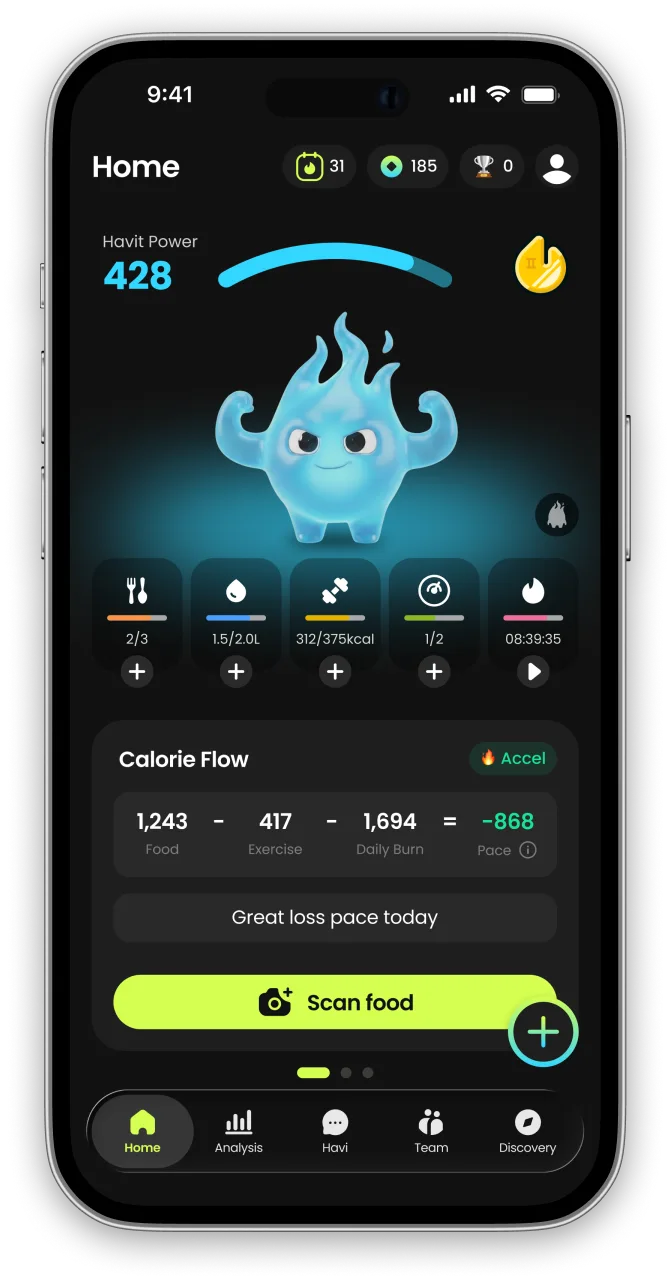
What is Havit?
Havit is an AI health companion for weight loss that protects muscle.
Unlike calorie-only trackers, Havit connects AI body-composition estimates, nutrition, hydration, sleep, steps, cycle, mood, and GLP-1 medication in one daily routine — so progress is measured by body composition, not just the number on the scale. Daily missions turn established behavior-change techniques into small repeatable actions, drawing on expertise from professionals formerly at Juvis Diet, one of Korea’s leading metabolic clinics.
In Havit’s own analysis of 1,090 GLP-1 users, people who logged consistently built stronger habits than the general user base. Read the GLP-1 Habit Report
Havit works with or without GLP-1 medication. It is a wellness app, not a medical device; body-composition results are estimates.

Continue in the App
Personalized wellness with your own data


References
- Consumer ECG Devices for Arrhythmia Detection: A Systematic Review of Accuracy and Clinical Utility — Heart Rhythm Society, 2025
- Limitations of Single-Lead Wearable ECG for Comprehensive Cardiac Assessment — Journal of the American College of Cardiology, 2024
- FDA Clearance Summary: Apple Watch AFib History Feature — U.S. Food and Drug Administration, 2024
- Clinical Outcomes Following Wearable-Detected Atrial Fibrillation: A Prospective Cohort Study — Journal of the American College of Cardiology, 2024


