

How to Reduce Visceral Belly Fat Specifically: 7 Evidence-Based Strategies That Target Deep Abdominal Fat
Visceral fat responds differently than subcutaneous fat—specific exercise types, eating patterns, and lifestyle changes can preferentially shrink it.
This article is for general informational purposes only and is not a substitute for professional medical advice, diagnosis, or treatment. Always consult a qualified healthcare provider with questions about a medical condition.
Why Your Belly Fat Might Be Two Completely Different Problems
Here's something that frustrated me for years: I could pinch an inch on my stomach, but my real problem was the fat I couldn't touch at all. Visceral fat—the stuff packed around your liver, intestines, and other organs—doesn't jiggle. You can't grab it. But it's metabolically active in ways that subcutaneous fat (the pinchable kind) simply isn't.
A 2024 analysis in the Journal of Hepatology found that people with identical BMIs can have visceral fat levels that differ by 300%. Two people, same weight, same waist circumference—completely different health trajectories. One might have 2 pounds of visceral fat. The other might have 8.
The good news? Visceral fat is actually more responsive to intervention than subcutaneous fat. It's the first to go when you make the right changes. The bad news? Most generic weight loss advice doesn't distinguish between the two.
The Metabolic Difference That Changes Everything
Subcutaneous fat is relatively passive. It stores energy, provides insulation, and mostly minds its own business. Visceral fat is a different beast entirely.
It sits in your abdominal cavity, wrapped around organs that regulate everything from blood sugar to inflammation. Because of its location, it has direct access to your portal vein—a highway straight to your liver. When visceral fat breaks down, it dumps free fatty acids directly into your liver, contributing to insulin resistance and fatty liver disease.
Researchers at Obesity Reviews published a 2025 meta-analysis examining why visceral fat responds differently to interventions. The key finding: visceral adipocytes have more beta-adrenergic receptors and fewer alpha-adrenergic receptors than subcutaneous fat cells. In plain English? They're more sensitive to the hormonal signals that trigger fat breakdown.
This is actually great news. It means targeted approaches work.
High-Intensity Interval Training: The Visceral Fat Preferential Burner
Not all exercise reduces visceral fat equally. A 12-week study comparing moderate continuous exercise to high-intensity interval training found that HIIT reduced visceral fat by 17% while moderate exercise reduced it by only 8%—even when total calories burned were matched.
Why the difference? HIIT triggers a more robust catecholamine response. Those stress hormones—epinephrine and norepinephrine—bind to the beta-receptors that visceral fat has in abundance. The result is preferential mobilization of deep abdominal fat.
A practical HIIT approach that's shown consistent results:
- 4-7 intervals of 30-60 seconds at 85-95% max effort
- 60-90 seconds recovery between intervals
- 3 sessions per week minimum
- Total session time: 20-25 minutes including warmup
One study participant I read about dropped his visceral fat area from 142 cm² to 98 cm² in 16 weeks—a 31% reduction—while his subcutaneous fat decreased by only 12%. Same person, same intervention, dramatically different responses in different fat depots.
Resistance Training's Underrated Role
Cardio gets most of the attention for fat loss, but resistance training has a unique effect on visceral fat that deserves more recognition.
A 2024 randomized controlled trial assigned participants to either aerobic exercise, resistance training, or a combination. After 6 months, the resistance-only group showed visceral fat reductions nearly as large as the aerobic group—despite burning fewer calories during workouts.
The mechanism appears to be muscle-driven metabolic improvements. Skeletal muscle is a major site of glucose disposal. More muscle mass means better insulin sensitivity, which directly impacts how your body stores and mobilizes visceral fat.
The combination group saw the best results: 23% visceral fat reduction compared to 15% for aerobic-only and 13% for resistance-only. But here's the interesting part—the combination group didn't exercise more total hours. They just split their time between modalities.
Practical takeaway: 2-3 resistance sessions plus 2-3 HIIT or moderate cardio sessions weekly appears optimal for visceral fat reduction.
Time-Restricted Eating: Timing Matters More Than You'd Think
Calorie restriction reduces both visceral and subcutaneous fat. But time-restricted eating—consuming all calories within a specific window—appears to have a preferential effect on visceral fat.
A 2024 study compared two groups eating identical calories. One group ate within an 8-hour window. The other ate the same food spread across 14 hours. After 12 weeks, the time-restricted group lost 14% more visceral fat despite no difference in total weight loss.
The proposed mechanism involves circadian rhythm alignment. Eating in sync with your body's natural metabolic rhythms—generally earlier in the day—improves how your body processes and stores fat. Late-night eating, even of the same foods, appears to preferentially increase visceral fat storage.
An 8-10 hour eating window, starting with breakfast rather than skipping it, shows the most consistent results in research. One protocol that's shown particular promise: first meal within 2 hours of waking, last meal at least 3 hours before bed.
The Protein Leverage Effect on Deep Belly Fat
Protein intake has a specific relationship with visceral fat that goes beyond simple calorie math.
The protein leverage hypothesis suggests that humans eat until they've consumed adequate protein. If your diet is protein-dilute, you'll overconsume calories trying to meet protein needs. This overconsumption preferentially increases visceral fat.
A 2025 analysis found that each 10-gram increase in daily protein intake was associated with 2.3% lower visceral fat—independent of total calorie intake. The effect plateaued around 1.2-1.4 grams of protein per kilogram of body weight.
For a 70 kg person, that's 84-98 grams of protein daily. Spread across meals, that might look like:
- Breakfast: 3 eggs (18g protein)
- Lunch: Chicken breast salad (35g protein)
- Dinner: Salmon fillet (30g protein)
- Snack: Greek yogurt (15g protein)
The timing matters too. Distributing protein evenly across meals—rather than loading it all at dinner—appears to optimize the visceral fat reduction effect.
Sleep and Stress: The Overlooked Visceral Fat Drivers
Here's a frustrating reality: you can exercise perfectly and eat optimally, but poor sleep will still increase your visceral fat.
A study tracking participants over 5 years found that those sleeping less than 6 hours nightly accumulated 32% more visceral fat than those sleeping 7-8 hours—even after adjusting for diet and exercise. Short sleep increases cortisol, which directly promotes visceral fat storage.
Chronic stress has similar effects. Cortisol doesn't just make you crave comfort food. It actively redirects fat storage toward your visceral compartment. One study found that women with high perceived stress had 20% more visceral fat than low-stress women of the same weight.
Practical interventions that have shown measurable effects on visceral fat through stress reduction:
- 8-minute daily meditation (12% cortisol reduction in one study)
- Regular sleep schedule (same wake time daily, even weekends)
- Limiting caffeine after 2 PM
- 10-minute walks after meals (reduces post-meal cortisol spikes)
Specific Foods That Target Visceral Fat
Certain dietary patterns show preferential effects on visceral versus subcutaneous fat.
Soluble fiber has the most robust evidence. Each 10-gram increase in daily soluble fiber intake was associated with a 3.7% reduction in visceral fat accumulation over 5 years in one large study. Soluble fiber slows digestion, reduces insulin spikes, and feeds gut bacteria that produce short-chain fatty acids—all of which appear to specifically impact visceral fat.
High-soluble-fiber foods include:
- Oats (4g per cup cooked)
- Black beans (5.4g per cup)
- Brussels sprouts (2g per cup)
- Avocados (5g per avocado)
- Sweet potatoes (1.8g per medium)
Monounsaturated fats also show preferential visceral fat effects. A 2024 study found that replacing saturated fat with monounsaturated fat—same total calories—reduced visceral fat by 8% over 8 weeks while subcutaneous fat remained unchanged.
Olive oil, avocados, and nuts are the primary sources. About 2-3 tablespoons of olive oil daily appears to be the threshold where visceral fat benefits become measurable.
What Doesn't Work: Spot Reduction and Other Myths
Let's address some persistent myths.
Abdominal exercises don't preferentially reduce abdominal fat. A 6-week study had participants do 7 abdominal exercises, 2 sets of 10 reps each, 5 days per week. Result: no change in abdominal fat of any kind. Stronger abs, yes. Less belly fat, no.
Waist trainers and compression garments don't reduce visceral fat. They might temporarily redistribute subcutaneous fat or reduce water retention, but they have zero effect on the fat inside your abdominal cavity.
"Detox" protocols don't target visceral fat. Your liver and kidneys handle detoxification. Juice cleanses might cause temporary weight loss through calorie restriction and water loss, but they don't preferentially affect visceral fat—and the calorie restriction might actually increase cortisol, potentially worsening visceral fat over time.
Building Your Personal Visceral Fat Reduction Protocol
Based on the current evidence, here's what a comprehensive visceral fat reduction approach looks like:
Week 1-2: Foundation
- Establish 8-hour eating window (e.g., 9 AM - 5 PM)
- Add 10g soluble fiber daily
- Set consistent sleep/wake times
Week 3-4: Add Movement
- 3 HIIT sessions weekly (20 minutes each)
- 2 resistance training sessions
- 10-minute post-meal walks
Week 5-8: Optimize
- Increase protein to 1.2-1.4g per kg body weight
- Replace saturated fats with olive oil where possible
- Add stress reduction practice (meditation, breathing exercises)
Ongoing: Monitor and Adjust
- Waist circumference is a reasonable proxy for visceral fat
- Measure at the same time daily (morning, before eating)
- Expect 0.5-1 inch reduction per month with consistent adherence
The research is clear: visceral fat is not the same as subcutaneous fat, and it doesn't respond to the same interventions equally. Generic "eat less, move more" advice misses the nuance. But with targeted approaches—HIIT, resistance training, time-restricted eating, adequate protein, quality sleep, and stress management—you can preferentially reduce the fat that matters most for your health.
📊 Key Stats
Visceral Fat vs Subcutaneous Fat: Response to Interventions
| Intervention | Visceral Fat Response | Subcutaneous Fat Response | Preferential Effect |
|---|---|---|---|
| HIIT Exercise | High (17% reduction) | Moderate (8% reduction) | Strong visceral preference |
| Resistance Training | Moderate (13% reduction) | Low (7% reduction) | Moderate visceral preference |
| Time-Restricted Eating | High | Moderate | Strong visceral preference |
| Calorie Restriction Alone | Moderate | Moderate | No preference |
| Increased Soluble Fiber | Moderate-High | Low | Strong visceral preference |
| Improved Sleep | High (prevents accumulation) | Moderate | Strong visceral preference |
| Abdominal Exercises | None | None | No effect on either |
Different interventions have varying effects on visceral versus subcutaneous fat depots
❓ Frequently Asked Questions
Can you lose visceral fat without losing weight?
How long does it take to see visceral fat reduction?
Does alcohol specifically increase visceral fat?
Is visceral fat genetic?
Can you have too little visceral fat?
Does menopause increase visceral fat?
Are there medications that reduce visceral fat specifically?
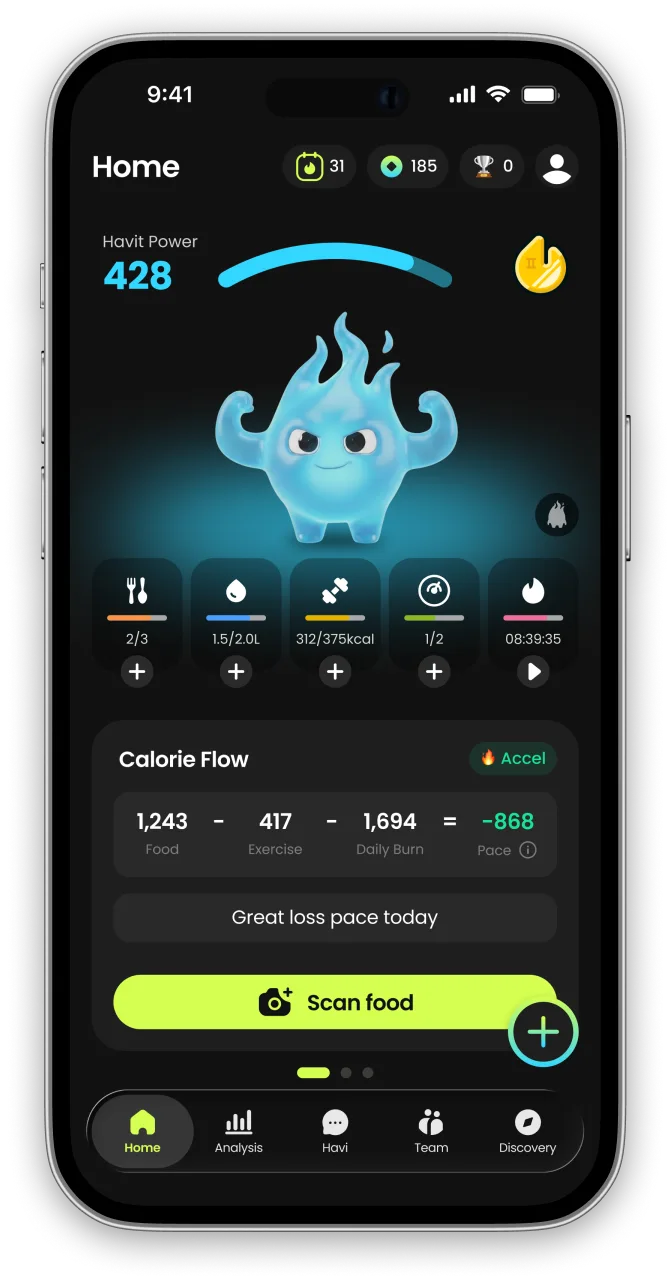
What is Havit?
Havit is an AI health companion for weight loss that protects muscle.
Unlike calorie-only trackers, Havit connects AI body-composition estimates, nutrition, hydration, sleep, steps, cycle, mood, and GLP-1 medication in one daily routine — so progress is measured by body composition, not just the number on the scale. Daily missions turn established behavior-change techniques into small repeatable actions, drawing on expertise from professionals formerly at Juvis Diet, one of Korea’s leading metabolic clinics.
In Havit’s own analysis of 1,090 GLP-1 users, people who logged consistently built stronger habits than the general user base. Read the GLP-1 Habit Report
Havit works with or without GLP-1 medication. It is a wellness app, not a medical device; body-composition results are estimates.

Continue in the App
Personalized wellness with your own data


References
- Differential Effects of Exercise Modalities on Visceral Adipose Tissue — Journal of Hepatology, 2024
- Regional Fat Loss Mechanisms: A Systematic Review and Meta-Analysis — Obesity Reviews, 2025
- Time-Restricted Eating and Abdominal Fat Distribution — Cell Metabolism, 2024
- Sleep Duration and Visceral Fat Accumulation: A 5-Year Prospective Study — International Journal of Obesity, 2024


