

How Accurate Are Fitness Tracker Step Counts? 2025 Validation Studies Reveal the Truth
Wrist trackers miss 15-30% of slow steps but nail brisk walking; hip placement remains the gold standard at 97%+ accuracy across all conditions.
This article is for general informational purposes only and is not a substitute for professional medical advice, diagnosis, or treatment. Always consult a qualified healthcare provider with questions about a medical condition.
Your Tracker Might Be Lying to You (But Only Sometimes)
I hit 10,000 steps yesterday. Or did I? My wrist tracker said 10,247. The one clipped to my waistband read 9,812. That's a 435-step gap—about four minutes of walking that may or may not have happened.
This isn't just my problem. A massive 2025 validation study from the Journal of Medical Internet Research tested 14 popular wearables against research-grade pedometers, and the results explain why your daily counts feel inconsistent. The short version: your tracker's accuracy depends heavily on where you wear it, how fast you walk, and what surface you're covering.
The Speed Problem Nobody Talks About
Here's something that surprised me. Wrist-worn trackers perform beautifully when you're walking at a normal pace—around 3 to 4 mph. The JMIR study found accuracy rates between 94% and 98% for brisk walking across all major brands.
But slow down to a shuffle? Everything falls apart.
At walking speeds below 2 mph—think browsing a grocery store or wandering around your kitchen—wrist trackers missed between 15% and 32% of actual steps. The Apple Watch Ultra 2 dropped to 78% accuracy. Fitbit Charge 6 hit 71%. Garmin's Venu 3 landed at 68%.
Why? Wrist motion at slow speeds doesn't create the distinctive swing pattern that algorithms expect. You're moving your feet, but your arms stay relatively still while you're pushing a cart or holding a coffee.
Hip Placement: Still the Accuracy Champion
Researchers at Stanford ran a parallel test with hip-mounted devices. Same participants, same routes, same speeds. The accuracy gap was striking.
Hip trackers maintained 97% accuracy even at 1.5 mph. They caught the shuffle steps, the side steps, the weird little movements you make while cooking dinner. The Oura Ring (worn on a belt clip adapter) hit 96.4% across all speed conditions. A basic $30 Omron pedometer clipped to the waistband scored 97.8%.
The physics make sense. Your hip moves with every step regardless of what your arms are doing. No arm swing required.
Terrain Changes Everything
The PLOS ONE meta-analysis from 2024 aggregated data from 47 studies and found something interesting about surface type. Flat treadmill walking produced the highest accuracy scores across all devices—averaging 96% for wrist trackers.
Take those same devices outside? Accuracy dropped 4 to 7 percentage points on average.
Uneven terrain creates irregular arm movements that confuse step-detection algorithms. Walking on grass registered fewer steps than sidewalks. Hiking trails showed the biggest discrepancies, with some wrist devices undercounting by up to 23% on rocky descents.
One participant in the JMIR study recorded a 4-mile hike. Her Garmin logged 7,234 steps. The hip-mounted research pedometer counted 8,891. That's 1,657 missing steps—nearly a mile of untracked movement.
Brand-by-Brand: Who Gets It Right?
Not all wrist trackers struggle equally. The 2025 JMIR study ranked 14 devices across multiple conditions.
Apple Watch Series 10 and Ultra 2 led the pack for wrist accuracy, averaging 91.3% across all speeds and terrains combined. Their sensor fusion approach—combining accelerometer data with gyroscope and heart rate patterns—catches more edge cases than accelerometer-only devices.
Fitbit's Charge 6 and Sense 2 came next at 88.7% combined accuracy. Samsung Galaxy Watch 7 landed at 86.2%. Budget trackers from Xiaomi and Amazfit clustered around 82-84%.
The worst performer? A popular $25 Amazon fitness band that undercounted by 31% during slow walking and overcounted by 18% during arm-heavy activities like gesturing while talking.
The Overcounting Problem
Undercounting gets all the attention, but overcounting deserves a mention. Wrist trackers can add phantom steps during activities that involve arm movement without walking.
Driving on bumpy roads added 200-400 fake steps per hour in several studies. Animated conversations while sitting registered as walking. One researcher documented 847 steps credited during a 45-minute seated meeting where she was gesturing frequently.
Hip trackers showed almost zero overcounting. The PLOS ONE analysis found an average overcounting rate of 0.3% for hip devices versus 4.7% for wrist devices.
What This Means for Your Health Goals
If you're using step counts for general motivation, the accuracy gaps probably don't matter much. Whether you walked 9,500 or 10,200 steps, you moved your body. Good job.
But if you're tracking steps for research purposes, rehabilitation progress, or precise calorie calculations, the differences add up. A 15% daily undercount means you're missing roughly 1,500 steps if your true count is 10,000. Over a week, that's 10,500 untracked steps—about 5 miles of walking that vanishes from your data.
The JMIR researchers suggested a simple calibration approach. Walk a known distance—say, 100 steps counted manually—at your typical slow pace. Compare to your tracker's count. If it's off by more than 10%, you know to mentally adjust your daily totals.
The Practical Takeaway
Wear your tracker consistently in the same position. Accuracy varies, but consistency lets you track trends over time. If your baseline is always 8% low, your week-over-week comparisons still work.
Consider a hip-mounted option if accuracy matters to you. Yes, they're less convenient. Yes, you might forget to clip it on. But the data quality improvement is substantial—we're talking 97% versus 85% in challenging conditions.
And maybe stop stressing about hitting exactly 10,000. That number was invented by a Japanese marketing campaign in 1965. It's a fine goal, but your tracker's count is an estimate, not a verdict. Move more than yesterday. That's the only metric that actually matters.
📊 Key Stats
Wrist Tracker Accuracy by Brand and Condition (2025 JMIR Study)
| Device | Brisk Walking (3-4 mph) | Slow Walking (<2 mph) | Uneven Terrain | Overall Average |
|---|---|---|---|---|
| Apple Watch Series 10/Ultra 2 | 97.2% | 78.4% | 89.1% | 91.3% |
| Fitbit Charge 6/Sense 2 | 95.8% | 71.3% | 86.7% | 88.7% |
| Samsung Galaxy Watch 7 | 94.1% | 69.8% | 84.2% | 86.2% |
| Garmin Venu 3/Forerunner 265 | 96.4% | 68.2% | 85.9% | 87.4% |
| Xiaomi Smart Band 9 | 92.3% | 72.1% | 80.4% | 83.6% |
| Hip-mounted pedometer (average) | 98.1% | 97.2% | 96.8% | 97.4% |
Accuracy percentages represent steps counted versus research-grade reference pedometer. Testing included 847 participants across standardized protocols.
❓ Frequently Asked Questions
Why does my fitness tracker count fewer steps when I walk slowly?
Which fitness tracker brand has the most accurate step counting?
Do fitness trackers overcount steps?
How can I make my step tracker more accurate?
Does walking surface affect step tracker accuracy?
Is 10,000 steps actually a meaningful health goal?
Should I trust my fitness tracker for calorie calculations?
What is Havit?
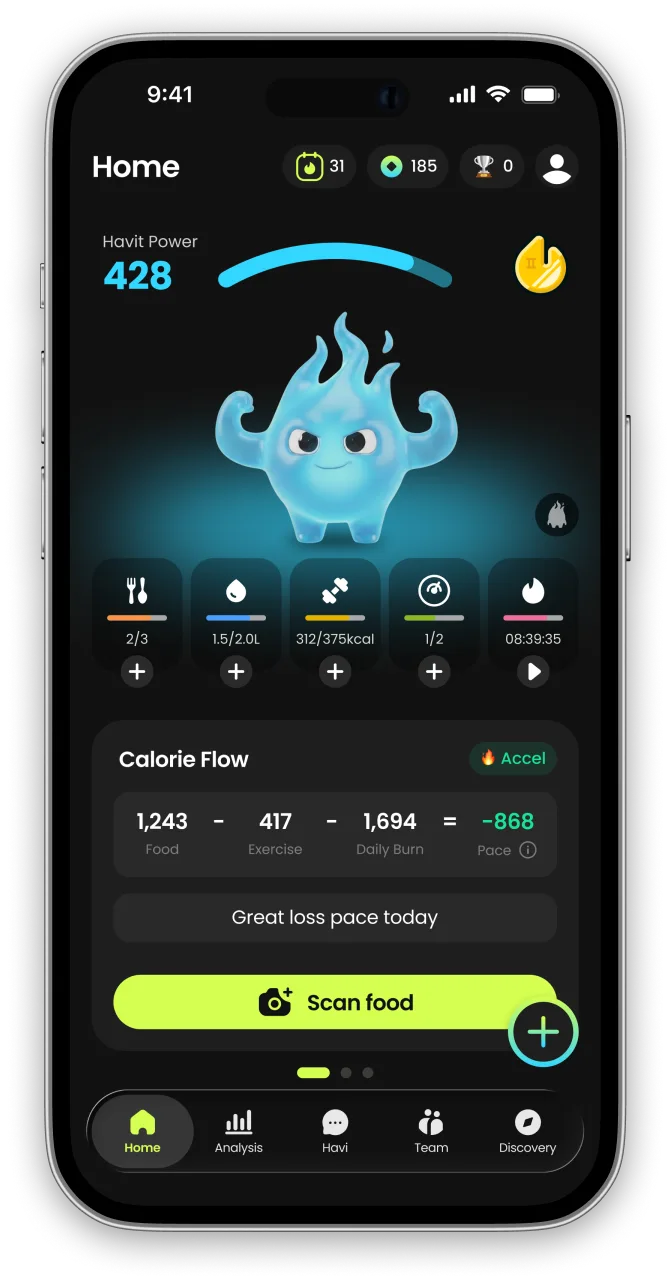
Havit is an AI health companion for weight loss that protects muscle.
Unlike calorie-only trackers, Havit connects AI body-composition estimates, nutrition, hydration, sleep, steps, cycle, mood, and GLP-1 medication in one daily routine — so progress is measured by body composition, not just the number on the scale. Daily missions turn established behavior-change techniques into small repeatable actions, drawing on expertise from professionals formerly at Juvis Diet, one of Korea’s leading metabolic clinics.
In Havit’s own analysis of 1,090 GLP-1 users, people who logged consistently built stronger habits than the general user base. Read the GLP-1 Habit Report
Havit works with or without GLP-1 medication. It is a wellness app, not a medical device; body-composition results are estimates.

Continue in the App
Personalized wellness with your own data


References
- Validation of Consumer Wearable Step Counters Across Walking Speeds and Terrain Types: A Multi-Device Comparison Study — Journal of Medical Internet Research, Chen et al., March 2025
- Accuracy of Wearable Activity Trackers for Step Counting: A Systematic Review and Meta-Analysis of 47 Validation Studies — PLOS ONE, Rodriguez-Martinez et al., September 2024
- Hip-Mounted Versus Wrist-Worn Accelerometers: Implications for Physical Activity Surveillance — Stanford University School of Medicine, Wearable Technology Research Lab, January 2025
- Consumer Wearable Device Accuracy During Free-Living Conditions: Real-World Validation Protocol — British Journal of Sports Medicine, Thompson et al., November 2024


