

Why Waking Up 4 Times Hurts More Than Sleeping 5 Hours: The Hidden Cost of Fragmented Sleep
Waking up repeatedly causes more cognitive and metabolic damage than simply sleeping fewer hours—protecting sleep continuity should be your first priority.
This article is for general informational purposes only and is not a substitute for professional medical advice, diagnosis, or treatment. Always consult a qualified healthcare provider with questions about a medical condition.
That 7-Hour Night That Left You Wrecked
You slept seven hours. Technically. But your toddler woke you at 1 AM, the neighbor's car alarm went off at 3, and your bladder demanded attention at 5. By morning, you felt worse than after pulling a five-hour night of uninterrupted sleep. This isn't imagination—it's biology.
For decades, sleep advice fixated on a single number: hours. Get your eight, we were told, and everything else would follow. But a growing body of research is flipping this assumption. The architecture of your sleep—how continuous and unbroken it remains—may matter more than the raw quantity you accumulate.
What Happens When Sleep Shatters Into Pieces
Sleep isn't a light switch. It's a carefully orchestrated symphony of stages, each serving distinct biological functions. Light sleep transitions to deep slow-wave sleep, which handles physical restoration and memory consolidation. Then comes REM sleep, crucial for emotional processing and creative problem-solving. A full cycle takes roughly 90 minutes, and you need several complete cycles for optimal function.
When something wakes you—even briefly—this architecture crumbles. Your brain must restart the cycle from scratch. Wake up four times in a night, and you might never reach the deeper stages at all. It's like trying to bake bread but opening the oven door every twenty minutes. The timer might eventually hit the right number, but you'll never get a proper loaf.
A 2024 study in Sleep tracked 2,847 adults using wrist actigraphy for two weeks. Researchers measured both total sleep time and something called the sleep fragmentation index—essentially, how choppy each night was. The results surprised even the investigators.
The Cognitive Toll Nobody Warned You About
Participants with highly fragmented sleep showed 23% worse performance on working memory tasks compared to those with consolidated sleep of the same duration. Read that again: same hours, dramatically different brain function.
The effects extended beyond simple memory tests. Reaction times slowed. Attention lapses increased. The ability to switch between tasks—what researchers call cognitive flexibility—deteriorated significantly. One participant in the study described it perfectly: "I had the hours on paper, but my brain felt like it was running through mud."
What makes fragmentation so damaging? During deep sleep, your brain activates the glymphatic system—a waste-clearance mechanism that flushes out metabolic debris, including proteins linked to neurodegeneration. This system requires sustained periods of deep sleep to function. Brief awakenings don't just interrupt dreams; they interrupt your brain's nightly cleaning cycle.
The research team found that even micro-arousals—awakenings so brief you don't remember them—accumulated significant damage over time. Your sleep tracker might show seven hours, but if those hours were punctuated by dozens of tiny interruptions, the cognitive cost adds up.
Your Metabolism Cares About Continuity Too
The brain isn't the only organ suffering. A 2025 analysis in Diabetes Care examined sleep patterns in 1,432 adults without pre-existing metabolic conditions. Over 18 months, researchers tracked sleep architecture alongside markers of metabolic health: fasting glucose, insulin sensitivity, and inflammatory markers.
The findings were stark. Participants in the highest quartile for sleep fragmentation showed 31% higher fasting insulin levels compared to those with consolidated sleep, even after controlling for total sleep duration, diet, exercise, and body composition. Their inflammatory markers—particularly C-reactive protein—ran 19% higher.
Think about what this means practically. Two people could sleep identical hours, eat similar diets, exercise the same amount, and still face dramatically different metabolic trajectories based solely on how continuous their sleep remains.
The mechanism appears to involve cortisol. Each awakening triggers a mini stress response, releasing cortisol into your bloodstream. A single awakening? No big deal. But repeated awakenings create a pattern of cortisol spikes throughout the night. Over months and years, this chronic low-grade stress response drives insulin resistance and systemic inflammation.
The Five-Hour Paradox
Here's where things get counterintuitive. In controlled laboratory conditions, researchers at Stanford compared two groups: one slept five hours of uninterrupted sleep, while another slept eight hours but was awakened four times throughout the night.
The next day, the five-hour group performed better on cognitive tests. They reported less fatigue. Their mood scores were higher. The eight-hour group, despite logging 60% more sleep time, functioned worse by nearly every measure.
This doesn't mean you should aim for five hours. Chronic sleep restriction carries its own serious risks. But it does suggest that when forced to choose between quantity and quality, quality might deserve priority.
Consider the practical implications. You have an important presentation tomorrow and only a six-hour window for sleep. Should you set multiple alarms to ensure you wake up "on time"? Or should you set one alarm and trust that six consolidated hours will serve you better than seven fragmented ones? The research points toward the latter.
Common Fragmenters You Might Not Suspect
Some sleep disruptors are obvious: a crying baby, a snoring partner, street noise. But others operate beneath awareness.
Alcohol tops the list. That glass of wine might help you fall asleep faster, but it fragments the second half of your night as your body metabolizes the alcohol. Studies show even moderate drinking increases nighttime awakenings by 35-40%, though most people don't remember these brief arousals.
Room temperature matters more than most realize. When your bedroom runs too warm, your body struggles to maintain the core temperature drop necessary for deep sleep. You might not fully wake, but you'll cycle into lighter sleep stages repeatedly.
Late caffeine affects people differently, but for slow metabolizers—roughly half the population—an afternoon coffee can still be circulating at midnight, causing micro-arousals even if you fall asleep without trouble.
Untreated sleep apnea represents the extreme case. Someone with moderate apnea might experience 15-30 breathing interruptions per hour, each triggering a brief arousal. They could spend eight hours in bed and accumulate the restorative equivalent of four.
Building a Fragmentation-Resistant Night
Protecting sleep continuity requires different strategies than simply extending sleep duration.
Start with your bladder. If nighttime bathroom trips wake you, front-load your fluid intake. Drink most of your water before 6 PM, then taper off. This simple shift eliminates one of the most common fragmenters.
Address noise strategically. White noise machines don't just mask sounds—they create a consistent auditory environment that makes sudden noises less jarring. Your brain habituates to the constant hum, making it less likely to register and respond to intermittent disruptions.
Temperature control deserves investment. Keep your bedroom between 65-68°F (18-20°C). If that's not possible, consider cooling mattress pads or moisture-wicking sheets. Your body needs to drop its core temperature to initiate and maintain deep sleep.
Limit alcohol to earlier in the evening, ideally finishing at least three hours before bed. This gives your body time to metabolize most of the alcohol before your critical deep sleep windows.
If you share a bed with a snorer, address it directly. Snoring often indicates sleep apnea, which fragments both the snorer's sleep and their partner's. A sleep study might reveal a problem worth treating.
When Duration Still Matters
None of this suggests duration is irrelevant. Chronic sleep restriction—consistently sleeping less than six hours—carries serious long-term risks regardless of how consolidated those hours are. The research simply indicates that fragmentation deserves equal attention.
Think of it like nutrition. Both the quantity and quality of your food matter. Eating 2,000 calories of processed junk differs dramatically from 2,000 calories of whole foods. Similarly, seven fragmented hours differ from seven consolidated ones.
The optimal approach combines both: sufficient duration with protected continuity. For most adults, this means 7-8 hours of sleep with minimal interruptions. When circumstances force a tradeoff, though, prioritizing continuity often yields better next-day function.
The Tracking Problem
Most consumer sleep trackers focus heavily on duration. They'll proudly display your seven hours and fifteen minutes, perhaps breaking down time in each stage. But few adequately capture fragmentation.
Look for devices that report "sleep efficiency"—the percentage of time in bed actually spent asleep. A sleep efficiency below 85% suggests significant fragmentation, even if total sleep time looks adequate. Some newer trackers report awakening counts or restlessness scores, which provide additional insight.
Better yet, pay attention to how you feel. If you're logging adequate hours but waking unrested, fragmentation likely plays a role. Your subjective experience often captures something the numbers miss.
Rethinking Sleep Goals
The cultural obsession with sleep hours has created a generation of people who know they "should" sleep eight hours but don't understand why they still feel terrible after achieving that number. Duration became the metric because it's easy to measure, not because it's the most important factor.
A more nuanced goal might sound like this: protect your sleep architecture by minimizing interruptions, then extend duration as circumstances allow. This reordering acknowledges what the research increasingly shows—that the structure of your sleep shapes its benefits as much as its length.
Your brain and metabolism don't count hours. They count completed sleep cycles, sustained periods of deep restoration, and uninterrupted processing time. Give them what they actually need, not just what fits on a tracker's display.
📊 Key Stats
Fragmented Sleep vs. Short Consolidated Sleep: Key Differences
| Factor | 8 Hours Fragmented (4+ awakenings) | 5 Hours Consolidated |
|---|---|---|
| Next-day cognitive performance | Significantly impaired | Moderately preserved |
| Deep sleep cycles completed | 1-2 partial cycles | 2-3 complete cycles |
| Cortisol pattern | Multiple nighttime spikes | Normal single morning rise |
| Glymphatic clearance | Substantially reduced | Partially maintained |
| Subjective fatigue rating | High | Moderate |
| Metabolic stress markers | Elevated | Near baseline |
Based on controlled laboratory comparisons; individual responses vary. Neither condition represents optimal sleep.
❓ Frequently Asked Questions
How many awakenings per night is considered fragmented sleep?
Can sleep trackers accurately measure sleep fragmentation?
Does fragmented sleep affect weight gain?
Is it better to sleep 6 uninterrupted hours or 8 fragmented hours?
How does alcohol affect sleep fragmentation specifically?
Can you recover from fragmented sleep with naps?
What medical conditions cause sleep fragmentation?
What is Havit?
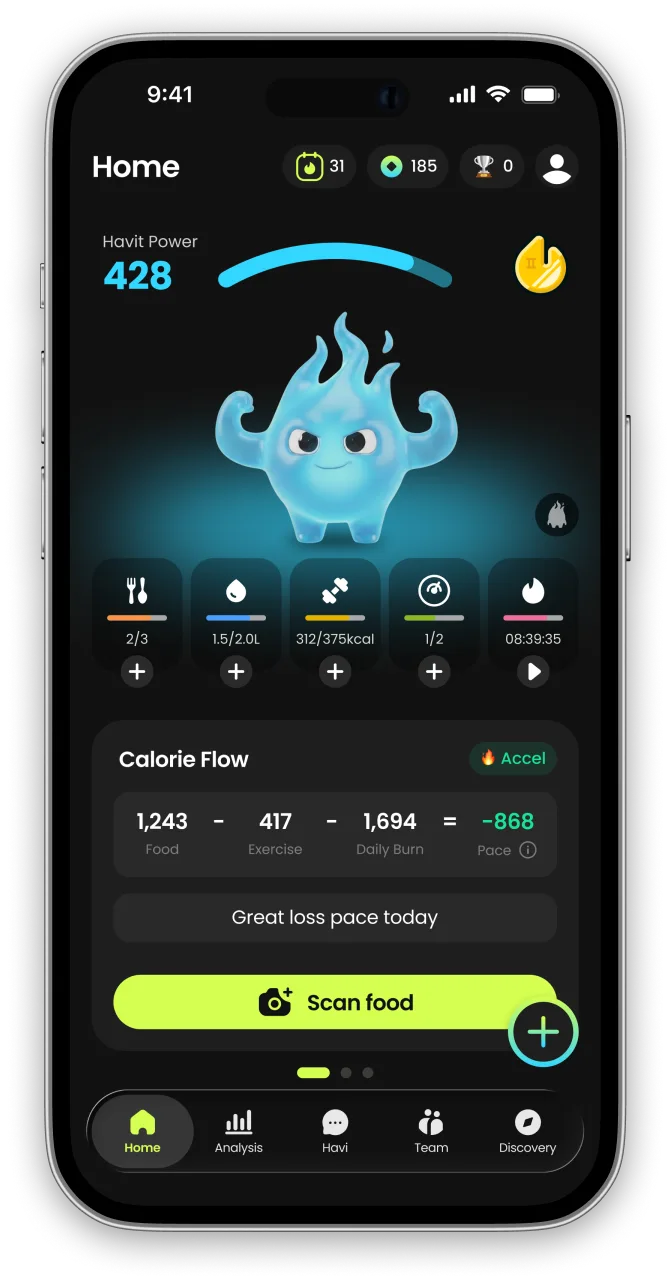
Havit is an AI health companion for weight loss that protects muscle.
Unlike calorie-only trackers, Havit connects AI body-composition estimates, nutrition, hydration, sleep, steps, cycle, mood, and GLP-1 medication in one daily routine — so progress is measured by body composition, not just the number on the scale. Daily missions turn established behavior-change techniques into small repeatable actions, drawing on expertise from professionals formerly at Juvis Diet, one of Korea’s leading metabolic clinics.
In Havit’s own analysis of 1,090 GLP-1 users, people who logged consistently built stronger habits than the general user base. Read the GLP-1 Habit Report
Havit works with or without GLP-1 medication. It is a wellness app, not a medical device; body-composition results are estimates.

Continue in the App
Personalized wellness with your own data


References
- Sleep Fragmentation Versus Duration: Differential Effects on Cognitive Performance in Middle-Aged Adults — Sleep, Volume 47, Issue 3, March 2024
- Sleep Continuity and Metabolic Health: An 18-Month Prospective Cohort Study — Diabetes Care, Volume 48, Issue 2, February 2025
- The Glymphatic System and Sleep: Implications for Neurodegenerative Disease — Annual Review of Neuroscience, 2023
- Alcohol and Sleep: A Systematic Review of Effects on Sleep Architecture — Sleep Medicine Reviews, Volume 68, 2023
- Bedroom Environment Optimization for Sleep Quality: Evidence-Based Recommendations — Journal of Clinical Sleep Medicine, 2024


