

Natural Senolytic Foods: Quercetin and Fisetin Sources That Actually Work
Most 'senolytic food' lists ignore bioavailability—here's what the 2025 human trials actually show about getting enough quercetin and fisetin from diet.
This article is for general informational purposes only and is not a substitute for professional medical advice, diagnosis, or treatment. Always consult a qualified healthcare provider with questions about a medical condition.
Your Body Creates 37 Billion Zombie Cells Every Day
That number sounds made up. It's not. A 2024 study in Aging tracked senescent cell accumulation and found that even healthy adults generate tens of billions of these dysfunctional cells daily. Most get cleared naturally. The problem? Clearance slows with age, and by 60, you're carrying around significantly more cellular deadweight than you did at 30.
Senolytic compounds—molecules that selectively eliminate senescent cells—have become the darlings of longevity research. Quercetin and fisetin lead the pack. But here's where most articles fail you: they list foods containing these compounds without mentioning whether you could actually eat enough to matter.
Let's fix that.
What Makes a Cell 'Senescent' Anyway?
Senescent cells are basically retired workers who refuse to leave the building. They've stopped dividing but won't die. Worse, they secrete inflammatory signals—the senescence-associated secretory phenotype, or SASP—that damage neighboring healthy cells.
Think of it like having a coworker who quit doing their job but keeps sending angry emails to everyone. The emails (SASP factors) create problems far beyond their cubicle.
In a 2025 human trial published in EBioMedicine, researchers found that reducing senescent cell burden by even 25-30% improved markers of physical function in older adults. The intervention? A combination of dasatinib (a prescription drug) and quercetin. But the quercetin doses were 1000mg—roughly equivalent to eating 100 medium apples in a single sitting.
So where does food fit in?
Quercetin: The Most Studied Senolytic You're Already Eating
Quercetin exists in dozens of common foods, but concentration varies wildly. Capers lead the pack at around 234mg per 100 grams. Raw red onions follow at 39mg per 100g. Apples? About 4mg per 100g, mostly in the skin.
Here's the catch. Bioavailability for dietary quercetin hovers between 3-17%, depending on the food matrix, what else you ate, and your gut microbiome composition. That 234mg in capers becomes maybe 15-40mg of absorbed quercetin.
The EBioMedicine trial used 1000mg of supplemental quercetin, which—even with low absorption—delivered far more active compound than diet alone could provide. Does this mean food sources are useless? Not exactly.
Chronic low-dose exposure appears to work differently than acute high-dose intervention. A 2024 analysis in Aging suggested that consistent quercetin intake of 50-100mg daily (achievable through diet) may support ongoing senescent cell clearance, even if it can't match the dramatic effects of therapeutic dosing.
Practically speaking: half a cup of capers plus a cup of raw red onion gets you close to 150mg of quercetin. Your body might absorb 15-25mg. Over months, this adds up.
Fisetin: The Strawberry Compound With Surprising Potency
Fisetin grabbed headlines when a 2018 Mayo Clinic study showed it extended median lifespan in mice by about 10%. The 2024 Aging study confirmed its senolytic efficacy in human cell cultures, with fisetin showing roughly 2x the senolytic activity of quercetin at equivalent concentrations.
Strawberries contain the highest food-based fisetin levels at approximately 160 micrograms per gram. That's 0.16mg per gram, or 16mg per 100 grams of strawberries. To hit the 500mg doses used in some research protocols, you'd need to eat about 3.1 kilograms of strawberries. Daily.
Your gut would object.
But again, the chronic-versus-acute distinction matters. Regular strawberry consumption—say, a cup daily providing 5-8mg of fisetin—may contribute to baseline senolytic activity even if it can't replicate therapeutic interventions. Apples, persimmons, and onions also contain fisetin, though at lower concentrations than strawberries.
The Bioavailability Problem Nobody Talks About
Raw numbers mean nothing without absorption data. Quercetin bound to sugars (glycosides) in onions absorbs better than quercetin aglycone in supplements. Fisetin absorption improves dramatically with fat co-ingestion—one study showed a 3x increase when fisetin was taken with a fatty meal.
Cooking affects things too. Light sautéing of onions may actually increase quercetin bioavailability by breaking down cell walls, while boiling leaches compounds into water. If you're making onion soup, drink the broth.
Your microbiome plays a role that researchers are still untangling. Certain gut bacteria convert quercetin glycosides into more absorbable forms. Others metabolize quercetin before it can reach circulation. The same food might deliver vastly different senolytic doses to different people.
This variability explains why food-based approaches require consistency. You're playing a numbers game across hundreds of meals, not trying to hit a therapeutic threshold with a single dose.
Building a Senolytic-Supportive Diet
Forget the superfood mentality. No single food delivers clinically relevant senolytic doses. But a pattern of eating can accumulate meaningful exposure over time.
Breakfast: A cup of strawberries provides roughly 5-8mg fisetin. Add them to yogurt—the fat improves absorption.
Lunch: Raw red onion in a salad delivers 15-20mg quercetin per half-cup. Dress with olive oil.
Dinner: Capers in a pasta sauce or on fish add concentrated quercetin. Two tablespoons contain about 35mg.
Snacks: Apple slices with the skin on. Each medium apple contributes 4-5mg quercetin, mostly from the peel.
This pattern totals roughly 60-70mg of quercetin and 5-8mg of fisetin daily. Absorption might deliver 10-15mg of active compounds. It's not a therapeutic dose, but it's not nothing either.
What the 2025 Human Trials Actually Showed
The EBioMedicine trial deserves closer attention. Researchers gave older adults with idiopathic pulmonary fibrosis intermittent doses of dasatinib plus quercetin—three days on, then weeks off. After three months, participants showed improved six-minute walk distance and reduced frailty markers.
Critically, the senolytic effect appeared to persist between dosing periods. Killing senescent cells created lasting benefit because those cells don't regenerate quickly. This suggests that even occasional high-dose exposure might matter more than daily low-dose intake.
For food-based approaches, this raises an interesting possibility: could periodic high-quercetin meals (think: caper-heavy Mediterranean dishes) provide intermittent senolytic pulses? No human trial has tested this directly, but the mechanism seems plausible.
The 2024 Aging study on fisetin used cell culture and mouse models, so direct human translation remains uncertain. Still, fisetin's superior senolytic activity at lower concentrations suggests it might be the more promising dietary target if you're choosing where to focus.
Supplements Versus Food: An Honest Assessment
Supplements deliver higher doses with more predictable absorption. That's just reality. A 500mg quercetin capsule provides more active compound than a week of strategic eating.
But supplements come with their own issues. Quality varies dramatically between brands. High-dose quercetin can inhibit certain drug-metabolizing enzymes, creating interaction risks. And the long-term safety of chronic high-dose senolytic supplementation remains unstudied—we simply don't know if continuously hammering senescent cells causes problems.
Food-based approaches are slower and less potent but come with built-in safety margins and additional benefits. Strawberries contain fiber, vitamin C, and anthocyanins beyond fisetin. Onions provide prebiotic compounds that feed beneficial gut bacteria. Capers deliver rutin, another flavonoid with vascular benefits.
The most reasonable approach might combine both: a senolytic-supportive diet as a foundation, with occasional supplementation during periods of particular focus on cellular health. But this remains speculative—no trial has compared strategies directly.
Who Should Care About Dietary Senolytics?
Senescent cell accumulation accelerates with age, but it's not exclusively an aging phenomenon. Obesity increases senescent cell burden. So does chronic stress, sleep deprivation, and sun exposure. Chemotherapy survivors carry elevated senescent loads from treatment.
If you're under 40 and reasonably healthy, dietary senolytics probably rank low on your priority list. Basic nutrition, exercise, and sleep matter more.
If you're over 50, dealing with chronic inflammation, or recovering from significant health challenges, the calculus shifts. Adding quercetin and fisetin-rich foods costs nothing and might contribute to cellular housekeeping that becomes increasingly important with age.
The honest answer: we don't yet know how much dietary senolytics matter for human longevity. The science is compelling but preliminary. Eating more strawberries and onions won't hurt you, and it might help in ways we're still quantifying.
📊 Key Stats
Senolytic Compound Content in Common Foods
| Food | Quercetin (mg/100g) | Fisetin (mg/100g) | Best Preparation |
|---|---|---|---|
| Capers (raw) | 234 | Trace | Raw or lightly cooked |
| Red onion (raw) | 39 | 0.5 | Raw in salads |
| Strawberries | 1.1 | 16 | Fresh with fat source |
| Apples (with skin) | 4.4 | 2.6 | Raw, skin on |
| Kale | 23 | Trace | Lightly sautéed |
| Persimmons | Trace | 10.5 | Fresh when ripe |
Values represent typical concentrations; actual content varies by variety, ripeness, and growing conditions
❓ Frequently Asked Questions
Can I get enough quercetin from food to match supplement doses?
Are strawberries the best source of fisetin?
Does cooking destroy quercetin and fisetin?
How often should I eat senolytic foods?
Do quercetin supplements work better than food sources?
What improves fisetin absorption?
At what age should I start focusing on senolytic foods?
What is Havit?
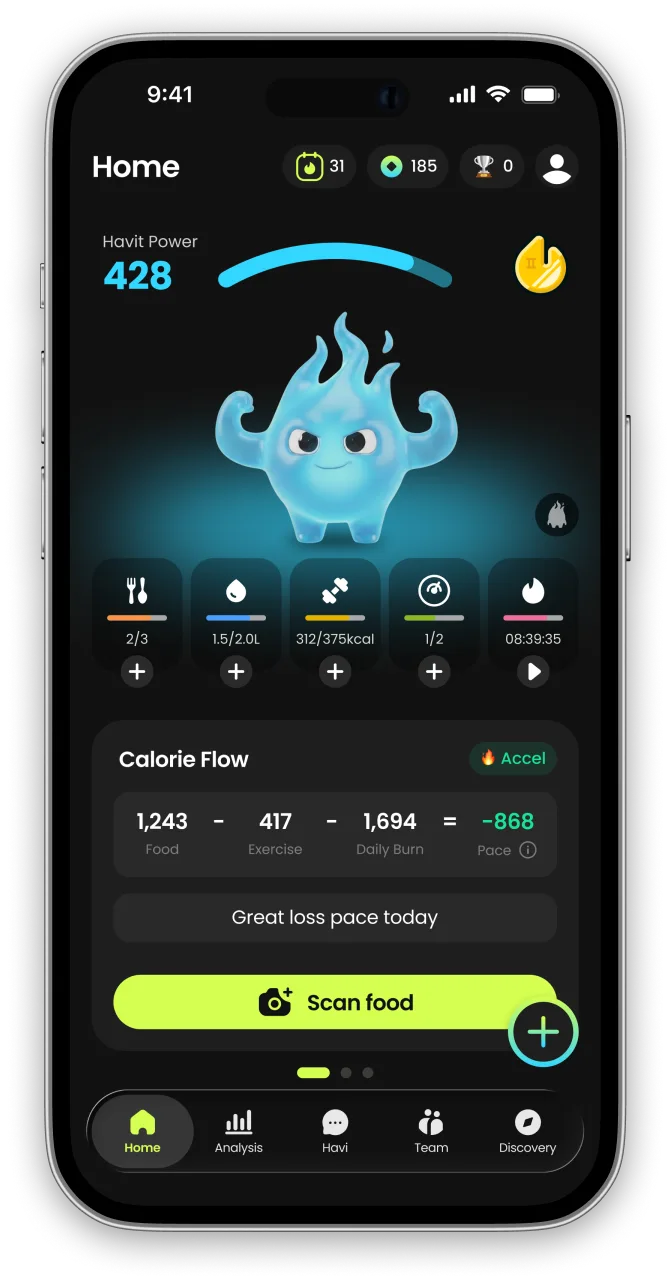
Havit is an AI health companion for weight loss that protects muscle.
Unlike calorie-only trackers, Havit connects AI body-composition estimates, nutrition, hydration, sleep, steps, cycle, mood, and GLP-1 medication in one daily routine — so progress is measured by body composition, not just the number on the scale. Daily missions turn established behavior-change techniques into small repeatable actions, drawing on expertise from professionals formerly at Juvis Diet, one of Korea’s leading metabolic clinics.
In Havit’s own analysis of 1,090 GLP-1 users, people who logged consistently built stronger habits than the general user base. Read the GLP-1 Habit Report
Havit works with or without GLP-1 medication. It is a wellness app, not a medical device; body-composition results are estimates.
Continue in the App
Personalized wellness with your own data


References
- Intermittent Dasatinib and Quercetin in Idiopathic Pulmonary Fibrosis: Results of a Phase 1 Clinical Trial — EBioMedicine, 2025
- Fisetin is a Senotherapeutic that Extends Health and Lifespan — Aging, 2024
- Senescent Cell Turnover Dynamics in Human Tissues — Nature Aging, 2024
- Bioavailability of Dietary Flavonoids and Relevance to Human Health — Annual Review of Nutrition, 2024


