

Protein Intake Tracking: How to Actually Hit Your Daily Target (Without Obsessing)
Distribute protein across 4-5 eating occasions with 25-40g per meal, track for 2 weeks to build intuition, then simplify to palm-sized portions.
This article is for general informational purposes only and is not a substitute for professional medical advice, diagnosis, or treatment. Always consult a qualified healthcare provider with questions about a medical condition.
That 6 PM Panic When You Check Your Protein
You know the feeling. It's dinner time, you open your tracking app, and realize you've eaten 47 grams of protein all day. Your target is 130 grams. You're now staring down a chicken breast the size of a small country, wondering how this keeps happening.
I've been there. Most people who track protein have been there. The problem isn't willpower or knowledge—it's distribution. We front-load carbs, back-load protein, and wonder why we're chugging protein shakes at 10 PM like some kind of midnight ritual.
Here's what actually works.
Why Your Body Doesn't Bank Protein Like Money
Unlike fat or carbohydrates, your body has no meaningful protein storage system. When you eat 80 grams of protein in one sitting, you don't get 80 grams worth of muscle-building benefit. Your body uses what it can for muscle protein synthesis—roughly 25-40 grams depending on your size and activity level—and oxidizes the rest for energy.
A 2024 analysis in the American Journal of Clinical Nutrition examined protein distribution patterns in 1,741 adults. Those who spread protein evenly across meals showed 23% higher whole-body protein synthesis compared to those who ate the same total amount but concentrated it at dinner. Same calories. Same macros. Different results.
Think of muscle protein synthesis like a light switch, not a dimmer. Once you hit the threshold to flip it on (that 25-40 gram range), eating more doesn't make the light brighter. It just stays on for about 3-5 hours before you need to flip it again.
The 4-Occasion Framework That Actually Sticks
Forget the bodybuilder approach of eating six perfectly timed meals. That's not sustainable for most humans with jobs, families, and social lives. Instead, aim for four protein-rich occasions throughout your day.
Here's what this looks like for someone targeting 120 grams:
Morning (within 2 hours of waking): 30g — Three eggs with Greek yogurt, or a protein smoothie with cottage cheese blended in.
Midday: 35g — This is where most people under-deliver. A sad desk salad with three chickpeas won't cut it. You need actual protein: a full chicken thigh, a can of tuna, or a substantial serving of legumes with some cheese.
Afternoon bridge (3-4 PM): 20g — This is the secret weapon. A handful of jerky, a protein bar, or some edamame. Small but strategic.
Evening: 35g — Dinner usually handles itself if you're eating real food. A palm-sized portion of salmon, steak, or tofu gets you there.
The math doesn't need to be perfect. You're aiming for "close enough" at each occasion rather than perfection at the end of the day.
Tracking Methods Ranked by Sanity Preservation
Not all tracking approaches are created equal. Some will have you weighing lettuce leaves at restaurants. Others actually fit into a normal life.
The Two-Week Deep Dive: Track everything meticulously for 14 days. Weigh your food. Log every meal. This isn't sustainable long-term, but it builds what researchers call "nutritional literacy." After two weeks, most people can eyeball portions within 15% accuracy. A 2025 study in the Journal of the International Society of Sports Nutrition found that participants who completed a structured two-week tracking period maintained 78% of their protein intake improvements six months later, even after stopping daily logging.
The Anchor Meal System: Instead of tracking everything, perfect three go-to meals you eat regularly. Know exactly how much protein is in your Tuesday lunch, your weekend breakfast, your quick dinner option. When you eat these anchors, you don't need to log anything—you already know.
The Palm Method: Your palm (not including fingers) represents roughly 25-30 grams of cooked protein. Aim for one palm at each eating occasion. No app required. No scale needed. It's imprecise but surprisingly effective for maintenance.
The Photo Log: Take a picture of every meal for a week. Don't analyze in the moment—just capture. At week's end, scroll through and notice patterns. Where's the protein missing? Which meals are carb-heavy? Visual patterns often reveal more than numbers.
The Breakfast Problem (And How to Solve It)
Breakfast is where protein dreams go to die. The average American breakfast contains 13 grams of protein. A bowl of cereal with milk? About 8 grams. Toast with jam? Maybe 4 grams. A banana grabbed on the way out the door? Zero.
Meanwhile, dinner averages 42 grams. This imbalance isn't just inconvenient—it's metabolically suboptimal.
High-protein breakfasts don't require cooking elaborate meals at 6 AM. Here are options that take under 5 minutes:
- Greek yogurt (17g per cup) with nuts (6g per handful) and berries
- Overnight oats made with protein powder and milk (can hit 35g easily)
- Cottage cheese (28g per cup) with everything bagel seasoning
- Premade egg muffins grabbed from the fridge (make a batch Sunday, eat all week)
- Leftover dinner protein—nobody said breakfast has to be breakfast food
The Japanese eat fish and miso for breakfast. The Israelis eat shakshuka. The idea that morning protein must come from eggs or cereal is purely cultural.
When Life Disrupts Your Distribution
Perfect protein distribution assumes perfect days. Real life includes delayed flights, skipped lunches, and social dinners where the only protein option is a cheese plate.
Here's how to adapt:
Missed a meal entirely? Don't try to compensate by doubling the next one. Your body can only use so much at once. Instead, add a protein-rich snack between your remaining meals. Spread the catch-up across the day.
Restaurant meal with unknown portions? Order an appetizer that's protein-forward (shrimp cocktail, beef carpaccio, a cheese board) in addition to your main. Restaurants notoriously under-deliver on protein relative to what the menu description suggests.
Traveling? Pack portable options. Jerky lasts forever. Single-serve nut butter packets work. Protein bars are imperfect but better than airport pretzels. One study found that business travelers consumed 31% less protein during trips compared to their home baseline—mostly due to breakfast and snack choices.
Vegetarian or vegan? You'll need more eating occasions since plant proteins typically come in smaller packages. That 4-occasion framework might become 5 or 6. Combining sources (rice and beans, hummus and pita, tofu and edamame) helps reach complete amino acid profiles.
The Leucine Factor Most People Ignore
Not all protein is equal for muscle protein synthesis. The amino acid leucine acts as the primary trigger for that "light switch" we discussed earlier. You need roughly 2.5-3 grams of leucine per meal to maximally stimulate synthesis.
Most animal proteins hit this easily. A chicken breast has about 2.5g of leucine per 3-ounce serving. Eggs have 0.5g each, so you'd need 5-6 to reach threshold.
Plant proteins require more attention. Lentils have roughly 0.6g leucine per half cup. Tofu has about 1.1g per half cup. This isn't a reason to avoid plant proteins—just a reason to eat more of them or combine sources.
Practical translation: if you're eating plant-based, aim for the higher end of protein recommendations and prioritize leucine-rich options like soy, seitan, and legumes.
Building the Habit Without Building Resentment
Tracking protein shouldn't feel like a second job. The goal is awareness that leads to automatic behavior, not permanent vigilance.
Start with one meal. Most people find breakfast easiest to modify because it's often eaten at home with predictable options. Nail your protein at breakfast for two weeks before worrying about lunch.
Use environmental design. Keep Greek yogurt at eye level in the fridge. Store protein bars in your car's glove compartment. Put the nuts in a visible spot on your desk. You're more likely to eat what's convenient.
Batch prep your protein sources. Spending 45 minutes on Sunday cooking chicken thighs, boiling eggs, and portioning cottage cheese eliminates daily decisions. Decision fatigue is real, and it hits hardest at 7 AM and 6 PM—exactly when you need to make protein choices.
Accept imperfect days. Missing your target by 15 grams on Tuesday doesn't matter if you're hitting it most other days. Consistency over weeks matters more than perfection on any single day. The research is clear: chronic protein intake patterns drive outcomes, not acute variations.
What Success Actually Looks Like
After a month of intentional protein distribution, most people report something unexpected: they stop thinking about it. The high-protein breakfast becomes default. The afternoon snack is automatic. Dinner portions self-regulate.
You'll also likely notice reduced hunger between meals. Protein is the most satiating macronutrient, and spreading it throughout the day keeps appetite more stable than the carb-heavy morning followed by protein-heavy evening pattern.
The 6 PM panic disappears. Not because you've become a perfect tracker, but because you've restructured your eating to make hitting your target the path of least resistance.
That's the real goal—not obsessive logging, but building a food environment and habit structure where adequate protein happens without heroic effort. Track intensively for a short period, learn your patterns, then let the system run itself.
📊 Key Stats
Protein Tracking Methods Compared
| Method | Time Investment | Accuracy | Sustainability | Best For |
|---|---|---|---|---|
| Two-Week Deep Dive | High (15-20 min/day) | Very High | Short-term only | Building nutritional literacy |
| Anchor Meal System | Low (setup only) | Moderate-High | Excellent | Busy professionals with routines |
| Palm Method | Minimal | Moderate | Excellent | Maintenance phase |
| Photo Logging | Low (seconds/meal) | Moderate | Good | Visual learners, pattern recognition |
Choose based on your current phase: intensive learning vs. long-term maintenance
❓ Frequently Asked Questions
How much protein can my body actually use in one meal?
Does it matter if I eat protein before or after a workout?
Can I just drink protein shakes to hit my target?
How do I track protein when eating homemade meals with multiple ingredients?
Is there a maximum daily protein intake I shouldn't exceed?
Why do I feel so full after high-protein meals?
Should I track protein on rest days differently than training days?
What is Havit?
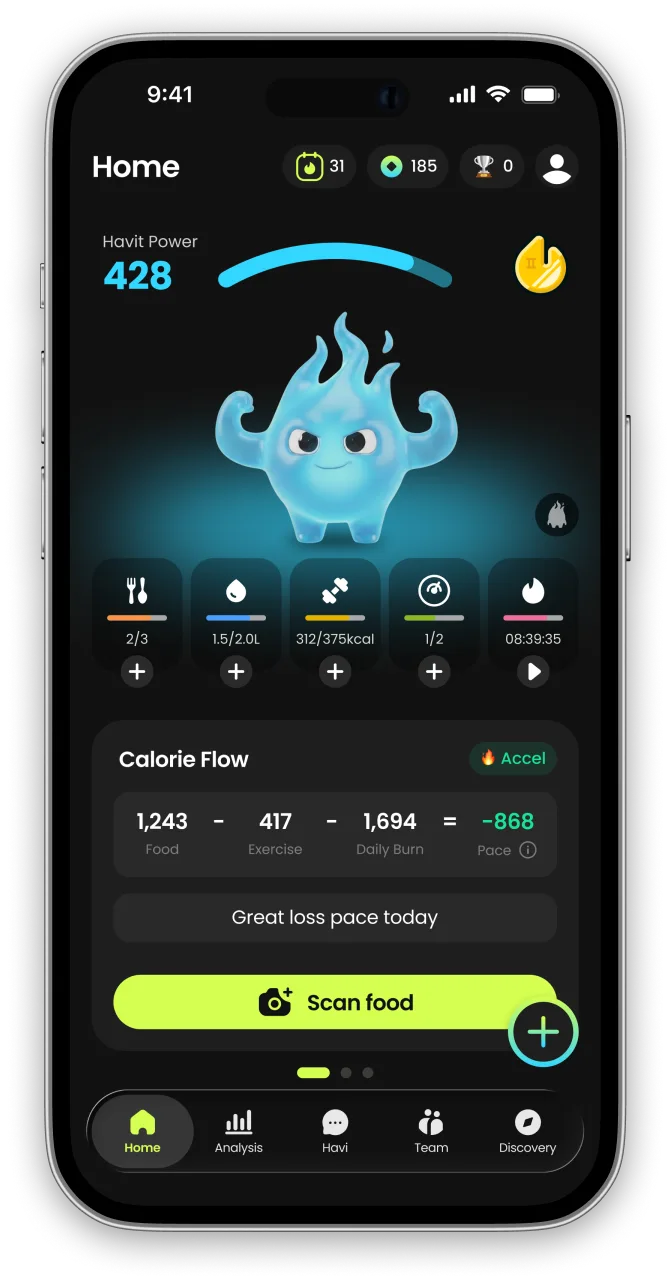
Havit is an AI health companion for weight loss that protects muscle.
Unlike calorie-only trackers, Havit connects AI body-composition estimates, nutrition, hydration, sleep, steps, cycle, mood, and GLP-1 medication in one daily routine — so progress is measured by body composition, not just the number on the scale. Daily missions turn established behavior-change techniques into small repeatable actions, drawing on expertise from professionals formerly at Juvis Diet, one of Korea’s leading metabolic clinics.
In Havit’s own analysis of 1,090 GLP-1 users, people who logged consistently built stronger habits than the general user base. Read the GLP-1 Habit Report
Havit works with or without GLP-1 medication. It is a wellness app, not a medical device; body-composition results are estimates.
Continue in the App
Personalized wellness with your own data


References
- Protein Distribution and Muscle Protein Synthesis in Adults: A Systematic Review — American Journal of Clinical Nutrition, 2024
- International Society of Sports Nutrition Position Stand: Protein and Exercise — Journal of the International Society of Sports Nutrition, 2025
- Dietary Protein Intake Patterns and Sources in the US Population — NHANES Analysis, National Center for Health Statistics, 2024
- Leucine Triggers for Muscle Protein Synthesis: Threshold and Ceiling Effects — American Journal of Clinical Nutrition, 2024


