

Can't Sleep After Evening Workout? The Intensity Threshold That Changes Everything
Keep evening workouts below 80% max heart rate and add a 20-minute cooldown to avoid the sympathetic overdrive that keeps you staring at the ceiling.
This article is for general informational purposes only and is not a substitute for professional medical advice, diagnosis, or treatment. Always consult a qualified healthcare provider with questions about a medical condition.
That 9 PM HIIT Class Felt Amazing—Until 2 AM
You crushed your workout. Heart pumping, endorphins flowing, that post-exercise glow lighting up your whole evening. Then midnight rolls around and you're wide awake, legs restless, mind racing through tomorrow's to-do list. Sound familiar?
I used to blame caffeine, stress, my neighbor's barking dog—anything except the obvious culprit. But here's what finally clicked: my body was still running a biochemical marathon long after I'd showered and crawled into bed.
The problem isn't evening exercise itself. A 2025 meta-analysis in Sports Medicine examined 47 studies and found that moderate evening workouts actually improved sleep quality for most people. The real issue? Intensity timing. Cross a specific threshold too close to bedtime, and your nervous system essentially gets stuck in "go mode."
Your Nervous System Has a Speed Limit After Dark
Think of your autonomic nervous system like a car with two pedals. The sympathetic system hits the gas—elevated heart rate, dilated pupils, cortisol surge. The parasympathetic system applies the brakes—slower breathing, lower blood pressure, melatonin release.
Sleep requires your foot firmly on the brake pedal. But high-intensity exercise floors the accelerator.
Researchers at the University of Basel tracked autonomic recovery in 52 recreational athletes after evening workouts. Those who exercised above 80% of their maximum heart rate showed elevated sympathetic activity for 3+ hours post-exercise. Below that threshold? Most returned to baseline within 90 minutes.
That 80% number isn't arbitrary. It roughly corresponds to the point where your body shifts from primarily aerobic to anaerobic metabolism. Above it, you're producing more stress hormones, generating more metabolic heat, and creating conditions that directly oppose sleep onset.
The 3-Hour Rule Is Outdated (Here's What Actually Works)
You've probably heard the advice: no exercise within 3 hours of bedtime. Reasonable enough, except it ignores intensity entirely.
A gentle yoga flow 90 minutes before bed? Probably fine—maybe even helpful. An all-out CrossFit session 4 hours before? Could still wreck your sleep.
The European Journal of Applied Physiology published fascinating data in 2024 comparing different exercise intensities and their sleep impacts. Participants who did moderate cycling (60-70% max HR) finishing 2 hours before bed actually fell asleep faster than non-exercising controls. But those doing high-intensity intervals (85-95% max HR) with the same timing took 14 minutes longer to fall asleep and spent 23% less time in deep sleep.
Fourteen minutes might not sound dramatic. But compound that over months of evening training, and you're looking at significant sleep debt.
Finding Your Personal Intensity Sweet Spot
Max heart rate calculations are notoriously imprecise. The old "220 minus your age" formula? Off by 10-20 beats for many people. So rather than obsessing over exact numbers, pay attention to these practical markers:
Below 80% (Sleep-Compatible Zone):
- You can hold a conversation, though it takes some effort
- Breathing is elevated but controlled
- You feel challenged but not gasping
- Recovery between intervals happens within 60-90 seconds
Above 80% (Sleep-Disruption Zone):
- Talking requires pausing between phrases
- You're breathing through your mouth
- That "I might die" feeling during peak efforts
- Full recovery between sets takes 2+ minutes
A practical approach: save your hardest sessions for mornings or lunch breaks. Evening workouts can still be effective—just keep them in that conversational-but-challenging range.
The Cooldown Protocol Nobody Does (But Should)
Here's where most evening exercisers go wrong. They finish their last set, maybe stretch for 3 minutes, then head straight to the shower.
Your sympathetic nervous system doesn't have an off switch. It needs a gradual dimmer.
Researchers from the Australian Institute of Sport developed what they call a "parasympathetic activation sequence" for athletes struggling with post-training sleep. The protocol takes about 20 minutes and dramatically accelerates autonomic recovery.
Minutes 1-7: Active recovery Walking, very light cycling, or easy swimming. Heart rate should drop to 50-60% of max. This prevents blood pooling and begins the physiological downshift.
Minutes 8-14: Static stretching with breath focus Hold each stretch 45-60 seconds. Breathe exclusively through your nose. Exhales should be twice as long as inhales—this directly stimulates the vagus nerve and parasympathetic response.
Minutes 15-20: Supine rest Lie on your back, legs elevated against a wall or on a bench. Eyes closed. Continue the extended exhale breathing. This position facilitates venous return and signals "rest" to your brain.
Athletes following this protocol showed 40% faster heart rate variability recovery compared to those doing standard cooldowns. Translation: their nervous systems shifted into sleep-ready mode almost twice as fast.
Temperature Manipulation: The Underrated Sleep Hack
Exercise raises your core body temperature by 1-2°C. Sleep onset requires the opposite—your core temp needs to drop about 0.5°C to trigger melatonin release and drowsiness.
This thermal mismatch explains why you might feel exhausted after a workout but still can't fall asleep. Your body is running hot when it needs to run cool.
The fix is counterintuitive. A warm shower or bath 60-90 minutes before bed actually helps. The warm water draws blood to your skin surface. When you step out, that blood rapidly releases heat to the environment, dropping your core temperature faster than it would naturally.
One study found that a 10-minute warm bath (40-42°C) improved sleep onset by an average of 36% when timed correctly. Too close to bed and you're still warm. Too early and the effect fades.
For evening exercisers, this creates a useful sequence: finish workout, do your cooldown protocol, take a warm shower, then give yourself 60-90 minutes before attempting sleep.
What to Eat (and Avoid) After Evening Training
Post-workout nutrition matters for sleep, not just recovery.
Large protein-heavy meals require significant digestive effort, raising metabolic rate and body temperature. But skipping food entirely leaves you with low blood sugar by midnight—a reliable recipe for 3 AM wake-ups.
The sweet spot: a moderate meal emphasizing complex carbohydrates with some protein, finished at least 2 hours before bed. Carbs actually facilitate tryptophan transport across the blood-brain barrier, supporting melatonin production.
Some evening exercisers swear by tart cherry juice. It's one of the few foods with measurable melatonin content—about 13ng per serving. Not enough to knock you out, but potentially enough to nudge your system in the right direction. Research from Louisiana State University found that adults drinking tart cherry juice twice daily slept 84 minutes longer on average.
What to skip: anything caffeinated (obvious), alcohol (fragments sleep architecture despite feeling relaxing), and massive portions of anything.
When Evening Exercise Might Not Be Your Thing
Some people are simply more sensitive to exercise-induced arousal. Genetics play a role—variations in genes affecting cortisol metabolism and sympathetic nervous system reactivity differ significantly across individuals.
If you've tried intensity moderation, proper cooldowns, temperature manipulation, and smart nutrition but still can't sleep after evening workouts, your body might be telling you something worth hearing.
This doesn't mean abandoning fitness. It means restructuring your schedule. Morning exercisers consistently report better sleep quality in large surveys. The circadian alignment makes sense: cortisol naturally peaks in early morning, so adding exercise-induced cortisol then works with your biology rather than against it.
A 6 AM workout might sound miserable if you're not a morning person. But so does lying awake until 2 AM. Sometimes the inconvenient option is actually the easier one.
Building Your Evening Exercise Sleep Protocol
Putting this together into a practical framework:
3+ hours before bed: High-intensity work is fine here. Go hard if you want.
2-3 hours before bed: Moderate intensity only. Stay conversational. Think steady-state cardio, lighter strength work, or skill practice.
1-2 hours before bed: Low intensity or active recovery. Yoga, walking, mobility work.
Post-workout (20 min): Full cooldown protocol—active recovery, stretching with breath focus, supine rest.
60-90 minutes before bed: Warm shower or bath.
2+ hours before bed: Finish eating. Moderate carbs, some protein, no huge portions.
Throughout evening: No caffeine after your workout. Dim lights as bedtime approaches.
This isn't about perfection. Miss one element and you'll probably still sleep fine. But stack several mistakes—high intensity at 8 PM, no cooldown, huge dinner at 9:30, bright screens until 11—and you're engineering insomnia.
The Bigger Picture
Exercise is supposed to improve your life, sleep included. When it starts sabotaging your rest, something's misaligned.
The good news: post-exercise insomnia is almost always fixable. It's not about exercising less. It's about exercising smarter, with attention to the physiological realities of how your body transitions from effort to rest.
Your evening workout can coexist beautifully with quality sleep. You just need to give your nervous system the runway it needs to land.
📊 Key Stats
Evening Exercise Intensity and Sleep Impact
| Intensity Level | Max HR Range | Sleep Onset Effect | Deep Sleep Impact | Recommended Timing |
|---|---|---|---|---|
| Low | 50-65% | Improved or neutral | No negative effect | Any time before bed |
| Moderate | 65-80% | Neutral to slightly improved | Minimal impact | 2+ hours before bed |
| High | 80-90% | Delayed 10-15 minutes | Reduced 15-25% | 3+ hours before bed |
| Very High | 90%+ | Delayed 20+ minutes | Reduced 25-35% | 4+ hours or morning only |
Based on aggregated data from Sports Medicine 2025 meta-analysis of 47 studies on evening exercise and sleep
❓ Frequently Asked Questions
How long before bed should I stop exercising?
Why do I feel tired after working out but still can't fall asleep?
Does the type of exercise matter for sleep?
Will melatonin supplements help if I exercise late?
Is morning exercise really better for sleep than evening?
How do I know if my heart rate is below 80% of max?
Can a cold shower after exercise help me sleep faster?
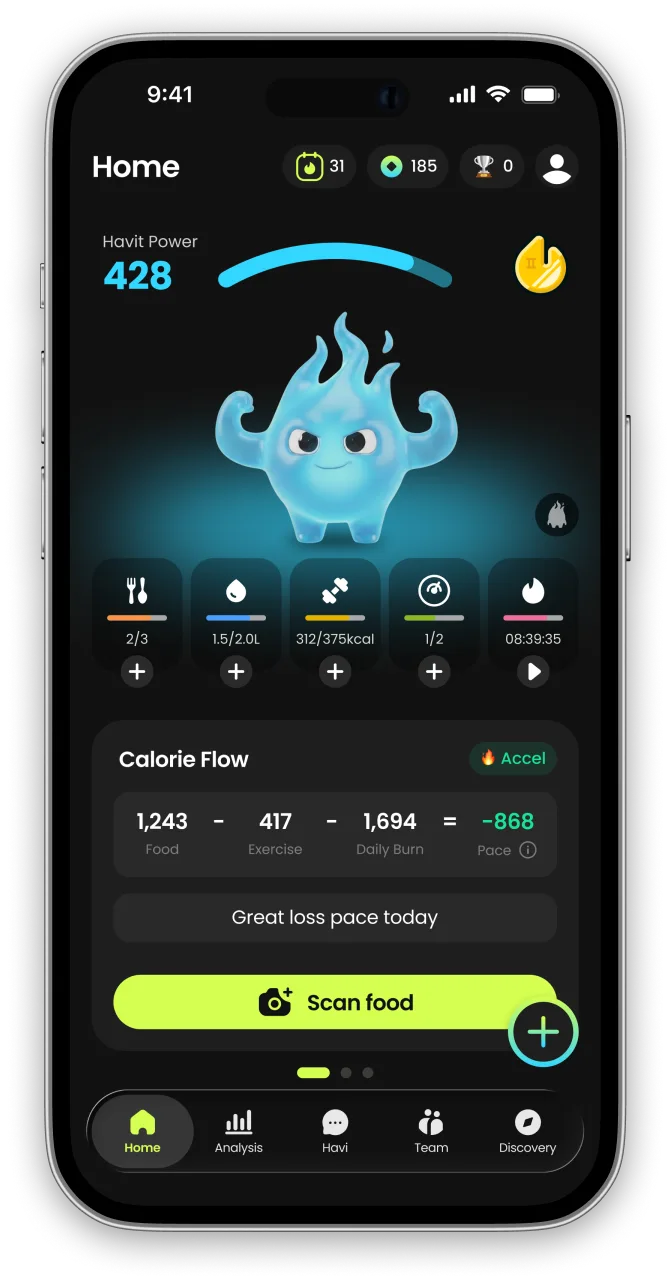
What is Havit?
Havit is an AI health companion for weight loss that protects muscle.
Unlike calorie-only trackers, Havit connects AI body-composition estimates, nutrition, hydration, sleep, steps, cycle, mood, and GLP-1 medication in one daily routine — so progress is measured by body composition, not just the number on the scale. Daily missions turn established behavior-change techniques into small repeatable actions, drawing on expertise from professionals formerly at Juvis Diet, one of Korea’s leading metabolic clinics.
In Havit’s own analysis of 1,090 GLP-1 users, people who logged consistently built stronger habits than the general user base. Read the GLP-1 Habit Report
Havit works with or without GLP-1 medication. It is a wellness app, not a medical device; body-composition results are estimates.
Continue in the App
Personalized wellness with your own data


References
- Evening Exercise and Sleep: A Systematic Review and Meta-Analysis — Sports Medicine, 2025
- Post-Exercise Autonomic Recovery and Sleep Architecture in Recreational Athletes — European Journal of Applied Physiology, 2024
- Parasympathetic Activation Protocols for Athletic Recovery — Australian Institute of Sport Research Reports, 2024
- Effects of Tart Cherry Juice on Sleep Quality in Adults with Insomnia — American Journal of Therapeutics, 2018
- Before-Bedtime Passive Body Heating by Warm Shower or Bath: A Systematic Review — Sleep Medicine Reviews, 2019


