

Why Your Heart Rate Should Drop While You Sleep (And What It Means If It Doesn't)
A healthy heart rate drops 10-20% during sleep; consistently flat nighttime patterns may signal cardiovascular stress worth discussing with your doctor.
This article is for general informational purposes only and is not a substitute for professional medical advice, diagnosis, or treatment. Always consult a qualified healthcare provider with questions about a medical condition.
The 3 AM Number You've Never Checked
Somewhere around 3 AM last night, your heart was beating at its slowest pace of the entire day. Or at least, it should have been. This nocturnal dip—a natural slowing of heart rate during deep sleep—turns out to be one of the most underappreciated markers of cardiovascular health. And most of us have no idea whether ours is happening.
I started paying attention to this after a friend showed me his wearable data. His daytime resting heart rate looked perfectly normal at 68 bpm. But his nighttime readings? Barely budged. They hovered around 64-66 bpm all night long. His doctor later found early signs of hypertension. Coincidence? The research says probably not.
What Actually Happens to Your Heart at Night
During healthy sleep, your autonomic nervous system shifts gears. The sympathetic branch (your fight-or-flight system) quiets down. The parasympathetic branch (rest-and-digest) takes over. Blood pressure falls. Heart rate slows. Your cardiovascular system gets a genuine break.
This isn't subtle. In a healthy adult, heart rate typically drops somewhere between 10% and 20% below daytime resting levels. Someone with a daytime resting rate of 70 bpm might dip to 56-63 bpm during their deepest sleep phases. The European Heart Journal's 2024 analysis of circadian cardiovascular patterns found this dipping phenomenon most pronounced during slow-wave sleep, usually occurring in the first half of the night.
The timing matters too. Your lowest point typically hits between 2 AM and 4 AM, then gradually rises as morning approaches. Cortisol begins climbing around 4 AM, preparing your body to wake. Heart rate follows. By the time your alarm sounds, your cardiovascular system has already begun revving up.
The Non-Dipper Problem
So what happens when this pattern doesn't occur? Researchers have a term for it: non-dipping. And the cardiovascular implications are significant.
A 2025 study published in Hypertension tracked over 3,400 adults using continuous heart rate monitoring alongside ambulatory blood pressure measurements. Those whose nighttime heart rate dropped less than 10% from daytime levels showed a 47% higher incidence of cardiovascular events over an eight-year follow-up period. The association held even after adjusting for age, BMI, smoking status, and existing health conditions.
Non-dipping doesn't mean something is definitely wrong. But it does suggest your autonomic nervous system isn't downshifting the way it should during rest. Think of it like a car engine that never fully idles—always running a bit hot, even when parked.
Common factors linked to reduced nocturnal dipping include chronic stress, sleep apnea, poor sleep quality, excessive evening alcohol, and certain medications. Night shift workers often show blunted dipping patterns, as do people with chronic insomnia. The pattern can also emerge as an early signal of developing hypertension, sometimes appearing years before blood pressure readings become concerning.
Reading Your Own Nighttime Data
If you wear a fitness tracker or smartwatch to bed, you're already collecting this information. The trick is knowing how to interpret it.
Pull up your heart rate graph from a typical night. Look for the overall shape. A healthy pattern resembles a gentle valley: rates decline after you fall asleep, reach their lowest point mid-sleep, then gradually rise toward morning. The depth of that valley matters.
Calculate your approximate dip percentage. Take your average daytime resting heart rate (measured while awake but calm—sitting, not exercising). Compare it to your lowest sustained nighttime rate (not a single anomalous reading, but your average during deep sleep phases). A 15% drop would look like going from 72 bpm during the day to around 61 bpm at night.
One night tells you almost nothing. You need patterns across weeks. A single night of poor sleep, late-night eating, or alcohol can flatten your curve temporarily. What you're watching for is consistency. If your nighttime rate rarely drops more than 8-10% below daytime levels across multiple weeks of data, that pattern deserves attention.
Factors That Flatten the Curve
Sleep apnea stands out as a major culprit. Each apnea event—when breathing temporarily stops—triggers a mini stress response. Heart rate spikes. Blood pressure jumps. Even if you don't fully wake, your cardiovascular system does. A 2024 meta-analysis found that untreated moderate-to-severe sleep apnea reduced average nocturnal heart rate dipping by 6-8 percentage points compared to matched controls.
Evening alcohol creates a similar effect through different mechanisms. That glass of wine might help you fall asleep faster, but it fragments sleep architecture and keeps heart rate elevated during the first half of the night. In studies tracking the same individuals across alcohol and non-alcohol nights, even moderate drinking (two standard drinks) reduced dipping by an average of 4 percentage points.
Chronic stress keeps the sympathetic nervous system partially activated even during sleep. People reporting high work stress showed 23% less nocturnal heart rate reduction compared to low-stress counterparts in a 2024 European Heart Journal study of 1,200 working adults.
Late-night intense exercise can temporarily blunt dipping. Your body needs time to downregulate after hard training. Working out within three hours of bedtime often shows up as elevated early-night heart rates, though the effect typically normalizes by mid-sleep.
What Healthy Dipping Actually Looks Like
Let me paint a picture of what optimal nighttime cardiovascular recovery looks like in the data.
A 35-year-old with good cardiovascular health might show a daytime resting rate around 65 bpm. After falling asleep around 11 PM, their rate begins declining within 30 minutes. By midnight, they're at 58 bpm. The lowest readings—around 52-54 bpm—occur between 2 and 4 AM during deep sleep phases. A slight rise begins around 5 AM. By wake time at 7 AM, they're back to 62-64 bpm before even getting out of bed.
That represents roughly a 17-20% dip from daytime resting to nighttime minimum. The curve looks smooth, not jagged. There might be brief elevations during REM sleep (when heart rate naturally becomes more variable), but the overall trend is clearly downward through the first half of the night.
Contrast that with a non-dipping pattern: same daytime rate of 65 bpm, but nighttime readings that hover between 60-63 bpm all night. Barely any valley. The difference between awake-resting and asleep looks more like 5-7% instead of 15-20%. The graph looks flat rather than U-shaped.
When to Pay Closer Attention
Certain patterns warrant a conversation with a healthcare provider. Consistently minimal dipping (under 10%) across several weeks of data. A sudden change from your historical pattern—if you used to dip 15% and now barely hit 8%. Frequent nighttime spikes that interrupt the normal decline. Morning heart rates that are higher than your afternoon resting rates.
None of these patterns alone constitute a problem. They're signals, not sentences. But they're signals worth understanding, especially if you have other cardiovascular risk factors like family history, elevated blood pressure, or metabolic concerns.
The Hypertension 2025 research specifically noted that non-dipping patterns often precede detectable changes in standard clinical measurements. In their cohort, reduced nocturnal dipping appeared an average of 2.3 years before blood pressure readings crossed into hypertensive ranges. Early awareness creates opportunity for lifestyle intervention.
Improving Your Nighttime Dip
The good news: nocturnal dipping often improves with targeted lifestyle changes. It's not a fixed characteristic.
Addressing sleep apnea makes the biggest difference for those affected. CPAP therapy normalized dipping patterns in 71% of participants in a 2024 sleep medicine trial within three months of consistent use. If you snore heavily, wake with headaches, or feel unrested despite adequate sleep duration, screening for apnea deserves priority.
Stress management techniques that activate the parasympathetic nervous system show measurable effects. An eight-week mindfulness program improved nocturnal heart rate dipping by an average of 4 percentage points in a controlled trial of adults with elevated stress markers. The mechanism makes sense: training your nervous system to downshift during the day helps it downshift more completely at night.
Timing matters for both exercise and eating. Finishing intense workouts at least three hours before bed allows adequate cardiovascular recovery. Avoiding large meals within two hours of sleep reduces the metabolic demand that keeps heart rate elevated. These aren't dramatic interventions, but their effects compound.
Alcohol reduction shows rapid results. Most people see improved dipping within days of reducing evening consumption. The effect is dose-dependent—less alcohol, better dipping—making it one of the most immediately actionable variables.
The Bigger Picture
Your nighttime heart rate pattern offers a window into something you can't consciously control: how well your autonomic nervous system recovers during sleep. It's measuring the quality of your cardiovascular rest, not just the quantity of your sleep hours.
This doesn't replace traditional health markers. Blood pressure, cholesterol levels, and clinical assessments remain essential. But for those already tracking heart rate data, the nighttime dimension adds meaningful context that daytime measurements alone can't provide.
The pattern you see tonight is just one data point. The pattern across months tells a story. And unlike many health indicators, this one responds relatively quickly to lifestyle changes—giving you feedback on whether your interventions are actually working.
Check your data from last night. Find your lowest sustained rate. Calculate the percentage drop from your typical daytime resting rate. Now you have a baseline. What you do with that information is up to you.
📊 Key Stats
Nocturnal Heart Rate Patterns: Healthy Dipping vs. Non-Dipping
| Characteristic | Healthy Dipper | Non-Dipper |
|---|---|---|
| Nighttime HR reduction | 10-20% below daytime resting | Less than 10% reduction |
| Lowest HR timing | 2-4 AM during deep sleep | Variable or absent clear minimum |
| Graph appearance | U-shaped valley | Relatively flat line |
| Example (65 bpm daytime) | Drops to 52-58 bpm at night | Stays at 59-63 bpm at night |
| Morning HR pattern | Gradual rise before waking | Minimal change from night levels |
| Autonomic indication | Strong parasympathetic activation | Reduced parasympathetic response |
Comparison based on European Heart Journal 2024 circadian cardiovascular patterns research
❓ Frequently Asked Questions
How accurate are consumer wearables for tracking nocturnal heart rate?
Can medications affect nocturnal heart rate dipping?
Is a very large dip (over 25%) a concern?
How long should I track before drawing conclusions about my pattern?
Does age affect normal nocturnal dipping?
Can improving sleep quality alone restore healthy dipping?
Should I be concerned about heart rate variability during sleep as well?
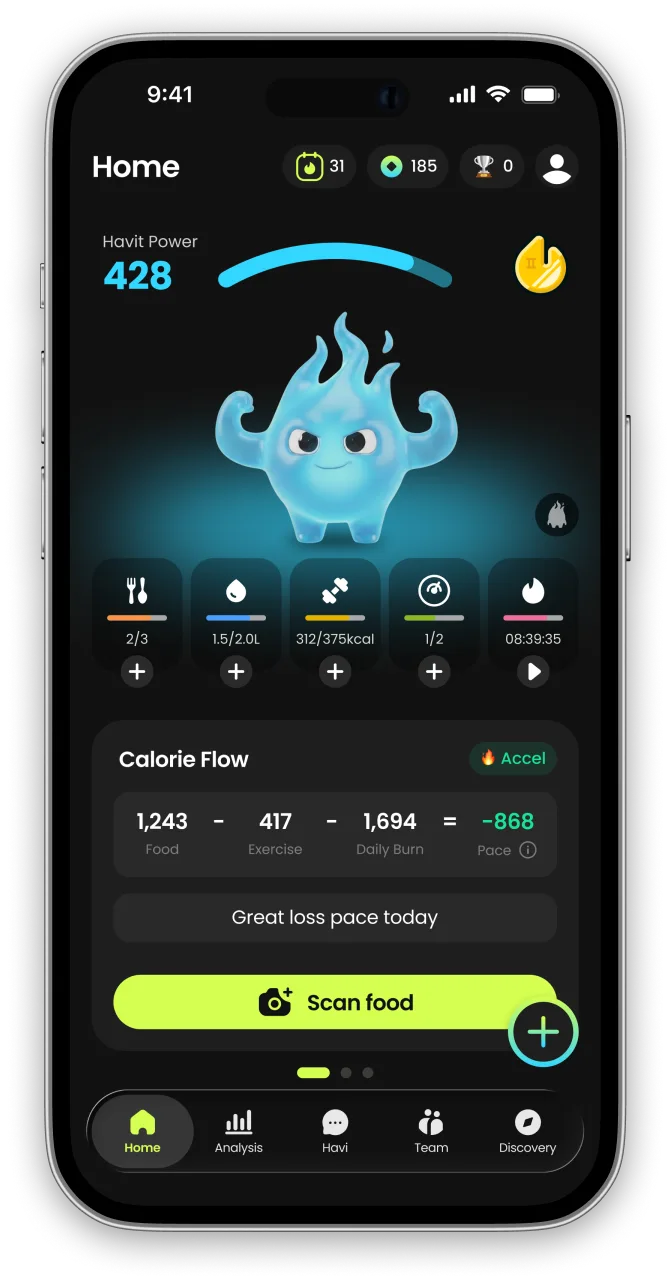
What is Havit?
Havit is an AI health companion for weight loss that protects muscle.
Unlike calorie-only trackers, Havit connects AI body-composition estimates, nutrition, hydration, sleep, steps, cycle, mood, and GLP-1 medication in one daily routine — so progress is measured by body composition, not just the number on the scale. Daily missions turn established behavior-change techniques into small repeatable actions, drawing on expertise from professionals formerly at Juvis Diet, one of Korea’s leading metabolic clinics.
In Havit’s own analysis of 1,090 GLP-1 users, people who logged consistently built stronger habits than the general user base. Read the GLP-1 Habit Report
Havit works with or without GLP-1 medication. It is a wellness app, not a medical device; body-composition results are estimates.

Continue in the App
Personalized wellness with your own data


References
- Nocturnal Blood Pressure and Heart Rate Patterns: Prognostic Implications for Cardiovascular Events — Hypertension, 2025
- Circadian Cardiovascular Risk: Autonomic Regulation During Sleep and Waking Hours — European Heart Journal, 2024
- Sleep Apnea and Nocturnal Cardiovascular Dipping: A Meta-Analysis — Sleep Medicine Reviews, 2024
- Lifestyle Interventions and Nocturnal Heart Rate Recovery: A Randomized Controlled Trial — Journal of the American Heart Association, 2024


