

Mouth Breathing During Sleep: How to Stop It With Myofunctional Therapy and Nasal Hygiene
Myofunctional therapy combined with proper nasal hygiene can help most mouth breathers transition to nasal breathing within 8-12 weeks, dramatically improving sleep quality.
This article is for general informational purposes only and is not a substitute for professional medical advice, diagnosis, or treatment. Always consult a qualified healthcare provider with questions about a medical condition.
You're Probably Breathing Wrong Right Now
Here's a weird experiment: close your mouth and try to breathe through your nose for the next thirty seconds. If that felt uncomfortable—or if you caught yourself mouth breathing while reading this—you're not alone. About 61% of adults breathe through their mouths during sleep at least part of the night, according to a 2024 analysis in Respiratory Physiology & Neurobiology.
I used to wake up with a mouth so dry it felt like I'd been chewing on sandpaper. My partner mentioned I snored. My dentist noticed my gums were receding. Turns out, all three problems traced back to the same root cause: I was a mouth breather.
The good news? This is fixable. Not with expensive gadgets or surgery, but with targeted exercises and simple nasal care routines that rewire how you breathe at night.
Why Your Body Prefers Your Nose (Even If You Don't)
Your nose isn't just a passive air hole. It's a sophisticated filtration and conditioning system.
When air enters through your nostrils, tiny hairs trap particles. The mucous membrane warms incoming air to body temperature—crucial because cold, dry air hitting your lungs triggers inflammation. Your nasal passages also add nitric oxide to each breath, a molecule that helps dilate blood vessels and improves oxygen absorption by roughly 10-15%.
Mouth breathing bypasses all of this. You're essentially running unfiltered, unconditioned air directly into your respiratory system. During sleep, this creates a cascade of problems: dry mouth accelerates tooth decay, the tongue falls backward and narrows the airway, and your body never quite reaches the deep restorative sleep stages it needs.
A 2025 study in the Journal of Dental Sleep Medicine tracked 847 adults who identified as habitual mouth breathers. Those who successfully transitioned to nasal breathing reported 34% improvement in subjective sleep quality scores after just twelve weeks. Their partners reported less snoring too.
The Muscle Problem Nobody Talks About
Here's what surprised me when I started researching this: mouth breathing isn't just a habit. It's often a muscle weakness issue.
Think about it. Keeping your mouth closed while you sleep requires your lips to seal and your tongue to rest against the roof of your mouth. If those muscles are weak or improperly trained—which happens when you've been mouth breathing for years—they simply give up once you fall asleep.
This is where myofunctional therapy enters the picture. It's essentially physical therapy for your face and tongue. Sounds ridiculous until you realize that the tongue is a muscle, and like any muscle, it responds to training.
The tongue contains eight separate muscles. When these muscles are toned and properly positioned, they naturally support nasal breathing. When they're weak, your jaw drops open the moment you lose consciousness.
A Four-Week Myofunctional Protocol That Actually Works
I'm going to walk you through a simplified version of what myofunctional therapists teach. This isn't a replacement for working with a professional if you have severe issues, but for most people with mild to moderate mouth breathing, these exercises produce real results.
Week One: Tongue Posture Awareness
The goal is training your tongue to rest in the correct position: tip behind your upper front teeth, middle and back pressed gently against the roof of your mouth. Most mouth breathers let their tongue rest on the floor of their mouth or pressed against their lower teeth.
Set a phone reminder for every two hours during the day. When it goes off, check your tongue position. Adjust if needed. This sounds stupidly simple, but conscious awareness during waking hours translates to unconscious habits during sleep.
Week Two: The Tongue Push-Up
Press your entire tongue firmly against the roof of your mouth. Hold for five seconds. Release. Repeat twenty times. Do this three times daily—morning, afternoon, before bed.
By the end of week two, most people notice their tongue naturally gravitating to the correct position without constant reminders.
Week Three: Lip Seal Exercises
Hold a thin object—a coffee stirrer or popsicle stick—between your lips (not your teeth) for five minutes. Your lips should be doing all the work. This strengthens the orbicularis oris muscle, the circular muscle around your mouth responsible for keeping it closed.
Do this while watching TV or reading. It's boring but effective.
Week Four: Integration
Combine everything. Correct tongue posture throughout the day, tongue push-ups three times daily, lip seal exercises once daily. Add a new element: practice breathing through your nose during light exercise. A twenty-minute walk while keeping your mouth closed builds respiratory endurance.
Nasal Hygiene: The Other Half of the Equation
All the myofunctional exercises in the world won't help if you physically can't breathe through your nose. Chronic congestion, deviated septums, and inflamed nasal passages make nasal breathing difficult or impossible.
Before assuming you need medical intervention, try optimizing your nasal hygiene. Most people dramatically underestimate how much gunk accumulates in their nasal passages.
Saline Rinse Protocol
Use a neti pot or squeeze bottle with isotonic saline solution (0.9% salt concentration—about 1/4 teaspoon of non-iodized salt per cup of distilled water). Rinse each nostril once in the morning and once before bed.
The 2024 Respiratory Physiology & Neurobiology study found that participants who added twice-daily saline rinses to their routine showed 28% improvement in nasal airflow within three weeks. That's without any medication.
Humidity Matters More Than You Think
Dry air inflames nasal passages. If your bedroom humidity drops below 30%—common in winter or air-conditioned rooms—your nasal tissues swell in response. A simple hygrometer costs about ten dollars. Target 40-50% humidity in your sleeping environment.
The Nasal Strip Question
Nasal strips (the adhesive kind that physically pull your nostrils open) work for some people as a transitional tool. They don't address the underlying issue, but they can help you experience nasal breathing while you build the muscle strength to maintain it naturally. Think of them as training wheels, not a permanent solution.
What About Mouth Tape?
You've probably seen mouth taping trending on social media. The concept is simple: tape your mouth shut before sleep, forcing nasal breathing.
The evidence is mixed. A small 2024 study of 30 participants found mouth taping reduced snoring frequency by 36% and improved oxygen saturation during sleep. But the dropout rate was high—nearly half of participants couldn't tolerate it.
If you want to try mouth taping, start with specialized sleep tape designed for the purpose (not regular tape, which can irritate skin). Use it only after you've spent a few weeks on myofunctional exercises and confirmed you can breathe comfortably through your nose while awake. And never use mouth tape if you have any nasal obstruction, sleep apnea, or respiratory conditions.
Honestly? I found mouth tape uncomfortable and anxiety-inducing. The myofunctional exercises worked better for me without the psychological stress of having my mouth physically sealed shut.
Tracking Your Progress
How do you know if this is working? A few markers to watch:
Morning mouth dryness should decrease within the first two weeks. If you're waking up with a dry mouth and throat, you're still mouth breathing.
Lip chapping often improves. Chronic mouth breathers tend to have persistently dry, cracked lips because air constantly flows over them.
Sleep quality scores on wearable devices may show changes in deep sleep percentage. This takes longer—usually six to eight weeks before you see consistent improvement.
Partner feedback is surprisingly useful. Ask them to notice if your snoring has changed or if they see your mouth hanging open while you sleep.
When to Seek Professional Help
These protocols work for most people with habitual mouth breathing. But some underlying conditions require medical attention.
See a specialist if: you can't breathe through your nose even when fully awake and not congested; you wake up gasping or choking; your partner reports that you stop breathing during sleep; or you've tried these interventions consistently for twelve weeks with no improvement.
An ENT can evaluate structural issues. A sleep specialist can rule out obstructive sleep apnea. A certified myofunctional therapist can create a personalized exercise program for complex cases.
The Long Game
Retraining your breathing patterns isn't a quick fix. Expect eight to twelve weeks before nasal breathing during sleep becomes automatic. The muscles need time to strengthen. The neural pathways need time to rewire.
But here's what makes it worth the effort: once you've made the switch, you don't have to think about it anymore. Your body defaults to the healthier pattern. You wake up without the sandpaper mouth. Your sleep deepens. Your energy improves.
I've been nasal breathing during sleep for about fourteen months now. The changes were gradual enough that I didn't notice them happening—but looking back, I can't believe I spent decades breathing wrong without realizing it.
Your nose was designed for this. Your mouth wasn't. Time to let each do its job.
📊 Key Stats
Nasal Breathing vs. Mouth Breathing During Sleep
| Factor | Nasal Breathing | Mouth Breathing |
|---|---|---|
| Air filtration | Particles trapped by nasal hairs and mucus | Unfiltered air enters respiratory system |
| Air temperature | Warmed to body temperature | Cold/dry air causes inflammation |
| Nitric oxide delivery | Natural production improves oxygen absorption | Bypassed entirely |
| Oral health impact | Saliva maintains protective pH | Dry mouth accelerates decay and gum disease |
| Airway positioning | Tongue supports open airway | Tongue falls back, narrowing airway |
| Snoring risk | Lower | Significantly higher |
Physiological differences between breathing routes during sleep
❓ Frequently Asked Questions
How long does it take to stop mouth breathing during sleep?
Is mouth taping safe for stopping mouth breathing?
Why do I breathe through my mouth even though my nose isn't blocked?
Can mouth breathing during sleep cause dental problems?
Do nasal strips help with mouth breathing?
What's the correct tongue position for nasal breathing?
When should I see a doctor about mouth breathing?
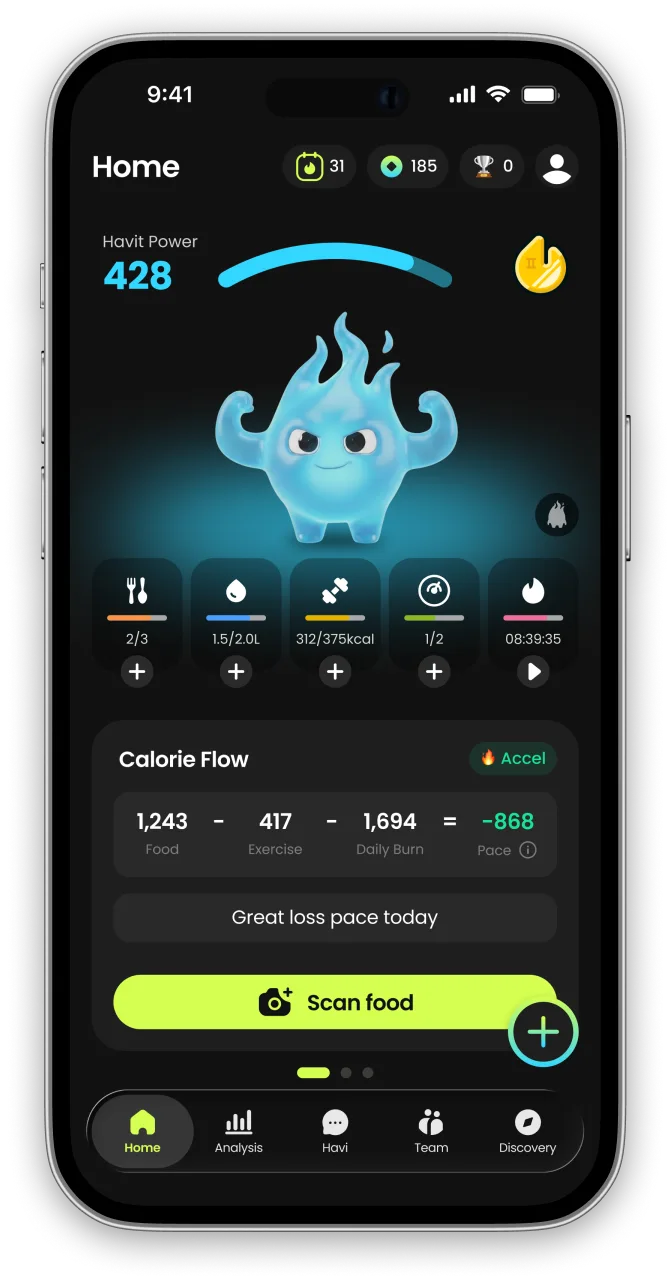
What is Havit?
Havit is an AI health companion for weight loss that protects muscle.
Unlike calorie-only trackers, Havit connects AI body-composition estimates, nutrition, hydration, sleep, steps, cycle, mood, and GLP-1 medication in one daily routine — so progress is measured by body composition, not just the number on the scale. Daily missions turn established behavior-change techniques into small repeatable actions, drawing on expertise from professionals formerly at Juvis Diet, one of Korea’s leading metabolic clinics.
In Havit’s own analysis of 1,090 GLP-1 users, people who logged consistently built stronger habits than the general user base. Read the GLP-1 Habit Report
Havit works with or without GLP-1 medication. It is a wellness app, not a medical device; body-composition results are estimates.

Continue in the App
Personalized wellness with your own data


References
- Myofunctional Therapy Interventions for Habitual Mouth Breathing: A Prospective Study of 847 Adults — Journal of Dental Sleep Medicine, 2025
- Nasal Breathing and Sleep Quality: Physiological Mechanisms and Clinical Implications — Respiratory Physiology & Neurobiology, 2024
- Saline Nasal Irrigation Effects on Nasal Airflow and Sleep-Disordered Breathing — Respiratory Physiology & Neurobiology, 2024
- Orofacial Myofunctional Therapy: Evidence-Based Protocols for Breathing Retraining — International Journal of Orofacial Myology, 2024


